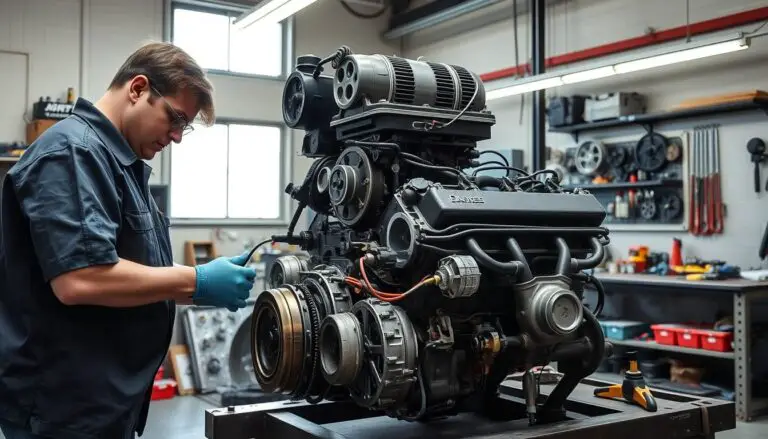
A malfunctioning transfer case poses a significant threat to your vehicle’s four-wheel-drive functionality. Timely identification of symptoms is imperative to avert extensive damage and prohibit exorbitant repair costs.
The transfer case, a pivotal component, facilitates the transition between two-wheel and four-wheel drive configurations. Its failure manifests through distinct symptoms, signaling an impending issue.
This discourse delves into the primary signs indicative of a defective transfer case and the anticipated repair estimates.
Key Takeaways
- Identify the common symptoms of a faulty transfer case.
- Understand the importance of early detection.
- Learn about the potential repair estimates for a faulty transfer case.
- Discover how to diagnose issues with your transfer case.
- Find out what to expect during the repair process.
What Is a Transfer Case and How Does It Work?
The transfer case is an indispensable component in four-wheel drive (4WD) and all-wheel drive (AWD) vehicles, serving a crucial role in power distribution between the front and rear axles. It facilitates the vehicle’s transition between two-wheel drive (2WD) and 4WD modes, adapting to varied driving conditions such as off-road terrains or slippery roads.

Function in 4WD and AWD Vehicles
In 4WD and AWD vehicles, the transfer case is responsible for power transfer from the transmission to both the front and rear axles. This capability allows the vehicle to dynamically allocate torque to the wheels that require it most, enhancing traction and stability. The transfer case is vital for overcoming 4WD problems and AWD issues, as it directly influences the vehicle’s ability to navigate challenging driving conditions.
By enabling the switch between 2WD and 4WD, the transfer case optimizes fuel efficiency and reduces drivetrain wear when 4WD is not required.
Types of Transfer Cases
Several types of transfer cases exist, including gear-driven and chain-driven models. Gear-driven transfer cases employ a set of gears for power transfer, whereas chain-driven models utilize a chain and sprockets. Each type offers distinct advantages and is tailored to specific vehicle configurations and driving requirements.
Regular transfer case maintenance is imperative to ensure the longevity and performance of the transfer case, regardless of its type. This entails fluid checks and replacements as necessary, alongside inspections for wear or damage signs.
Signs Of A Bad Transfer Case: Symptoms & Costs
Recognizing the symptoms of a malfunctioning transfer case is crucial for vehicle owners to circumvent expensive repairs. This critical component, integral to 4WD and AWD vehicles, ensures power transmission from the transmission to the front and rear axles. Failure of the transfer case precipitates a spectrum of issues, ranging from minor inconveniences to severe safety risks.

The Importance of Early Detection
Timely identification of transfer case malfunctions is imperative to avert further damage to the vehicle’s drivetrain. Regular maintenance and inspections facilitate the detection of potential issues before they escalate into major problems.
Key indicators to watch out for:
- Unusual noises during gear changes
- Vibrations at specific speeds
- Fluid leaks under the vehicle
- Difficulty shifting between 4WD and 2WD
Common Causes of Transfer Case Failure
Several factors contribute to transfer case failure. Common causes include worn-out or damaged components, inadequate maintenance, and excessive wear and tear.
- Worn-out or damaged components, such as bearings and seals
- Inadequate maintenance, including neglecting to change the transfer case fluid
- Excessive wear and tear due to frequent use in extreme conditions
When to Seek Professional Help
If you suspect a malfunction in your transfer case, seeking professional assistance is imperative. A qualified mechanic can accurately diagnose the issue and recommend the necessary repairs.
Don’t wait until it’s too late; early intervention can save you from more significant problems and expenses.
8 Key Symptoms of a Faulty Transfer Case
A faulty transfer case manifests through various symptoms, necessitating early identification of warning signs. The transfer case, integral to four-wheel drive (4WD) and all-wheel drive (AWD) vehicles, is responsible for power transmission to the front and rear axles. Failure of this component can precipitate significant issues if not addressed promptly.
1. Difficulty Shifting Between 4WD and 2WD
Difficulty in shifting between 4WD and 2WD modes is a primary indicator of a faulty transfer case. Resistance or hesitation during mode switching may signify wear or malfunction. This issue can stem from worn-out clutch packs, faulty shift motors, or insufficient fluid levels.
2. Grinding Noises During Gear Changes
Grinding noises during gear changes are indicative of a faulty transfer case. These sounds can arise from worn-out gears, bearings, or inadequate lubrication. If grinding or clunking sounds are heard during mode switching, immediate inspection by a professional mechanic is imperative.
3. Fluid Leaks Under the Vehicle
Fluid leaks under the vehicle signify a transfer case problem. The transfer case’s fluid lubricates its components. Damage to seals or cracks in the case can lead to fluid leakage, exacerbating wear and potential failure. Look for puddles or drips under the vehicle or on the garage floor.
4. Unexpected Disengagement from 4WD
Unexpected disengagement from 4WD mode may indicate a faulty transfer case. This disengagement can result from electrical issues, mechanical failure, or low fluid levels. If your vehicle unexpectedly disengages, have the transfer case inspected to determine the cause.
5. Vehicle Vibrations at Specific Speeds
Vibrations at specific speeds can signal a faulty transfer case. Incorrect functioning can cause vibrations felt through the vehicle, notably at certain speeds. These vibrations may stem from worn-out components or improper alignment.
6. Illuminated 4WD Warning Light
Modern vehicles often feature a 4WD warning light on the dashboard. Illumination of this light may indicate a transfer case problem. The light can be triggered by various issues, including faulty sensors, electrical problems, or mechanical failure.
7. Strange Noises in Neutral
Strange noises in neutral can be a symptom of a faulty transfer case. Whining, grinding, or clunking sounds may occur due to worn-out bearings or gears. If unusual noises are heard in neutral, inspecting the transfer case is advisable.
8. Complete Loss of Drive Power
In severe cases, a faulty transfer case can result in a complete loss of drive power. Failure of the transfer case can lead to a loss of power to the wheels, making vehicle control difficult or impossible. This symptom requires immediate attention.
Early recognition of these symptoms can prevent further damage to your vehicle’s drivetrain and ensure road safety. If any of these signs are experienced, prompt inspection and repair by a qualified mechanic are essential.
Diagnosing Transfer Case Problems
The accurate identification of transfer case malfunctions is paramount for successful repair endeavors and to avert additional damage. A comprehensive grasp of the system’s constituent parts and their roles is imperative for diagnosing transfer case issues.
DIY Inspection Methods
Vehicle proprietors can initiate a preliminary assessment of transfer case anomalies prior to professional intervention. This preliminary step involves basic inspections to discern potential malfunctions.
Visual Inspection Steps
Initiate by visually scrutinizing the transfer case for any evidence of leaks or physical damage. Verify the fluid’s level and quality, as suboptimal fluid conditions can precipitate issues. Inspect the transfer case mounts and linkage for any signs of wear.
Fluid Check Procedure
Conducting a fluid check is of paramount importance. The fluid’s level should be within the recommended parameters, and its condition must be assessed for any signs of contamination or degradation. Fluid exhibiting signs of dirtiness or a burnt odor often signals internal malfunctions.
Professional Diagnostic Procedures
For intricate issues, the employment of professional diagnostic tools and methodologies is indispensable. Technicians leverage a blend of computer diagnostics and physical component assessments to accurately diagnose transfer case malfunctions.
Computer Diagnostics
Modern vehicles, equipped with electronic control units (ECUs), offer invaluable diagnostic insights through computer diagnostics. Technicians can access trouble codes and monitor system performance to identify anomalies.
Physical Component Testing
Alongside computer diagnostics, the physical examination of components such as the transfer case’s electrical circuits, sensors, and mechanical parts is crucial. This holistic approach ensures a precise diagnosis.
Transfer Case Repair Options and Cost Estimates
Understanding the various repair options for transfer cases and their costs is imperative. Whether the issue is minor or a complete failure, being informed aids in making decisions. This knowledge is crucial for budgeting and ensuring the longevity of your vehicle.
Fluid Change and Maintenance
Fluid change and maintenance represent a cost-effective transfer case repair option. Regular maintenance can avert more severe problems. The cost for this service typically falls between $150 and $300, contingent upon the vehicle and service provider.
Seal and Bearing Replacement
Seal and bearing replacement is necessary when leaks or wear are identified. This process requires more labor and parts, thus increasing the cost to between $500 and $800. It is a critical step in preserving the transfer case’s integrity.
Chain and Sprocket Repairs
Repairs for transfer cases with chain-driven systems are more extensive. The cost for replacing the chain and sprockets ranges from $800 to $1,200. This significant repair can substantially extend the transfer case’s lifespan.
Complete Transfer Case Replacement
In instances where the transfer case is irreparable, a complete replacement is required. This is the most expensive option, with costs ranging from $1,500 to $3,500, including parts and labor. Obtaining a detailed quote from a mechanic is essential to fully comprehend the costs involved.
| Repair Option | Cost Estimate |
|---|---|
| Fluid Change and Maintenance | $150-$300 |
| Seal and Bearing Replacement | $500-$800 |
| Chain and Sprocket Repairs | $800-$1,200 |
| Complete Transfer Case Replacement | $1,500-$3,500 |
Grasping these transfer case repair options and their associated costs is vital for budgeting. Regular maintenance is paramount in averting more expensive repairs in the future.
Conclusion
A malfunctioning transfer case poses a substantial threat to the integrity of your vehicle’s four-wheel drive mechanism. The identification of symptoms, including erratic shifting between 4WD and 2WD, audible grinding noises, or the presence of fluid leaks, is paramount for timely intervention and rectification.
Comprehension of the underlying causes of transfer case failure, coupled with vigilance towards early warning signs, empowers proactive measures to avert more critical damage. Adherence to routine maintenance protocols, such as fluid exchanges, can significantly prolong the operational life of your transfer case.
In the event of encountering transfer case-related symptoms, immediate recourse to professional diagnostic and repair services is imperative. A transfer case in optimal condition is indispensable for the vehicle’s performance and safety. Prompt resolution of transfer case malfunctions not only spares you from incurring exorbitant repair costs but also ensures the continued reliability of your vehicle.
FAQ
What are the common symptoms of a faulty transfer case?
Symptoms indicative of a malfunctioning transfer case include an impediment in shifting between 4WD and 2WD modes, audible grinding during gear transitions, and the presence of fluid leaks beneath the vehicle. Other signs include unexpected disengagement from 4WD, vehicle vibrations at specific speeds, an illuminated 4WD warning light, peculiar noises in neutral, and a complete loss of drive power.
How do I diagnose transfer case problems?
To diagnose transfer case malfunctions, one can employ DIY methods such as visual inspections and fluid checks. Professional diagnostics, encompassing computer diagnostics and physical component testing, are also essential.
What are the repair options for a faulty transfer case?
Repair options for a faulty transfer case span from routine fluid changes and maintenance to more extensive interventions like seal and bearing replacements, chain and sprocket repairs, and, in extreme cases, a complete transfer case replacement. The cost spectrum for these repairs can vary significantly, ranging from $150 to $3,500.
How much does it cost to replace a transfer case?
The financial outlay for a transfer case replacement can fluctuate between $1,500 and $3,500, influenced by the vehicle’s make and model, as well as the intricacy of the replacement procedure.
Can I drive with a faulty transfer case?
It is strongly advised against driving a vehicle with a faulty transfer case, as it can exacerbate damage to the drivetrain and pose potential safety hazards.
How often should I maintain my transfer case?
Adherence to the manufacturer’s recommended maintenance schedule for fluid changes is crucial to prevent transfer case malfunctions and ensure optimal performance.
What is the average lifespan of a transfer case?
The longevity of a transfer case is contingent upon various factors, including the vehicle’s type, driving conditions, and maintenance practices. With diligent care, a transfer case can endure for numerous years.
,500 and ,500, influenced by the vehicle’s make and model, as well as the intricacy of the replacement procedure.
Can I drive with a faulty transfer case?
It is strongly advised against driving a vehicle with a faulty transfer case, as it can exacerbate damage to the drivetrain and pose potential safety hazards.
How often should I maintain my transfer case?
Adherence to the manufacturer’s recommended maintenance schedule for fluid changes is crucial to prevent transfer case malfunctions and ensure optimal performance.
What is the average lifespan of a transfer case?
The longevity of a transfer case is contingent upon various factors, including the vehicle’s type, driving conditions, and maintenance practices. With diligent care, a transfer case can endure for numerous years.