This guide helps U.S. drivers pick between an AFE cold air intake and a K&N intake using measurable criteria: gains, protection, fitment, and long-term value.
“Better” depends on your engine, factory calibration, and how you use the vehicle — daily driving, towing, or off-road work change the outcome.
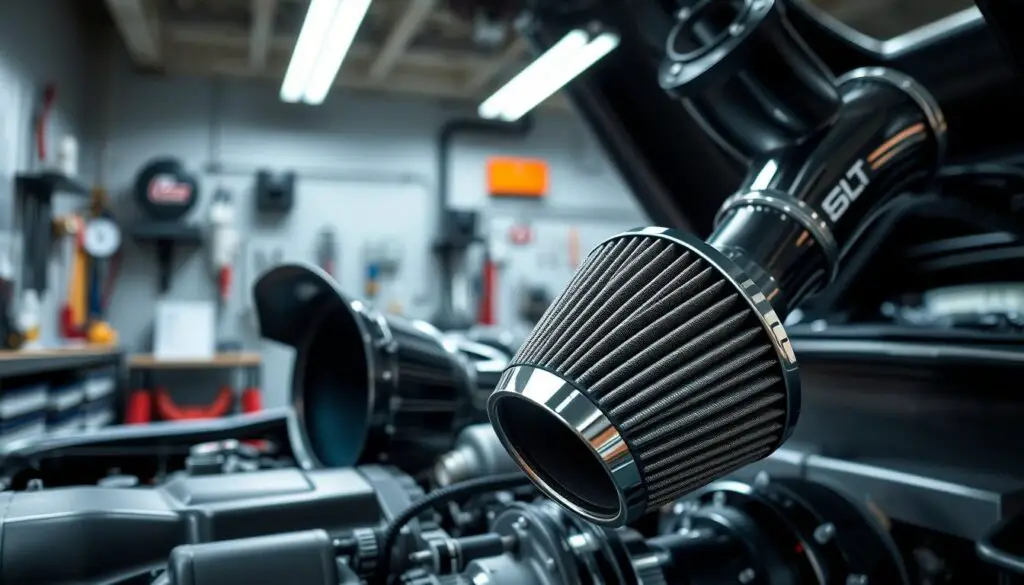
Most kits alter three main parts: the filter media, the intake tube, and sometimes a box or heat shield. The factory system still handles sensors and throttle control, so some sensors and mounts remain unchanged.
You’ll learn what realistic gains look like, why dyno charts can mislead, how sound will change, and what truly matters for day-to-day drivability.
Evaluation will focus on air flow, filter media, sealing, heat management, sensor compatibility, and maintenance habits. This keeps comparisons practical and platform-specific.
This is an informational guide, not an OEM endorsement. Fitment and results vary by platform and supporting mods, so check your model before buying.
Key Takeaways
- Choice hinges on engine tuning and how you use the vehicle.
- Expect modest, real-world gains rather than dramatic power jumps.
- Filter media and sealing matter more than flashy dyno numbers.
- Sound and throttle response change, but protection should not be sacrificed.
- Check sensor compatibility and maintenance needs before you buy.
Cold air intake basics for modern engines and stock intake systems
A well-designed air intake system changes how much air the engine sees and how the ECU reacts.
How air delivery affects mass airflow and fueling
Mass airflow sensors read the actual flow into the throttle body. When restriction drops, the ECU trims fueling via short and long fuel trims to keep air/fuel ratios safe.
Consistent flow matters more than a high peak number on the street. Smooth part-throttle delivery and steady metering reduce hesitation and improve drivability.
Temperature and engine compartment effects
Colder, denser air supports more potential power because it has more oxygen per volume. Hotter intake temps lower density and can make power delivery uneven, particularly after idling.
The engine compartment traps heat. Routing and shields that pull cooler air from the grille or fender can be as important as a larger filter in keeping inlet temps stable.
When a factory box is already doing the job
Many factory systems use calibrated tube diameter, resonators for noise control, and sealed box designs that draw from outside the compartment.
If you have a mild build, conservative tuning, or the stock box is not restrictive, a stock intake and stock filter may be the most efficient choice.
| Component | Role | Impact on driveability |
|---|---|---|
| Intake tube | Routes air to throttle body | Diameter and bends affect steady flow |
| Intake box / heat shield | Isolates filter from hot under-hood air | Improves temperature consistency |
| Filter media (open vs closed) | Traps particulates, regulates flow | Balance of filtration vs peak flow |
Performance gains that matter in the real world
Expect modest peak numbers from most aftermarket kits; the real upside shows as steadier air flow, crisper throttle response, and a more usable midrange on the street.
Horsepower and torque expectations
On a stock engine, peak horsepower and torque gains are usually small. Consistency and throttle feel often matter more than a single peak number. Supporting mods and a tune can increase any gain.
What dyno results can and can’t prove
A dyno measures before/after changes on the same vehicle. Results vary with heat soak, fan placement, correction factors, and run temps.
Dyno charts prove repeatable change on one car. They can’t guarantee the same power gain across different vehicles or climates.
Where drivers notice a difference
Most drivers notice better throttle response, stronger midrange pull on part throttle, and smoother drivability in traffic.
Sound and feel
Sound changes—intake tube resonance, louder induction, more audible turbo spool, or pronounced V8 induction noise—give a perception of performance. Louder doesn’t always equal faster, but the change can be a valid reason to buy.
| Metric | Typical change | What drivers feel | Variability |
|---|---|---|---|
| Peak horsepower | +1–5% | Minor top-end gain | Depends on tune and mods |
| Throttle response | Noticeable | Quicker tip-in | Filter, tube design, ECU |
| Sound | Louder / different tone | Perceived performance | Engine type, routing |
| Midrange pull | Small to moderate | Better part-throttle power | Boosted vs NA engines |
Afe Vs K&N Cold Air Intake: Which Offers Better Performance for Your Car?
Match the kit to the vehicle and mission, not the badge. A fair comparison looks at three practical areas: filter media and serviceability, tube design and smoothness, and how well the box or shield keeps hot under-hood air out.
Side-by-side criteria
Filter media choices affect flow and protection. Washable media cuts long-term money spent on replacements, while paper or cotton blends may trade longevity for lower upkeep.
Tube design determines steady flow. Smooth bends and proper diameter reduce turbulence and help throttle response across the rev range.
Box sealing matters most for temp stability. A well-sealed enclosure that draws cooler outside air keeps gains consistent during towing or long pulls.
Use-case matchups and gains
- Daily driving: prioritize smooth delivery and low maintenance.
- Towing: choose sealing and consistent temps over loudness.
- Off-road: filtration and sealing from dust are critical.
- Spirited street: tube design and sound may take priority.
Gains vary by engine type (NA vs turbo), sensor strategy, and supporting mods. Pick the kit that fits space, sensors, and your service habits. Total ownership cost—cleaning supplies, replacement filters, and time—matters as much as up-front price.
| Criterion | What to check | Why it matters |
|---|---|---|
| Filter type | Washable vs replaceable | Maintenance cost and protection |
| Tube profile | Smooth bends, diameter | Steady flow and response |
| Box sealing | Fitment and heat isolation | Consistent gains under load |
Filter and airflow differences that affect engine protection
Filtration and sealing are as critical to long-term drivability as raw flow numbers. Protecting the engine keeps compression, sensor readings, and mileage stable over time.
Filter construction and maintenance
Common themes in construction matter: pleat depth, material layers, and internal cage support change how a filter balances flow and particle capture.
A deeper pleat pack can raise surface area and help flow without loss of protection. The cage keeps shape under vacuum and heat.
Washable filters, intervals, and cleaning habits
Washable filters cut long-term cost but need disciplined maintenance. Cleaning intervals depend on dust, climate, and miles driven.
Over-oiling or not fully drying a filter can foul sensors. Follow the manufacturer schedule and keep cleaning habits consistent.
Air vs filtration trade-offs, fit, and sealing
Maximizing flow can reduce the filtration margin. The right balance depends on whether the vehicle sees highway miles or dusty trails.
Fit and a sealed box are non-negotiable. A great filter fails if unfiltered air bypasses the seal or a lid gaps near the inlet.
- Inspect clamps and couplers after heat cycles.
- Ensure the lid seats evenly and no gaps exist at box edges.
- Compare claimed flow with evidence of sealing when choosing a system over the stock or factory box.
Intake design, heat management, and under-hood packaging
Routing, sensor placement, and sealing are the practical details that separate a reliable kit from a headache.
Closed box designs keep intake temps consistent by isolating the filter from hot under-hood air. Open element setups can flow well but will see more temp swings. That makes repeatable midrange power and tuning stability easier with a well-shielded box.
The tube path affects fitment and steady air delivery. Avoid sharp bends, pinch points, and sections that rub against brackets. Turbulence near the sensor reduces measurement accuracy and can create drivability quirks.
Sensor placement and heat soak
MAF-equipped systems need a straight section ahead of the sensor and correct clocking to read flow cleanly. Leaks downstream of the sensor distort fuel trims and cause hesitation.
Heat soak matters in stop-and-go driving; slow traffic lets the compartment heat the system and raise inlet temps. Highway pulls usually cool the bay and stabilize intake temps, improving repeatability.
Space constraints and installation pain points
Engine compartment clearance often forces one kit choice over another. Battery trays, coolant lines, and engine covers limit routing options.
| Issue | What to check | Why it matters |
|---|---|---|
| Clearance | Measure around hood, fender, and cover | Prevents contact and vibration |
| Breathers / PCV | Verify included fittings and hose lengths | Avoids leaks and error codes |
| Bracket alignment | Inspect mounts and clamp access | Simplifies maintenance and reduces rattles |
- Before buying, click expand fitment notes and confirm the kit includes tube, box, couplers, and hardware.
- Expect tight clamps, tricky bracket alignment, and the need to re-route small hoses on many installs.
Fitment for popular U.S. trucks and the realities of aftermarket compatibility
Fitment is the single practical test that decides if a kit will work without headaches on a given truck. Measure engine code, model year, and emissions gear before you buy. Even small changes to routing or sensor location can cause problems.
Common platforms buyers shop for
Shoppers often target Ford F-150, Ranger, and Super Duty variants. Engines such as EcoBoost, Power Stroke, and Triton V8 use different sensor layouts and may need kit-specific hardware.
GM and Ram fitment considerations
Silverado/Sierra, Tahoe/Yukon, Colorado/Canyon, and Ram 1500-3500 families vary by trim and engine. Check that the listed kit matches the exact drivetrain and intake routing on your truck.
Catalogs, forums, and verification steps
Before you buy, click expand fitment tables, confirm included parts, and review clear photos. Use a forum to read posts from members who installed the same intakes on the same year and engine. Pay attention to posts about clearance, check-engine lights, or revised instructions.
| Platform | Common fit issue | Buyer check |
|---|---|---|
| Ford F-150 / Ranger | MAF clocking, sensor brackets | Verify engine code and included fittings |
| Silverado/Sierra / Tahoe/Yukon | Trim-specific routing, shield fit | Confirm trim and engine option in listing |
| Ram 1500-3500 / Colorado/Canyon | PCV hose lengths, bracket clearance | Check hose fittings and mount points |
Trademark note: Brand names identify vehicle applications only and do not imply endorsement. Confirm warranty, emissions legality, and return policy before ordering.
Cost, value, and long-term ownership
A kit’s headline price is only one piece of the ownership puzzle. Plan for recurring costs, time spent on upkeep, and any extra tuning that might be needed to get consistent results. Small choices now change total money spent later.
Budgeting beyond the kit: tune needs, replacement parts, and maintenance time
Factor in potential tune needs if your car shows drivability quirks after installation. A tune is not always required, but it can unlock gains or fix fuel-trim issues on sensitive engines.
Also budget for replacement parts such as couplers, clamps, and a spare filter. Washable filters save money but add maintenance time for cleaning and re-oiling on a schedule.
Choosing the best money-to-performance option
Value means steady gains with low hassle, not the loudest sound or the priciest badge. If measurable speed is the goal, invest in traction first — tires and suspension often yield more real-world gain than small airflow changes.
For daily drivers, a sealed setup and low upkeep wins. For spirited use, choose the kit that balances tube design and filter serviceability with clear instructions and good warranty support.
- Read reviews for clarity of instructions and filter availability.
- Check warranty length and parts access before buying.
- Match the choice to how often you tow, drive dusty roads, or commute.
| Cost element | Typical range | Why it matters |
|---|---|---|
| Kit price | $200–$600 | Initial money outlay and fitment quality |
| Tune (if used) | $300–$800 | Can maximize gains or fix ECU issues |
| Replacement parts & filters | $20–$150 | Long-term spend and service intervals |
| Maintenance time | 1–3 hours per service | Ongoing labor cost and inconvenience |
Compare kits and total ownership before you buy; a balanced approach often gives the best money-to-performance result. For more on model-specific tradeoffs, compare kits and fitment reports to see how each option affects real ownership costs.
Conclusion
A sensible choice focuses on leak-free installation, steady inlet temps, and realistic service needs.
Match the intake to mission and fit: sealing, tube routing, and filter approach matter most. A well-sealed cold air intake keeps inlet temps stable and preserves drivability more than a peak dyno number.
Choose this if: daily-driver consistency, towing stability, dusty protection, or sound-forward street use. Verify fitment, then re-check clamps after a few heat cycles.
Before you buy, read platform-specific forum posts and owner reports. Look for repeatable outcomes in posts rather than single anecdotes to confirm long-term results.
In short, pick the kit that fits right, protects the engine, and delivers the drivability and performance you want within budget — and check afe notes in fit guides when you finalize the purchase.
FAQ
What does a performance intake do for a modern engine compared to a stock setup?
A performance intake improves airflow into the throttle body, which can sharpen throttle response and sometimes raise power and torque. It changes the engine’s air-fuel balance slightly, which may affect fuel trims and require tuning on some vehicles. In many cars the factory box is adequate, so gains depend on how restrictive the original system is and whether supporting mods exist.
How important is intake air temperature and why does cooler air matter?
Cooler air is denser and contains more oxygen per volume, which helps combustion efficiency. Reducing intake temperature can improve midrange pull and sustain power during long pulls. Heat soak from the engine bay reduces those benefits, so designs that isolate or shield the filter tend to preserve cooler charge better.
How many horsepower or torque should I expect from an aftermarket kit?
Typical gains on naturally aspirated engines are modest—often a few horsepower and similar torque improvements. Turbocharged engines can show larger gains, especially with supporting modifications. Real-world results vary by engine displacement, restriction of the stock system, and whether the car is tuned.
Can dyno tests be trusted to compare intake systems accurately?
Dynos are useful but can mislead if protocols differ. Results change with ambient conditions, run order, and tuning. A single dyno pull can exaggerate gains; consistent back-to-back testing under identical conditions gives the best comparison. Look for multiple tests and conservative averages.
Where will I notice changes most after installing a performance intake?
Drivers usually notice improved throttle response, a stronger midrange, and a more assertive induction sound. Peak power might not jump dramatically, but drivability—how the car feels in everyday conditions—often improves more noticeably than top-end numbers.
How much louder will my engine sound after fitting an aftermarket system?
Sound changes range from subtle to pronounced. Open-element designs amplify intake noise and give a sporty intake roar under load. Closed-box systems aim to remain quieter. Resonance in the intake tube or enhanced turbo spool noise can also alter cabin sound.
What filter media and maintenance differences should I consider?
Filters come as oiled cotton gauze, dry synthetic, or paper. Oiled filters are reusable but need careful cleaning and re-oiling on schedule. Dry synthetics clean with compressed air or light washing. Replace paper elements when clogged. Follow manufacturer intervals to protect the engine and maintain flow.
Is there a trade-off between airflow and filtration efficiency?
Yes. Higher-flow media often sacrifices some filtration efficiency. Over time, poor filtration can allow particulates past the element. Choose a design that balances flow with protection, especially if you drive on dusty roads or tow frequently.
How important is fit and sealing of the intake box and ducting?
Proper fit and seals prevent unfiltered air from bypassing the filter and entering the engine. A poorly sealed box can negate filtration and temperature control benefits. Good clamps, gaskets, and precise molding reduce the chance of leaks and help maintain performance.
Which intake design handles heat soak best: closed box or open element?
Closed-box designs generally manage heat better because they isolate the filter from engine bay heat. Open-element systems can draw warmer under-hood air unless paired with ducting or heat shields. For stop-and-go driving, a sealed box tends to retain cooler intake temps longer.
Does tube routing and sensor placement affect performance or reliability?
Yes. Smooth, short tube routing reduces intake turbulence and pressure drop. Sensor location matters for accurate MAF readings; relocating or altering sensor housings can change fuel trims. Installations should maintain correct sensor placement and avoid sharp bends or kinks.
How do space constraints under the hood influence installation difficulty?
Tight engine compartments make routing and mounting more challenging. Some kits require trimming or relocating small components. Trucks and V8 engines often offer more room, while compact cars may need custom fitting or smaller-profile solutions.
Are aftermarket intakes compatible with popular U.S. truck platforms like the F-150, Silverado, and Ram?
Many brands design vehicle-specific kits for Ford, GM, and Ram trucks, including EcoBoost and Power Stroke engines. Fitment varies by year, engine, and trim, so verify compatibility with part numbers and catalog listings before buying. Note that marketplace listings may include disclaimers about OEM affiliation.
Will installing a new intake require engine tuning or changes to the fuel system?
Most cars accept a bolt-on intake without immediate tuning, but some systems—especially those with exposed MAF sensors—benefit from a tune to optimize air-fuel ratios and unlock full gains. Turbocharged vehicles and cars with other modifications often need calibration for safe and repeatable results.
How should I budget beyond the initial purchase price?
Factor in potential costs for calibration, replacement filter elements, clamps, hoses, and professional installation if you’re not doing the work yourself. Also consider the long-term cost of cleaning supplies or replacement filters at recommended intervals.
Which option offers the best money-to-performance ratio for daily drivers?
For daily use, a well-sealed box with a quality filter often provides the best balance of cooling, filtration, and modest gains. It reduces heat soak and requires less maintenance than exposed filters, making it a practical choice for commuting and light towing.
How do I choose between two popular branded systems when shopping online?
Compare filter media type, box design, tube material, and fitment notes. Read multiple real-world posts and dyno results for your exact engine, and confirm return policies. Prioritize build quality, service support, and proven fit for your vehicle platform.
What should I watch for when installing an intake on a turbocharged truck or diesel?
Ensure the intake allows for proper MAF or MAP sensor placement and does not introduce leaks. Turbocharged systems gain more from higher flow but are sensitive to intake temperature and pressure losses. Diesel engines need robust sealing to prevent unmetered air and ingestion of dust during work conditions.
How often should I inspect and service the filter element?
Inspect every 6–12 months or more often in dusty environments. Clean or replace according to the manufacturer’s schedule and your driving conditions. Regular checks protect performance and prevent long-term engine wear.