This guide helps owners of aging vehicles pick the right wax with confidence. We tested well-known formulas and compared hands-on lab results to real user ratings. The goal is clear: balance protection, longevity, and visible shine on tired clear coats.
P21S Carnauba Wax stands out as the 2025 top pick, noted for ease of use, lasting protection, and solid value at about $65 with a 4.2/5 Amazon score. We also evaluated Meguiar’s Ultimate Liquid, Collinite 845, Chemical Guys Butter Wet Wax, CSI Q-7 spray, and WeatherTech gel.
Our review mixes pro-level hood tests with real-world application tips. We looked at application ease, buff-off behavior, hydrophobic performance, and the warm gloss these products deliver on oxidized paint. Expect clear, fit-for-purpose recommendations and U.S. pricing context so you can act fast.
Key Takeaways
- P21S Carnauba led lab and user testing in 2025 for ease and durability.
- Weigh protection, longevity, and shine when choosing a product.
- Paste, liquid, spray, and gel formats suit different budgets and finishes.
- Prep and layer wisely to get the best results on older paint.
- Real hood tests revealed subtle but important differences in beading and gloss.
- U.S. availability and price notes help you buy with confidence.
Why Older Cars Need the Right Wax for Protection and Shine
When a finish shows its years, microscopic wear in the clear coat cuts gloss and leaves paint vulnerable. Sun, dirt, and abrasion strip oils and roughen the surface, making light scatter instead of reflect.
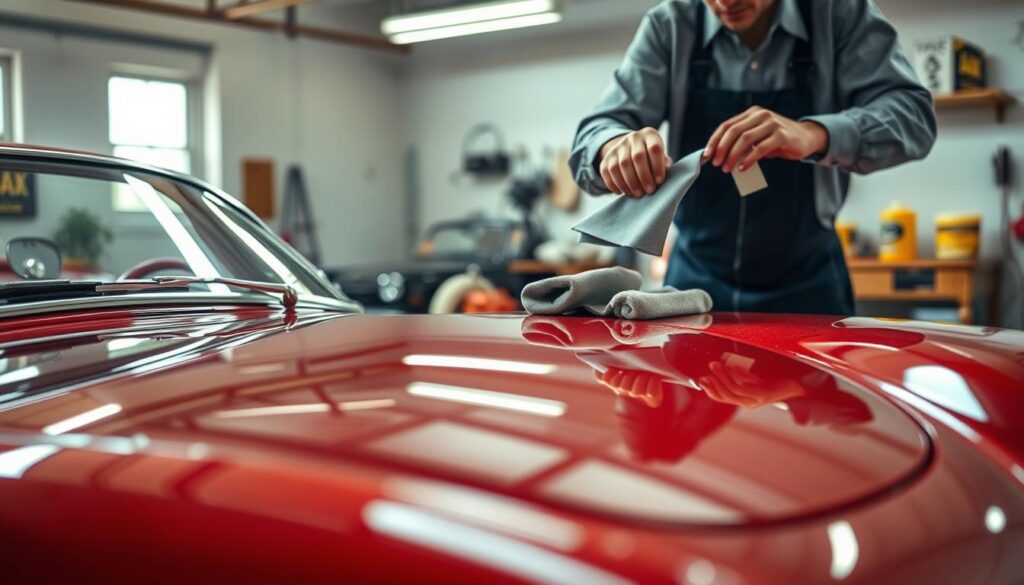
Wax works by filling tiny voids in the clear coat, smoothing the panel so light reflects more evenly. That restores depth and improves visual shine while making contaminants easier to remove.
- Loss of oils and clear coat integrity: older paint fades, becoming more prone to UV and stains.
- Surface filling: wax fills micro-defects to enhance reflection and ease cleaning.
- Everyday protection: a proper layer helps lift tree sap, bugs, and bird droppings from the vehicle.
- Durability windows: reapply roughly every one to four months; synthetics stretch that span, but not to ceramic levels.
- Balance matters: a synthetic base plus a carnauba topcoat gives durability and warm depth on aged finishes.
Note: faded or oxidized panels can look much better after waxing, but deep scratches and heavy oxidation need polishing first. Later sections match product types to regional exposure and common parking conditions so you get the right outcome and a better overall experience.
Editor’s Top Picks at a Glance for Aging Paint
This roundup highlights products that restore warmth and protection to tired paint.
Quick overview: these selections balance visible gloss, lasting protection, and easy sourcing in the United States. Ratings and hands-on results guided each choice.
Best Overall Paste: P21S Carnauba Wax
P21S is our top paste wax pick for older finishes. It spreads easily, offers a premium carnauba glow, and lasts well. Expect a retail price near $65 and strong real-world durability.
Best Liquid for Easy Use: Meguiar’s Ultimate Liquid Wax
Meguiar’s uses advanced synthetic polymers for strong hydrophobic performance. It’s ideal for quick maintenance on high-mileage hoods and earns roughly a 4.7/5 average rating.
Best Value: Chemical Guys Butter Wet Wax
Chemical Guys’ Butter Wet Wax costs about $20 and delivers a warm, high-shine finish. With 15,000+ reviews and a 4.6/5 score, it’s a reliable budget product that adds instant visual depth.
Longest-Loved Classic: Collinite 845 Liquid Wax
Collinite 845 is celebrated for longevity and protection. Priced near $21, it may need warming in cold weather but scores about 4.8/5 from 3,800+ reviews. Enthusiasts still favor it for long-term results.
- Where each excels: visual warmth (carnauba), durability (synthetic liquid), quick upkeep (budget paste/liquid).
- Value & availability: U.S. sourcing is reliable; price ranges suit different budgets.
- Proof points: solid user reviews and hands-on tests back these recommendations.
Next: we’ll cover application nuances and climate tips for each product in dedicated sections ahead.
How We Tested: Touch, Shine, and Water Beading/Sheeting
We ran controlled hood comparisons to measure slickness, gloss, and how water behaved on aged panels.
Test protocol: a 2019 hood test split a metallic gray 2014 Toyota Avensis into 10 taped sections. Prep followed a standard routine: quick detailer wipe, clay bar with lubricant, then an isopropyl alcohol wipe to remove oils and residues.
Touch and Slickness on Weathered Clear Coats
We evaluated fingertip slickness after a single-coat baseline application. Mirror Bright and Butter Wet stood out for a glassy slip.
Other formulas felt oilier or softer to the touch. These tactile differences matter on weathered clear coats when you expect smoother feel and easier dirt release.
Visual Depth, Warmth, and Metallic Pop
Visual differences were subtle. Some products slightly boosted flake pop on metallic panels without reducing clarity.
Overall, a single thin coat showed which formulas add warmth versus those that only improve reflection.
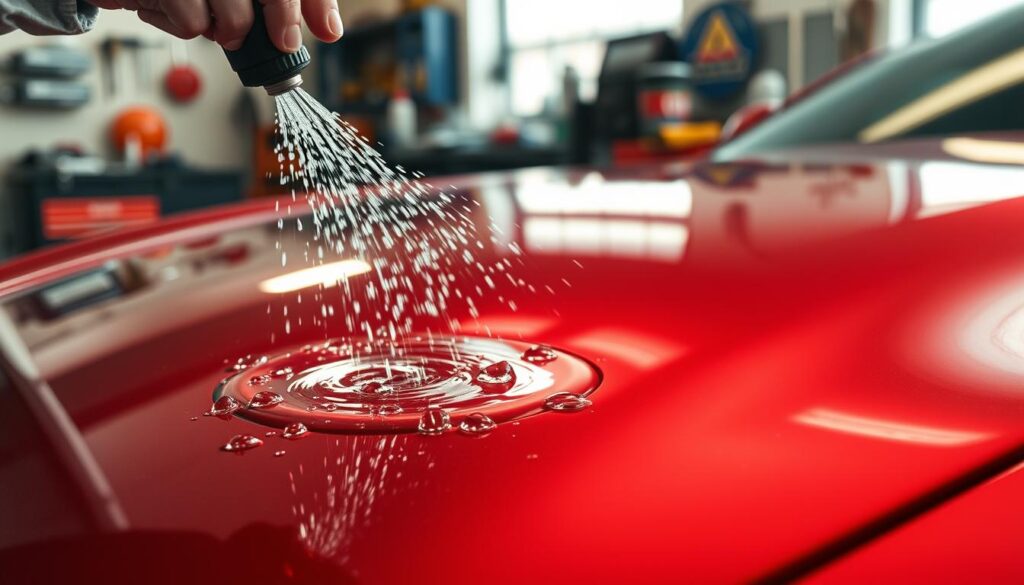
Water Behavior: Heavy Sheeting vs Tight Beads
We poured and misted water to compare hydrophobic behavior. Meguiar’s led in tight beading.
Butter Wet excelled at sheeting, which helps rinse away grime between washes.
Application and Buffing Effort on Older Paint
Most products hazed in about 15 minutes and buffed off per instructions. Hard pastes generally lasted longer in our follow-up checks.
Spray mists like Glisten underperformed on durability versus liquids and pastes. Buffing effort was modest for liquids and higher for dense pastes.
Key testing results at a glance
| Metric | Top Performer | Notes |
|---|---|---|
| Fingertip slickness | Mirror Bright / Butter Wet | Glassy feel vs oilier slip |
| Hydrophobic behavior | Meguiar’s (beads) / Butter Wet (sheeting) | Beading helps runoff; sheeting aids dirt rinse |
| Durability | Hard pastes | Pastes held up longer than most liquids |
| Application & buffing | Liquids (ease) | Liquids balanced cure time and buff-off; pastes required more buffing |
Conclusion: single-coat testing revealed practical differences that matter to daily-driven owners. Tactile slickness and water behavior were the easiest to spot; aesthetic shifts were often subtle. Later sections translate these findings into product recommendations and application tips tailored to aging finishes.
Paste vs Liquid vs Spray Waxes for Older Cars
Different wax categories deliver distinct trade-offs in longevity, ease, and final feel on weathered panels. This short guide helps you match format to need and schedule.
Where Paste Waxes Excel on Thinner, Aged Clear Coat
Paste wax builds a thicker sacrificial layer on thin clear coats. That layer fills micro-voids and boosts tactile slickness.
In side-by-side tests, paste options outlasted liquids. They require more effort to apply and buff, but they reward that time with longer protection and better feel.
When Liquid Waxes Save Time without Sacrificing Protection
Liquid waxes bridge ease and longevity. They spread fast, cure predictably, and often deliver strong hydrophobic performance.
For monthly upkeep or busy owners, liquids cut application time while still giving good protection and visual depth.
Spray Waxes for Maintenance Between Full Details
Spray waxes are the fastest option. Use them as quick boosters after a wash or between full applications.
They rarely match paste or liquid durability. Treat sprays as interim gloss enhancers, not the main long-term shield on aging paint.
- Visual parity: pastes and liquids can look similar right after application, but pastes usually last longer.
- Effort trade-offs: paste = more prep and buffing; liquid = moderate effort; spray = minimal time.
- Routine pairing: paste for seasonal protection, liquid for monthly upkeep, spray for quick post-wash gloss.
- Budget & time: choose by how often you can invest time versus how long you want protection to last.
- Product mapping: later sections match top performers in each category to aging finishes and conditions.
| Format | Typical Longevity | Effort | Best Use Case |
|---|---|---|---|
| Paste wax | High (longest) | High (application & buffing) | Seasonal protection on thin, weathered clear coats |
| Liquid wax | Moderate | Moderate (easy spread, standard buff) | Monthly upkeep; owners short on time who want solid protection |
| Spray wax | Low (short-term) | Low (quick application) | Between full details; quick gloss after washes |
Carnauba vs Synthetic: Finding the Right Balance for Aging Paint
Choose chemistry that suits the finish: natural carnauba and synthetic polymers offer different outcomes on tired paint.
Carnauba delivers a warm, deep shine that flatters dark finishes and show-day prep. It layers nicely as a final topcoat but wears faster than synthetics.
Synthetic polymers extend longevity and boost bead-and-sheet behavior. They give stronger protection between details but can lack that classic glow.
Hybrid approach: apply a polymer sealant first, cure it fully, then add a thin carnauba top layer. This blends endurance with visual depth and improves the overall experience on weathered clear coats.
- Favor carnauba for dark colors and short-interval aesthetics.
- Choose synthetics when climate or long gaps between details demand tough protection.
- Always test on a small panel to confirm the look on faded or oxidized areas.
| Chemistry | Typical Benefit | When to Use |
|---|---|---|
| Carnauba | Warm shine, rich depth | Show prep, dark finishes, short maintenance cycles |
| Synthetic polymer | Longer protection, strong hydrophobics | Harsh climates, long intervals between applications |
| Polymer + Carnauba layer | Balanced durability and glow | Older paint needing both protection and improved visual depth |
Tip: cure each layer per product directions to avoid smearing on fragile clear coats and maintain consistent slickness over time. Later sections outline a recommended polymer sealant + wax stack using widely available products.
The Best Car Wax for Older Cars
This shortlist highlights top-performing waxes chosen to revive aged paint while balancing cost, ease, and staying power.
Expert testing in 2025 ranked P21S Carnauba as the leading paste, with Meguiar’s Ultimate Liquid, CSI Q-7 spray, WeatherTech TechCare gel, Collinite 845, and Chemical Guys Butter Wet Wax close behind. Each product was applied to test panels and tracked for beading, contamination removal, and longevity.
- Maximum glow: P21S Carnauba and Chemical Guys Butter Wet deliver warm depth and visible shine.
- Longest protection: Collinite 845 and polymer-based Meguiar’s excel at extended durability and hydrophobic behavior.
- Easiest upkeep: CSI Q-7 spray and WeatherTech gel speed reapplications between full details.
All picks are proven performers in lab and field reviews across varied climates. The next sections explain what each product does on aging clear coats and the proper way to apply them. Match your choice to your maintenance routine and parking environment to get the most efficient protection and visual improvement.
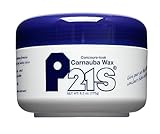
P21S Carnauba Wax: Premium Paste Shine with Long-Lasting Protection
A small jar of P21S goes a long way when you need depth and protection on high-mileage paint.
P21S uses a refined carnauba blend that lifts warmth and masks micro-marring on faded panels. A thin coat fills tiny surface voids and restores a deep, natural gloss that flatters darker finishes.
Why It Works on Aged Finishes
Efficient coverage: the wide-mouthed container and dense paste mean small amounts spread far. That matters on thin clear coats where gentle, controlled application is critical.
Visual and tactile payoff: lab checks and user reviews show strong beading and an upscale finish on older panels. The formula favors a warm, rich look rather than a mirror-cold sheen.
Pros, Cons, and Price Perspective
Pros: easy to apply, excellent protection, long-lasting compared with many carnauba-only products. Many users report an immediately visible improvement in depth and slickness.
Cons: about $65 per jar, a higher cost per ounce and limited bulk availability on Amazon. A few reviewers note shorter longevity on black paint when used alone.
| Feature | Notes | Practical Tip |
|---|---|---|
| Cost | ~$65 | Small dose per panel offsets price |
| Performance | Warm glow, good beading | Best as a seasonal topcoat |
| Availability | Limited bulk on some retailers | Buy from specialized outlets if needed |
Application tip: work one panel at a time and use thin coats to avoid over-application on weathered clear coats. If you need longer intervals, apply a synthetic sealant first and then a thin P21S topcoat to combine durability with carnauba depth.
Meguiar’s Ultimate Liquid Wax: Easy Application, Strong Hydrophobic Protection
Meguiar’s G210516 Ultimate Liquid Wax uses Hydrophobic Polymer Technology to give aging vehicles a reliable, water-repellent shield. In lab and field tests it ranked just behind P21S for multi-week protection and provides immediate visible results.
How it performs: the synthetic blend lays down a durable barrier that repels grime and water. That behavior helps commuters and outdoor-parked vehicles stay cleaner between washes.
Ease of application: forgiving working time, smooth rub-in, and quick buff-off make this liquid wax a go-to for regular upkeep. It spreads evenly across weathered panels and produces consistent gloss with little haze when applied correctly.
Hydrophobic Polymer Technology on High-Mileage Vehicles
Comparative testing and 2,200+ Amazon reviews (avg 4.7/5) show the product rivals many pastes for short- to mid-term protection. For owners who prefer quick maintenance cycles, it balances strong hydrophobics with fast application.
- Durable shield that repels water and road film.
- Easy application and consistent visual results on aged finishes.
- Comparable protection to top pastes for weeks after application.
Recommendation: choose this liquid as a primary option when you want solid protection with minimal fuss. Apply thin, even coats to avoid haze and allow proper cure time before buffing.
| Feature | Notes | Practical Tip |
|---|---|---|
| Formula | Hydrophobic polymers | Best on daily-driven vehicles |
| Amazon rating | 4.7/5 (2,200+ reviews) | Well-regarded by users |
| Maintenance interval | 2–3 months | Refresh for commuters or outdoor parking |
Collinite 845 Liquid Wax: Tried-and-True Longevity and Gloss
For vehicles parked outdoors or driven often, Collinite 845 offers a low-maintenance shield that holds up. Priced near $21, it earns high marks for long-term protection and reliable beading on weathered paint.
Why it stands out: Collinite 845 is celebrated for durability and cost-effectiveness. Users report strong results on light colors and steady gloss retention. Amazon ratings (~4.8/5 from 3,800+ reviews) back that experience.

Layering Over a Polymer Sealant for 7–9 Months of Results
To stretch longevity, apply a polymer sealant first, let it fully cure, then add a thin Collinite 845 topcoat. Obsessed Garage and other detailers recommend Jescar Power Lock Plus as the base. This stack can deliver roughly 7–9 months of protection with routine upkeep.
Tips for Application and Climate Considerations
Warm the bottle in cool weather for easier flow. Work in small, organized sections and apply a thin coat per panel to reduce buffing time and prevent streaks.
- Thin coats: one light coat buffs off cleanly and preserves fragile clear coats.
- Section workflow: tackle one panel at a time for consistent cure and sheen.
- Color note: excels on light paints; darker finishes may show less pop.
| Feature | Notes | Practical Tip |
|---|---|---|
| Price | ~$21 | Good value for long intervals |
| Durability | High when layered over sealant | Expect 7–9 months with proper prep |
| Best use | Daily-driven, high-mileage vehicles | Seasonal protection and reduced maintenance |
Bottom line: Collinite 845 is a budget-friendly long-hauler that pairs well with a polymer base. The combination gives extended protection and an easy-to-achieve gloss that suits many owners’ needs.
Chemical Guys Butter Wet Wax: Budget-Friendly Warmth for Tired Paint
Many owners choose Chemical Guys Butter Wet Wax for quick weekend refreshes that still look rich. Priced near $20 and holding about 4.6/5 from 15,000+ Amazon reviews, this product stands out as a value leader.

In 2019 side-by-side tests it scored high in fingertip slickness and led overall in water sheeting under a full pour. That sheeting helps daily-driven vehicles rinse cleaner between washes.
The formula spreads fast, buffs off easily, and gives a warm, deep look with little effort. Expect good visual payoff but shorter longevity than premium pastes. Frequent reapplication keeps results fresh.
- Value: restores warmth and gloss with minimal time investment.
- Tested benefits: excellent tactile slickness and standout sheeting performance.
- Application tip: wear gloves or use dedicated applicators to avoid temporary dye staining on hands.
- Role in maintenance: ideal as a maintenance companion between heavier protection cycles.
| Feature | Result | Practical Tip |
|---|---|---|
| Price & availability | ~$20, widely sold | Good budget option for frequent upkeep |
| Performance | Warm depth, fast shine | Apply thin coats for best buff-off |
| Durability | Moderate | Reapply more often than premium pastes |
Bottom line: Chemical Guys’ product is a practical, user-friendly choice when you want visible improvement and easy application without a big time or budget commitment.
CSI Q-7 Wax: Spray-On Ease for Quick Revivals
CSI Q-7 is a time-saving spray that applies very evenly and gives an instant visual lift to aging paint. It scored 4.7/5 on Amazon across about 30 reviews and is sold in bulk for repeat maintenance.

This spray offers high protection relative to many liquids, though it does not match the longevity of dense pastes or long-wearing liquids. Use it after a wash as a quick topper to preserve slickness and water behavior on high-mileage vehicles.
Work panel by panel since the mist lays down thin. That approach ensures full coverage and avoids missed spots on large hoods or doors.
- Why choose Q-7: ultra-fast application and uniform coverage for busy owners.
- Protection level: strong for a spray, best as interim protection between full details.
- Cost tip: buy bulk sizes if you reapply often to lower per-treatment cost.
| Feature | Performance | Practical Advice |
|---|---|---|
| Application speed | Very fast (spray) | Spray then wipe per panel for even finish |
| Protection | Good for a spray; less than paste/liquid | Use as topper after washing and drying |
| Value | Available in bulk | Buy bulk for frequent maintenance cycles |
WeatherTech TechCare Carnauba Gel Wax: Gel Control for Even Coverage
WeatherTech’s gel dispenses like mayonnaise, giving you a viscous product that stays put during work. This texture reduces runs and helps maintain even coverage on thin, worn clear coats.

Why viscosity matters: the thicker body cuts drips and lets you apply a measured layer without slumping. That control is useful when panels are uneven or slightly oxidized.
The formula delivers a warm carnauba look with easy spreadability. Users report consistent results and a good visual depth that flatters dull finishes.
Set expectations: durability is solid for a wax but not comparable to ceramic or silicone coatings. Think of this as a practical way to add gloss and short‑term protection without heavy prep.
- Great choice if you want more control than liquids but less buffing than hard pastes.
- Cost is around $30, making it a mid-range option among detailing products.
- Apply thin, even layers and allow proper cure time, then buff patiently for a streak‑free finish.
Real-World Findings: What Side-by-Side Tests Reveal on Older Hoods
Practical hood tests demonstrate that multiple thin layers can close the gap between different formulas. In a 2019 divided-hood test we compared paste, liquid, and spray options on a weathered panel to see real-world results over time.
Single-Coat vs Multi-Layer Results Over Time
After one coat, visual difference was minimal between paste and liquid. Slickness and water behavior showed faster changes.
Pastelike products tended to outlast liquids, giving longer intervals between reapplications. Layering thin coats evened appearance and performance across products as the process matured.
Brand Differences That Matter Less Than Technique
Meguiar’s led in tight beading, while Chemical Guys Butter Wet showed superior sheeting. Spray mists underperformed versus liquids and pastes in durability tests.
- Key takeaway: prep and technique often outweigh brand when comparing good waxes side by side.
- Single coats reveal quick differences in slickness, but layered applications close that difference over time.
- Sheeting helps older vehicles rinse cleaner between washes; beading helps runoff but can trap streaks.
- Hard pastes extend service intervals; liquids match day-one gloss with less effort.
Recommendation: test a small section, build thin layers, and follow a consistent process to get the best long-term outcome on an aging car.
Application Process for Older Cars: The Right Prep, the Right Layers
Treat each panel like a small project to avoid overworking aged paint. A steady, repeatable flow protects fragile clear coats and yields a more uniform result across the hood, roof, and doors.
Wash, Clay, and Polish to Remove Oxidation and Swirls
Begin with a thorough wash and decontamination clay to remove bonded grime. Use a gentle machine polish and the correct pad to address oxidation and light swirls.
Tip: tape off trim and badges to avoid staining or tugging brittle plastics during polishing.
Sealant Base + Wax Topcoat
Apply a polymer sealant such as Jescar Power Lock Plus as a stable base. Obsessed Garage recommends wiping oils with CARPRO Eraser first, then laying the sealant and topping with Collinite 845 for 7–9 months of protection.
The sealant stabilizes the finish so a thin wax or paste layer can add warmth without compromising durability.
Thin Coats, Organized Sections, Proper Cure and Buffing
Work in small, organized sections. Use a quality applicator pad and minimal product per coat to avoid streaks on compromised panels.
Allow each coat to cure per product directions before buffing. Gentle buffing with clean microfiber towels preserves the layer and reduces effort.
- Use dedicated applicators and fresh microfiber towels to avoid dragging grit across car paint.
- Maintain a log of treated sections to ensure full, even coverage on large surfaces.
- Apply thin layers and build if needed—one light coat often beats one heavy coat.
| Step | Why it matters | Practical action |
|---|---|---|
| Prep (wash & clay) | Remove contaminants | Use claying lubricant and gentle pressure |
| Polish | Fix oxidation & swirls | Match pad/compounds to defect level |
| Sealant + wax | Durability + visual depth | Apply sealant, cure fully, then thin topcoat |
Color and Finish Considerations: Dark, Light, and Metallic Paints
How a product looks on metallic gray differs from white or black, so match the formula to the finish.
Dark finishes benefit from carnauba’s warm depth. A good carnauba layer can mask micro-defects and improve perceived gloss on aged black panels.
Light and white paint often respond better to synthetic formulas that deliver a crisp, bright result. Our tests showed Collinite 845 performing especially well on white surfaces.
Metallics reveal clarity and flake pop. Prep thoroughly and use thin, even layers so the metallic effect stays clear rather than dulled by heavy product.
- Some waxes subtly warm neutral tones; others keep a cooler, mirror-like look.
- Test on an inconspicuous panel—black paint demands the highest expectations for depth.
- Use gloves and color-safe applicators: dye-tinted formulas can transfer to fingers or pads.
| Finish | Recommended approach | Note |
|---|---|---|
| Dark | Carnauba topcoat | Masks micro-defects, warmer shine |
| Light | Synthetic sealant/liquid | Brighter, crisper car paint look |
| Metallic | Thin layers & prep | Preserves flake pop and clarity |
Budget and Value: Where to Spend and Where to Save
Knowing true cost means looking past retail tags to cost per application and expected service life.
Price range: typical retail sits between $20 and $60. P21S occupies the higher end but uses less per panel, so a jar lasts longer. Collinite 845 gives strong protection near $21, which makes it a high-value option.
Compare formats — pastes can give longer intervals but take more time to apply. Liquids and gels balance ease and durability. Sprays like CSI Q-7 and gallon options of Chemical Guys Butter Wet reduce per-use cost for frequent maintenance.
- Calculate cost-per-application to see real value over a season.
- Spend more on a durable base sealant if you want longer gaps between details.
- Save on maintenance liquids or bulk sprays to keep gloss up with less effort and less money.
| Choice | Typical Cost | When to pick |
|---|---|---|
| Durable base | $20–$60 | Stretch intervals and protect paint |
| Maintenance product | $20–$30 | Short work sessions, quick refresh |
| Bulk/gallon | Lower per-application | High-frequency use or fleets |
Pick a primary and a secondary product to balance time, quality, and money. That place-based pairing delivers routine protection without overspending.
Common Waxing Mistakes on Older Cars and How to Avoid Them
A few predictable errors—over-application, poor prep, wrong timing—cause most waxing headaches on aged paint.
Don’t over-apply. Meguiar’s training warns that excess product can harden and become difficult to remove. Apply several thin coats instead of one heavy layer to save product and avoid buffing problems.
Prep thoroughly. Skipping wash, clay, or polishing seals dirt and defects under the finish. That mutes shine and shortens protection. Detailers always stress proper prep before applying wax.
Work methodically. Track sections so large panels get even coverage. CSI sprays can be thin and hard to see during buffing; move panel by panel to avoid missed spots.
- Use the right applicator and fresh microfiber to limit micro‑marring.
- Avoid hot panels and direct sun; they cause flashing and hard buffing.
- Be patient—technique matters more than elbow grease; force can damage fragile clear coats.
Note: some waxes are dye‑tinted and may stain fingers or pads. Wear gloves and test a small area first.
Conclusion
Pick a primary wax and a maintenance companion to match your car’s condition. P21S led testing in 2025; Meguiar’s Ultimate, CSI Q-7, WeatherTech TechCare Gel, Collinite 845, and Chemical Guys Butter Wet rounded out top options.
Prep well, apply thin coats, and buff patiently to maximize protection and visible shine. Use a synthetic sealant as a durable base and add a carnauba topcoat when depth matters.
Plan your next wash‑clay‑polish‑wax cycle, track outcomes, and adjust products and timing. This simple, strategic way yields the most consistent long‑term results.