Maintaining your vehicle’s braking system is crucial for safety on the road. One often overlooked aspect is cleaning the brakes, which can be a daunting task, especially when it involves removing the tires. However, there’s a convenient trick that allows you to apply brake cleaner without going through the hassle of tire removal.
This method not only saves time but also ensures that your brakes are clean and functioning optimally. For DIY enthusiasts, this trick is a game-changer, making brake maintenance more accessible and less intimidating.
Key Takeaways
- Efficient brake maintenance without tire removal
- Convenient application of brake cleaner
- Enhanced safety through proper braking system care
- Time-saving method for DIY enthusiasts
- Optimal brake performance through regular cleaning
Why Regular Brake Cleaning Is Essential
Maintaining clean brakes is essential for ensuring the safety and performance of your vehicle. Regular brake maintenance is crucial for preventing brake failures and reducing the risk of accidents. Dirty brakes can lead to decreased stopping power, increased wear on brake components, and potentially dangerous driving conditions.
Signs Your Brakes Need Cleaning
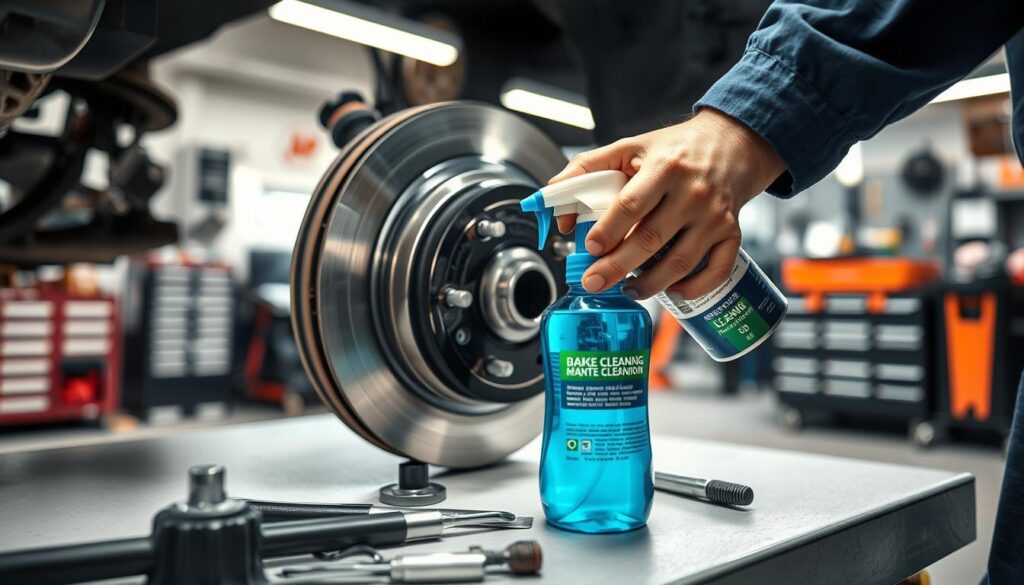
Several signs indicate that your brakes need cleaning. These include a spongy brake pedal, unusual noises when applying the brakes, and visible dirt or grime on the brake components. If you notice any of these signs, it’s essential to clean your brakes as soon as possible to prevent further damage.
Benefits of Clean Brake Components
Clean brake components offer several benefits, including improved stopping power, reduced wear on brake parts, and enhanced overall vehicle safety. By following proper brake cleaning tips, you can extend the life of your brake system and ensure your vehicle remains safe to drive.
When to Clean vs. When to Replace
Determining whether to clean or replace your brake components depends on their condition. If the brakes are merely dirty or have minor wear, cleaning may be sufficient. However, if the components are worn beyond a certain threshold or damaged, replacement is necessary. Regular inspections can help you make this determination and keep your brakes in optimal condition.
Tools and Materials You’ll Need
The right tools and materials make all the difference when it comes to cleaning your vehicle’s brakes. To ensure a successful DIY brake cleaning process, it’s crucial to have the necessary equipment on hand.
Selecting the Right Brake Cleaner
Choosing the correct brake cleaner is vital for effective brake cleaning. Look for a product that is specifically designed for your brake type, whether it’s for drum brakes or disc brakes. Some brake cleaners are formulated to be more environmentally friendly, so consider this if you’re concerned about the environmental impact.
When selecting a brake cleaner, check the label for compatibility with your vehicle’s brake components. Some cleaners may be too harsh for certain materials, so it’s essential to choose a product that is safe to use.
Safety Equipment Requirements
Safety should be your top priority when working with brake cleaners and other chemicals. Make sure you have safety goggles and gloves to protect your eyes and skin from potential splashes or spills.
Additionally, working in a well-ventilated area is crucial to avoid inhaling fumes from the brake cleaner. If you’re working in a garage, consider opening the door or using a fan to improve ventilation.
Additional Helpful Tools
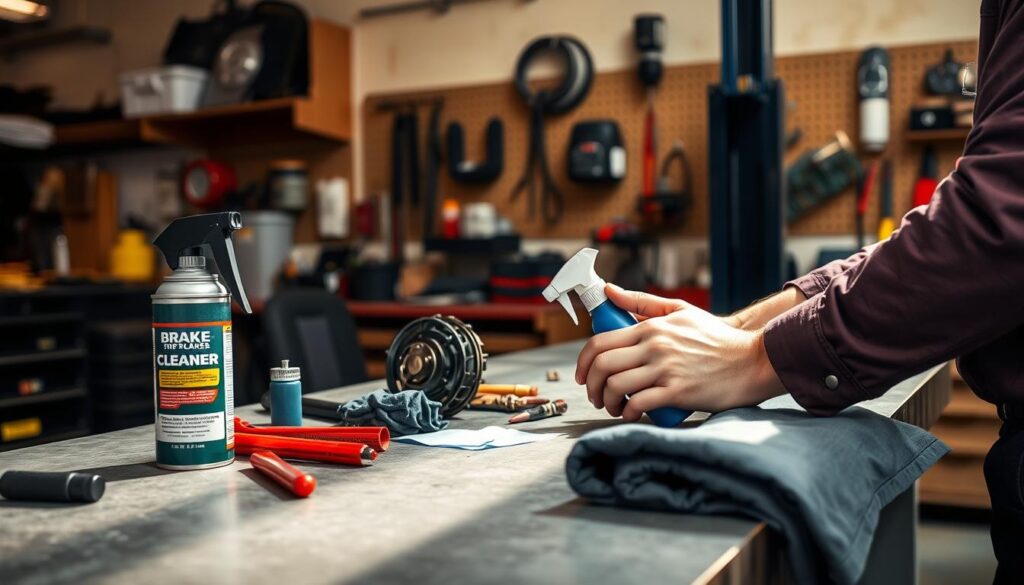
While not strictly necessary, having a few additional tools can make the brake cleaning process easier and more efficient. A soft-bristled brush can be useful for gently removing grime and debris from brake components.
A microfiber cloth is also handy for wiping down surfaces and absorbing any spills or drips.
What You Don’t Need
It’s just as important to know what you don’t need as it is to know what you do need. Avoid using harsh chemicals or abrasive materials that could damage your brake components. Also, refrain from using household cleaners, as they may not be suitable for the materials used in your vehicle’s brakes.
How To Use Brake Cleaner? You Don’t Have To Remove the Tire!
Using brake cleaner without removing the tire is a convenient trick for maintaining your vehicle’s brake system. This method is efficient and can be done with the right tools and a bit of know-how.
Preparing Your Work Area
Before you start, ensure your work area is well-ventilated and clear of any flammable materials. Wear protective gloves and safety glasses to prevent any potential harm from the brake cleaner. It’s also a good idea to lay down some newspaper or a drop cloth to catch any drips or spills.
Accessing the Brake Components
To clean your brakes without removing the tire, you’ll need to access the brake components through the wheel spokes or by removing the wheel hub, depending on your vehicle’s design. Consult your vehicle’s manual to determine the best approach for your specific vehicle.
Step-by-Step Application Process
Cleaning your brakes involves a straightforward process that can be broken down into manageable steps. First, identify the type of brake system your vehicle has—either disc brakes or drum brakes—and follow the appropriate cleaning technique.
Disc Brake Cleaning Technique
For disc brakes, spray the brake cleaner onto the brake caliper, rotor, and any other visible brake components. Allow the cleaner to evaporate, then use a clean cloth to wipe away any remaining grime or residue.
Drum Brake Cleaning Technique
For drum brakes, you’ll need to spray the brake cleaner into the drum through the wheel spokes or by removing the drum. Be cautious not to spray the cleaner onto the brake linings. Use a clean cloth to wipe down the drum and other components.
Drying and Finishing Up
After applying the brake cleaner, allow the components to air dry. Inspect the brakes to ensure they are clean and free of debris. If necessary, repeat the cleaning process.
When This Method Isn’t Sufficient
While cleaning your brakes without removing the tire is convenient, there are times when a more thorough cleaning is required. If your brakes are heavily contaminated or you’re experiencing persistent brake issues, it may be necessary to remove the tire or wheel for a more detailed inspection and cleaning.
| Brake Type | Cleaning Method | Precautions |
|---|---|---|
| Disc Brakes | Spray brake cleaner onto caliper and rotor | Avoid spraying onto other components |
| Drum Brakes | Spray cleaner into drum through wheel spokes | Be cautious not to spray onto brake linings |
Safety Precautions and Best Practices
Safety should always be the top priority when it comes to brake maintenance and cleaning. Ensuring that you follow the right procedures not only protects you from potential hazards but also contributes to a more effective brake cleaning process.
Environmental Considerations
When cleaning brakes, it’s essential to consider the environmental impact of the chemicals and materials used. Brake cleaners can contain harsh chemicals that may contaminate soil and water if not disposed of properly. Always use a containment tray or a similar device to catch any spills or drips.
Furthermore, consider using eco-friendly brake cleaners that are designed to be less harmful to the environment. These products are becoming increasingly available and can significantly reduce the ecological footprint of your brake maintenance activities.
Health and Safety Warnings
Brake cleaning involves working with potentially hazardous materials and being in close proximity to potentially harmful substances. It’s crucial to wear appropriate personal protective equipment (PPE), including gloves, safety glasses, and a mask, to minimize exposure to harmful chemicals.
Additionally, ensure that your work area is well-ventilated to prevent the inhalation of fumes from brake cleaners. Never smoke or have an open flame near the work area, as many brake cleaners are highly flammable.
Common Mistakes to Avoid
One of the most common mistakes during brake cleaning is using the wrong type of cleaner. Always select a cleaner that is compatible with the materials of your brake components to avoid damage.
Another mistake is not properly disposing of used cleaning materials and rags. These should be disposed of in accordance with local regulations regarding hazardous waste.
| Common Mistake | Correct Practice |
|---|---|
| Using incorrect cleaner | Choose a cleaner compatible with brake materials |
| Improper disposal | Dispose of rags and materials according to local hazardous waste regulations |
Maintenance Schedule Recommendations
Regular brake maintenance is key to ensuring your vehicle’s safety and performance. It’s recommended to inspect your brakes every 10,000 to 15,000 miles, or as indicated by your vehicle’s manufacturer.
Keeping a maintenance log can help you track when inspections and cleanings were last performed, ensuring you stay on schedule and maintain your vehicle’s safety standards.
Conclusion
By following these simple steps and tips, you can keep your vehicle’s brakes in top condition and enjoy a safe and smooth driving experience. Regular maintenance is key to extending the life of your brakes and ensuring your safety on the road. DIY brake cleaning is a simple and effective way to keep your vehicle running smoothly. With the right tools and a little know-how, you can keep your brakes in top condition and enjoy a safer driving experience.
## FAQ
### Q: What are the benefits of cleaning brakes without removing the tire?
Cleaning brakes without removing the tire can save time and effort, and is a convenient method for maintaining your vehicle’s braking system.
### Q: How do I clean my brakes without removing the tire?
To clean your brakes without removing the tire, start by preparing your work area and gathering the necessary materials, including brake cleaner and a rag.
### Q: What safety precautions should I take when cleaning my brakes?
When cleaning your brakes, make sure to wear protective gloves and eyewear to prevent injury from harsh chemicals or debris.
### Q: Can I use any cleaning solution to clean my brakes?
No, it’s recommended to use a brake cleaner specifically designed for cleaning brakes. Using the wrong cleaning solution can damage the brake components or compromise their performance.
### Q: How often should I clean my brakes?
The frequency of cleaning your brakes depends on your driving habits and the manufacturer’s recommendations. As a general rule, it’s a good idea to inspect and clean your brakes regularly to ensure optimal performance.
### Q: What are the signs that my brakes need to be cleaned?
Signs that your brakes need to be cleaned include decreased braking performance, unusual noises when applying the brakes, and visible signs of wear or corrosion on the brake components.
### Q: Can I clean my brakes without removing the wheels?
Yes, you can clean your brakes without removing the wheels, but it’s essential to be careful not to spray any cleaning solution onto the wheels or other surrounding components.
### Q: Are there any specific precautions I should take when cleaning my brakes?
Yes, always refer to your vehicle’s owner’s manual for specific instructions on how to clean your brakes, and take necessary safety precautions to avoid injury or damage to your vehicle.