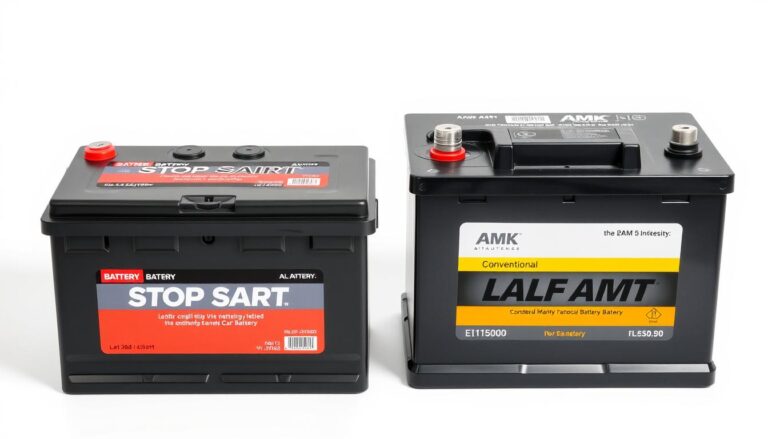
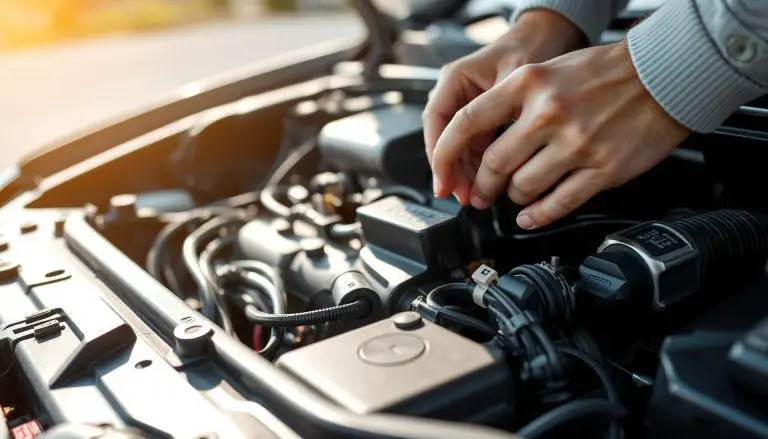
The impact of elevated temperatures on the longevity and functionality of your car battery is profound. While the adverse effects of cold weather on battery performance are well-documented, the heat poses a similar threat, leading to the evaporation of battery fluid and the deterioration of internal components.
Grasping the perils inherent in summer car care is imperative for averting battery failure. As temperatures ascend, it becomes critical to adopt preventive strategies to maintain your vehicle’s dependability and preserve the integrity of your battery.
Key Takeaways
- High temperatures can cause car battery fluid to evaporate.
- Internal battery components can degrade due to heat.
- Regular maintenance is crucial for preventing battery failure.
- Proper summer car care can extend battery life.
- Understanding the risks can help in taking preventive measures.
How Heat Affects Your Car Battery
As temperatures escalate, the burden on your car battery intensifies, potentially culminating in unforeseen malfunctions. Grasping the impact of heat on your car battery is imperative for its preservation and averting premature degradation.
The Science Behind Battery Deterioration in High Temperatures
In elevated temperatures, the chemical interactions within a car battery expedite, resulting in a swifter discharge rate and diminished functionality. This phenomenon is a direct consequence of the augmented kinetic energy of ions within the battery, prompting them to react with increased fervor.
Chemical Reactions Inside a Hot Battery
The electrolyte within a car battery is notably sensitive to temperature variations. At elevated temperatures, the electrolyte’s viscosity diminishes, facilitating expedited ionic movement but concurrently escalating the risk of internal corrosion. This intensified chemical activity precipitates a diminution in the battery’s lifespan.
Evaporation and Fluid Loss Issues
Heat catalyzes the evaporation of battery fluid at an accelerated rate, potentially resulting in a diminution of the electrolyte level. If the level descends to a critical point, it can expose the plates, inducing irreparable damage. Regular inspections are imperative to guarantee the battery’s continued hydration.

Why Summer Can Be More Damaging Than Winter
While extreme cold can impede a car battery’s efficacy, high temperatures pose a more significant threat in the long term. Summer heat not only hastens chemical reactions but also compels the battery to exert greater effort due to the augmented demands from cooling systems and other accessories.
| Factor | Impact on Car Battery | Summer vs. Winter |
|---|---|---|
| Chemical Reactions | Accelerated reactions due to heat | More pronounced in Summer |
| Fluid Evaporation | Rapid fluid loss | Predominantly a Summer issue |
| Battery Load | Increased load due to accessories | Higher in Summer due to cooling systems |
By comprehending these factors, car proprietors can proactively counteract the detrimental effects of heat on their car batteries.
Can a Car Battery Die From Heat? Understanding the Risk
The impact of heat on car batteries is a significant concern that should not be overlooked. High temperatures can accelerate the chemical reactions within a battery, leading to a reduction in its lifespan and potentially causing it to fail.
Short-Term vs. Long-Term Heat Damage
Heat damage to car batteries can be categorized into short-term and long-term effects. Short-term exposure to high temperatures can cause immediate issues such as reduced battery performance. On the other hand, long-term exposure can lead to irreversible damage, significantly shortening the battery’s lifespan.
For instance, a study found that for every 15°C above 20°C, the life of a lead-acid battery is halved. This highlights the importance of protecting your car battery from excessive heat.
| Temperature (°C) | Battery Life Reduction |
|---|---|
| 20 | Normal Life |
| 35 | 50% Reduction |
| 50 | 75% Reduction |
Warning Signs Your Battery Is Suffering From Heat Stress
Identifying the warning signs of heat stress on your car battery can help prevent unexpected failures. These signs can be categorized into visual indicators and performance issues.
Visual Indicators to Check For
Visual inspection of your car battery can reveal signs of heat damage. Look for:
- Swollen or bloated battery case
- Corrosion on the terminals
- Leaking electrolyte

Besides visual signs, there are performance issues that can indicate your battery is suffering from heat damage. These include:
- Difficulty starting the engine
- Dim or flickering headlights
- Swollen battery case causing electrical issues
For more information on protecting your car battery from heat, you can visit Chapell Hill Tire’s guide on the topic.
Preventive Measures to Protect Your Battery
As temperatures escalate, it becomes imperative to proactively shield your car battery from heat-induced damage. High temperatures can drastically shorten a battery’s lifespan. Fortunately, with the adoption of appropriate preventive measures, this risk can be substantially mitigated.
Parking Strategies to Minimize Heat Exposure
One of the most straightforward methods to safeguard your car battery from heat is by parking in a shaded location or a garage. If such options are not feasible, employing a sunshade or windshield visor to deflect direct sunlight is advisable. Parking in shaded areas can decrease the interior temperature of your vehicle by up to 30 degrees, thus alleviating the strain on your battery.
Battery Insulation and Protection Products
Various products are available to insulate and protect your car battery from heat. Battery insulation kits and heat shields are engineered to diminish the adverse effects of high temperatures on your battery. These tools are invaluable, notably in extremely hot climates or when your battery is situated in a hot engine compartment.
Maintenance Routine for Hot Weather Conditions
Adherence to a regular maintenance regimen is essential for prolonging your car battery’s lifespan, notably in hot weather. This entails periodic inspections of the battery’s condition and execution of necessary tasks to ensure its optimal functionality.
Cleaning Connections and Terminals
Corrosion on terminals can precipitate suboptimal performance and eventual battery failure. Cleaning the connections and terminals with a wire brush and applying a corrosion inhibitor is imperative. This practice ensures uninterrupted connectivity and averts potential damage.
Fluid Level Monitoring
For maintenance-free batteries, it remains crucial to monitor their condition and prevent overheating. For non-maintenance-free batteries, checking the fluid levels and replenishing them as needed is vital. Utilizing distilled water for topping off is essential to avoid contamination.
By integrating these preventive strategies, you can significantly prolong the life of your car battery and avert unexpected failures during hot weather.
Testing and Emergency Solutions for Heat-Affected Batteries
As temperatures escalate, it becomes imperative to evaluate your car battery’s condition to circumvent unforeseen malfunctions. Elevated temperatures expedite the deterioration of your vehicle’s battery, potentially culminating in a failure at the most inopportune moment.
How to Test Your Battery’s Health During Hot Months
Assessing your battery’s health necessitates verifying its voltage and cold cranking amps (CCA) against the manufacturer’s standards. Utilizing a multimeter or seeking professional mechanical evaluation can facilitate this task. Regular assessments are crucial for detecting potential issues before they escalate into significant problems.
Immediate Steps When Your Battery Fails in Hot Weather
In the event of a battery failure, prompt action is vital to mitigate inconvenience. The initial step involves identifying the cause, which may be attributed to heat exposure. For deeper insights into battery failure, including in models such as Jeep, refer to this resource.
Jump-Starting Safely in High Temperatures
When jump-starting in hot weather, ensure both vehicles are positioned on level ground, with engines turned off and in neutral or park gear. Connect the positive (red) jumper cable to the positive terminal of the dead battery, then to the positive terminal of the good battery. Subsequently, attach the negative (black) jumper cable to the negative terminal of the good battery and lastly to a metal surface on the vehicle with the dead battery. Initiate the functioning vehicle’s engine, followed by the one with the dead battery. Exercise caution to avoid sparks and refrain from connecting the negative cable to the dead battery’s negative terminal to prevent potential explosions.
When to Call a Professional
If you are hesitant to attempt a jump-start or if the battery continues to fail post-jump-start, professional intervention is warranted. A mechanic can accurately diagnose the issue and advise on the necessary repairs or replacement. Do not jeopardize your safety or compromise your vehicle’s electrical system.
Conclusion
The impact of heat on your car battery’s longevity cannot be overstated. High temperatures are known to compromise both performance and lifespan, a critical concern for vehicle owners.
To safeguard your battery against the sweltering summer heat, adherence to preventive measures is paramount. This includes strategic parking and regular maintenance routines. Such practices are indispensable for maintaining battery health and ensuring reliable vehicular operation during the hot season.
Implementing the suggested summer driving tips can substantially prolong your battery’s lifespan, thus averting unforeseen malfunctions. The implementation of routine checks and adequate protective measures can significantly enhance battery longevity.
Proactive maintenance of your vehicle’s health is imperative for a seamless driving experience throughout the summer. By prioritizing car battery care, you can enjoy a season of uninterrupted motoring.
FAQ
Can extreme heat really kill a car battery?
Affirmatively, extreme heat can precipitously shorten a car battery’s lifespan, culminating in its failure. The elevated temperatures expedite the chemical reactions within the battery, thus accelerating its deterioration.
How can I protect my car battery from heat damage?
To safeguard your car battery against heat damage, park your vehicle in shaded locales or employ a sunshade to obstruct direct sunlight. Regularly inspect and maintain your battery’s fluid levels, clean the terminals, and contemplate the use of battery insulation products.
What are the signs that my car battery is suffering from heat stress?
Indicators of heat stress in your car battery include swelling or bloating of the battery case, leakage or corrosion on the terminals, and difficulty in engine start-up. If you observe any of these symptoms, it is imperative to have your battery assessed.
Can I jump-start my car safely in hot weather?
Affirmatively, you can jump-start your car in hot weather, albeit with caution. Ensure both vehicles are positioned on level ground with engines turned off, and adhere to the correct jump-starting procedure to avert any damage or safety hazards.
How often should I check my car battery’s health during hot months?
It is advisable to inspect your car battery’s health every three months, or more frequently if residing in extremely hot climates. Verify the battery’s age, fluid levels, and terminal condition to ascertain its operational integrity.
Are there any specific maintenance tasks I should perform on my car battery during hot weather?
Affirmatively, during hot weather, it is crucial to regularly inspect your battery’s terminals for corrosion, verify the fluid levels, and clean the terminals as necessary. Also, ensure the battery is securely fastened to prevent damage from vibrations.
Can using a battery maintainer or trickle charger help during hot weather?
Utilizing a battery maintainer or trickle charger can aid in maintaining your battery’s charge and health, notably during periods of inactivity or hot weather. Yet, select a charger compatible with your battery type to avoid overcharging.