Engine strength is a critical factor in determining a vehicle’s performance and durability. When it comes to engine design, one key aspect that affects its overall strength is the main bearing configuration. The debate between 2 bolt main and 4 bolt main engines has been ongoing, with each having its own set of advantages.
A 2 bolt main engine is more common and simpler in design, whereas a 4 bolt main engine offers additional support and stability, particularly under high-stress conditions. For those interested in engine comparison, understanding the differences between these configurations is crucial.
Key Takeaways
- The main difference between 2 bolt and 4 bolt main engines lies in their bearing support and stability.
- 4 bolt main engines are generally stronger and more durable under high-performance conditions.
- The choice between 2 bolt and 4 bolt main engines depends on the intended use and performance requirements.
- Engine strength is crucial for overall vehicle performance and longevity.
- Understanding engine design configurations can help in making informed decisions.
Understanding Main Bearing Caps in Engine Design
Main bearing caps play a crucial role in the structural integrity of an engine. They are a fundamental component that ensures the crankshaft is properly supported and aligned within the engine block.
What Are Main Bearing Caps?
Main bearing caps are the components that secure the crankshaft in place, providing the necessary support to withstand the stresses of engine operation. They are typically bolted to the engine block and work in conjunction with the main bearings to facilitate smooth crankshaft rotation.
The Role of Main Caps in Engine Integrity
The main bearing caps are essential for maintaining engine integrity by:
- Providing additional structural support to the engine block
- Ensuring proper crankshaft alignment
- Helping to distribute the forces generated by the crankshaft
This support is critical in preventing engine damage and ensuring reliable operation.
How Main Bearing Caps Affect Crankshaft Support
The design and construction of main bearing caps directly impact crankshaft support. A robust main cap design helps to:
- Minimize crankshaft deflection under load
- Reduce the risk of bearing failure
- Enhance overall engine durability
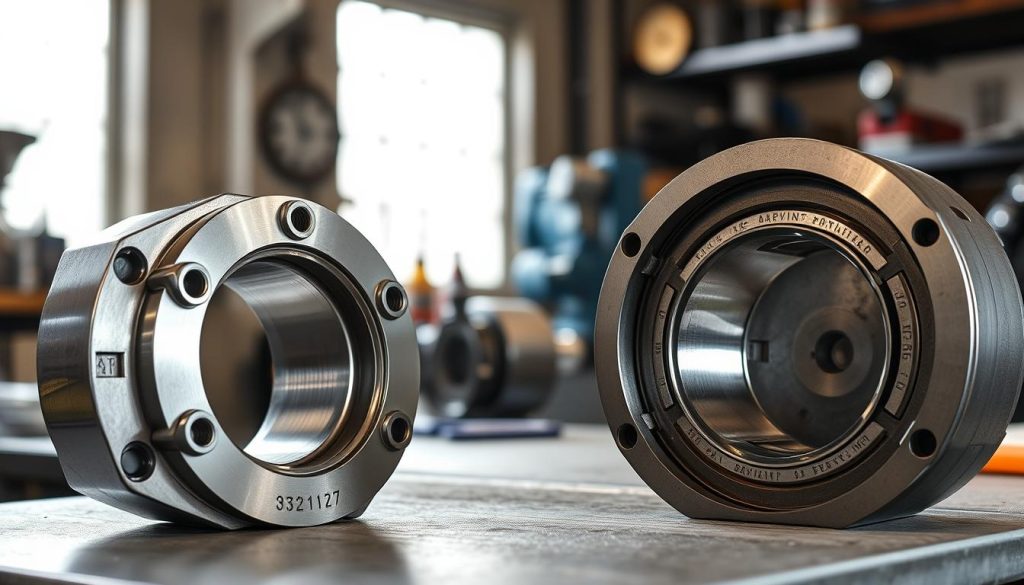
By understanding the role of main bearing caps, we can better appreciate their significance in engine design and how they contribute to the overall performance and reliability of the engine.
2 Bolt Vs 4 Bolt Main: Which Offers Superior Engine Strength?
When it comes to engine strength, the debate between 2 bolt and 4 bolt main engines is a crucial one for performance enthusiasts. The primary difference between these two engine configurations lies in their main bearing cap design, which significantly affects their overall strength and durability.
Basic Design Differences
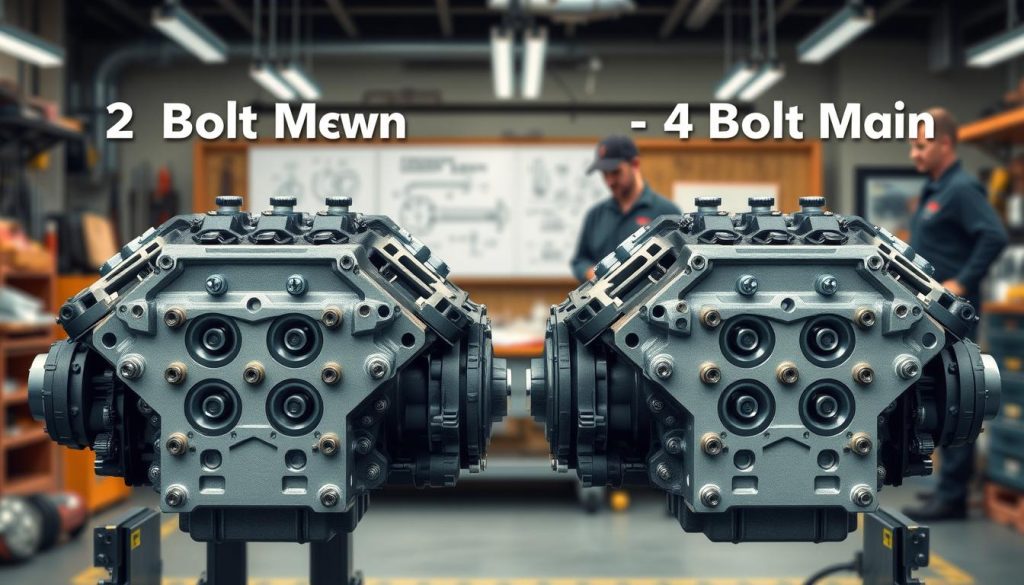
The 2 bolt main engine features a simpler design with two bolts holding the main bearing cap in place. In contrast, the 4 bolt main engine has a more robust design with four bolts, providing additional support and stability to the main bearing cap. This fundamental difference in design has a profound impact on the engine’s ability to withstand stress and maintain its structural integrity.
Structural Integrity Comparison
The 4 bolt main engine offers superior structural integrity due to its additional bolts, which help to distribute the forces more evenly across the main bearing cap. This results in improved resistance to deformation and reduced risk of engine failure under high-stress conditions. In contrast, the 2 bolt main engine may be more prone to main bearing cap walk and deformation, particularly when subjected to high horsepower and torque.
Torque Handling Capabilities
The ability to handle torque is a critical aspect of engine performance. The 4 bolt main engine is generally better equipped to handle high torque levels due to its enhanced structural integrity. This makes it an ideal choice for high-performance applications where engines are subjected to extreme stress.
Maximum Horsepower Thresholds
The maximum horsepower threshold is a key consideration when evaluating engine strength. While 2 bolt main engines can typically handle up to 400-500 horsepower, 4 bolt main engines can often withstand in excess of 600-800 horsepower, depending on the specific design and implementation. Understanding these thresholds is crucial for engine builders and performance enthusiasts looking to push their engines to the limit.
In conclusion, the 4 bolt main engine offers superior engine strength and torque handling capabilities compared to the 2 bolt main engine. By understanding the design differences and structural integrity of these two engine configurations, individuals can make informed decisions when selecting an engine for their specific needs.
The Anatomy of 2-Bolt Main Engines
In the realm of engine construction, the 2-bolt main bearing cap is a fundamental component. The 2-bolt main engine design has been widely used in various production vehicles due to its simplicity and cost-effectiveness.
Design Characteristics and Construction
The 2-bolt main engine features a straightforward design where the main bearing caps are secured by two bolts. This design is characterized by its simplicity, making it easier to manufacture and maintain. The construction of 2-bolt main engines typically involves cast iron or sometimes aluminum for the engine block, with steel main bearing caps.
Strength Limitations Under Load
Despite its advantages, the 2-bolt main design has inherent strength limitations under high-load conditions. The two bolts may not provide sufficient clamping force to prevent the main bearing cap from moving under extreme stress, potentially leading to engine damage.
Common Applications in Production Vehicles
2-bolt main engines are commonly found in production vehicles that do not require extreme performance. They are suitable for daily driving conditions and are often used in sedans and other non-performance-oriented vehicles. Their widespread use is a testament to their reliability for standard driving needs.
The Anatomy of 4-Bolt Main Engines
One of the key features that distinguish high-performance engines is the use of 4-bolt main caps, which provide enhanced strength and reduced risk of engine failure. The design of 4-bolt main engines incorporates additional bolts to secure the main bearing caps, resulting in a more stable crankshaft support system.
Enhanced Design Features and Cross-Bolting Benefits
The cross-bolting design in 4-bolt main engines offers several benefits, including improved structural integrity and increased resistance to deformation under high stress. This design feature is particularly advantageous in high-performance engines where the crankshaft is subjected to extreme forces.
Strength Advantages in High-Performance Settings
4-bolt main engines exhibit superior strength and durability compared to their 2-bolt counterparts, making them ideal for high-performance and racing applications. The additional main bearing caps provide enhanced support to the crankshaft, reducing the risk of engine failure under extreme conditions.
Typical Applications in Performance and Racing
Due to their enhanced strength and stability, 4-bolt main engines are commonly used in racing applications and high-performance vehicles. These engines are designed to withstand the rigors of high-RPM operation and extreme torque loads, making them a popular choice among performance enthusiasts.
Performance Under Stress: Testing the Limits
The true test of an engine’s strength lies in its performance under extreme conditions, where the 2-bolt and 4-bolt main engines diverge significantly. Engines are often subjected to high-RPM conditions, increased horsepower, and torque, making the structural integrity of the main bearing caps crucial.
High-RPM Performance Comparison
Under high-RPM conditions, the 4-bolt main engines exhibit superior stability and resistance to deformation compared to their 2-bolt counterparts. The additional bolts provide a more secure fastening of the main caps, reducing the risk of cap walk and improving overall engine durability.
Handling Increased Horsepower and Torque
As horsepower and torque increase, the stresses on the engine’s main bearing caps intensify. 4-bolt main engines are better equipped to handle these increased stresses due to their enhanced structural integrity, making them a preferred choice for high-performance applications.
Durability in Racing and Extreme Applications
In racing and extreme applications, engine durability is paramount. The robust design of 4-bolt main engines offers a significant advantage, providing the reliability needed under the most demanding conditions.
Failure Points and Prevention
Common failure points in 2-bolt main engines include main cap separation and crankshaft damage under high stress. Preventive measures include reinforcing the main caps and ensuring proper engine tuning to avoid excessive stress on the engine components.
In conclusion, when engines are pushed to their limits, the 4-bolt main configuration demonstrates a clear advantage over the 2-bolt design in terms of high-RPM performance, handling increased horsepower and torque, and overall durability.
Upgrading Options: Converting or Reinforcing Main Caps
Upgrading or reinforcing main caps can significantly improve an engine’s durability and strength. For those looking to enhance their engine’s performance, understanding the available upgrading options is crucial.
Aftermarket Solutions for 2-Bolt Mains
Aftermarket solutions offer a range of options for upgrading 2-bolt main engines. These include main cap strengthening kits and 4-bolt main conversions, which can significantly enhance the engine’s structural integrity. Companies like ARP and Eagle provide high-quality aftermarket parts designed to improve engine durability.
Engine Block Considerations When Upgrading
When upgrading the main caps, it’s essential to consider the engine block’s condition and design. The engine block must be capable of supporting the upgraded main caps. This may involve machining the engine block to accommodate the new caps or ensuring that the block is properly aligned.
Cost-Effective Strengthening Techniques
Cost-effective strengthening techniques can provide significant improvements without the need for a full upgrade. Techniques such as main cap stress relief and using stronger main cap bolts can enhance the engine’s durability. These methods can be particularly effective for engines that are not being fully rebuilt.
Conclusion: Making the Right Choice for Your Engine Needs
Choosing the right engine type is crucial for optimal performance and durability. The debate between 2-bolt and 4-bolt main engines centers on engine strength and performance needs. A 4-bolt main engine offers superior engine strength, making it ideal for high-performance applications and racing.
When considering an engine choice, it’s essential to evaluate your specific performance needs. If you’re looking for a balance between everyday driving and occasional high-performance driving, a 2-bolt main might suffice. However, for consistent high-RPM performance and increased horsepower, a 4-bolt main engine is the better option.
Ultimately, understanding the design differences and structural integrity of each engine type will help you make an informed decision. By assessing your performance requirements and matching them with the appropriate engine strength, you can ensure your engine delivers the desired performance while maintaining durability.
FAQ
What is the main difference between a 2-bolt and 4-bolt main engine?
The primary difference lies in the number of bolts used to secure the main bearing caps, with 2-bolt mains using two bolts and 4-bolt mains using four, providing enhanced strength and stability.
How does the number of bolts affect engine strength?
The additional bolts in a 4-bolt main engine provide greater clamping force, reducing the likelihood of main cap walk and improving the engine’s ability to withstand high horsepower and torque.
Are 4-bolt main engines more suitable for high-performance applications?
Yes, 4-bolt main engines are generally preferred for high-performance and racing applications due to their enhanced strength and ability to handle increased stress and load.
Can a 2-bolt main engine be upgraded to improve its strength?
Yes, aftermarket solutions such as main cap strengthening kits and engine block machining can be used to upgrade a 2-bolt main engine, enhancing its durability and performance.
What are the typical applications for 2-bolt and 4-bolt main engines?
2-bolt main engines are commonly found in production vehicles, while 4-bolt main engines are often used in high-performance and racing applications, such as in engines built by renowned manufacturers like Ford and Chevrolet.
How do main bearing caps impact crankshaft support?
Main bearing caps play a crucial role in supporting the crankshaft, and their design and construction significantly affect the engine’s overall strength and performance, particularly in high-RPM conditions.
What are the benefits of cross-bolting in 4-bolt main engines?
Cross-bolting in 4-bolt main engines provides additional strength and stability by securing the main bearing caps with bolts that intersect, enhancing the engine’s ability to withstand high stress and load.
What are the potential failure points in 2-bolt and 4-bolt main engines?
Potential failure points include main cap walk, crankshaft damage, and engine block cracking, which can be mitigated by proper engine design, construction, and maintenance, as well as the use of high-quality components from manufacturers like ARP.