Goal: This short guide gives shoppers clear, present-day clarity on how the Edge’s trunk measurements translate into real-world utility for families and weekend adventurers.
We consolidate authoritative information into one place so you can see the actual cubic figures and how the 60/40 split-fold second row improves usability. The data shows 39.2 cubic feet behind the rear seats and up to 73.4 cubic feet with the rear row folded.
What you’ll learn: exact measures, how EasyFold and the 60/40 split work, and practical packing tips for balancing people and gear. We also cover interior tech and convenience features that make loading and organizing simpler.
Outcome: After this section you’ll know which setup fits luggage, groceries, strollers, or small furniture, and which features — like tie-down hooks, below-floor storage, and a hands-free liftgate — help secure loads.
Key Takeaways
- Official cargo numbers: 39.2 cu ft rear, 73.4 cu ft with seats folded.
- 60/40 split and EasyFold make mixed passenger + gear trips easier.
- Interior features like tie-downs and below-floor storage boost usability.
- Hands-free liftgate and SYNC 4A tech simplify daily loading tasks.
- Data reflects common specs for current models to aid buying decisions.
Understanding the Ford Edge cargo “actual size” in the present day
This section breaks down the real cargo numbers so you can plan luggage and gear with confidence.
What “actual” means: measured, usable cubic figures you can rely on for packing decisions. Behind the rear bench there are 39.2 cubic feet for daily errands and luggage. Fold the 60/40 rear seatbacks and the hold opens to 73.4 cubic feet for bigger loads.
The cabin also supports passengers well. Total passenger volume is 113.9 cubic feet, with front/rear headroom at 40.2 and 40.3 inches, and front/rear legroom at 42.6 and 40.6 inches. Adults ride comfortably in both rows on longer drives.
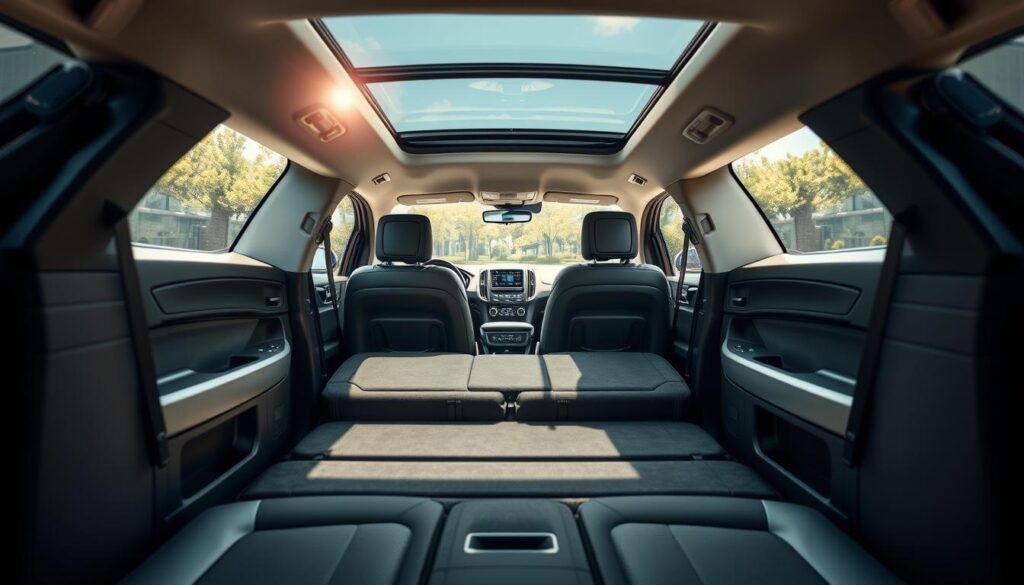
- Balance seating vs. storage: decide if you need all five passenger seats or more cargo room.
- Front seats and rear geometry fold quickly to expand the hold when required.
- Use-case: two adults up front, two in back, and luggage or a stroller for a weekend getaway.
| Metric | Value | Use |
|---|---|---|
| Cargo behind rear seats | 39.2 cubic feet | Groceries, carry-on luggage |
| Max cargo with seats folded | 73.4 cubic feet | Large hauls, small furniture |
| Passenger volume | 113.9 cubic feet | Comfort for five passengers |
| Front/Rear headroom | 40.2 / 40.3 inches | Head clearance for adults |
| Front/Rear legroom | 42.6 / 40.6 inches | Leg comfort on long drives |
Ford Edge Cargo Space Dimensions: Revealing Actual Size
This passage turns cubic figures into clear, practical guidance for packing and seating choices.
Cargo volume behind the rear seats: 39.2 cubic feet
39.2 cubic feet is available with all rear seats upright. That room handles groceries, several roller suitcases, or a stroller without complex stacking.
Maximum cargo room with second row folded: 73.4 cubic feet
Fold the 60/40 split and you get up to 73.4 cubic feet. A near-flat load floor makes sliding in boxes or suitcases easier and reduces shifting while driving.
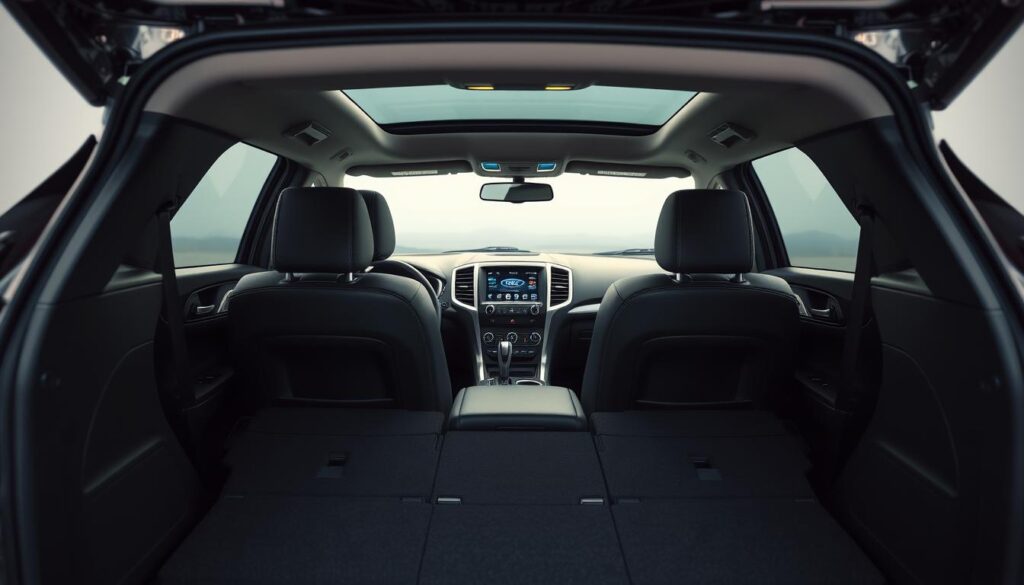
How the 60/40 split-fold rear seats expand usable cargo area
The standard 60/40 split lets you lower one section to carry a long item while keeping one or two seats available. Use it to fit skis or a ladder on one side and a child seat on the other.
Passenger space context: headroom and legroom for front and rear
The cabin keeps comfort while adding load room. Total passenger volume is 113.9 cubic feet, with headroom at 40.2 / 40.3 inches and legroom at 42.6 / 40.6 inches for front and rear.
- Fits: multiple roller suitcases plus soft duffels, two bikes with front wheels off, or flat-packed boxes.
- Wide rear opening and low liftover height make lifting heavy items easier.
- Measure your items at home and protect the area with a liner; secure bulky loads to prevent shifting.
| Metric | Value | Use |
|---|---|---|
| Cargo behind rear seats | 39.2 cubic feet | Daily errands, luggage |
| Max cargo with seats folded | 73.4 cubic feet | Large hauls, bikes or flat boxes |
| Headroom (front/rear) | 40.2 / 40.3 inches | Adult comfort |
| Legroom (front/rear) | 42.6 / 40.6 inches | Long-drive comfort |
How to optimize your Ford Edge cargo area for real-world loads
Practical steps make packing quicker and safer, whether you’re running errands or heading out for a trip.
Use the EasyFold release to drop the rear seats quickly.
Press the EasyFold switch from the rear to lower one or both sides of the 60/40 second row without walking to each door. This saves time and keeps heavy items inside while you work.
Secure loads with hooks, nets, and below-floor storage
Tie-down hooks and an available cargo net stop bags and crates from sliding during turns. Store jumper cables, a first-aid kit, and small tools in the below-floor compartment to keep the main hold tidy.
Hands-free liftgate tips for hands-full loading
Approach with the key, kick straight under the bumper, then step back and let the power liftgate open. This system works well when you carry children, groceries, or large boxes.
Packing strategies for passenger-and-gear days
Place heavy items low and forward, then top off with soft bags to keep the center of gravity stable. Fold only one seat section when you need both people and long items.
- Protect surfaces with a liner when hauling dirty gear.
- Use nets and hooks to immobilize fragile loads.
- Distribute weight evenly left-to-right for predictable handling.
| Quick check | Action | Why |
|---|---|---|
| EasyFold switch | Press from rear | Fast seat drop without walking around |
| Below-floor bin | Store essentials | Keeps the main hold uncluttered |
| Hands-free liftgate | Kick then step back | Open with arms full |
Interior features and tech that make cargo hauling easier
Smart infotainment and practical cabin touches help you manage pickups, navigation, and phone calls while you load.
Infotainment and controls: SYNC 4A 12-inch touchscreen and cabin convenience
SYNC 4A’s 12-inch touchscreen centralizes navigation, audio, and phone functions so you can keep focus during quick stops. Wireless Apple CarPlay and Android Auto let you stream directions or contacts hands-free.
Conversational voice commands speed reroutes when a pickup changes. The clear touch layout and ambient lighting also help you confirm routes and settings at night.
Trim level considerations: ST-Line, Titanium, and ST interior touches
All trim levels keep the same roomy 39.2 cubic feet behind the rear seats and 73.4 cubic feet max when folded, so practicality stays constant across trim choices.
ST-Line adds Miko suede inserts with red stitching for a sportier feel. The ST brings bolstered front captain’s chairs with distinctive colored stitching for added lateral support when the cabin is fully loaded.
- Comfort and power: heated/cooled front seats, heated rear seats, ten-way power driver’s seat, and driver memory for quick re-adjust after hauling.
- Useful tech: wireless charging, FordPass Wi‑Fi, a 110V/150W outlet, and a premium B&O sound system for better drives with a full load.
- Controls that matter: leather-wrapped steering wheel, heated steering wheel, auto-dimming mirror, and dual-zone climate control keep occupants comfortable while you handle gear.
| Feature | Benefit | Where it helps |
|---|---|---|
| SYNC 4A 12-inch | Streamlines controls | Quick pickups and navigation |
| Wireless charging & 110V outlet | Power devices on the go | At destination or during stops |
| Seat memory & power seats | Restore driver fit fast | Switching between hauling and daily driving |
Conclusion
In short, the numbers translate into real utility for weekend trips, grocery runs, and moving day.
39.2 cubic feet behind the rear seats and 73.4 cubic feet with the second row folded give clear packing choices. Passenger headroom and legroom remain generous, so adults ride comfortably while you haul gear.
The vehicle adds practical helpers: a hands-free, foot-activated liftgate, tie-down hooks, a cargo net, and below-floor storage to keep the hold tidy. SYNC 4A’s 12-inch touchscreen and voice system make navigation and device control straightforward during loading.
Match interior comfort, trim, power, and technology to your needs, then schedule test drive or schedule test to confirm fit for strollers, bikes, or bulk shopping. Compare trims in person to find the right balance of features and confidence for day-to-day use.
FAQ
What is the cargo volume behind the rear seats in the Ford Edge?
The cargo volume behind the rear seats measures about 39.2 cubic feet, providing room for groceries, suitcases, or a couple of medium-sized boxes while still carrying passengers in back.
How much cargo room is available with the second row folded?
Folding the second row expands usable cargo to roughly 73.4 cubic feet, creating a flat load floor that accommodates larger items like furniture components, long boxes, or multiple duffel bags.
How does the 60/40 split-fold rear seat configuration affect loading?
The 60/40 split lets you fold one side for long items while keeping the other side upright for a passenger. This flexibility balances cargo and people without needing to remove headrests or perform complicated seat maneuvers.
What passenger room should I expect in the cabin when carrying cargo?
Front and rear occupants retain comfortable headroom and legroom thanks to a spacious cabin design. Even with gear in the back, two adults can ride front and rear comfortably when one side of the seat remains folded.
How do I quickly fold the rear seats for more room?
Use the EasyFold release or the in-cabin release levers to drop the rear seats quickly. This simple pull mechanism saves time and keeps the load area accessible when you’re loading bulky items.
What cargo tie-down and storage features are included?
The vehicle offers cargo tie-down hooks, nets, and below-floor storage to secure smaller gear and prevent shifting. These features help keep fragile items safe and create better organization for trips.
Are there hands-free loading options for the liftgate?
Yes. A hands-free, foot-activated liftgate makes loading easier when your hands are full. Kicking under the rear bumper opens the liftgate so you can slide items in without dropping packages.
What packing strategies work best for weekend trips with passengers?
Pack heavy items low and forward, use soft bags to squeeze into irregular gaps, and use the 60/40 split to keep a passenger seat while expanding cargo. Secure loose items with nets or tie-downs to prevent movement during travel.
What infotainment and cabin tech help during cargo loading or travel?
A large SYNC 4A touchscreen and easy cabin controls improve route planning and hands-free calls while loading. Rearview camera and parking sensors also aid safe maneuvering when backing up with a full load.
Do trim levels affect interior cargo features?
Yes. Higher trims like Titanium and ST add premium touches and optional convenience features that may include upgraded storage solutions, enhanced tie-downs, or additional cargo organization accessories compared with base trims.