An isolator is a mechanical switch that fully disconnects part of an electrical system from its power source for safe servicing. It creates a visible break so technicians can confirm circuits are dead before they start maintenance. This tool is common in power distribution and equipment servicing across the United States.
This introduction outlines the guide’s goal: to explain how an isolator works, where it fits in modern systems, and how teams use it for safe isolation. Standards such as IEC and IEEE shape ratings, selection, and installation for reliable isolation.
Expect clear coverage of safe isolation steps, why a visible break matters versus only switching off a breaker, and why isolators are not protective devices like breakers or fuses. Later sections will cover LV switches, HV disconnectors, DC isolators for solar, HVAC disconnects, comparisons, and maintenance practices.
Key Takeaways
- Isolators provide a visible break to ensure a circuit is physically open before work begins.
- They support safe maintenance and reduce risk for electricians and facility teams.
- Isolators are not substitutes for overcurrent protection devices.
- Standards (IEC/IEEE) guide selection and installation for reliable isolation.
- Common types include LV switches, HV disconnectors, and DC isolators for solar.
- Follow a safe sequence and lockout procedures when using an isolator.
What Is an Isolator in an Electrical System?
A manually operated safety switch creates a tangible break in the line, making the absence of voltage obvious.
Isolator definition: a manually operated mechanical switch that forms a visible open gap so a section of a circuit is physically separated from its source. This visible break helps crews confirm zero voltage before service.
Practical meaning of isolation
Isolation means no hazardous voltage is present, no current path exists, and stored energy is discharged or secured. That reduces shock risk during inspection and repair.
Role in distribution systems and circuits
Upstream protective devices stop current flow. The isolator adds a physical barrier for safe maintenance. In LV systems the gap is an air separation; in HV, larger clearances and grounding are common.
- Safety outcome: prevents unexpected energization during work.
- Terminology: in substations a disconnector serves the same isolation purpose at higher voltage.
| Application | Typical Feature | Safety Role | Standards |
|---|---|---|---|
| Low voltage panels | Visible air gap | Confirm zero voltage | IEC 60947-3 |
| High-voltage substations | Large clearances, grounding | Full network isolation | IEC 62271 series |
| Equipment disconnects | Local manual switch | Permit safe servicing | Manufacturer specs |
What Are Isolators? (Working, Definition and Uses)
A reliable isolation point must deliver deliberate ON/OFF switching plus a confirmed open gap that meets service standards.
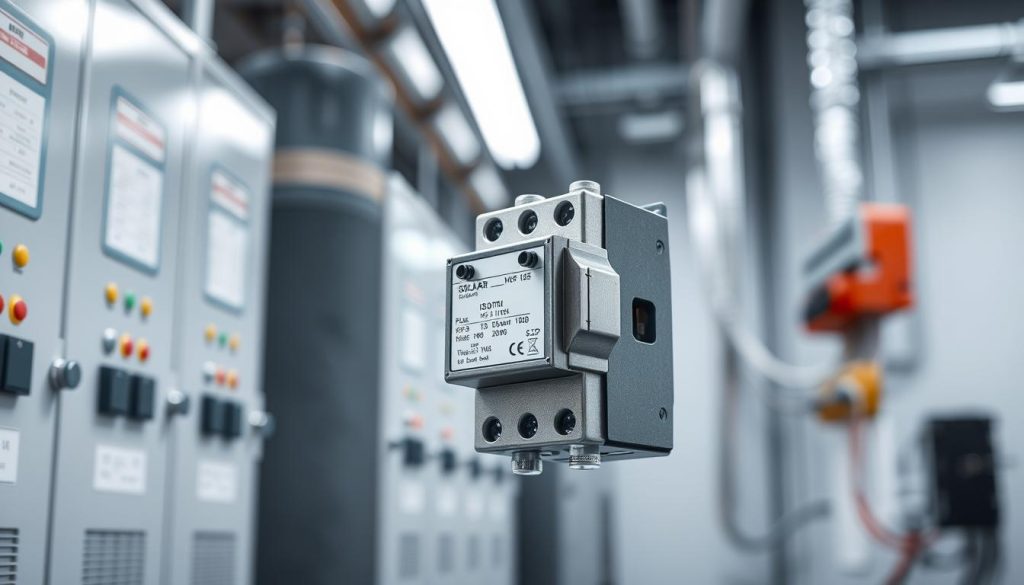
Primary functions: isolators provide a manual switch for clear ON/OFF control and a visible break that verifies a safe separation. For LV applications, IEC 60947-3 defines the isolation criteria these devices must meet.
Unlike breakers or fuses, an isolator is not used to protect circuits during faults. It does not trip automatically and should be used only after upstream protection removes load current.
Why teams use isolators to isolate power before maintenance and repair:
- They give technicians a dependable, visible point of separation close to equipment.
- They reduce ambiguity during handoffs between operations and contractors.
- Typical scenarios include isolating a motor before bearing replacement, a panel section before re-termination, or an inverter input in a PV array.
Note: isolators are generally no-load devices and must be operated in the correct sequence with protective devices ahead of them. The next section explains contact separation and safe switching practice.
How an Electrical Isolator Switch Works in Practice
The mechanical action behind a reliable disconnect is straightforward but critical to safe service.
Mechanical action: the operator handle drives moving contacts away from fixed contacts. This creates a growing gap that raises the dielectric strength between conductors and stops conduction.
In low-voltage systems the ambient air in that gap serves as the insulating medium. A visible break lets crews see the separation and trust the circuit is open.
Why these switches cannot break load
Isolator switches are no-load devices. Opening them under current can form an arc across the widening contact faces. Arc energy can weld contacts, damage the switch, and cause an arc-flash hazard.
Safe operating sequence
Follow a strict sequence: trip the circuit breaker first to interrupt current, verify the load is removed, then open the isolator to provide the visible break.
Confirm zero voltage and manage stored energy
- Use an approved tester to confirm zero voltage at the point of work; test the tester before and after use.
- Discharge capacitors, wait for VFD DC buses to bleed down, and treat long cable runs as potential stored charge.
- Only start work once indicators show safe state and residual energy is controlled.
Design notes: contact materials (copper, brass, silver plating), contact pressure, and enclosure design affect resistance, heating, and long-term reliability.
How to Use an Isolator Safely During Maintenance
Safe maintenance around live equipment starts with a clear, repeatable isolation routine that every crew member follows.
Lockout‑tagout workflow: identify the correct isolator, open upstream protection, open the isolator to show the visible break, apply a padlock to the handle, attach a clear tag, and document the isolation point in the work permit.
Preventing accidental re-energization
Control keys and limit access. Use group lock boxes where many workers need protection.
Only authorized personnel should remove locks. Record who holds keys and who can clear tags.
Visible verification, interlocks, and manual control
Confirm the isolator shows a definite OFF position and a visible open gap. Do not rely on indicator lights alone.
Many systems include mechanical or electrical interlocks that stop the switch from moving unless the breaker is open. These interlocks enforce safe sequencing.
Manual control matters because technicians can see and feel the contact state. That reduces ambiguity during handoffs.
Common risks and prevention
Improper switching under load can cause arcing and may weld contacts. Repeated misuse shortens device life and raises the risk of a dangerous arc‑flash.
- Never “crack” the isolator under load to test it.
- Keep enclosures closed where required and follow site arc‑flash procedures.
- Verify zero voltage with a tested meter before work and manage stored charge in capacitors or long cable runs.
Practical tip: train crews on the sequence, record each isolation, and treat every switch operation as a controlled safety act. This reduces risk and improves maintenance outcomes.
Types of Electrical Isolators and Disconnectors
Different constructions and locations let teams match a disconnect to voltage, space, and maintenance needs.
Construction types:
- Single break — simple, cost-effective for lower voltages (often up to ~33 kV); one visible gap. Useful when budget and space matter.
- Double break — two gaps for higher-voltage confidence (common 33–132 kV); added mechanical complexity improves isolation assurance.
- Pantograph — compact, used where horizontal clearance is tight; common on higher-voltage lines where footprint matters.
- Vertical break — robust outdoors; better performance under wind, ice, and contamination.
Location and pole choices
Bus-side, line-side, and transfer bus disconnectors name the part by where it sits in the lineup. Transfer bus devices let operators reroute feeds without full shutdown.
Poles: 1P suits single live conductors, 3P covers three-phase equipment, and 4P adds neutral for full separation. Match pole count to the conductors the switch used must open.
Special case
MCB isolators look like a breaker but lack a trip mechanism. Treat them as manual isolation devices, not protection devices. Choose the type that fits site procedures, voltage, and service risk.
High-Voltage Isolators in Transmission and Substations
High-voltage gear in substations uses robust disconnects to give crews a clear, physical open point before any work begins.
HV isolation differs from low-voltage work because larger clearances, precise mechanical alignment, and interlocked procedures matter more. Nominal ratings often include 11 kV, 33 kV, 66 kV, and 110 kV in distribution networks.
Grounding blades and earth switches
After opening a disconnect, a grounding blade or earth switch makes the open state safe by draining residual capacitive charge. This step stops stored energy on long lines and turns an open point into a confirmed safe zone.
Sectionalizing feeders and rerouting power
Disconnectors let operators isolate a feeder, transformer, or bus section while keeping adjacent circuits live. That sectionalizing supports planned maintenance, faster restoration, and improved overall reliability.
Common HV designs and selection drivers
Typical styles include knife blade, post-insulator mounted, composite insulator, and indoor/GIS units. Utilities pick designs for wind tolerance, salt-spray protection, space limits, and pollution resistance.
- Knife blade: simple, visible break for open-air yards.
- Post-mounted: robust for outdoor lines and higher voltages.
- Composite: lower maintenance in coastal or polluted sites.
- Indoor/GIS: compact solutions for constrained substations.
Operational discipline: always verify status, open the isolator, confirm the visible break, then apply grounding. This sequence protects crews and preserves system reliability during maintenance.
Isolator vs Circuit Breaker vs Load Break Switching
Choosing the correct device starts with a clear view of roles: fast automatic protection or a visible safety gap.
Protection versus isolation: circuit breakers detect and interrupt a fault automatically. They use mechanical and electrical means to trip when current exceeds safe levels. An isolator provides a visible, locked-open separation so people can work safely. That is the core difference.
Breaking capacity and arc control
Breaking capacity means a device can stop high fault current without failing. Circuit breakers and some load-break switches use arc-quenching techniques to extinguish the arc. Isolators lack this feature and should not be used to interrupt a current-carrying circuit.
What happens if an isolator is opened under load
Attempting that creates an arc. Contacts can weld, the switch will be damaged, and the risk of injury rises sharply. Always interrupt the load with a breaker before operating the isolator.
Where each device belongs
- Breakers: sit at protection points to clear faults and protect equipment.
- Load-break switches: handle routine switching of specified loads but do not replace full fault protection.
- Isolators: placed near equipment for visual verification and lockout during service.
| Device | Primary role | Can interrupt fault? | Typical location |
|---|---|---|---|
| circuit breaker | Automatic protection | Yes (high breaking capacity) | Switchgear, feeders |
| Load-break switch | Switch specified load | Limited (rated only for certain currents) | Distribution panels, motor circuits |
| isolator | Visible safety separation | No | Local equipment, service points |
Not interchangeable: a breaker can open an energized circuit, but only an isolator gives the visible gap technicians need. Use the correct sequence: trip the breaker, verify zero, then lock the isolator. For related maintenance guidance, see a practical service checklist.
Where Isolators Are Used Across Industries and Buildings
Facilities place manual disconnects at equipment to reduce accidental energization during maintenance.
Industrial machinery: conveyors, CNC machines, pumps, and packaged skids commonly use an electrical isolator to prevent unexpected starts. These devices support lockout‑tagout and stop remote commands from re-energizing a line during service.
Solar PV power supply: rooftop arrays and ground‑mounted fields need DC isolators because panels produce voltage whenever light is present. A dedicated isolator near the inverter lets crews safely service the power supply and perform emergency shutdowns.
Data centers and distribution: high-density racks and PDUs use local disconnects so technicians can replace modules with lower risk. Electrical isolators create clear separation at the point of work and simplify downstream distribution maintenance.
HVAC installations: in the U.S., outdoor AC disconnects are mounted within sight of condensers. These weatherproof switches (often IP66) give local control for quick, safer servicing.
Practical notes: match the device to AC/DC ratings, current, and intended operation. Use corrosion‑resistant enclosures on rooftops and label isolators clearly in multi‑tenant buildings to support fast, reliable maintenance.
| Application | Common equipment | Primary safety outcome |
|---|---|---|
| Industrial plants | Conveyors, CNC, pumps | Prevents unexpected starts during LOTO |
| Solar PV | DC isolator at inverter | Allows safe inverter service; isolates photovoltaic voltage |
| Data centers | PDU, rack distribution | Enables component swaps with reduced shock risk |
| HVAC / outdoor units | Condensers, rooftop units | Local control, weatherproof maintenance access |
How to Select, Install, and Maintain Isolators for Reliability
A reliable selection process blends electrical ratings with the site environment and operational needs.
Selection checklist
- Match nominal voltage and confirm the device rating exceeds system voltage to preserve long‑term reliability.
- Verify continuous current capacity so the unit runs without overheating under expected load.
- Consider the installation environment: indoor vs outdoor, pollution level, salt spray, and temperature swings.
- Decide manual vs motorized operation based on access, remote control needs, and safety distances.
Standards and compliance
Procure devices with clear nameplate data. For LV switches follow IEC 60947-3 guidance in documentation.
For higher voltages check IEC 62271-102 and IEEE C37.30 for disconnect and earthing switch requirements.
Installation essentials
Ensure correct clearances, secure mounting, and visible break points that are easy to verify during lockout.
Label each isolator and confirm the visible separation before any grounding blade is applied in HV work.
Maintenance practices for long life
- Exercise mechanisms periodically to prevent seizing and maintain reliability.
- Use thermal imaging to find hot contacts and address loose connections.
- Clean insulators to avoid surface leakage and torque terminals to spec to prevent overheating.
| Checklist item | Why it matters | Quick action |
|---|---|---|
| Voltage rating | Prevents insulation failure | Match nameplate to system voltage |
| Current capacity | Stops overheating at contacts | Size for continuous current |
| Environment | Drives enclosure and material choices | Pick IP rating, composite for pollution |
In brief: choose the right device for voltage and current, install with verifiable clearances, follow standards, and keep a simple maintenance plan to maximize reliability across systems.
Conclusion
Final takeaway: an isolator gives a visible safety gap that keeps crews safe during routine maintenance. This low‑cost device helps confirm a circuit is open before work starts.
Follow the rule: trip the breaker first, open the isolator next, verify zero voltage, and control stored energy before touching equipment. Use the switch only when the load is removed.
Choose the correct construction, pole count, and AC/DC rating to match site needs. Proper selection and documentation to IEC/IEEE standards improve uptime and safety.
Finally, routine inspection, exercising, torque checks, and thermal scans keep isolation points dependable when they matter most.
FAQ
What is an electrical isolator and how does it differ from a circuit breaker?
An electrical isolator is a mechanical switch that creates a visible break in a circuit to allow safe access for maintenance. It is designed for isolation, not for interrupting fault or load current. A circuit breaker provides protection by detecting and interrupting overloads and short circuits, using arc-quenching mechanisms. Use a breaker to open under load and an isolator to verify and maintain an open, visible disconnection.
Why is visible separation important when isolating equipment?
Visible separation confirms contacts are physically apart so technicians can verify zero voltage before work. This reduces risk from accidental re-energization and hidden conductive paths. Many standards and safe work procedures require a clear, observable air gap between contacts for effective lockout-tagout.
Can isolators break load current or clear faults?
No. Isolators are no-load devices and should not be used to interrupt load current or clear faults. Attempting to operate them under load risks arcing, contact welding, and equipment damage. Always de-energize the circuit using a circuit breaker or other load-breaking device first.
What is the correct switching sequence when taking equipment out of service?
First, open the circuit breaker or other load-breaking device to remove current. Next, operate the isolator to provide a visible break and apply lockout-tagout. Finally, confirm zero voltage, discharge stored energy, and ground if required. This sequence prevents arcing and ensures safe maintenance.
How do grounding blades or earth switches work with high-voltage isolators?
Grounding blades or earth switches provide a positive earth connection after the isolator is open. They discharge residual and induced voltages and ensure the isolated section stays at earth potential. Operators should only fit ground blades after visible isolation and verifying zero voltage.
What types of isolator designs exist for different applications?
Common designs include single-break, double-break, pantograph, vertical-break, and knife-blade types. There are indoor and outdoor variants, post-insulator mounted models for substations, and composite designs for compact installations. Choice depends on voltage class, mounting, and switching needs.
When are DC isolators required for solar PV systems?
DC isolators are required where PV arrays produce current whenever sunlight is present. They allow safe disconnection of DC strings for maintenance or emergency isolation. These devices must be rated for DC voltage, continuous current, and have appropriate arc-resistant construction for PV use.
What are common safety practices for using isolators during maintenance?
Follow lockout-tagout procedures, apply padlocks and tags, and use interlocks where provided. Verify zero voltage with a calibrated tester, discharge capacitors, and fit grounding where necessary. Maintain clear communication and ensure only authorized personnel operate switchgear.
How do poles and configurations (1P, 3P, 4P) affect isolator selection?
Pole count matches circuit phases and neutral handling. Single-pole (1P) suits single-phase circuits; three-pole (3P) isolates three-phase conductors together; four-pole (4P) isolates three phases plus neutral, useful for certain IT or TN systems. Select pole count based on system grounding and protective device coordination.
What standards and ratings should I check when selecting an isolator?
Verify voltage and current ratings, short-time withstand or making capacity where applicable, and compliance with standards such as IEC 60947-3 for LV and IEC 62271-102 for HV switchgear. Check mechanical endurance, ingress protection, and environmental suitability for outdoor or indoor installation.
How often should isolators be maintained and what does maintenance include?
Establish periodic maintenance based on duty cycle and environment. Routine tasks include mechanical operation checks, cleaning contacts and insulators, torqueing terminals, thermal imaging to detect hotspots, and exercising moving parts. Replace worn contacts and address corrosion promptly.
What are the risks of operating an isolator under load?
Operating under load can produce sustained arcing, weld contacts, damage switchgear, and create fire hazards. It may also fail to fully open, leaving unsafe partial connections. Always remove load current first using appropriate breakers or load-break switches.
Can motorized isolators be used instead of manual ones?
Yes, motorized or remote-operated isolators exist for applications where local access is difficult or where frequent operation is needed. Ensure motorized units include position indication, interlocks with protection devices, and manual override for safety during maintenance.
How do isolators fit into system reliability and fault management?
Isolators enable safe sectionalizing, allowing maintenance without wide outages and facilitating feeder rerouting. In substations they help sectionalize feeders, work with breakers for protection, and support planned switching to maintain system reliability during repairs or upgrades.
What is the difference between an MCB isolator and a standard MCB?
A standard miniature circuit breaker (MCB) combines protection and manual switching for low-voltage circuits and can trip under overload. An MCB isolator or isolating device labeled as such emphasizes visible separation and manual isolation. Verify the product’s capabilities—many MCBs are not intended as visible-break isolators per IEC definitions.