This guide tells owners the correct coolant by model year and how to avoid costly engine and system damage.
The 2013 and newer models require OAT per Chrysler TSB 07-004-12 Rev A, with a service interval of 10 years or 150,000 miles. Models from 2012 and earlier typically use HOAT, usually rated 5 years or 100,000 miles.
Important: OAT and HOAT do not mix. Mixing can cause smells, debris, blackened aluminum, corrosion, overheating, and leaks. In an emergency on an OAT system, use distilled water only to limp home, then flush and refill correctly.
This introduction previews how factory data and field-proven tips will help you confirm the right coolant, verify labels beyond color, and avoid service counter errors. You will learn differences in coolant types, color caveats, safe emergency top-offs, proper flush steps, and common warning signs to watch.
Key Takeaways
- Model split: 2012 and earlier = HOAT; 2013+ = OAT with 10-year/150k mile interval.
- Do not mix HOAT and OAT — mixing damages the cooling system and engine.
- Use Mopar OAT part numbers (e.g., 68163849AA) and ignore cap color as a sole identifier.
- In an emergency, distilled water can limp you home on OAT systems; plan a proper flush and refill immediately.
- Choosing the right fluid protects aluminum parts, seals, and overall vehicle reliability.
What Coolant for Jeep Wrangler: Ultimate Guide — Read This First
Choosing the correct long-life fluid depends on your model year and service interval, not cap color.
User intent and why the correct coolant matters
You want a clear answer: which coolant your vehicle needs and why it protects the engine and cooling system. The right chemistry controls temperature, prevents corrosion, and preserves seals.
Using the wrong liquid invites deposits, gelling, and early failure. Even small contamination can cause odors, floating debris, and blackened aluminum that lead to overheating and leaks.
Present-day U.S. guidance and common service pitfalls
Factory guidance sets a model-year split: older models use HOAT while 2013 and newer require OAT with a long service interval measured in miles and years.
Many service counters still rely on color or cap cues. Both OAT and HOAT bottles may have black caps, and OAT can appear orange in some light. Always confirm the label and spec, and consult the owner manual or the factory TSB.
- Specify the correct coolant by model year when you speak to advisors.
- In a trail emergency with an OAT system, use distilled water only to reach a safe location, then flush and refill.
- Don’t add another type of coolant — mixing causes chemical reactions and rapid system issues.
| Model Year | Recommended Technology | Service Interval |
|---|---|---|
| 2012 and earlier | HOAT | ~5 years / 100,000 miles |
| 2013 and newer | OAT | 10 years / 150,000 miles |
| Emergency top-off | Distilled water only (OAT systems) | Flush and refill ASAP |
For more on normal operating ranges and related maintenance, click expand to review temperature guidance and related service notes.
Jeep Wrangler coolant types explained: OAT vs HOAT and why they don’t mix
Two long-life technologies serve Wrangler cooling systems, and they are chemically distinct.
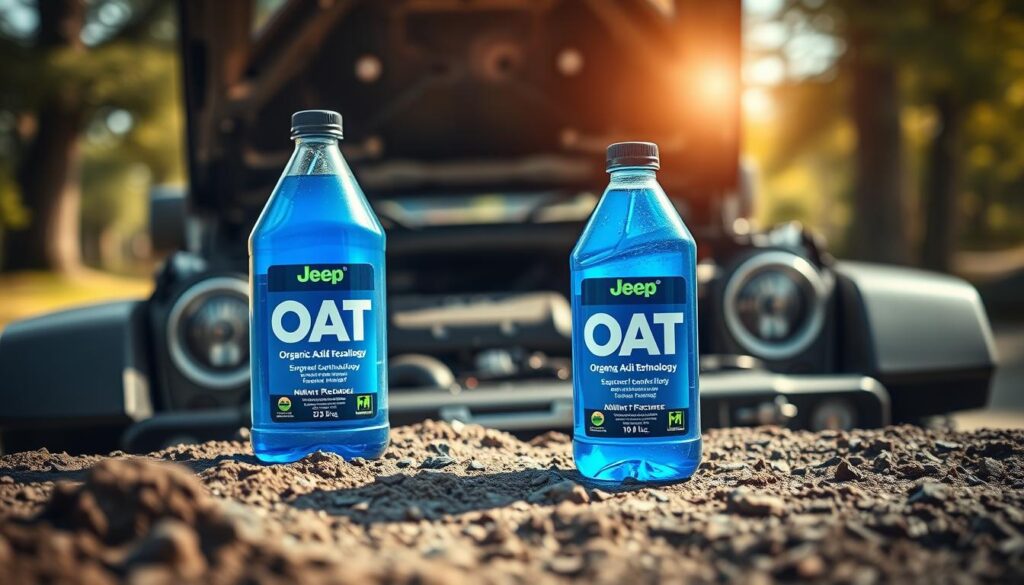
Hybrid Organic Additive Technology (HOAT)
HOAT was the standard on 2012 and older models. It combines organic acids with supplemental inhibitors to protect mixed metals in older engines.
This type typically carries a service life near five years or 100,000 miles when used as intended.
Organic Additive Technology (OAT)
OAT replaced HOAT starting in 2013 under TSB guidance and extends service to about 10 years or 150,000 miles.
OAT relies on organic acid corrosion inhibitors designed for long-term protection and deposit control in newer systems.
Chemical incompatibility and risks
Mixing these two types destabilizes inhibitor packages. The result can be gelling, floating debris, and blackened aluminum that speed corrosion.
Restricted passages reduce heat transfer, the engine runs hotter, and leaks or failures can follow.
- Practical thing: Use the specified type for your model year and avoid mixing.
- Factory warning: If contamination occurs, flush the system thoroughly per the TSB.
| Type | Typical Service Life | Key Risk if Mixed |
|---|---|---|
| HOAT | ~5 years / 100,000 miles | Gel residues, inhibited protection loss |
| OAT | 10 years / 150,000 miles | Blackened aluminum, accelerated corrosion |
| Mixed | N/A | Ammonia odor, debris, overheating — flush immediately |
Identify the correct coolant by model year, color cues, and labeling
A quick model-year check is the simplest way to narrow the correct fluid chemistry before you read a bottle label.
Model-year rule: If your vehicle is 2012 or earlier, it typically uses HOAT; 2013 and newer require OAT per factory guidance. Always verify the bottle print before you add fluid.
Service intervals differ: HOAT commonly calls for about five years or 100,000 miles. OAT on 2013+ carries a 10-year or 150,000-mile interval under normal duty cycles.
Color cues and why they can mislead
OAT is dyed purple but may look orange when viewed in some bottles or low light. This optical effect is normal and does not mean the formula is wrong.
Cap color is unreliable. Dealers and manufacturers may ship both technologies in bottles with black caps. Read the printed specification and part number instead.
- Check the owner manual and factory TSB before you buy.
- Compare bottle part numbers such as 68163849AA or 68163848AA to the TSB reference.
- If a dealer’s OAT price is unusually low, ask questions—Mopar OAT often runs $50–$60/gal at the counter; online listings can be lower.
| Model range | Typical service life | Key ID step |
|---|---|---|
| 2012 and earlier | ~5 years / 100,000 miles | HOAT label or spec on bottle |
| 2013 and newer | 10 years / 150,000 miles | OAT part number and factory spec |
| Visual check | N/A | Small sample on a clean tool to confirm purple tint |
When to change or flush your Wrangler’s coolant
Factory timing is a baseline; use it with common-sense checks. Follow the owner manual as the starting point. Then adjust based on how the vehicle is used and what the fluid looks like.
Intervals by technology: legacy vs long-life fluids
HOAT (older vehicles): typically serviced near five years or 100,000 miles.
OAT (2013+ per TSB): is designed for 10 years or 150,000 miles under normal duty.
Owner’s manual guidance vs real-world service needs in the United States
Inspect level and clarity during routine oil service visits. Dealers may advise checks every 15,000 miles for peace of mind.
A flush may be needed sooner if you find rust, sediment, incorrect top-offs, or after an overheating event.
- Document time and miles at each service to plan the next interval.
- Consider shorter intervals for severe duty, towing, or heavy off-road use.
- If a vehicle’s history is unknown, test the fluid and audit records before setting long-term schedules.
| Technology | Typical interval | When to flush sooner |
|---|---|---|
| HOAT | ~5 years / 100,000 miles | Visible rust, sediment, or mixing |
| OAT (2013+) | 10 years / 150,000 miles | Overheating events or contamination |
| Unknown history | Test and set conservative interval | Audit records; flush if uncertain |
Cooling system flush: steps, dilution, and distilled water best practices
Start every service with a clear plan. Work only on a cool engine, wear eye and hand protection, and gather the correct Mopar-spec fluid, catch pan, funnel, and a refractometer or hydrometer.
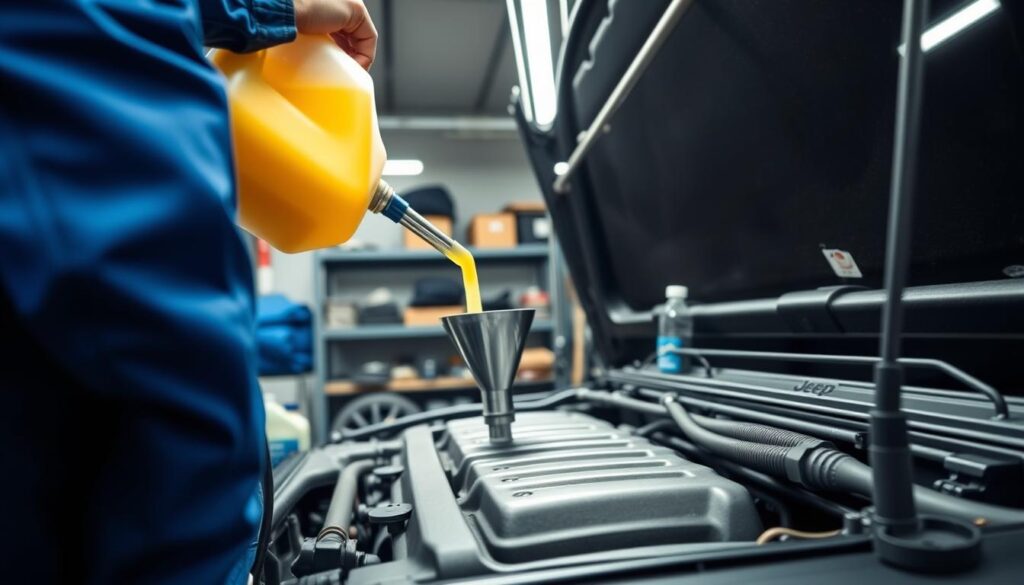
Preparation and safety
Inspect hoses, clamps, and the radiator for leaks. If old liquid shows rust or odd particles, expect a deeper cleaning cycle.
Thorough flush procedure
Use a compatible cleaner to loosen rust, sediment, and particles. Drain radiator and block as applicable.
Flush with distilled water until the outflow runs clear and free of debris. Repeat cycles when prior mixing produced gel or floating matter.
Refill, bleed, and measure
Refill with the correct concentrate and top with distilled water to the recommended dilution for your climate. Purge air per vehicle procedure and warm the engine to operating temperature.
Verify freeze/boil protection with a refractometer or hydrometer and adjust with more distilled water or concentrate as needed.
- Dispose drained fluid at an approved recycling facility.
- If emergency top-up is required on an OAT system, use distilled water only and plan a full flush and refill immediately.
| Step | Action | Why it matters |
|---|---|---|
| Preparation | Cool engine, PPE, correct fluid, tools | Safety and correct matching of fluid chemistry |
| Flush | Cleaner, drain, flush with distilled water | Removes rust, sediment, and mixed-residue |
| Refill & Measure | Mix concentrate with distilled water, bleed air, test | Ensures correct dilution and protection levels |
| Disposal | Recycle drained liquid | Environmental and legal responsibility |
Troubleshooting and warning signs of coolant issues
Small symptoms often point to larger cooling system problems. Catching them early prevents engine damage and costly repairs.
Overheating or steam: A climbing temperature gauge or visible steam under the hood means the radiator isn’t shedding heat. Stop, cool the engine, and inspect before driving further.
Leaks, sediment, rust, and odd odors
Look at the overflow bottle and radiator for discoloration. Sediment, rust, or oily films indicate internal corrosion or contamination.
Smell the fluid near the reservoir. An ammonia-like or sharp chemical odor often signals mixed chemistries that demand a full flush.
Mixed-fluid symptoms and system checks
Floating particles, blackened aluminum parts, or rapid level loss point to chemical incompatibility between OAT and HOAT. These signs accelerate corrosion and harm engine components.
- Check heater performance—poor heat can mean low level, air pockets, or blocked passages.
- Inspect hoses, clamps, and puddles under the vehicle for leaks that will worsen if ignored.
- If wrong fluid may have been added, plan an immediate inspection and complete flush to protect the system.
| Symptom | Likely issue | Action |
|---|---|---|
| High temp / steam | Restricted flow or loss of protection | Stop, cool, check level and radiator |
| Rust or sediment | Corrosion or contamination | Test fluid; flush if present |
| Ammonia smell / particles | Mixed OAT and HOAT | Flush system immediately |
Buying the right coolant: part numbers, pricing, and service tips
When you shop, match the factory part number before trusting color or cap cues. For 2013+ models look for Mopar OAT references such as 68163849AA (also cited as 68163848AA). A correct part number ensures the additive package and corrosion inhibitors align with the vehicle.
Price expectations matter. Dealer OAT often runs $50–$60 per gallon. Online listings near $29 can be real, but a suspiciously low dealer price is a red flag — verify the bottle and spec before purchase.
Universal coolants claim broad compatibility but can mix incompatible chemistries. Chrysler’s TSB warns not to mix OAT, HOAT, or IAT. If you must top off an OAT system on the trail, use distilled water only to limp home, then flush and refill with the correct coolant.
- Confirm the type on the bottle and match part numbers at the counter.
- Ask the service tech to state the service interval in miles and years for your model.
- Bring owner notes or documentation to prevent misfills.
| Item | Quick check | Why it matters |
|---|---|---|
| Part number | 68163849AA / 68163848AA | Ensures OAT chemistry and warranty compliance |
| Price | $50–$60 dealer; ~$29 online | Too cheap may mean wrong product |
| Emergency top-up | Distilled water only | Prevents immediate chemical reaction; flush later |
Verify more than colors — OAT is purple but may appear orange in some bottles. A simple part-number check, realistic price awareness, and a short service checklist at the counter will protect your cooling system. Thanks to careful verification, you can avoid costly mistakes.
Conclusion
Confirming the specified chemical type is the simplest way to protect cooling components and avoid costly engine damage.
Key point: match the fluid to your model year — HOAT on 2012 and earlier; OAT on 2013 and newer with a 10‑year / 150,000‑mile service interval.
Do not mix formulations. Mixing invites debris, odors, blackened aluminum, and accelerated corrosion. If someone added the wrong product, prioritize a full flush and refill with the correct coolant and parts (Mopar P/N 68163849AA / 68163848AA).
Keep distilled water as the emergency way to limp home on OAT systems, then schedule prompt service. Follow the owner manual, verify labels at purchase, and you’ll protect the cooling system and engine over time. Thanks for reading.