Want a clear view of today’s crate kit market? Start here. The old tales of $50 wartime finds are myths. Modern listings show realistic costs and specific kit contents so buyers can plan smartly.
For example, JeepsterMan lists an MD Juan “Jeep in a Crate, 1942 Willys MB Kit” at $15,730. That kit excludes the engine, transmission, transfer case, axles, and title. Omix-ADA sells reproduction bodies and packages from about $3,000 up to roughly $7,000 for larger kits.
What that means for buyers: you’re purchasing new body components built for restoration, not a turn-key vehicle. Check state titling rules, match parts to your donor chassis, and factor in shipping, paint, and professional labor.
Compare sellers, verify crate contents, and pick the right place to source components. That approach helps folks avoid costly surprises and build the classic look they want with legal, practical steps.
Key Takeaways
- Market reality: reproduction tubs and full kits sell for thousands, not pocket change.
- Most crate kits exclude drivetrain and title—plan for a donor chassis or kit titling.
- Two price tiers: individual parts (around $3k) and larger body packages (up to $7k+).
- Always confirm compatibility and crate contents before you order.
- Include shipping, assembly, paint, and missing parts in total cost estimates.
- Compare retailers and lead times to find the best fit for your restoration plan.
Jeep in a crate: myth versus modern reality for U.S. buyers
Many stories claim postwar surplus sold complete military vehicles for pocket change, but records do not back that up.
The wartime fact: manufacturers did box and ship vehicles to speed deployment. For example, Ford’s Richmond plant crated roughly 70% of units to support nearby ports.
Why the $50 tale is a myth: there’s no verified sale evidence and a $10,000 reward for proof stayed unclaimed. Collectors and historians treat that story with skepticism.
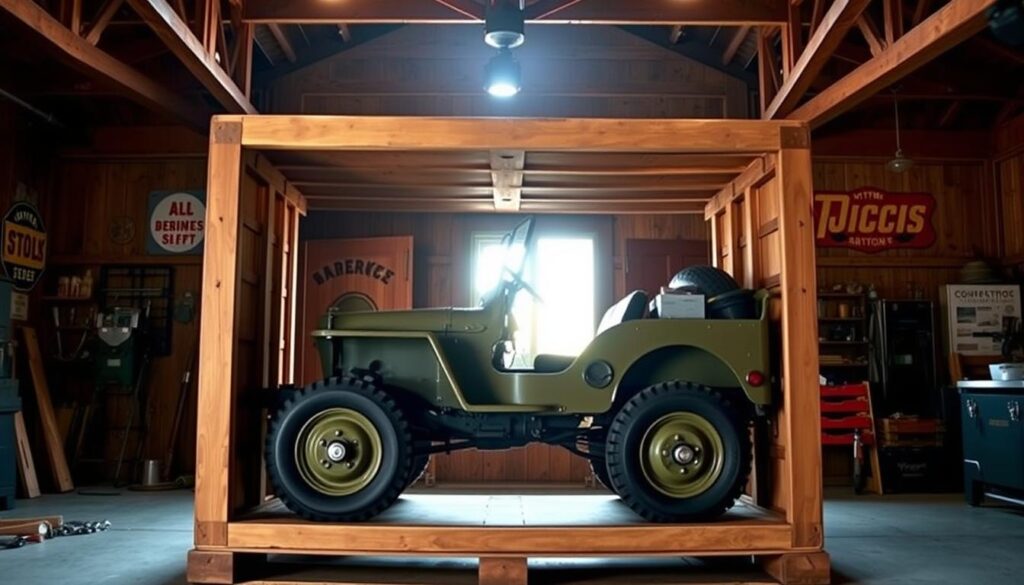
The modern warehouse reality
Today’s supply chain centers on reproduction tubs, frames, and body kits built by firms such as MD Juan and sold through established retailers.
Crates now carry new sheet metal and subassemblies, not untouched wartime vehicles. That shift solves rust problems and cuts restoration time.
What buyers should know about assembly
- Crates typically include tubs, fenders, and windshield frames, but exclude drivetrain and title.
- Assembly means mating a reproduction body to an existing chassis, not unbolting a running surplus vehicle.
- Focus on verifiable sources, clear pricing, and parts lists when planning purchases.
Bottom line: use the myth as historical color, but plan purchases around today’s reproduced parts and verified crate contents.
Price breakdowns and inclusions: what a crate or kit really costs in the present market
Market listings divide into simple tubs and expanded kits that include multiple panels.
Typical ranges: basic reproduction tubs often start near $3,000 through vendors like Omix-ADA. Fuller packages — tub, windshield frame, hood, tailgate, and fenders — can approach $7,000 for certain CJ applications.
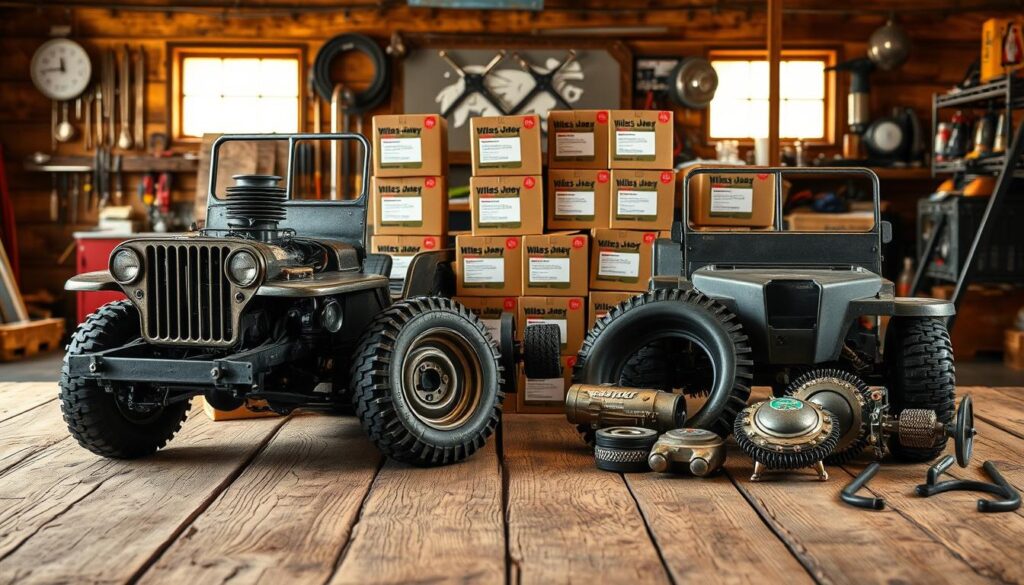
Benchmark and exclusions
The current ceiling many buyers use is the MD Juan kit listed at $15,730. That listing confirms no engine, transmission, transfer case, axles, or title are included.
Titles, registration, and planning
Plain terms: shipments do not carry a state title. You must either use a donor frame with paperwork or register the build under your state’s kit car rules.
Budget items beyond the crate
Plan for shipping, paint, hardware, electrical, interior, and expert labor if needed. Verify lead times, returns, and warranty terms before you order.
| Item | Typical Cost | Common Contents | Notes |
|---|---|---|---|
| Basic tub | $3,000 | Body tub | Good starting point for donor-based rebuilds |
| Full body package | $5,500–$7,000 | Tub, windshield frame, hood, fenders, tailgate | Better fit for CJ6/CJ8 style builds |
| MD Juan reproduction kit | $15,730 | Extensive sheet metal; excludes drivetrain | Practical ceiling for historically accurate projects |
| Extra costs | Varies | Shipping, paint, hardware, labor | Often 20–50% of parts cost |
- Confirm fitment between reproduction panels and your chosen frame and running gear.
- Contact your DMV early to resolve VIN, inspection, and emissions questions.
Willys Jeep in a Crate Price: Uncover Affordable Deals
Sourcing the right crate kit starts with trusted sellers that list exact contents and current shipping terms.
Where to shop
Specialty retailers such as JeepsterMan publish MD Juan kit listings; one example shows a 1942 MD Juan kit priced at $15,730 with shipping calculated at checkout. Verify that powertrain and title are excluded before you buy.
Omix-ADA operates a warehouse model with reproduction bodies for CJ2A, CJ3A, CJ5, and CJ8. Basic tubs often start near $3,000 while fuller packages approach $7,000.
Smart sourcing strategies
- Pair a new reproduction tub with a sound donor frame to lower costs and speed assembly.
- Use surplus-style auctions and classifieds to find donor jeeps and usable parts with titles.
- Confirm packing lists and request photos of crates to avoid missing components.
- Factor shipping logistics—dock access, liftgate needs, and delivery surcharges—into total landed cost.
| Source | Typical Cost | Tip |
|---|---|---|
| Specialty retailer | $3,000–$15,730 | Check contents and exclusions |
| Warehouse/reproduction | $3,000–$7,000 | Match panels to your frame |
| Surplus/classifieds | Varies | Look for complete titles |
Conclusion
Finish by using current kit data to set expectations for parts, paperwork, and shop time.
MD Juan’s Willys MB kit listed at $15,730 via JeepsterMan clearly excludes powertrain and title. Modern reproduction tubs start near $3,000, and full packages with tub, windshield frame, hood, tailgate, and fenders can approach $7,000.
Practical advice: focus on documented pricing, plan assembly steps, and treat titling as a priority to avoid delays. Price the build from crate to finished car, include shipping, coatings, wiring, and labor.
Folks who match a sound donor frame to a fresh tub usually finish on budget. For more on compatible components, see parts interchangeability.
FAQ
What is the difference between the WWII “jeep in a crate” myth and today’s reproduction kits?
The wartime story suggests complete vehicles were shipped disassembled and reassembled on arrival. In reality, modern kits deliver body tubs, frames, or full body kits that resemble originals but usually omit engine, transmission, and wiring. Today’s offerings focus on cosmetic and structural parts rather than fully boxed, ready-to-drive vehicles.
What parts typically come in a reproduction tub or crate?
Most crates include a body tub, hood, fenders, and a windshield frame. Some kits add mounting brackets and floor pans. Critical components like the drivetrain, electrical system, gauges, and seats usually do not come with the crate and must be sourced separately.
How much should I expect to pay for a tub or kit today?
Prices vary by quality and completeness. Basic reproduction tubs can run from approximately ,000 to ,000, while more complete kits that closely match original specifications can reach around ,000 or more. Costs rise when you factor in shipping, import fees, and protective packaging for large sheet-metal pieces.
Do crates include a title or registration paperwork?
Crates and body kits rarely include a vehicle title. Registering a completed vehicle depends on state laws and whether you use a donor chassis with an existing title. Many builders register their restorations as kit cars or use matching donor frames to secure a clear title.
What additional costs should I budget beyond the crate purchase?
Plan for shipping, taxes, assembly labor, paint, hardware, fasteners, and missing mechanical parts. Professional assembly and alignment can add significant expense. Many builders also budget for tooling, replacement clips, and unexpected fabrication work.
Where can I buy reproduction tubs and complete body kits?
Reputable sources include specialty retailers, restoration shops, and warehouse suppliers that focus on surplus-style parts and reproductions. Look for vendors that publish detailed item lists, dimensions, and clear return policies. Local classic-vehicle shops can also point to reliable suppliers.
Is it smarter to use a donor vehicle or buy all-new reproduction parts?
Using a donor chassis can simplify registration and provide compatible mechanical systems. New reproduction parts offer improved fit and corrosion-free panels. Many restorers combine both approaches: a donor drivetrain and frame with fresh body panels for the best balance of authenticity and reliability.
How do I ensure quality when shopping for reproduction parts?
Check customer reviews, request high-resolution photos, and confirm materials and manufacturing methods. Compare panel fitment notes and ask about warranty coverage. Vendors that specialize in period-correct reproductions and supply detailed specs reduce the risk of receiving ill-fitting components.
Can I assemble a crate kit myself, or should I hire a professional?
DIY assembly is possible for experienced hobbyists with the right tools and workspace. However, welding, body alignment, and electrical work often require professional skills for a safe, roadworthy result. Many builders hire specialists for final assembly, paint, and registration tasks.
Are reproduction windshield frames and glass commonly included or sold separately?
Windshield frames are often included with higher-level kits but glass and seals may be sold separately. Confirm whether the vendor supplies laminated glass, rubber seals, and mounting hardware to avoid sourcing those items later.
What should I check regarding the frame and tub fit before purchase?
Verify dimensions, mounting hole locations, and material thickness. Request templates or measurement sheets and compare them to any donor frame you plan to use. Good vendors provide fitment information to reduce post-delivery modification and fabrication.
How do kit car rules affect registration and insurance?
Kit car regulations differ by state. Some states have streamlined titles for assembled kit vehicles, while others require inspections and proof of component origins. Insurance companies may demand build documentation, receipts, and photos of the assembly process for coverage.
Are there cost-saving strategies to reduce overall project expense?
Shop auctions and surplus sales for donor parts, buy used hardware and gauges from specialist marketplaces, and mix new reproduction panels with salvaged mechanicals. Networking with restoration clubs and forums can surface deals and local experts who offer lower-cost labor.
What warranties or guarantees should I expect from reputable sellers?
Look for sellers that offer limited warranties on workmanship or materials, clear return policies, and post-sale support. A vendor that provides technical assistance, installation guides, or replacement parts helps protect your investment and reduces the risk of costly surprises.