
Short answer: Not every model includes a second power source from the factory. Some trims add an aux battery for stop/start support, while plug-in hybrid models use a high-voltage propulsion pack that is not the same as the 12V main battery.
Owners report real-life clues you can check. One user with a 3.6L eTorque saw display voltage from 12.4V at start to 14.0V while driving. A trailer package often signals a larger main battery fitted at the factory. Warranties like 36 months/36,000 miles also help decide when to seek service.
Factory ESS systems may add a second battery to keep accessories running during stops. Aftermarket dual-battery Overlanding setups use a solenoid isolator to protect the engine start battery and the house battery when the vehicle is off.
What this section covers: which model lines include a second battery, how ESS and aux battery setups differ from propulsion packs, and what owners should watch for over the years. Use the FAQ to click expand for the exact scenario that matches your vehicle.
Key Takeaways
- Factory second batteries are common with ESS or heavy-duty towing packages, not universal across every model.
- A 12V aux battery supports start/stop features; hybrid propulsion packs serve a different role.
- Check dash voltage, towing package notes, and warranty time to spot battery issues early.
- Aftermarket dual-battery rigs use isolators to protect the start battery during camping or overlanding.
- Service and matching battery types matter for reliability and system longevity.
Do all Jeeps have two batteries?
Battery layouts vary by trim, package, and the presence of ESS electronics.
Many models use a single 12V battery. Some trims equipped with ESS include an aux battery to run accessories during automatic stops. That aux unit helps preserve cranking power for the engine and keeps infotainment on at the button.
Owners often infer configuration from behavior. A 3.6L eTorque owner saw dashboard voltage near 12.4V at start and about 14.0V while driving. That pattern is normal for charge strategy and does not uniquely confirm a second battery.
Because factory setups differ by model year and option packages, verify with the owner’s manual or dealer build sheet before assuming the layout for your vehicle.
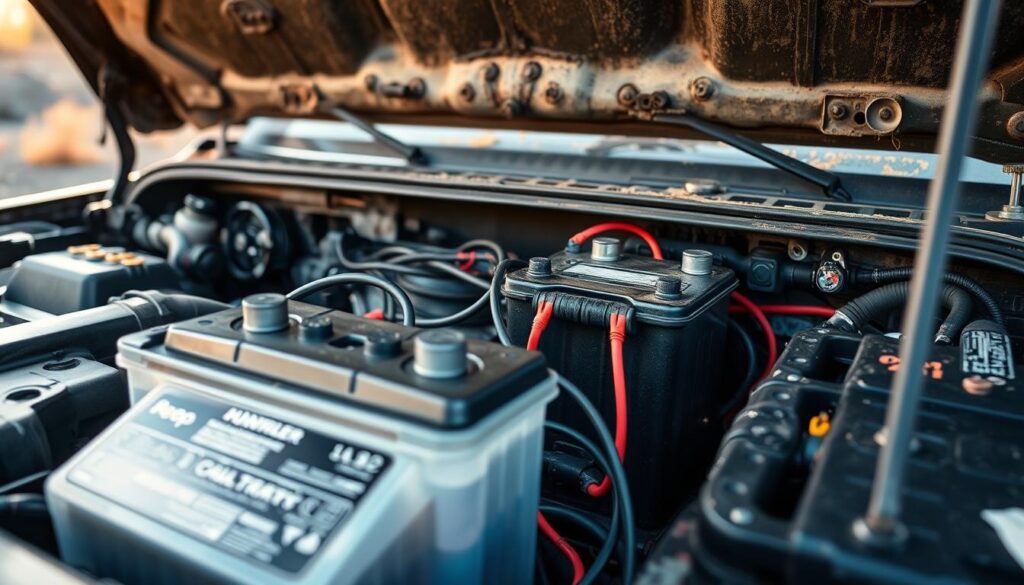
| Scenario | Likely battery setup | What to check |
|---|---|---|
| Base trim, no ESS | Single 12V battery | Underhood label, owner’s manual |
| Trim with ESS or towing package | Second battery or beefed main battery | Dash voltage behavior, build sheet |
| Plug-in hybrid models | High-voltage pack + 12V support battery | Service manual, dealer confirmation |
For model-specific answers, click expand in the FAQ to jump to the exact guidance that matches your vehicle.
Which Jeep models and systems use two batteries today
Battery arrangements vary across model years and optional systems, so configuration isn’t uniform.
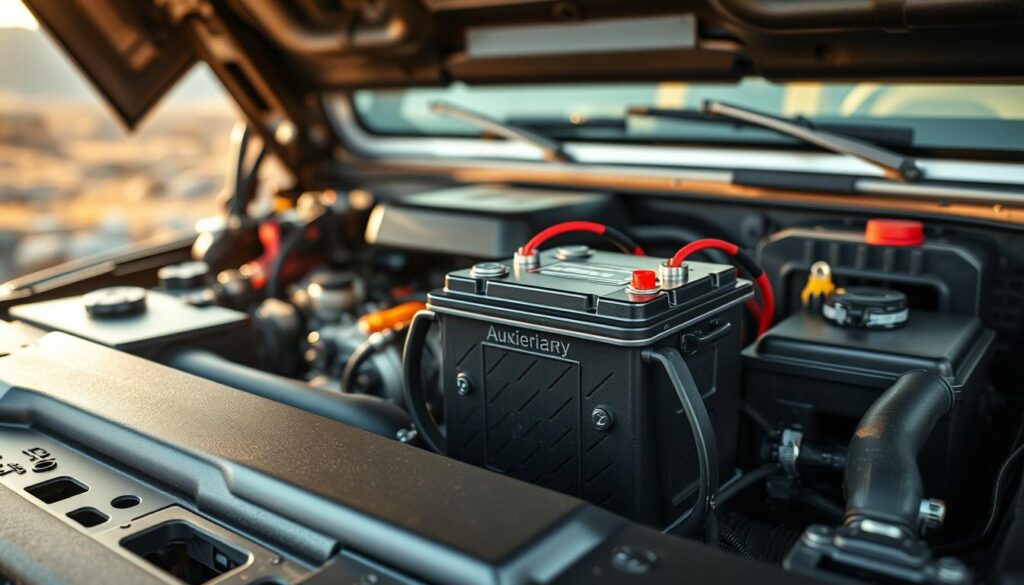
ESS and aux battery: Many late-model vehicles equipped with ess include an aux battery alongside the main 12V unit. That setup keeps infotainment and climate controls powered during stops and preserves cranking power for the engine.
eTorque 3.6L systems
On 3.6L eTorque rigs the charging logic balances targets. Readings like 12.4V at start and about 14.0V while driving match active management. The auxiliary unit supports accessories and quick restarts during stop/start events.
4xe plug-in hybrids
Plug-in models pair a high-voltage propulsion pack with a conventional 12V battery. The propulsion battery provides electric range and torque but does not replace the 12V functions that run accessories and control modules.
Grand Cherokee 4xe facts
The Grand Cherokee 4xe uses a water-sealed propulsion pack rated for about 25 miles of electric range. Jeep reinforced the underbody for off-road protection and fording up to 24 inches while maintaining towing and efficiency specs.
For specific VIN equipment, check the dealer build sheet or consult this guide for troubleshooting and service: jeep battery keeps dying — here’s. Click expand to see how these setups affect warranty and maintenance.
Why some Jeeps have an auxiliary battery and how it affects starting
An auxiliary battery keeps electronics alive during short stops and reduces load on the main battery. That setup helps the starter retain cranking reserve so the vehicle restarts smoothly after stop/start events.
Main battery vs. auxiliary battery: ESS, electronics, and starter load
ESS-equipped models prioritize the main battery for cranking while the aux battery supports infotainment and climate controls when the engine stops. This split lets screens and HVAC stay steady without drawing from the starter supply.
Real-world signs you have two batteries: voltage behavior, start button cues, and warranty timing
Watch the dash voltage. A report from a 3.6L eTorque owner showed about 12.4V at initial start and roughly 14.0V once charging ramped up. That pattern often signals managed charging with an aux battery in place.
If accessories stay bright at lights and the button yields a quick restart, the second battery is likely functioning. If restarts feel slow or screens flicker, the aux unit or main battery may need service—especially near a 36 months/36,000 miles warranty milestone.
Owners also confirm setup via a service thread or by inspecting the bay. For a fast checklist, click expand in our guide to verify your configuration and protect the starter and charging system over time.
Do All Jeeps Have Two Batteries: factory setups vs. aftermarket dual-battery upgrades
Factory electronics and overland rigs serve different goals. Factory builds add an aux battery for stop/start and accessory stability. Aftermarket systems are designed to power camp gear while protecting the engine’s starter supply.
Isolated dual-battery systems for Overlanding: Engine Battery and House Battery
Engine Battery stays dedicated to cranking. The House Battery runs fridges, lights, and inverters so you don’t risk a no-start at camp.
Parallel when running, isolated when parked: solenoid/isolator basics
Most DIY builds use a high-amperage solenoid (for example, a Painless Performance kit). It ties batteries in parallel while driving so the alternator charges both, then isolates them when the vehicle is off.
Why identical batteries matter for charging and system balance
Matched units like Optima YellowTop D34 pairs share chemistry and capacity. That reduces uneven wear and helps the charging system balance state-of-charge over time.
Wiring essentials and powering accessories safely
Use a purpose-built tray (Nemesis Industries), heavy-gauge welded cables, proper crimps, fused ignition trigger via a mini add-a-circuit, solid grounds, and secure routing to maintain hood clearance.
Terminate accessory loads on the house side and use low-voltage cutoffs (for example, a Dometic CFX-35 fridge) to protect the main battery and the starter. For a deeper comparison, why dual setups differ — click expand for a checklist.
Conclusion
In short, your vehicle’s power setup reflects the model year and fitted systems.
ESS-equipped trims often include an auxiliary battery to keep cabin electronics alive and protect the starter during stop/start events. Real-world clues like a 12.4V‑to‑14.0V swing on a 3.6L eTorque hint at managed charging and an extra 12V unit.
Check underhood, review the build sheet, or use our quick checklist — click expand — to confirm your model. Watch for dimming, slow starts, or ESS warnings as the battery ages toward the common 36 months/36,000 miles service window.
For heavy accessory use, consider an isolated dual setup with proven parts and safe wiring. Thanks for reading, and thanks for sharing questions that shaped the guide. Thanks again for helping other owners, and thanks for checking this page.


![Chevy Check Engine Light Flashing then Stops [Here’s Why]](https://automotivesimple.com/wp-content/uploads/2026/03/Chevy-Check-Engine-Light-Flashing-then-Stops-Heres-Why-768x439.jpeg)