Maintaining your vehicle’s appearance is crucial, and one often overlooked aspect is the car side mirror. Scratches on these mirrors can be annoying and compromise your visibility on the road. Fortunately, removing them is easier than you think with the right techniques.
DIY enthusiasts can restore their car’s side mirrors to their original condition without professional help. This guide will walk you through the simple process of DIY car side mirror scratch removal, ensuring your vehicle looks its best and your safety on the road is not compromised.
Key Takeaways
- Simple methods for removing scratches from car side mirrors
- DIY techniques to restore your car’s original appearance
- Importance of maintaining car side mirrors for safety
- Step-by-step guide for car side mirror scratch removal
- Tips for achieving professional results at home
Understanding Car Side Mirror Scratches
The first step in removing scratches from car side mirrors is understanding the type of scratch you’re dealing with. Car side mirrors are susceptible to various forms of damage, ranging from minor surface scratches to deep structural scratches that can impair their functionality.
Types of Scratches on Side Mirrors
Scratches on car side mirrors can be broadly categorized into two types: surface-level and deep structural scratches.
Surface-Level Scratches
Surface-level scratches are minor and typically affect only the outermost layer of the mirror. These scratches are often caused by minor accidents, such as branches or debris hitting the mirror while driving. Surface-level scratches can usually be repaired with simple DIY methods.
Deep Structural Scratches
Deep structural scratches, on the other hand, penetrate deeper into the mirror, potentially damaging the reflective coating or the glass itself. These scratches can significantly impair the mirror’s functionality and may require professional repair or replacement.
Assessing Scratch Severity
Accurately assessing the severity of a scratch is crucial for determining the appropriate repair method.
Visual Inspection Techniques
A thorough visual inspection is the first step in assessing scratch severity. Look for signs of deep damage, such as cracks or significant discoloration. Use a bright light source to illuminate the scratch, making it easier to gauge its depth and length.
When Scratches Require Professional Attention
If a scratch is deep, extends across a significant portion of the mirror, or is accompanied by other forms of damage, it may require professional attention. Professional technicians have the tools and expertise to repair or replace damaged mirrors effectively.
To better understand the different types of scratches and their repair requirements, consider the following comparison:
| Scratch Type | Characteristics | Repair Method |
|---|---|---|
| Surface-Level | Minor, affects outer layer | DIY repair methods |
| Deep Structural | Penetrates deep, damages coating or glass | Professional repair or replacement |
Essential Tools and Materials for Mirror Scratch Removal
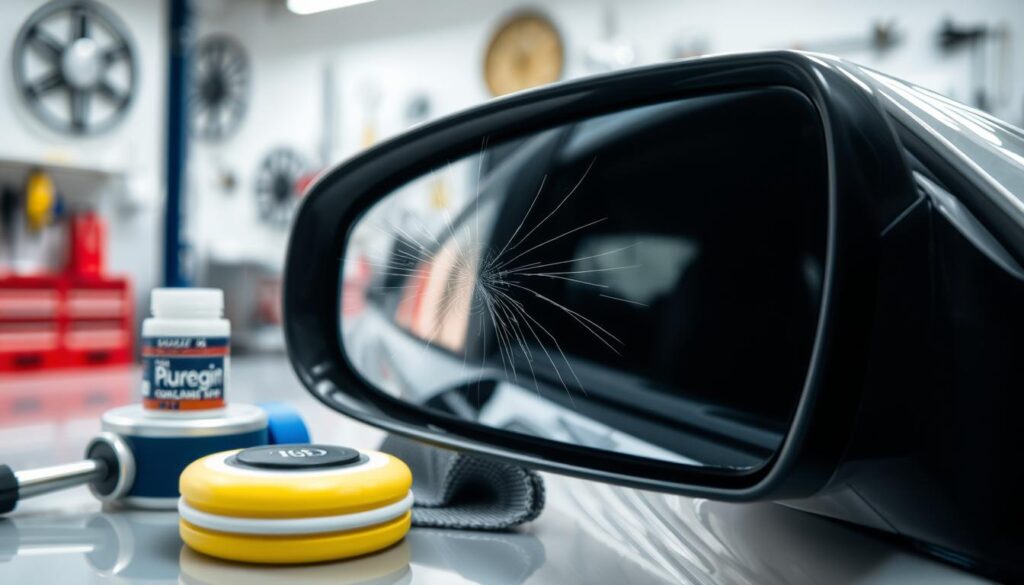
The key to successfully removing scratches from car side mirrors lies in using the appropriate tools and materials. Having the right equipment not only makes the process easier but also ensures a professional finish.
Basic Supplies You’ll Need
To start, you’ll need some basic supplies that are readily available at most auto parts stores or online.
Cleaning Materials
Begin with cleaning materials to prepare the surface. A mild soap and water are usually sufficient for initial cleaning. For more stubborn dirt or grime, consider using a dedicated automotive cleaning solution.
Abrasives and Polishes
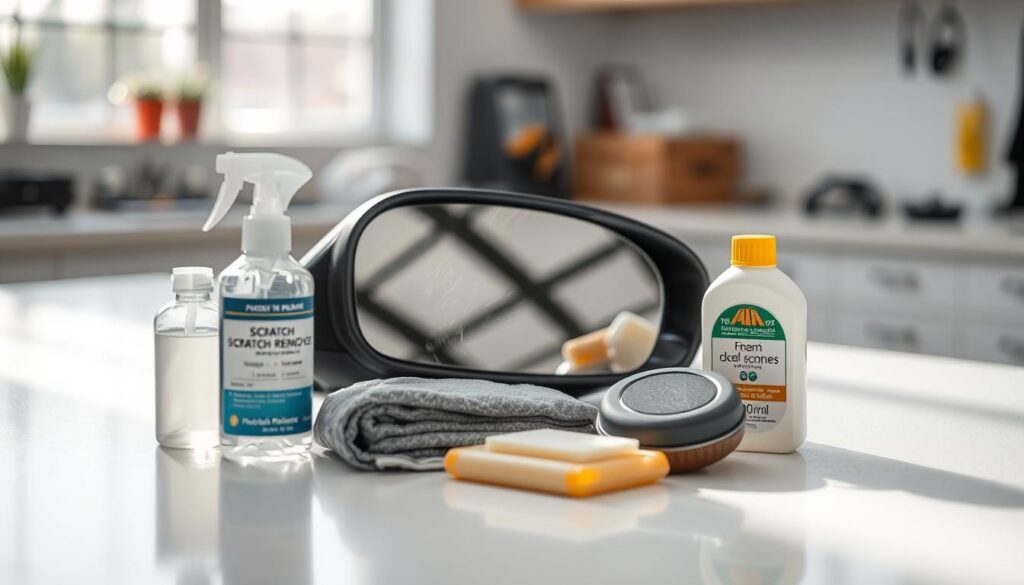
For the actual scratch removal, you’ll need abrasives and polishes. Start with a fine-grit sandpaper (around 1000-1500 grit) for deeper scratches, followed by a rubbing compound to smooth out the surface. Finish with a polish to restore the mirror’s original shine.
Optional Professional Tools
For those looking for a more professional finish or dealing with particularly stubborn scratches, there are optional professional tools available. These can include dual-action polishers or specialized scratch removal kits designed specifically for automotive glass or mirrors.
Choosing the Right Scratch Removal Products
Selecting the right products depends on the type of mirror you’re dealing with and the severity of the scratches. For instance, if you’re dealing with a plastic mirror surface, you’ll need products compatible with that material.
Product Recommendations for Different Mirror Types
| Mirror Type | Recommended Product | Key Features |
|---|---|---|
| Glass Mirrors | Ceramic Scratch Remover | Safe for glass, effective on deep scratches |
| Plastic Mirrors | Plastic Polish Kit | Gentle on plastic, restores clarity |
| Heated Mirrors | Heat-Resistant Scratch Remover | Safe for use on heated surfaces |
Safety Considerations When Using Chemicals
When using any chemical products for scratch removal, it’s crucial to follow safety guidelines. Always wear protective gloves and eyewear, and work in a well-ventilated area. For more complex procedures, you might want to refer to a comprehensive guide like the one on how to buff out scratches on your.
How to Remove Scratches from Car Side Mirror: Step-by-Step Process
Scratches on car side mirrors don’t have to be permanent; this guide will show you how to remove them effectively. Removing scratches from car side mirrors can be a meticulous process, but with the right approach, you can achieve professional-like results. The key is to follow a systematic step-by-step guide that covers preparation, scratch removal, and finishing touches.
Preparing the Mirror Surface
Before you start removing scratches, it’s crucial to prepare the mirror surface properly.
Proper Cleaning Techniques
Begin by cleaning the mirror surface with a mild soap solution to remove dirt and grime. Use a soft, microfiber cloth to avoid causing further scratches. Rinse thoroughly and dry with a clean microfiber cloth to prevent water spots.
Masking and Protection of Surrounding Areas
Apply masking tape around the mirror to protect the surrounding paint and trim from accidental damage during the scratch removal process. Ensure the tape is pressed firmly onto the surface to create a seal.
Removing Light Surface Scratches
For minor scratches, you can use simple DIY methods.
Using Toothpaste Method
Toothpaste can be an effective scratch remover for light surface scratches. Apply a small amount of toothpaste to the scratched area and rub it gently with a soft cloth. Rinse with cold water and inspect the area. If the scratch is still visible, you may need to repeat the process or consider alternative methods.
Applying Commercial Scratch Removers
For more stubborn light scratches, consider using a commercial scratch remover. Follow the product’s instructions carefully, and always test on a small, inconspicuous area first to ensure compatibility with your mirror’s material.
Tackling Deep Scratches
Deep scratches require more aggressive techniques.
Wet Sanding Technique
Wet sanding is effective for deeper scratches. Start with a fine-grit sandpaper (around 1000 grit) and sand the area wet, gradually increasing the grit to achieve a smooth finish. Be cautious not to sand too aggressively, as this can damage the mirror surface.
Multi-Stage Polishing Process
After wet sanding, use a multi-stage polishing process to restore the mirror’s shine. Start with a coarse polish and progress to finer polishes, buffing the area with a clean, soft cloth after each stage.
Polishing and Finishing Touches
The final steps involve polishing and applying protective coatings.
Buffing for a Perfect Finish
Use a high-quality buffing compound to achieve a flawless finish. Apply the compound to the mirror and buff it out with a clean, soft cloth attached to a buffing wheel or drill. Work in small sections to maintain even coverage.
Applying Protective Coatings
To protect your mirror from future scratches, apply a protective coating. There are various products available, including sprays and wipes. Follow the product’s instructions for application and reapplication guidelines.
For more detailed information on buffing out scratches, you can refer to our guide on how to buff out scratches on your car in 5.
| Scratch Type | Removal Method | Recommended Products/Tools |
|---|---|---|
| Light Surface Scratches | Toothpaste or Commercial Scratch Removers | Toothpaste, Soft Cloth, Commercial Scratch Remover |
| Deep Scratches | Wet Sanding and Multi-Stage Polishing | Fine-grit Sandpaper, Polishing Compounds, Buffing Wheel |
Preventing Future Scratches and Maintenance Tips
Preventing scratches on car side mirrors requires a combination of protective measures and regular maintenance. By adopting a few simple habits, you can keep your side mirrors in excellent condition and ensure your vehicle’s overall appearance remains unblemished.
Protective Films and Covers
One of the most effective ways to prevent scratches on your car’s side mirrors is by applying protective films or covers. These films are designed to absorb minor impacts and protect the mirror surface from damage. When selecting a protective film, look for products that are specifically designed for automotive use and follow the manufacturer’s installation instructions carefully.
Key benefits of protective films include:
- Scratch resistance
- UV protection
- Easy installation
Proper Cleaning Routines
Regular cleaning is essential for maintaining your car’s side mirrors. Use a soft, lint-free cloth and a mild detergent solution to wipe down the mirrors. Avoid using harsh chemicals or abrasive materials that could scratch the surface.
Tips for effective cleaning:
- Use a microfiber cloth for best results
- Avoid cleaning in direct sunlight
- Dry the mirrors thoroughly after cleaning
DIY Home Remedies for Minor Maintenance
For minor scratches or imperfections, several DIY home remedies can be effective. Toothpaste, for example, can be used to polish out light scratches. Apply a small amount to the affected area and gently rub it in with a soft cloth.
Other home remedies include:
- Baking soda and water paste for gentle polishing
- Vinegar solution for removing dirt and grime
Seasonal Care for Side Mirrors
Different seasons bring unique challenges for your car’s side mirrors. In winter, ensure that ice and snow are cleared from the mirrors to prevent damage. In summer, be mindful of the increased risk of scratches from debris on the road.
Seasonal tips:
- Use a de-icer spray in freezing temperatures
- Regularly inspect mirrors for damage during road trips
Conclusion
Restoring your car’s side mirrors to their original condition is achievable with the right techniques and tools. By following this comprehensive car side mirror scratch removal guide, you can effectively remove scratches and maintain your vehicle’s appearance.
Proper maintenance is crucial to prevent future scratches. Regular cleaning and applying protective films can significantly reduce the risk of damage. For more severe scratches, considering a professional car mirror scratch fix can ensure a flawless finish.
By implementing the steps outlined in this guide, you can enjoy a clear and unobstructed view while driving, enhancing your overall safety on the road. Regular upkeep and prompt attention to scratches will keep your car’s side mirrors in optimal condition.
FAQ
What are the common types of scratches found on car side mirrors?
Car side mirrors can suffer from surface-level scratches and deep structural scratches, each requiring different approaches for removal.
How do I assess the severity of a scratch on my car side mirror?
Assessing the severity involves a visual inspection to determine the depth and length of the scratch, helping you decide whether to attempt removal yourself or seek professional help.
What are the essential tools needed for removing scratches from car side mirrors?
Basic supplies include cleaning materials, abrasives, and polishes. Optional professional tools can also be used for more severe scratches.
Can I remove scratches from my car side mirror using household items?
Yes, for light surface scratches, methods like using toothpaste can be effective. However, for deeper scratches, commercial scratch removers or professional tools may be necessary.
How do I prevent future scratches on my car side mirrors?
Using protective films and covers, maintaining proper cleaning routines, and applying DIY home remedies for minor maintenance can help prevent future scratches.
Are there any seasonal care tips for maintaining car side mirrors?
Yes, seasonal care involves checking and maintaining your side mirrors regularly, especially during extreme weather conditions, to ensure they remain in good condition.
What safety considerations should I keep in mind when removing scratches from car side mirrors?
When using chemicals for scratch removal, it’s crucial to follow safety guidelines, such as wearing protective gloves and working in a well-ventilated area, to avoid health risks.
Can I use the same scratch removal techniques for different types of car side mirrors?
No, different mirror types may require specific products or techniques. It’s essential to choose the right scratch removal products and methods suitable for your mirror type.