The Jeep Grand Cherokee 4WD system is designed to provide enhanced traction and control, making it an essential feature for off-road adventures and challenging weather conditions.
Understanding how to effectively use this system can significantly improve your vehicle’s performance and safety. This guide will walk you through the process of enabling 4WD in your Jeep Grand Cherokee.
By following this step-by-step guide, you’ll gain a comprehensive understanding of your vehicle’s capabilities and learn how to optimize its 4WD system for various driving conditions.
Key Takeaways
- Understand the benefits of the Jeep Grand Cherokee 4WD system.
- Learn the step-by-step process to enable 4WD.
- Discover how to optimize 4WD for different driving conditions.
- Enhance your vehicle’s performance and safety.
- Gain confidence in using your Jeep Grand Cherokee’s 4WD capabilities.
Understanding Your Jeep Grand Cherokee’s 4WD System
The 4WD system in the Jeep Grand Cherokee is engineered for versatility and control, allowing drivers to navigate various terrains with confidence. To fully leverage this capability, it’s essential to understand the intricacies of the 4WD system.
Types of 4WD Systems in Jeep Grand Cherokee Models
Jeep Grand Cherokee models come equipped with advanced 4WD systems, designed to cater to different driving needs. The primary types include:
- Part-Time 4WD: Engages 4WD mode manually, ideal for off-road or low-traction conditions.
- Full-Time 4WD: Automatically distributes power between two and four wheels based on driving conditions.
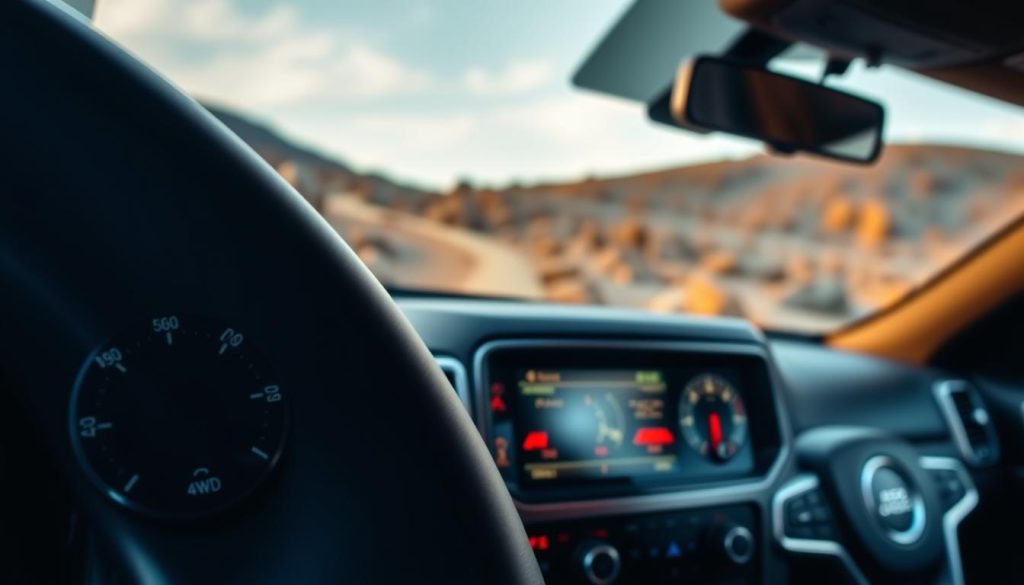
4WD Modes Explained: 4WD Auto, 4WD High, and 4WD Low
The Jeep Grand Cherokee features various 4WD modes to suit different driving scenarios:
- 4WD Auto: Automatically switches between 2WD and 4WD based on road conditions, offering a balance between performance and fuel efficiency.
- 4WD High: Engages 4WD mode for increased traction at higher speeds, suitable for rugged terrain or slippery roads.
- 4WD Low: Provides maximum torque at lower speeds, ideal for challenging off-road conditions or steep inclines.
Key Components of the 4WD System
The 4WD system in the Jeep Grand Cherokee comprises several critical components:
- Transfer Case: Transfers power between the front and rear axles.
- Driveline: Includes driveshafts and axles that transmit power to the wheels.
- Electronic Control Systems: Monitors and adjusts power distribution in real-time.
Understanding these components and how they work together is crucial for maintaining and optimizing your vehicle’s 4WD performance.
Preparing Your Vehicle Before Engaging 4WD
Preparing your Jeep Grand Cherokee for 4WD operation is crucial for safe and effective off-road driving. Before you hit the trails or venture into challenging terrain, it’s essential to ensure your vehicle is ready for the demands of four-wheel drive.
Safety Checks and Vehicle Inspection
Conducting thorough safety checks and vehicle inspections is vital before engaging 4WD. This includes:
- Checking tire pressure and tread depth to ensure even traction
- Inspecting brakes for wear and proper function
- Verifying that all lights, including headlights and taillights, are functioning correctly
- Ensuring that the vehicle’s fluids, such as oil and coolant, are at the recommended levels
Regular maintenance is key to preventing mechanical issues during off-road adventures. It’s also a good idea to check the vehicle’s battery condition and ensure that all electrical systems are functioning properly.
Optimal Driving Conditions for 4WD Activation
Understanding when to engage 4WD is just as important as preparing your vehicle. 4WD is typically recommended for:
- Snowy or icy conditions where extra traction is needed
- Off-road terrain, such as mud, sand, or rocky trails
- Steep inclines or declines where additional control is necessary
It’s crucial to match your driving mode to the conditions. For instance, using 4WD Low for low-speed, high-torque situations can be beneficial in extreme off-road conditions.
When Not to Engage 4WD
There are scenarios where engaging 4WD is not advisable. For example:
- Driving on dry pavement, as this can cause unnecessary wear on the drivetrain
- High-speed driving on highways or freeways, where 2WD is sufficient and more fuel-efficient
Understanding these limitations can help you use your Jeep Grand Cherokee’s 4WD system more effectively and prolong its lifespan.
How to Turn on 4WD Jeep Grand Cherokee: Step-by-Step Instructions
Understanding how to properly engage 4WD in your Jeep Grand Cherokee is crucial for maximizing its performance in various driving conditions. The process involves several straightforward steps that ensure your vehicle is ready for challenging terrain.
Step 1: Locate the 4WD Control System
The first step in engaging 4WD is to locate the control system. In most Jeep Grand Cherokee models, the 4WD control is a dial or button located on the center console. It’s essential to familiarize yourself with the layout and labeling of this control system, as it may vary slightly depending on your vehicle’s model year.
Step 2: Select the Appropriate 4WD Mode
Once you’ve located the 4WD control, the next step is to select the appropriate mode for your driving conditions. The Jeep Grand Cherokee typically offers several 4WD modes, including 4WD Auto, 4WD High, and 4WD Low. 4WD Auto is suitable for most everyday driving and provides automatic switching between two-wheel drive and 4WD as needed. 4WD High is ideal for more challenging terrain where extra traction is required, while 4WD Low is used for extreme off-road conditions or steep inclines.
Step 3: Verify 4WD Engagement
After selecting the desired 4WD mode, it’s crucial to verify that the system has engaged correctly. Many Jeep Grand Cherokee models feature dashboard indicators or lights that illuminate when 4WD is active. Take a moment to check your dashboard to confirm that the 4WD system is engaged.
Step 4: Adjusting Your Driving Technique
With 4WD engaged, you’ll need to adjust your driving technique to maximize the system’s benefits. When driving in 4WD, maintain a steady speed, avoid sudden acceleration, and use gentle braking. These techniques will help optimize traction and control, especially in slippery or uneven terrain.
By following these steps and adjusting your driving habits, you can effectively utilize your Jeep Grand Cherokee’s 4WD capabilities to tackle a variety of driving conditions with confidence.
Best Practices and Common Scenarios for Using 4WD
To get the most out of your Jeep Grand Cherokee’s 4WD system, it’s essential to understand the best practices for its use in various driving scenarios. This knowledge will not only enhance your driving experience but also ensure your safety on the road or off-road.
Driving in Snow and Ice Conditions
When driving in snowy or icy conditions, engaging your Jeep Grand Cherokee’s 4WD system can significantly improve traction and control. 4WD Low is particularly useful in extreme conditions where high torque at lower speeds is necessary.
- Reduce your speed and increase your following distance.
- Avoid hard acceleration and braking.
- Use gentle steering inputs to maintain control.
Off-Road Terrain and Mud
Off-road driving is where your Jeep Grand Cherokee’s 4WD capabilities truly shine. When navigating through mud or rugged terrain, 4WD Low provides the necessary control and traction.
- Engage 4WD before entering challenging terrain.
- Use a slow and steady pace to maintain traction.
- Know how to recover your vehicle if it becomes stuck.
Switching Between 4WD Modes While Driving
Your Jeep Grand Cherokee allows you to switch between different 4WD modes while driving, but it’s crucial to follow the manufacturer’s guidelines to avoid damaging your vehicle’s drivetrain.
- Come to a complete stop before switching between 4WD High and 4WD Low.
- Use the appropriate mode for your driving conditions.
Disengaging 4WD and Returning to 2WD
Disengaging 4WD and returning to 2WD mode can help improve fuel efficiency and reduce wear on your vehicle’s drivetrain. It’s generally recommended to switch back to 2WD when driving on dry, paved roads.
- Ensure you’re driving on a suitable surface before disengaging 4WD.
- Follow the manufacturer’s instructions for switching modes.
Conclusion
Understanding and properly using the Jeep Grand Cherokee 4WD system is crucial for safe and effective driving in various conditions. By following the steps outlined in this guide, you can confidently engage and disengage 4WD, adapting to different terrain and weather conditions.
To get the most out of your Jeep Grand Cherokee’s 4WD capabilities, it’s essential to apply the 4WD tips and best practices discussed in this article. This knowledge will enable you to navigate challenging environments, such as snow, ice, and off-road terrain, with increased control and precision.
By mastering the Jeep Grand Cherokee 4WD system, you can unlock your vehicle’s full potential and enjoy a more versatile driving experience. Whether you’re driving on paved roads or venturing off the beaten path, a thorough understanding of your vehicle’s capabilities will help you stay safe and in control.
FAQ
How do I know if my Jeep Grand Cherokee is in 4WD mode?
You can verify if your Jeep Grand Cherokee is in 4WD mode by checking the dashboard indicators or the 4WD control panel. The specific indicator or display will vary depending on the model year and trim level of your vehicle.
Can I switch between 4WD modes while driving my Jeep Grand Cherokee?
Yes, you can switch between 4WD modes while driving, but it’s essential to follow the manufacturer’s guidelines and ensure it’s safe to do so. The Jeep Grand Cherokee’s 4WD system is designed to handle mode changes while in motion, but you should always check your owner’s manual for specific instructions.
What are the benefits of using 4WD Low in my Jeep Grand Cherokee?
4WD Low is designed for extreme off-road conditions, such as steep inclines, rocky terrain, or deep sand. It provides maximum torque and control at low speeds, making it ideal for navigating challenging terrain.
How do I maintain my Jeep Grand Cherokee’s 4WD system?
Regular maintenance is crucial to ensure your 4WD system operates correctly. This includes checking the fluid levels, inspecting the drivetrain components, and following the recommended maintenance schedule outlined in your owner’s manual.
Can I drive my Jeep Grand Cherokee in 4WD on dry pavement?
While it’s technically possible to drive in 4WD on dry pavement, it’s not always recommended. Driving in 4WD on dry pavement can cause unnecessary wear on the drivetrain and may affect the vehicle’s handling. It’s best to follow the manufacturer’s guidelines and use 4WD only when necessary.
What is the difference between 4WD Auto and 4WD High in my Jeep Grand Cherokee?
4WD Auto is a mode that automatically sends power to the front and rear axles as needed, while 4WD High is a mode that locks the front and rear axles together, providing maximum traction. 4WD Auto is suitable for most driving conditions, while 4WD High is better suited for more challenging terrain or situations where maximum traction is required.