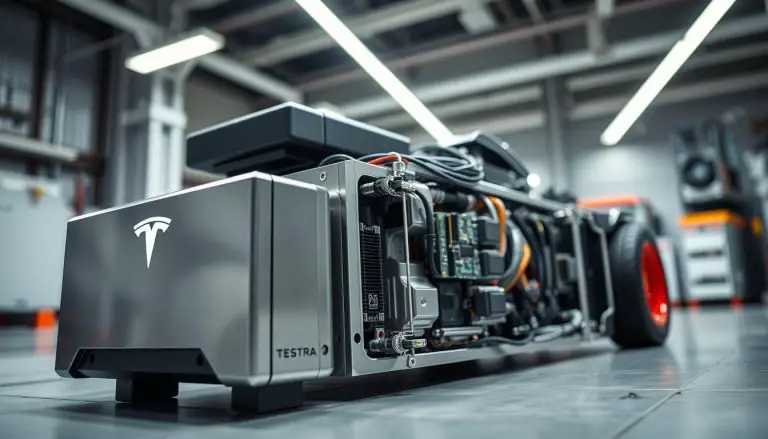
As electric vehicles (EVs) continue to ascend in popularity, the imperative to comprehend the repercussions of hot temperatures on their battery performance intensifies. The adverse effects of elevated temperatures on the durability and efficiency of an EV battery necessitate a heightened awareness among proprietors. This awareness is pivotal in mitigating potential impacts.
The prolonged exposure to high temperatures exceeding 85°F (29°C) precipitates an accelerated battery degradation, thus curtailing the overall lifespan of the electric vehicle. For inhabitants of regions characterized by sweltering climates, this phenomenon results in a more rapid diminution of their EV‘s usable capacity relative to those residing in temperate locales. To acquire insights into strategies for countering these adverse effects, peruse resources dedicated to optimizing EV battery performance under scorching conditions.
Key Takeaways
- High temperatures accelerate battery degradation.
- EVs lose usable capacity faster in hot climates.
- Overheating reduces driving range due to increased energy consumption.
- Fast charging in hot weather causes extra stress on the battery.
- Best practices include avoiding fast charging during extreme heat and maintaining a charge between 20% and 80%.
The Science Behind EV Batteries and Temperature Sensitivity
Lithium-ion batteries, the quintessence of modern electric vehicles, operate within a complex interplay of chemical processes that are highly sensitive to temperature variations. Understanding how these batteries function and why temperature matters is crucial for optimizing their performance and longevity.
How Lithium-Ion Batteries Function
Lithium-ion batteries work through a delicate balance of chemical processes and electron flow. The battery’s operation is based on the movement of lithium ions between the positive cathode and negative anode, facilitated by an electrolyte.
Chemical Processes and Electron Flow
The discharge process involves the movement of lithium ions from the anode to the cathode through the electrolyte, releasing electrons that flow through the external circuit to power the vehicle. This process is reversible, allowing the battery to be recharged.
Optimal Operating Temperature Range
Lithium-ion batteries have an optimal operating temperature range, typically between 20°C and 30°C, where they can charge and discharge efficiently. Deviations from this range can impact performance and longevity.
Why Temperature Matters for Battery Chemistry
Temperature significantly affects the battery’s chemistry, notably in terms of electrolyte stability and internal resistance.
Electrolyte Stability in Heat
High temperatures can cause the electrolyte to degrade, leading to a loss of battery capacity and potentially causing safety issues. Maintaining electrolyte stability is crucial for battery health.
Internal Resistance Changes
Temperature changes affect the internal resistance of the battery, influencing its efficiency and ability to hold a charge. Lower temperatures increase resistance, while high temperatures can lead to overheating.
| Temperature Range | Battery Performance | Impact on Lifespan |
|---|---|---|
| Below 0°C | Reduced capacity and power output | Potential for long-term damage |
| 20°C – 30°C | Optimal performance | Minimal impact on lifespan |
| Above 40°C | Increased degradation | Reduced lifespan |

EV Battery in Hot Temperature:5 Things to Know
Grasping the nuances of EV battery performance under elevated temperatures is imperative for enhancing their longevity and efficacy. As ambient temperatures escalate globally, electric vehicle proprietors must remain vigilant regarding the potential repercussions on their vehicle’s energy storage unit.
1. Reduced Driving Range
Escalating temperatures can drastically curtail an EV’s operational range. This phenomenon arises from the battery’s diminished efficiency in such conditions.
Average Range Loss Percentages
Research indicates that EV range can plummet by up to 20% in scorching weather. For example, a study revealed that at 95°F (35°C), certain EVs experience a range diminution of approximately 15-20% relative to their performance at more temperate temperatures.
Highway vs. City Driving Differences
The thermal impact on range exhibits variability between highway and urban driving scenarios. Highway driving is more susceptible due to the sustained high velocities and augmented battery load.

2. Accelerated Battery Degradation
Hot temperatures not only curtail range but also expedite battery degradation. Elevated heat levels catalyze the deterioration of battery cells at an accelerated rate.
Cell Deterioration Mechanisms
The primary factor behind this degradation is the heightened chemical activity within battery cells at elevated temperatures, resulting in a diminution of overall battery health over time.
3. Charging Limitations
EVs encounter charging constraints in hot weather. Elevated temperatures impede the battery’s charging efficiency.
DC Fast Charging Restrictions
Some EVs impose limitations on DC Fast Charging in extreme heat to avert battery damage. This can lead to extended charging durations.
Optimal Charging Times During Hot Days
Charging during the cooler segments of the day, such as the early morning or evening, can help alleviate some of these challenges.
4. Thermal Management System Importance
A sophisticated thermal management system is indispensable for maintaining the battery’s optimal temperature. This factor significantly influences the battery’s performance and longevity.
Active vs. Passive Cooling Designs
Active cooling systems, which employ liquid or air to cool the battery, are generally more efficacious than passive designs, notably in extreme temperatures.
5. Battery Lifespan Implications
The long-term implications of hot temperatures on battery lifespan are profound. Prolonged exposure to high heat can substantially diminish the battery’s overall lifespan.
Long-term Capacity Retention Data
Studies have demonstrated that EVs operated in hot climates may retain less of their original battery capacity over time compared to those in more temperate regions.
Thermal Management Systems Compared
Diverse thermal management systems are employed in EVs to regulate battery temperature and enhance performance. These systems are pivotal in preserving battery health and efficiency, notably in extreme temperatures.
Liquid-Cooled Battery Systems
Liquid-cooled battery systems employ a coolant to absorb and dissipate heat from the battery pack. This approach is highly effective in maintaining optimal battery temperatures.
Efficiency and Performance Metrics
The efficiency of liquid-cooled systems is gauged by their capacity to sustain a consistent battery temperature, typically between 20°C to 30°C, even in extreme external conditions. Key performance metrics include the system’s coefficient of performance (COP) and the rate of heat dissipation.
Air-Cooled Battery Designs
Air-cooled battery designs rely on air circulation to cool the battery pack. While simpler and less expensive than liquid-cooled systems, they may struggle to maintain optimal temperatures in extreme heat.
Limitations in Extreme Heat
In high temperatures, air-cooled systems can face challenges in keeping the battery at a safe temperature, potentially leading to reduced performance and lifespan. The effectiveness of air-cooled designs is highly dependent on ambient temperature and airflow.
Hybrid Cooling Approaches
Hybrid cooling approaches combine elements of both liquid-cooled and air-cooled systems to achieve a balance between efficiency and cost.
Cost vs. Effectiveness Analysis
| Cooling System | Cost | Effectiveness |
|---|---|---|
| Liquid-Cooled | High | Very Effective |
| Air-Cooled | Low | Moderately Effective |
| Hybrid Cooling | Moderate | Effective |
The selection of thermal management system depends on various factors, including vehicle design, intended use, and cost considerations. By comparing these systems, manufacturers can optimize EV performance and battery longevity.
How Leading EV Manufacturers Address Heat Challenges
Top electric vehicle manufacturers are confronting heat-related challenges with cutting-edge technologies. As the EV market expands, thermal management has become a paramount concern for industry leaders.
Tesla’s Advanced Thermal Management
Tesla has developed an advanced thermal management system, crucial for maintaining battery health. The Model 3 and Model Y benefit from an active liquid cooling system, which regulates battery temperature during charging and driving.
Model 3/Y vs. Model S/X Differences
While all Tesla models employ thermal management, there are distinctions between the Model 3/Y and Model S/X. The latter models boast more intricate cooling systems, necessitated by their larger battery packs.
Nissan’s Evolution from Leaf to Ariya
Nissan has made substantial advancements in thermal management, drawing from their early experiences with the Leaf. The Ariya features an advanced battery management system that enhances efficiency and minimizes heat-related degradation.
Lessons Learned from First-Generation EVs
Nissan’s transition from the Leaf to the Ariya has yielded invaluable insights into EV battery management. These lessons have been pivotal in shaping their contemporary thermal management strategies.
European Approaches: Volkswagen ID Series and Audi e-tron
European manufacturers, such as Volkswagen and Audi, are also pioneering advancements in thermal management. The Volkswagen ID Series features an advanced liquid-cooled battery system, while Audi’s e-tron models employ a combination of air and liquid cooling.
Engineering Philosophies Compared
The engineering philosophies of Volkswagen and Audi diverge, reflecting their distinct design priorities. Understanding these differences offers insights into the future of EV thermal management.
Real-World Performance Data: Hot Weather Impact
In hot climates, electric vehicles encounter distinct challenges, necessitating an examination of real-world data to grasp these impacts. As temperatures escalate, the performance of EVs, notably in terms of range and charging speed, emerges as a critical concern for drivers.
Range Reduction Percentages Across Popular Models
The effect of hot weather on EV range differs across various models. Research indicates that certain EVs experience a more pronounced range reduction in high temperatures than others.
Urban vs. Highway Driving Scenarios
Driving scenarios significantly influence range reduction. Urban driving scenarios exhibit a different impact compared to highway driving, due to differences in speed and stop frequency.
| Model | Urban Range Reduction (%) | Highway Range Reduction (%) |
|---|---|---|
| Tesla Model 3 | 15 | 20 |
| Nissan Leaf | 18 | 22 |
| Chevrolet Bolt | 12 | 18 |
Charging Speed Variations in High Temperatures
Hot weather not only diminishes driving range but also impairs charging speeds. Grasping these variations is critical for EV owners, notably during extended journeys.
Supercharging vs. Level 2 Charging
The charging method employed significantly influences charging times in hot weather. Supercharging, though convenient, is susceptible to high-temperature impacts.
Owner-Reported Experiences in Hot Climates
Insights from EV owners in hot climates offer invaluable practical implications regarding the effects of high temperatures on EV performance.
Arizona, Texas, and Florida Case Studies
Case studies from these regions reveal varying degrees of impact on EV performance, underscoring the significance of thermal management systems.
Key Takeaway: Comprehending the impact of hot weather on your EV’s performance is essential for optimizing its efficiency and longevity.
Practical Tips for Protecting Your EV Battery in Summer
The advent of summer heralds a period of heightened thermal stress for electric vehicles, necessitating the adoption of specific strategies to safeguard the battery’s integrity. Optimal charging practices, judicious parking strategies, and the implementation of battery-preserving driving techniques are pivotal in maintaining the vehicle’s performance and prolonging the battery’s lifespan.
Optimal Charging Practices During Heat Waves
Adapting charging routines to the extreme heat of summer is imperative. It is advisable to maintain the battery’s state of charge within the 20% to 80% range, thus mitigating the stress on the battery cells.
Ideal State-of-Charge Ranges
Strategic avoidance of both full charges and deep discharges is crucial in minimizing battery degradation. It is recommended to maintain the battery level between 20% and 80% unless embarking on a prolonged journey.
Time-of-Day Charging Strategies
Opt for charging during the cooler segments of the day, such as the early morning or late evening, to diminish the adverse effects of heat on the battery.
Parking Strategies to Minimize Heat Exposure
Whenever feasible, park your EV in a shaded location or within a garage to shield it from direct sunlight.
Shade Solutions and Garage Alternatives
In the absence of a garage, consider employing a sunshade or parking in a shaded area to mitigate heat exposure.
Using Pre-Conditioning Features Effectively
Many electric vehicles are equipped with pre-conditioning features, enabling the cooling or heating of the vehicle while it is still charging.
App-Based Climate Control Benefits
Utilize your EV’s app to pre-condition the vehicle’s temperature before departure, which can significantly reduce the battery’s load.
Battery-Preserving Driving Techniques
Employing smooth acceleration and regenerative braking can substantially reduce wear on the EV’s battery.
Acceleration and Regenerative Braking Tips
Avoid abrupt accelerations and leverage regenerative braking to capture energy, thus reducing battery drain.
Future Innovations in EV Battery Heat Resistance
The imperative for electric vehicle (EV) technology advancements in hot climates is paramount. As the electric vehicle market expands, the necessity for batteries that operate efficiently across diverse temperatures intensifies. Manufacturers face a critical challenge in this regard.
Solid-State Battery Technology
The advent of solid-state battery technology heralds a significant leap in EV battery evolution. By substituting the liquid electrolyte with a solid material, these batteries are poised to elevate safety, energy density, and charging velocities.
Temperature Stability Improvements
Temperature stability is a pivotal advantage of solid-state batteries. Unlike conventional lithium-ion batteries, which are susceptible to rapid degradation in high temperatures, solid-state batteries are engineered to preserve performance and longevity under extreme heat. This is facilitated by the solid electrolyte’s capacity to endure elevated temperatures without decomposition.
Advanced Cooling Systems in Development
Parallel to battery technology advancements, researchers are dedicated to the creation of more efficacious cooling systems for EV batteries. These systems are indispensable for maintaining optimal battery temperature during operation, a necessity in hot climates.
Immersion Cooling Research
Immersion cooling, where battery cells are submerged in a coolant, is an area of research garnering significant attention. This method is anticipated to offer superior heat dissipation compared to conventional air or liquid cooling systems. Preliminary studies indicate that immersion cooling can substantially lower battery temperatures, thus enhancing performance and lifespan.
Predictive Thermal Management Software
Predictive thermal management software represents another critical innovation. This technology leverages advanced algorithms and real-time data to forecast battery temperature and adjust cooling strategies appropriately.
AI-Driven Battery Protection
The integration of AI in thermal management systems enables more sophisticated battery protection. By scrutinizing driving patterns, environmental conditions, and battery health, AI-driven systems can optimize cooling and heating to maintain the battery within its optimal temperature range. This not only augments performance but also extends the battery’s lifespan.
In conclusion, the future of EV battery heat resistance appears promising with the advent of solid-state battery technology, advanced cooling systems, and predictive thermal management software. These innovations are poised to significantly enhance the performance and longevity of EV batteries in hot climates.
Conclusion: Maximizing Your EV’s Performance in Hot Climates
The influence of elevated temperatures on the performance of electric vehicle (EV) batteries is paramount for optimizing both efficiency and longevity. High ambient temperatures can notably diminish driving range, expedite battery deterioration, and impede charging velocities. To counteract these adverse effects, it is imperative to adopt optimal charging methodologies, employ parking strategies that minimize thermal exposure, and effectively utilize pre-conditioning functionalities.
Renowned EV manufacturers, such as Tesla, Nissan, and Volkswagen, have integrated sophisticated thermal management systems to address heat-related hurdles. By comprehending the operation of these systems and their strategic deployment, EV proprietors can markedly augment their vehicle’s performance under scorching climatic conditions.
The progression of the EV sector is anticipated to introduce advancements in battery technology and thermal management systems, thus enhancing EV battery performance in high-temperature environments. By remaining abreast of these advancements and adhering to best practices, EV owners can optimize their vehicle’s performance, ensuring a more seamless and efficient driving experience, even in the most extreme climates.
FAQ
How do high temperatures affect EV battery performance?
Elevated temperatures expedite the degradation of the chemical processes within EV batteries, leading to a diminution in driving range and overall performance.
What is the optimal operating temperature range for lithium-ion batteries?
The ideal temperature range for lithium-ion batteries is between 20°C to 30°C (68°F to 86°F). This range, while generally accepted, can vary based on the specific battery chemistry.
How can I protect my EV battery from heat damage during summer?
To safeguard your EV battery against heat damage, adhere to optimal charging practices. Park in shaded areas or garages. Utilize pre-conditioning features and adopt battery-preserving driving techniques.
What are the differences between liquid-cooled and air-cooled battery systems?
Liquid-cooled battery systems are more efficient and effective in extreme heat, offering superior temperature regulation. In contrast, air-cooled systems, while simpler and less expensive, are less effective in high temperatures.
How do leading EV manufacturers address heat challenges in their vehicles?
Renowned EV manufacturers, such as Tesla, Nissan, Volkswagen, and Audi, employ advanced thermal management strategies. These include sophisticated cooling systems and software, designed to mitigate the adverse effects of heat on their EV batteries.
What are some future innovations aimed at improving EV battery heat resistance?
Innovations on the horizon include solid-state battery technology and advanced cooling systems, such as immersion cooling. Predictive thermal management software, leveraging AI, is also being developed to enhance EV battery performance and longevity in hot temperatures.
Can hot weather affect the charging speed of my EV?
Affirmatively, hot weather can impede the charging speed of your EV. High temperatures cause the battery to heat up further during charging, potentially reducing charging speeds or necessitating thermal management interventions.
Are there any specific driving techniques that can help preserve my EV battery in hot weather?
Yes, employing smooth acceleration, regenerative braking, and avoiding extreme speeds can mitigate the strain on your EV battery. This approach aids in preserving its lifespan during hot weather conditions.