Dealing with swollen lug nuts on your Ford vehicle can be a frustrating experience. It’s a common issue that many Ford owners face, and it requires prompt attention to avoid further complications.
This comprehensive lug nut replacement guide is designed to walk you through the process of identifying and replacing swollen lug nuts, ensuring your vehicle’s safety and performance. Proper Ford maintenance is crucial, and this guide will help you understand the importance of addressing this issue.
Key Takeaways
- Understanding the causes of swollen lug nuts on Ford vehicles
- Identifying the signs and symptoms of swollen lug nuts
- Step-by-step guide to replacing swollen lug nuts
- Tips for preventing swollen lug nuts in the future
- Importance of regular Ford maintenance
Understanding the Ford Swollen Lug Nuts Problem
Swollen lug nuts on Ford vehicles can be a frustrating and challenging issue to address. This problem has been affecting many Ford owners, causing difficulties during routine maintenance and repairs.
Why Ford Lug Nuts Swell
The swelling of lug nuts is primarily attributed to two main factors. Understanding these causes is crucial to preventing and addressing the issue.
The Two-Piece Design Flaw
One of the primary reasons for lug nut swelling is the two-piece design of the lug nuts. This design can lead to corrosion between the two pieces, causing the lug nut to swell.
Environmental Factors Contributing to Swelling
Environmental factors, such as exposure to moisture and road salt, can also contribute to the swelling of lug nuts. These elements can accelerate corrosion, making the problem worse over time.
Affected Ford Models and Years
Several Ford models are prone to swollen lug nuts, particularly those produced during certain years. Models such as the Ford Fusion, Ford Escape, and Ford Explorer are among the affected vehicles. It’s essential for owners of these models to be aware of this issue.

Signs Your Lug Nuts Need Replacement
If you’re experiencing difficulty removing your lug nuts or notice signs of corrosion, it may be time to replace them. Other indicators include stripped or damaged threads on the lug nuts or wheel studs.
Tools and Materials Needed for Replacement
Before starting the Ford swollen lug nuts replacement process, it’s crucial to gather the necessary tools and materials. Having the right equipment on hand will make the job easier and help prevent potential complications.
Essential Tools for Removal
To remove swollen lug nuts, you’ll need a combination of standard and specialized tools. Let’s break down the essentials:
Standard Socket Sets
A high-quality socket set is a fundamental tool for any automotive repair. For lug nut removal, you’ll typically need a deep socket that fits your Ford’s lug nuts. Ensure the socket is the correct size to avoid damaging the lug nuts or wheel studs.
Specialized Lug Nut Removal Tools
In cases where lug nuts are severely swollen, a specialized lug nut removal tool may be necessary. These tools are designed to grip the lug nut securely, providing the leverage needed for removal.
Additional Helpful Equipment
Other useful tools include a torque wrench for tightening new lug nuts to the correct specification and a wheel chock for added safety when working on the vehicle.
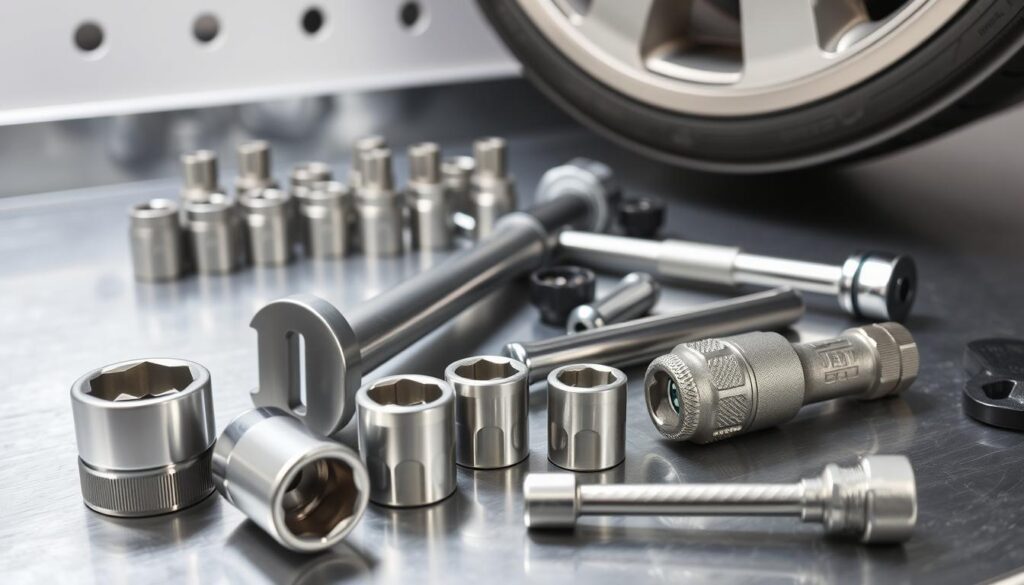
Recommended Replacement Lug Nuts
When it comes to replacing swollen lug nuts, choosing the right replacement is crucial. Here are some considerations:
OEM vs. Aftermarket Options
Original Equipment Manufacturer (OEM) lug nuts are designed specifically for your Ford model, ensuring a precise fit. Aftermarket options can be more affordable but require careful selection to ensure compatibility and quality.
Cost Considerations
The cost of replacement lug nuts can vary significantly depending on whether you choose OEM or aftermarket options. On average, OEM lug nuts can range from $5 to $15 per nut, while aftermarket options may start at around $2 to $10 per nut.
| Type | Price Range per Nut | Quality Level |
|---|---|---|
| OEM Lug Nuts | $5 – $15 | High |
| Aftermarket Lug Nuts | $2 – $10 | Variable |
Where to Purchase Quality Replacements
You can find quality replacement lug nuts at automotive parts stores, online retailers, or directly from Ford dealerships. When purchasing, ensure you’re buying from reputable sources to guarantee authenticity and quality.
Preparing Your Vehicle for Lug Nut Replacement
To replace swollen lug nuts on your Ford, you must first prepare your vehicle, focusing on safety and proper positioning. This step is crucial for ensuring a smooth and hazard-free replacement process.
Safety Precautions
Before you start, it’s essential to take necessary safety precautions to protect yourself and others nearby. This includes wearing appropriate personal protection equipment and ensuring the vehicle is stable.
Personal Protection Equipment
Wear gloves and safety glasses to protect yourself from potential hazards such as sharp edges or flying debris. This personal protection equipment is vital for safeguarding your hands and eyes.
Vehicle Stability Concerns
Ensure your vehicle is on a flat, stable surface and apply the parking brake. This helps prevent the vehicle from moving during the replacement process, reducing the risk of accidents.
Proper Vehicle Positioning
Correctly positioning your vehicle is vital for safe lug nut replacement. This involves using jack stands to support the vehicle after it has been raised.
Using Jack Stands Correctly
Place jack stands under the vehicle’s recommended lift points and slowly lower the vehicle onto them. This provides a safe and stable support system, allowing you to work under the vehicle with confidence.
Organizing Your Workspace
A well-organized workspace is key to an efficient lug nut replacement process. Keep your tools within easy reach and ensure the area around the vehicle is clear of clutter and obstacles.
Step-by-Step Ford Swollen Lug Nuts Replacement Guide
Understanding how to replace swollen lug nuts is essential for Ford owners to maintain their vehicle’s integrity and safety. This guide will walk you through the process, ensuring that you can perform the replacement efficiently and effectively.
Removing the Wheel Covers or Hubcaps
Before you can access the lug nuts, you need to remove the wheel covers or hubcaps. Use a hubcap removal tool or a flathead screwdriver to pry off the cover gently. Be careful not to damage the cover or the wheel.
Loosening the Swollen Lug Nuts
Loosening swollen lug nuts can be challenging, but there are several methods you can employ:
- Standard Socket Method: Use a socket that fits snugly over the lug nut. If it’s too damaged, consider alternative methods.
- Lug Nut Extractor Method: A lug nut extractor is a specialized tool designed for removing damaged lug nuts. It grips the nut internally, allowing for safe removal.
- Hammer and Impact Socket Method: For particularly stubborn lug nuts, using a hammer with an impact socket can provide the necessary force to loosen them.
- Using Penetrating Oil: Applying penetrating oil to the lug nut can help loosen it by reducing corrosion and friction.
Standard Socket Method
For less damaged lug nuts, a standard socket may suffice. Ensure it’s the correct size to avoid damaging the nut further.
Lug Nut Extractor Method
A lug nut extractor is a valuable tool when dealing with swollen or damaged lug nuts. It works by internally gripping the nut, allowing for its removal without causing further damage.
Hammer and Impact Socket Method
This method involves using a hammer with an impact socket to apply significant force to the lug nut. It’s effective for stubborn nuts but requires caution to avoid damage.
Using Penetrating Oil
Penetrating oil can be applied to the lug nut to help loosen it. Let it sit for a while before attempting to remove the nut.
Removing the Wheel
Once the lug nuts are loosened, you can remove the wheel. Completely remove the lug nuts and set them aside, then carefully pull the wheel straight off the hub.
Installing New Lug Nuts
Installing new lug nuts requires attention to detail to ensure they’re properly secured:
- Proper Installation Sequence: Tighten the lug nuts in a star pattern to ensure even pressure.
- Correct Torque Application: Use a torque wrench to tighten the lug nuts to the manufacturer’s specified torque. For Ford F150 owners, you can find the correct torque specifications here.
- Final Inspection: After tightening, inspect the lug nuts to ensure they’re securely in place and the wheel is properly seated.
Proper Installation Sequence
Tightening the lug nuts in a star pattern helps prevent uneven pressure on the wheel, ensuring a secure fit.
Correct Torque Application
Using a torque wrench is crucial for applying the correct amount of torque. Over-tightening or under-tightening can lead to safety issues.
Final Inspection
After installation, a final check is necessary to confirm that the lug nuts are tightened correctly and the wheel is securely in place.
Dealing with Stubborn or Damaged Lug Nuts
The process of dealing with stubborn or damaged lug nuts involves understanding the right techniques and utilizing specialized tools. Stubborn lug nuts can be a significant challenge for vehicle owners, potentially leading to further damage if not handled correctly.
Using Specialized Lug Nut Removal Sockets
One of the most effective methods for removing stubborn lug nuts is by using specialized lug nut removal sockets. These sockets are designed to fit snugly around the lug nut, providing a secure grip that helps to loosen even the most stubborn nuts.
According to a study by the Automotive Research Association, using the correct removal socket can reduce the risk of damaging the wheel or brake components by up to 70%.
Drilling Methods for Extremely Damaged Nuts
In cases where lug nuts are severely damaged, drilling methods may be necessary. This involves carefully drilling into the lug nut to weaken it before removal. It’s crucial to use the correct drill bit size and technique to avoid damaging the wheel stud.
“Drilling out a lug nut requires patience and precision. It’s a method that should be used as a last resort, as it can potentially damage the wheel stud if not done correctly.” –
When to Seek Professional Help
If you’re unsure about how to remove stubborn or damaged lug nuts, or if you’ve tried various methods without success, it’s time to seek professional help. A professional mechanic has the necessary tools and expertise to safely remove the lug nuts without causing further damage to your vehicle.
Preventing Thread Damage During Removal
To prevent thread damage during lug nut removal, it’s essential to use the correct techniques and tools. Applying penetrating oil and allowing it to sit can help loosen the lug nut, making it easier to remove.
| Method | Description | Risk Level |
|---|---|---|
| Specialized Removal Sockets | Using sockets designed for stubborn lug nuts | Low |
| Drilling | Drilling into the lug nut to weaken it | High |
| Professional Help | Seeking assistance from a mechanic | Low |
Preventing Future Lug Nut Issues
Preventing lug nut problems requires a combination of the right replacement parts and proper maintenance. By focusing on these key areas, Ford vehicle owners can significantly reduce the risk of lug nut-related issues.
Choosing Quality Replacement Lug Nuts
When replacing lug nuts, it’s essential to choose high-quality parts that meet or exceed the manufacturer’s specifications. Quality replacement lug nuts are less likely to swell or become damaged, ensuring a safer and more reliable driving experience.
Proper Torque Specifications for Different Ford Models
Following the correct torque specifications is crucial when tightening lug nuts. Different Ford models have specific torque requirements, so consult your owner’s manual or a reliable repair manual to ensure you’re applying the correct torque.
Regular Inspection and Maintenance
Regularly inspecting your lug nuts for signs of wear or damage can help prevent future issues. Make it a part of your routine vehicle maintenance to check lug nuts and address any problems promptly.
Conclusion
Replacing Ford swollen lug nuts is crucial for maintaining vehicle safety. As discussed in this guide, swollen lug nuts can lead to serious safety issues if not addressed promptly. By understanding the causes of swollen lug nuts and following the step-by-step replacement guide, vehicle owners can ensure their safety on the road.
Proper lug nut maintenance is essential to prevent future issues. Choosing quality replacement lug nuts and following the correct torque specifications for different Ford models can help prevent lug nut swelling. Regular inspection and maintenance of lug nuts can also help identify potential problems before they become major issues.
By following the guidelines outlined in this article, Ford vehicle owners can ensure their vehicles remain safe to drive. Proper Ford swollen lug nuts replacement and lug nut maintenance are critical components of overall vehicle safety. Vehicle owners should prioritize these tasks to avoid potential risks associated with swollen or damaged lug nuts.
FAQ
What are the signs that my Ford lug nuts need replacement?
Signs that your lug nuts need replacement include swelling, rust, or corrosion on the lug nuts, difficulty removing the lug nuts, or if the lug nuts are stripped or damaged.
Can I use aftermarket lug nuts on my Ford vehicle?
While aftermarket lug nuts may be available, it’s recommended to use OEM (Original Equipment Manufacturer) lug nuts or high-quality aftermarket lug nuts that meet the manufacturer’s specifications to ensure compatibility and safety.
How do I properly torque my Ford lug nuts?
To properly torque your Ford lug nuts, refer to your owner’s manual or the manufacturer’s specifications for the correct torque value, and use a torque wrench to tighten the lug nuts in a star pattern.
What are the consequences of not replacing swollen lug nuts on my Ford vehicle?
Failing to replace swollen lug nuts can lead to wheel detachment, loss of control, and potentially cause an accident, putting you and others at risk.
Can I remove swollen lug nuts without professional help?
While it’s possible to remove swollen lug nuts yourself, it’s recommended to seek professional help if you’re unsure or uncomfortable with the process, as it may require specialized tools and techniques.
How often should I inspect my Ford lug nuts?
Regularly inspect your lug nuts during routine maintenance, such as oil changes or tire rotations, to catch any signs of wear or damage early.
Are all Ford models prone to swollen lug nuts?
Certain Ford models, particularly those with two-piece lug nut designs, are more prone to swollen lug nuts, but it’s not exclusive to all Ford models.
What is the best way to prevent lug nut swelling?
To prevent lug nut swelling, keep your lug nuts clean and dry, apply a rust-inhibiting coating, and avoid exposing your vehicle to extreme temperatures or environments.