Rust on a car’s frame is a serious issue that can lead to significant structural damage if left unaddressed. It’s a problem that many car owners face, especially in regions with high humidity and salted roads. Rust removal is crucial for maintaining the integrity and longevity of a vehicle.
Addressing rust on a car frame requires a combination of the right techniques and materials. Car maintenance experts recommend a range of methods, from simple cleaning and coating to more complex repairs involving metalwork.
By understanding the causes of rust and applying the appropriate removal techniques, car owners can restore their vehicle’s frame and ensure its durability.
Key Takeaways
- Understanding the causes of rust on a car frame is essential for effective removal.
- Regular car maintenance can help prevent rust from forming.
- Various methods are available for rust removal, depending on the severity of the rust.
- Applying a protective coating can help prevent future rust formation.
- Professional help may be necessary for severe cases of rust damage.
Understanding Car Frame Rust and Its Dangers
Understanding the dangers of car frame rust is crucial for maintaining vehicle safety and longevity. Rust on car frames is not just a cosmetic issue; it can lead to significant structural problems that affect the overall safety and durability of the vehicle.
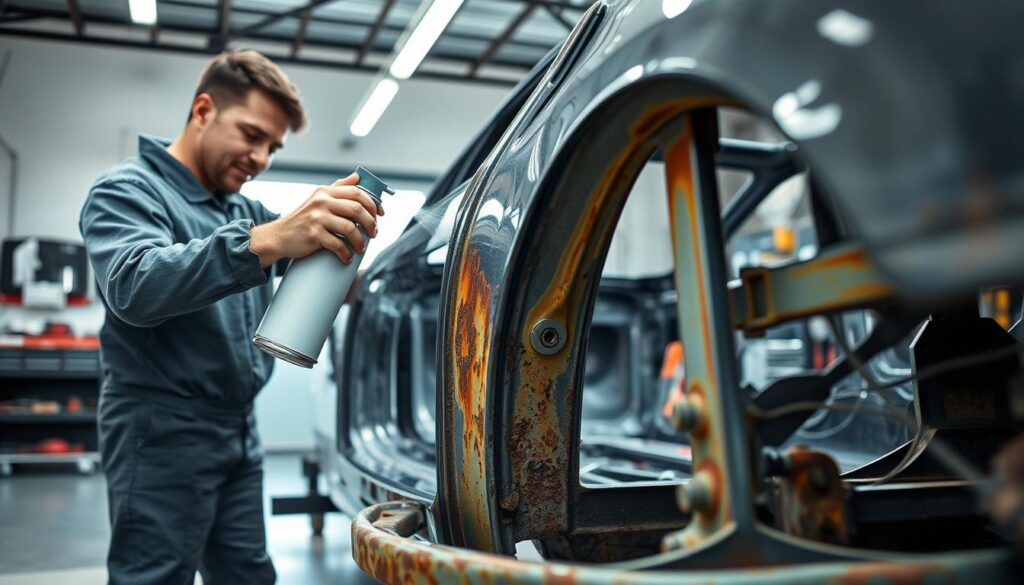
What Causes Rust on Car Frames
Rust on car frames is primarily caused by exposure to moisture, salt, and oxygen. When these elements combine, they can accelerate the rusting process, especially in areas where roads are salted during winter months. Regular exposure to moisture can lead to the formation of rust, which can weaken the metal over time.
Types of Rust Damage on Vehicles
There are several types of rust damage that can occur on vehicles, including surface rust, scale rust, and penetrating rust. Surface rust is the most common and can often be treated with rust removal techniques. However, penetrating rust can cause significant structural damage and is more challenging to repair.
Why Immediate Action Is Necessary
Addressing rust on car frames is crucial because it can lead to costly repairs if left unchecked. Moreover, a rusted frame can fail vehicle inspections, as noted in a recent article on whether a rusted frame will pass inspection. Immediate action can help prevent further damage and ensure the vehicle remains safe to drive.
Assessing the Severity of Frame Rust
Assessing the severity of rust on your car’s frame is a critical step that determines the best course of action for repair. It’s essential to differentiate between surface rust, which can be relatively easy to address, and more severe structural damage that could compromise the vehicle’s safety and integrity.
Identifying Surface Rust vs. Structural Damage
Surface rust is typically superficial and can be identified by its appearance on the surface of the metal. It often looks like a reddish-orange flaking or scaling. On the other hand, structural damage involves deeper penetration of rust that can weaken the metal’s structure. To identify the severity, inspect areas prone to moisture accumulation, such as near the suspension components or where water tends to collect.
Key indicators of structural damage include:
- Significant flaking or pitting that exposes the metal beneath
- Rust trails or streaks indicating active rust
- Soft or spongy metal when probed with a tool
Tools Needed for Proper Inspection
A thorough inspection requires the right tools. Essential items include a flashlight for illuminating dark or hard-to-see areas, a wire brush to remove surface debris, and a probe or pick to test the metal’s integrity. For a more detailed examination, consider using a magnifying glass or a rust meter if available.
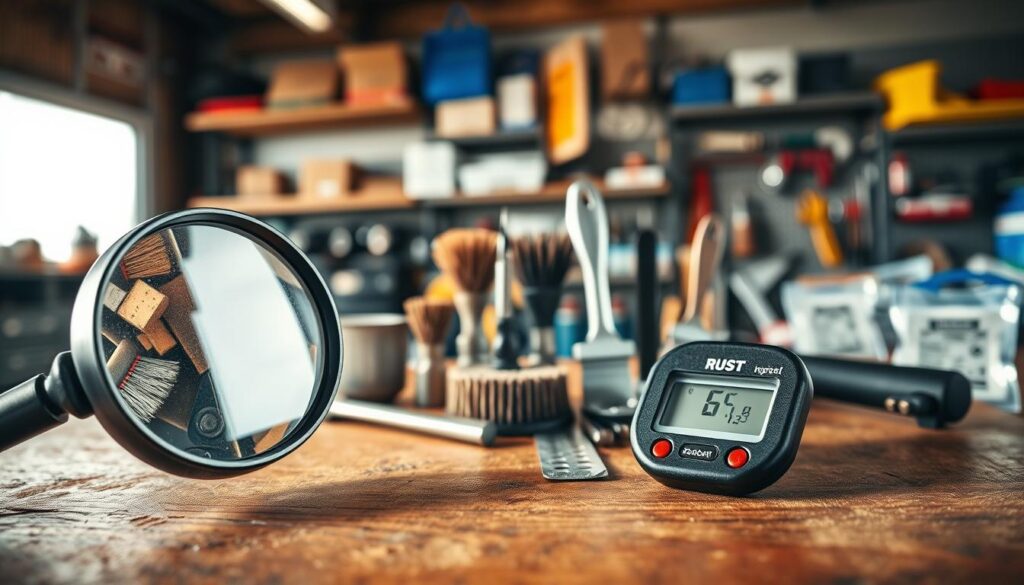
| Tool | Purpose |
|---|---|
| Flashlight | Illuminates dark areas for better visibility |
| Wire Brush | Removes surface debris for a clearer inspection |
| Probe or Pick | Tests the metal’s integrity by probing for soft spots |
When to DIY vs. Seek Professional Help
For minor surface rust, DIY rust removal can be a cost-effective and rewarding approach. However, if the rust has caused significant structural damage, it’s advisable to seek professional rust repair services. Professionals have the necessary equipment and expertise to restore the vehicle’s frame to a safe and durable condition.
When deciding between DIY and professional repair, consider the extent of the damage, your level of comfort with the repair process, and the potential risks associated with improper repair.
Preparation for Rust Removal
Before starting the rust removal process, it’s crucial to prepare adequately to ensure a safe and effective operation. Preparation involves several key steps that help in achieving a successful outcome.
Safety Equipment and Precautions
Ensuring your safety is paramount when dealing with rust removal. Wear protective gear including gloves, safety glasses, and a mask to protect yourself from harmful chemicals and debris. It’s also advisable to wear old clothing that covers your skin to prevent irritation.
Cleaning the Work Area
Clear the area around the rusted frame of any obstructions or flammable materials. Thoroughly clean the rusted section with a wire brush to remove loose rust and debris, providing a clearer view of the damage.
Gathering Necessary Tools and Materials
To effectively remove rust, you’ll need specific tools and materials. Here’s a breakdown of what’s required:
| Tool/Material | Description | Usage |
|---|---|---|
| Wire Brush | For removing loose rust | Initial cleaning |
| Rust Converter | Converts rust into a stable surface | After cleaning |
| Metal Primer | Prepares surface for painting | After rust conversion |
By following these steps and gathering the necessary tools and materials, you’ll be well-prepared to tackle the rust removal process effectively and safely.
How to Get Rid of Rust on Car Frame: Effective Removal Techniques
Removing rust from a car frame requires a thorough approach, combining effective techniques with proper car maintenance habits. Start by applying a rust converter or a chemical treatment to neutralize the rust, making it easier to remove.
For more severe cases, mechanical removal using a wire brush or grinder may be necessary. After removing the rust, apply a rust-inhibiting coating to protect the metal from future corrosion, a crucial step in rust prevention.
For those comfortable with DIY rust removal, following these steps can save money and extend the life of your vehicle. However, if the rust damage is extensive, consider seeking professional help from an automotive rust repair specialist to ensure the structural integrity of your car’s frame.
By combining these techniques with regular inspections and maintenance, you can effectively get rid of rust on your car frame and prevent its return, ensuring your vehicle remains safe and reliable on the road.
FAQ
What causes rust on a car frame?
Rust on a car frame is typically caused by exposure to moisture, salt, and oxygen, which can lead to the oxidation of metal. Road salt used during winter months can accelerate this process.
How can I identify rust on my car’s frame?
To identify rust, inspect your car’s frame for orange or reddish-brown discoloration, flaking, or pitting. You can also check for soft spots or weakened areas in the metal.
Can I remove rust from my car’s frame myself?
Yes, you can remove rust from your car’s frame yourself using various methods, including chemical treatments and mechanical removal. However, if the rust damage is extensive, it’s recommended to seek professional help.
What safety precautions should I take when removing rust?
When removing rust, wear protective gear, including gloves, safety glasses, and a mask. Ensure the work area is well-ventilated, and avoid using harsh chemicals or abrasive materials that can cause injury.
How can I prevent rust from forming on my car’s frame again?
To prevent rust, apply a rust-inhibiting coating or wax to the frame, keep your car clean and dry, and avoid driving in areas where road salt is used. Regular inspections can also help detect rust early.
What are the consequences of neglecting rust damage on my car’s frame?
Neglecting rust damage can lead to structural weakening of the frame, compromising the safety and integrity of your vehicle. If left unchecked, rust can cause costly repairs or even render the vehicle unusable.
Are there any specific tools or materials needed for rust removal?
Yes, you’ll need tools like wire brushes, sandpaper, and drills, as well as materials like rust converters, epoxy coatings, or rust-inhibiting waxes. The specific tools and materials required will depend on the extent and type of rust damage.