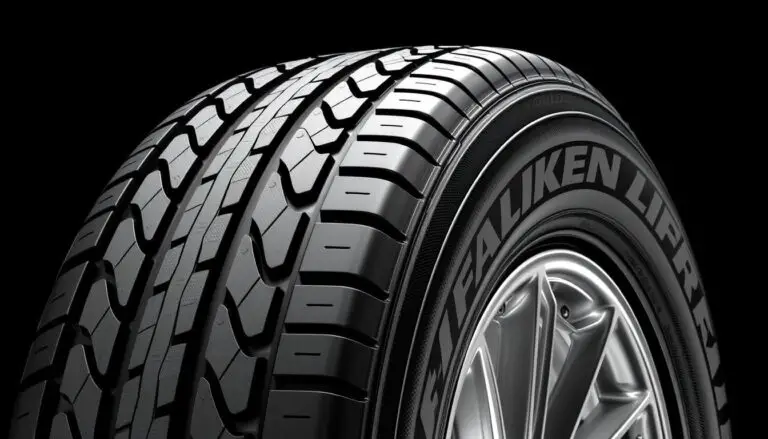
In the realm of automotive selection, grasping the nuances of tire speed ratings emerges as a pivotal factor. These ratings delineate a tire’s capacity to navigate high velocities with safety. The dichotomy between H and V speed ratings, though seemingly minor, holds significant implications for your vehicle’s performance. It is imperative to discern which rating aligns with your vehicular requirements.
The disparity between H and V speed-rated tires is manifest in their respective maximum speed thresholds. H-rated tires are engineered to sustain speeds up to 130 mph, whereas V-rated tires are designed to endure velocities reaching 149 mph. This distinction underscores the importance of selecting tires that harmonize with your vehicle’s capabilities and your driving style.
Key Takeaways
- Understanding tire speed ratings is crucial for choosing the right tires.
- H-rated tires have a maximum speed limit of 130 mph.
- V-rated tires can handle speeds up to 149 mph.
- The right speed rating depends on your vehicle’s capabilities and your driving habits.
- Choosing the correct speed rating ensures safety and optimal performance.
Understanding Tire Speed Ratings
Grasping the nuances of tire speed ratings is paramount for drivers aiming to align their vehicular choices with their driving ethos. These ratings serve as a benchmark, delineating a tire’s capacity to navigate high velocities with safety and efficacy.
What Are Speed Ratings?
Speed ratings, a construct of tire manufacturers, delineate the utmost velocity a tire can endure for an extended duration without compromising its integrity. Tire speed ratings are denoted by a letter on the tire’s sidewall, such as ‘H’ or ‘V’, providing a visual cue to consumers.
“The speed rating is a critical factor in determining a tire’s overall performance,” opine industry stalwarts. Predominantly, the spectrum encompasses H (up to 130 mph) and V (up to 149 mph) ratings.
How Speed Ratings Are Determined
The determination of a tire’s speed rating is a result of exhaustive testing, encompassing high-speed endurance evaluations. Manufacturers scrutinize a tire’s performance across diverse scenarios to assign a speed rating definition that encapsulates its capabilities.

Tires that emerge triumphant from these evaluations are bestowed with a speed rating, which is thereafter displayed on the tire’s sidewall. This disclosure empowers drivers to select the most suitable tires for their specific requirements.
The H Speed Rating Explained
The H speed rating denotes a tire’s aptitude for speeds up to 130 mph, rendering it appropriate for a myriad of driving scenarios. This classification is crucial for drivers aiming to reconcile performance with everyday safety.

Technical Specifications of H-Rated Tires
H-rated tires are crafted with precise technical specifications to fulfill the requisite speed and performance benchmarks. Key attributes encompass:
- Speed Capability: Up to 130 mph.
- Tread Compound: Formulated for high-speed stability.
- Construction: Reinforced for high-speed driving stresses.
Common Vehicles Using H-Rated Tires
H-rated tires are frequently employed on a variety of vehicles, including:
- Family sedans.
- Performance-oriented coupes.
- Crossover vehicles.
These vehicles derive benefits from the harmonious blend of speed and safety that H-rated tires offer. This makes them ideal for both routine driving and occasional high-speed ventures.
The V Speed Rating Explained
V-rated tires are engineered to support vehicles that operate at speeds exceeding 149 mph. These tires are designed to provide superior handling, traction, and control at high speeds, making them ideal for high-performance vehicles.
The technical specifications of V-rated tires are critical to their performance. They are built with specialized tread compounds and tire constructions that can handle the stresses of high-speed driving.
Technical Specifications of V-Rated Tires
V-rated tires have distinct technical specifications that set them apart from other speed-rated tires. They typically have a higher load-carrying capacity and are designed to operate at higher temperatures.
| Specification | Description | Benefit |
|---|---|---|
| Speed Rating | Up to 149+ mph | High-speed capability |
| Tread Compound | Specialized for high-speed handling | Improved traction and control |
| Tire Construction | Reinforced for high-speed stability | Enhanced safety and performance |
Common Vehicles Using V-Rated Tires
V-rated tires are commonly used on high-performance vehicles, including sports cars and luxury sedans. Examples of vehicles that often come equipped with V-rated tires include the Porsche 911, BMW M3, and Mercedes-AMG C-Class.
“Tires play a critical role in a vehicle’s performance, and V-rated tires are no exception. They offer a unique blend of speed, handling, and safety that is unmatched by lower-speed-rated tires.”
H vs V Speed Rating: Direct Comparison
Deciphering the distinction between H and V speed ratings necessitates an examination of their velocity capabilities, performance attributes, and endurance. Each rating boasts unique advantages and disadvantages, rendering the selection contingent upon specific vehicular requirements and personal inclinations.
Speed Capabilities
The fundamental disparity between H and V speed-rated tires resides in their maximum velocity tolerances. H-rated tires are engineered for velocities up to 130 mph, aligning with the needs of everyday driving. In contrast, V-rated tires are capable of reaching speeds up to 149 mph, catering to drivers seeking enhanced performance, notably on highways or during exhilarating driving maneuvers.
V-rated tires possess a superior velocity threshold, rendering them exemplary for drivers who habitually traverse at elevated velocities or seek a more agile driving experience.
Performance Characteristics
Performance attributes, encompassing handling and cornering, diverge between H and V-rated tires. V-rated tires are crafted to deliver superior handling and stability at elevated speeds, attributed to their specialized tread compounds and tire architectures. H-rated tires, though still offering dependable performance, are more suited for everyday driving comfort and stability.
Durability Differences
Durability presents a pivotal distinction between H and V-rated tires. H-rated tires are renowned for their extended tread life, attributed to their conservative tread compounds, prioritizing durability over high-performance attributes. V-rated tires, with a focus on performance, may exhibit a shorter tread life but compensate with their augmented driving dynamics.
“The right tire choice can significantly impact your vehicle’s performance and safety. Understanding the differences between H and V speed ratings is key to making an informed decision.”
Performance Considerations
Grasping the performance implications of H versus V speed-rated tires is paramount for enhancing a vehicle’s handling, cornering, and braking capabilities. The disparity between these two ratings profoundly influences a vehicle’s behavior on the road, notably under strenuous conditions.
Handling and Cornering
Tires rated as H are crafted to strike a balance between comfort and performance, rendering them ideal for everyday driving with occasional spirited cornering. On the other hand, V-rated tires are engineered for superior performance, offering enhanced grip and stability during aggressive cornering maneuvers. V-rated tires tend to provide more responsive handling, making them a preferred choice for drivers who frequently push their vehicles to the limit.
Braking Distance
The braking performance of H and V-rated tires can differ significantly, notably at high speeds. V-rated tires generally offer shorter braking distances due to their compound and tread design, which are optimized for high-speed braking. While H-rated tires provide reliable braking performance, they may not match the V-rated tires in extreme conditions. This difference is crucial for drivers who often drive at high speeds or in conditions that demand rapid stopping.
In conclusion, when considering tire performance, the choice between H and V speed ratings should be based on your driving habits and the performance characteristics you prioritize.
Safety Implications of Speed Ratings
The comprehension of the safety implications tied to tire speed ratings is paramount for drivers aiming to guarantee their vehicle’s preparedness for emergency scenarios. The appropriateness of a tire’s speed rating profoundly influences a vehicle’s safety, performance, and maneuverability.
Risk Factors of Underrated Tires
Employment of tires with a speed rating inferior to the vehicle’s requirements escalates the peril of tire failure, notably at elevated velocities. Tire failure can precipitate loss of control, accidents, and potentially grave injuries. For example, equipping a vehicle with H-rated tires when it necessitates V-rated tires jeopardizes safety, as H-rated tires are not engineered to endure the same elevated speeds as V-rated tires.
| Speed Rating | Max Speed | Risk Level |
|---|---|---|
| H | 130 mph | Moderate |
| V | 149 mph | Low |
Emergency Handling Differences
The disparity in emergency handling between H and V speed-rated tires is considerable. V-rated tires are crafted to deliver enhanced handling and stability at elevated speeds, rendering them more apt for drivers who frequently traverse highways or engage in spirited driving. In contrast, H-rated tires, though capable, may not proffer the same degree of responsiveness and stability in emergency maneuvers.
Opting for the correct speed rating is imperative for ensuring your vehicle’s safety features function as intended, notably in emergency scenarios.
Cost Analysis: H vs V Rated Tires
Assessing the financial implications of opting for H or V Rated Tires is paramount for a well-informed decision. The disparity in cost between these tire categories transcends the initial acquisition price; it encompasses the long-term economic benefits as well.
Initial Purchase Price Differences
The initial expenditure on H Rated Tires is typically lower than that of V Rated Tires. This disparity stems from the fact that V Rated Tires are engineered to support higher speeds and superior performance, necessitating the use of cutting-edge technology and materials. For example, V Rated Tires are predominantly utilized in high-performance vehicles, which justifies their premium pricing. The price gap can vary from $50 to $200 per tire, contingent upon the brand, model, and technical specifications.
Long-Term Value Considerations
Despite the initial cost advantage of H Rated Tires, their long-term economic viability must be weighed. V Rated Tires, despite their elevated initial cost, may offer enhanced durability and performance over the long haul, potentially obviating the need for frequent replacements. The superior safety attributes of V Rated Tires can also contribute to cost savings by mitigating accident risks. Thus, when evaluating the cost, it is imperative to consider both the initial outlay and the long-term advantages.
Weather Performance Comparison
H and V speed-rated tires exhibit distinct performance characteristics in various weather conditions. Understanding these differences is crucial for drivers who experience a range of weather conditions throughout the year.
Wet Conditions Performance
In wet conditions, both H and V rated tires are designed to provide adequate traction. Notably, V-rated tires tend to have a slight edge due to their softer compound and more advanced tread patterns. These features help in evacuating water and reducing the risk of hydroplaning.
Dry Conditions Performance
On dry roads, both tire types perform well. Notably, H-rated tires can offer a more comfortable ride due to their slightly harder compound. In contrast, V-rated tires provide superior handling and responsiveness, making them ideal for drivers who prioritize performance.
Winter Driving Considerations
For winter driving, the performance differences between H and V rated tires become more nuanced. While neither is designed for snow and ice, V-rated tires generally offer better traction in cold conditions due to their softer compound. For extreme winter conditions, dedicated winter tires are recommended.
Ultimately, the choice between H and V rated tires should be based on the driver’s typical driving conditions and priorities.
Common Misconceptions About Speed Ratings
The realm of tire speed ratings is replete with misconceptions that necessitate rectification. Many drivers remain oblivious to the repercussions of selecting an inappropriate speed rating for their tires, thus posing potential safety risks and performance shortcomings.
Higher Ratings Always Mean Better Tires
A prevalent fallacy posits that a higher speed rating invariably equates to a superior tire. Yet, the speed rating is merely one criterion to ponder. A higher rating signifies a tire’s capacity to endure higher velocities, yet it does not inherently signify its suitability for your specific requirements. For example, if your driving locale is predominantly urban, with stringent speed restrictions, a tire with a lower rating might suffice, potentially offering economic advantages.
The paramount consideration is aligning the tire’s capabilities with your driving regimen. If your driving style is performance-oriented or you frequently traverse highways, a tire with a higher rating could be advantageous. On the contrary, if your daily driving involves navigating city streets, a tire with a lower speed rating might be more than sufficient.
Speed Rating vs. Load Rating Confusion
Another widespread misconception lies in the conflation of speed ratings with load ratings. While both are indispensable, they fulfill distinct roles. The load rating signifies the utmost weight a tire can bear, in contrast to the speed rating, which denotes the maximum velocity a tire can sustain. It is imperative to verify that both ratings align with your vehicle’s specifications to guarantee safety and optimal performance.
Grasping the distinction between these ratings is crucial for making an enlightened choice when selecting tires. Always consult your vehicle’s specifications to ascertain that the tires you select possess the requisite load and speed ratings.
Choosing Between H and V Speed Ratings
The selection between H and V speed-rated tires hinges on various considerations, including driving habits and vehicle characteristics. Grasping these nuances is paramount for a decision that optimizes your vehicle’s performance and safety.
Matching to Your Driving Style
For drivers who frequently engage in high-speed maneuvers or relish spirited driving, V-rated tires are advisable. They are engineered to manage elevated speeds, offering superior performance in such scenarios. In contrast, if your driving is predominantly within speed limits and routine, H-rated tires might suffice, presenting a more economical option.
Considering Your Vehicle’s Requirements
It is imperative to consult your vehicle’s manufacturer guidelines. Certain vehicles are crafted to perform best with specific speed-rated tires. Utilizing tires with an inappropriate speed rating can compromise your vehicle’s handling and safety attributes. Refer to your owner’s manual or seek professional advice to ascertain the recommended speed rating for your vehicle.
Balancing Performance and Budget
When deliberating between H and V speed-rated tires, financial considerations are also pivotal. V-rated tires, with their advanced technology and superior performance, typically command a higher price. Assess the trade-off between enhanced performance and increased expenditure to align with your financial constraints and driving preferences.
In summary, the choice between H and V speed ratings necessitates a comprehensive evaluation of your driving style, vehicle specifications, and financial resources. By harmonizing these elements, you can make an informed decision, ensuring a safe and pleasurable driving experience.
Conclusion
The selection between H and V speed ratings hinges on a multitude of considerations, including driving habits, vehicle specifications, and financial constraints. H-rated tires strike a harmonious balance between performance and endurance, making them a suitable choice for the majority of drivers. On the other hand, V-rated tires are designed to cater to drivers who prioritize superior handling and speed.
Drivers who engage in aggressive maneuvers or frequently traverse complex road networks may find V-rated tires more advantageous. In contrast, those who adopt a more conservative driving approach might prefer H-rated tires for their blend of performance and longevity.
Ultimately, the choice between H and V speed ratings should be a reflection of your unique requirements and preferences. By grasping the distinctions between these speed ratings, you can make a well-informed decision that optimizes your vehicle’s performance and safety.
FAQ
What is the main difference between H and V speed ratings?
The distinction between H and V speed ratings is rooted in their respective speed capabilities. H-rated tires are designed to sustain speeds up to 130 mph, whereas V-rated tires are engineered to reach speeds of up to 149 mph.
How do I know if my vehicle requires H or V-rated tires?
To determine the appropriate tire speed rating for your vehicle, consult the owner’s manual or the tire information placard located on the driver’s side doorjamb or inside the fuel filler door.
Are V-rated tires always better than H-rated tires?
The superiority of V-rated tires over H-rated tires is not universally applicable. The choice between the two should be based on your driving habits, the specific characteristics of your vehicle, and your performance expectations.
Can I use H-rated tires on a vehicle that came with V-rated tires?
It is generally not advisable to use H-rated tires on a vehicle originally equipped with V-rated tires. Such substitution may compromise your vehicle’s performance and safety, notably at elevated speeds.
How do speed ratings affect tire performance in different weather conditions?
Both H and V-rated tires possess unique strengths. V-rated tires excel in dry conditions, offering superior performance. In contrast, H-rated tires may provide enhanced stability in certain wet conditions, though this can vary by tire model.
Do H and V-rated tires differ significantly in terms of cost?
V-rated tires are typically more expensive than H-rated tires. This disparity is due to their higher performance capabilities and the advanced technology employed in their construction.
What are the safety implications of choosing the wrong speed rating?
Selecting tires with a lower speed rating than recommended can elevate the risk of tire failure at high speeds. This increased risk may lead to accidents, underscoring the importance of choosing the correct speed rating.
How do I balance performance needs with budget when choosing between H and V-rated tires?
To strike a balance between performance needs and budget, consider your typical driving conditions, the performance capabilities of your vehicle, and your financial constraints. This informed decision-making process will help you select tires that meet your requirements without overspending.
Can the wrong speed rating affect my vehicle’s handling and braking performance?
Yes, utilizing tires with an inappropriate speed rating can negatively impact your vehicle’s handling, cornering, and braking performance. Such degradation can compromise safety, emphasizing the criticality of selecting the correct speed rating.
Are there any specific maintenance requirements for H and V-rated tires?
Both H and V-rated tires necessitate regular maintenance to ensure optimal performance and longevity. This maintenance includes proper inflation, rotation, and alignment.