Maintaining optimal pressure in air conditioning systems is crucial for their efficient operation. High pressure in AC systems can lead to a range of problems, including reduced cooling performance and increased energy consumption.
When the pressure is too high, it can cause the system to work harder, leading to potential damage and a shortened lifespan. Troubleshooting these issues is essential to prevent costly repairs and ensure the system operates smoothly.
Key Takeaways
- Understanding the causes of high pressure in AC systems is crucial for effective troubleshooting.
- Regular maintenance can help prevent issues related to high pressure.
- Identifying symptoms of high pressure can help in addressing problems early.
- Troubleshooting involves checking for refrigerant leaks and condenser coil issues.
- Resolving high pressure issues can improve the overall efficiency of the AC system.
Understanding High Pressure in Air Conditioning Systems
Air conditioning systems are complex and rely on a delicate balance of pressures to function efficiently.
How AC Systems Work
The air conditioning system operates by circulating refrigerant through a cycle of evaporation and condensation, absorbing heat from indoor air and transferring it outside. The system’s pressure is influenced by factors such as refrigerant charge, condenser coil condition, and ambient temperature. Proper maintenance is key to ensuring these systems work correctly.
| Component | Function | Impact on Pressure |
|---|---|---|
| Compressor | Compresses refrigerant | Increases pressure |
| Condenser Coils | Dissipates heat | Raises pressure if clogged |
| Expansion Valve | Reduces pressure | Decreases pressure |
For more detailed information, you can check out this resource on diagnosing and fixing AC pressure issues.
What Causes High Pressure on AC System: Common Issues and Fixes
Several common issues can lead to high pressure in AC systems, affecting their performance and longevity. Understanding these causes is crucial for effective troubleshooting and maintaining the system’s efficiency.
Refrigerant Overcharge
A refrigerant overcharge occurs when too much refrigerant is added to the system. This excess refrigerant can cause the system’s pressure to rise, leading to increased stress on the compressor and other components. Symptoms include reduced cooling performance and potentially, system failure. To fix this, a professional technician must recover the excess refrigerant to achieve the optimal charge.
Condenser Airflow Restrictions
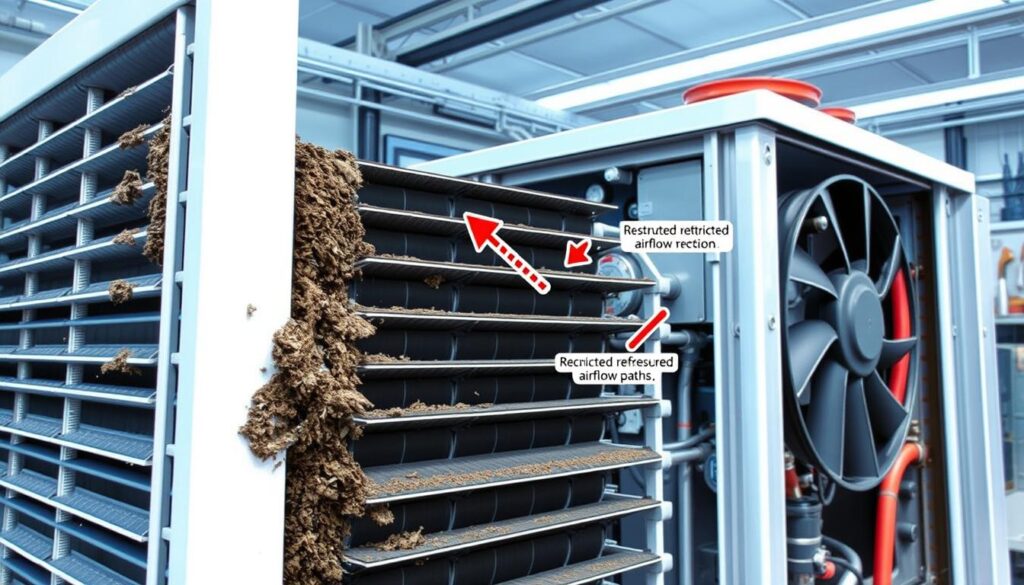
Condenser airflow restrictions can significantly impact the system’s ability to dissipate heat. Causes include dirty condenser coils, obstructed airflow due to debris, or a malfunctioning condenser fan. To resolve this, regular cleaning of the condenser coils and ensuring unobstructed airflow around the condenser unit are essential.
Faulty Condenser Fan Motor
A faulty condenser fan motor can prevent the condenser coils from dissipating heat effectively, leading to increased pressure within the system. Signs include the fan not spinning or operating erratically. Replacing the faulty motor with a new one can restore proper airflow and system pressure.
Non-Condensable Gases in the System
Non-condensable gases, such as air or nitrogen, can enter the system during installation or maintenance. These gases can cause the system’s pressure to rise, as they cannot be condensed by the condenser. To fix this, the system needs to be evacuated and recharged with the correct refrigerant.
| Cause | Symptoms | Fix |
|---|---|---|
| Refrigerant Overcharge | Reduced cooling performance, system failure | Recover excess refrigerant |
| Condenser Airflow Restrictions | Increased pressure, reduced heat dissipation | Clean condenser coils, ensure unobstructed airflow |
| Faulty Condenser Fan Motor | Fan not spinning, erratic operation | Replace faulty motor |
| Non-Condensable Gases | Increased system pressure | Evacuate and recharge system |
Recognizing Symptoms of High Pressure Problems
Recognizing the symptoms of high pressure problems in your air conditioning system is vital for timely intervention. When your AC system operates under high pressure, it can lead to a range of issues that affect its performance and longevity.
Reduced Cooling Performance
One of the primary indicators of high pressure issues is a decrease in cooling performance. If your AC is not cooling as effectively as it should, it might be due to high pressure within the system.
Unusual Noises from the Compressor
Unusual noises emanating from the compressor can signal high pressure problems. These noises can range from clunking sounds to hissing, indicating potential mechanical stress.
System Short Cycling
System short cycling, where the AC turns on and off frequently, is another symptom. This can be due to the system trying to cope with the increased pressure, leading to inefficiency and potential damage.
| Symptom | Description | Potential Cause |
|---|---|---|
| Reduced Cooling | AC not cooling effectively | High pressure in the system |
| Unusual Noises | Clunking or hissing sounds | Mechanical stress due to high pressure |
| System Short Cycling | Frequent on/off cycles | Inefficiency and potential damage |
Diagnosing High Pressure Issues in Your AC System
High pressure problems in AC systems can be effectively diagnosed with the right tools and knowledge. Diagnosing these issues is crucial for maintaining the efficiency and longevity of your air conditioning system.
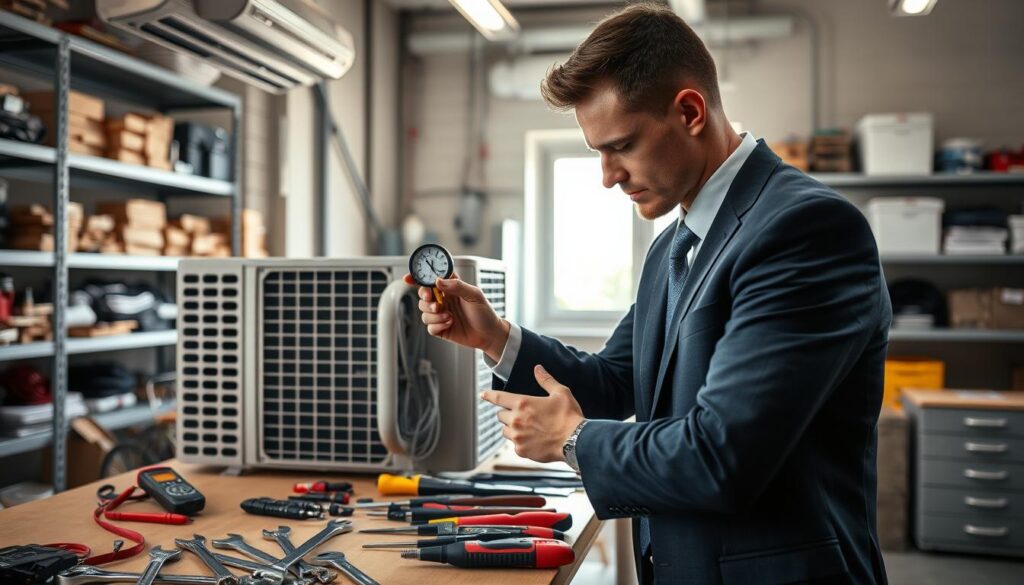
To start diagnosing, you’ll need to understand how to use the necessary tools correctly. Using pressure gauges correctly is the first step in identifying high pressure issues.
Using Pressure Gauges Correctly
To use pressure gauges correctly, ensure they are properly calibrated and connected to the service ports on your AC system. Take readings when the system is operating under normal conditions to get accurate measurements.
Interpreting High-Side Pressure Readings
Interpreting high-side pressure readings involves understanding what the readings indicate about your system’s condition. High-side pressure that’s too high can indicate issues like refrigerant overcharge or condenser airflow restrictions.
Comparing Readings to Manufacturer Specifications
Once you have your pressure readings, compare them to the manufacturer’s specifications for your particular AC system model. This step is crucial for determining if the pressures are within the acceptable range.
When to Call a Professional Technician
If you’re unsure about any part of the diagnosis process or if your readings indicate a problem that you’re not equipped to fix, it’s time to call a professional technician. They have the expertise and equipment to diagnose and repair complex issues.
By following these steps, you can effectively diagnose high pressure issues in your AC system and take appropriate action to resolve them.
Step-by-Step Solutions for High Pressure Problems
Resolving high pressure issues in your AC system requires a systematic approach. High pressure problems can lead to reduced system performance and increased energy bills. By following a step-by-step guide, you can identify and fix the root cause of the issue.
Cleaning Condenser Coils
One of the most common causes of high pressure in AC systems is dirty or clogged condenser coils. Cleaning the condenser coils is a straightforward process that can significantly improve system performance. Turn off the power to the AC unit, then use a garden hose to gently spray the coils, removing dirt and debris. For more thorough cleaning, use a coil cleaning solution.
Checking and Replacing Condenser Fan
The condenser fan plays a crucial role in dissipating heat from the system. If the fan is not working correctly, it can lead to high pressure issues. Check the fan for any obstructions or damage. If the fan is not spinning, check the capacitor and wiring for any faults. Replacing a faulty condenser fan or its components can resolve high pressure problems.
| Component | Check | Action |
|---|---|---|
| Condenser Fan | Inspect for damage or obstructions | Clean or replace if necessary |
| Capacitor | Check for faults or wear | Replace if faulty |
| Wiring | Inspect for damage or corrosion | Repair or replace wiring |
Proper Refrigerant Charge Adjustment
A refrigerant overcharge can cause high pressure in the AC system. Checking and adjusting the refrigerant charge is crucial. Ensure the system is properly evacuated before recharging. Use a refrigerant charging scale to measure the correct amount of refrigerant.
Safety Precautions When Handling Refrigerants
When handling refrigerants, always wear protective gear, including gloves and safety glasses. Ensure the area is well-ventilated to avoid inhaling refrigerant fumes.
Proper Recovery Procedures
Follow EPA guidelines for refrigerant recovery to prevent environmental harm. Use certified recovery equipment to ensure safe and efficient refrigerant removal.
By following these step-by-step solutions, you can effectively troubleshoot and resolve high pressure problems in your AC system, ensuring optimal performance and efficiency.
Preventive Maintenance to Avoid High Pressure Issues
Preventive maintenance plays a vital role in ensuring that air conditioning systems operate within normal pressure ranges. By adopting a proactive approach, homeowners and facility managers can avoid many common issues associated with high pressure in AC systems.
Seasonal Maintenance Checklist
A seasonal maintenance checklist should include inspecting and cleaning condenser coils, checking refrigerant levels, and ensuring proper airflow around the condenser unit. Regular inspections can help identify potential issues before they become major problems.
Professional Service Intervals
It is recommended to have a professional HVAC technician inspect and service your air conditioning system at least once a year. They can perform tasks that require specialized tools and expertise, such as refrigerant charge adjustments and compressor checks.
DIY Maintenance Tips
Homeowners can perform simple maintenance tasks like keeping the area around the condenser unit clean and clear of debris, and checking for signs of refrigerant leaks. Simple actions like these can significantly reduce the risk of high pressure issues.
| Maintenance Task | Frequency | Benefit |
|---|---|---|
| Inspect and clean condenser coils | Seasonally | Improves airflow and efficiency |
| Check refrigerant levels | Annually | Prevents overcharging and undercharging |
| Ensure proper airflow around condenser unit | Monthly | Reduces pressure on the system |
Conclusion
Understanding and addressing high pressure in AC systems is crucial for maintaining optimal performance and prolonging the lifespan of your air conditioning unit. By recognizing the causes, such as refrigerant overcharge and condenser airflow restrictions, you can take proactive steps to troubleshoot and resolve issues.
Regular maintenance is key to preventing high pressure problems. This includes cleaning condenser coils, checking and replacing the condenser fan, and ensuring proper refrigerant charge adjustment. By following these steps, you can help prevent reduced cooling performance, unusual noises, and system short cycling.
Effective AC system troubleshooting involves using pressure gauges correctly and interpreting high-side pressure readings. Comparing these readings to manufacturer specifications will help you identify potential issues. If you’re unsure, it’s always best to consult a professional technician to diagnose and repair high pressure issues in your AC system.
By staying proactive and addressing high pressure issues promptly, you can ensure your AC system operates efficiently and effectively, providing a comfortable indoor environment while minimizing energy consumption.
FAQ
What are the common causes of high pressure in AC systems?
Common causes include refrigerant overcharge, condenser airflow restrictions, faulty condenser fan motors, and non-condensable gases in the system.
How do I know if my AC system has high pressure issues?
Symptoms include reduced cooling performance, unusual noises from the compressor, and system short cycling.
How do I diagnose high pressure issues in my AC system?
Use pressure gauges correctly, interpret high-side pressure readings, and compare these readings to manufacturer specifications.
What are the normal pressure ranges for residential and commercial AC systems?
Normal pressure ranges vary depending on the system type and manufacturer specifications, but generally fall within specific guidelines for residential and commercial systems.
Can I fix high pressure problems in my AC system myself?
Some issues, such as cleaning condenser coils and checking the condenser fan, can be addressed through DIY maintenance. However, complex problems may require professional assistance.
How often should I perform maintenance on my AC system to prevent high pressure issues?
Follow a seasonal maintenance checklist, and consider professional service intervals to ensure your system operates within optimal pressure ranges.
What safety precautions should I take when handling refrigerants?
Always follow proper safety protocols, including wearing protective gear and ensuring proper recovery procedures, when handling refrigerants to avoid injury and environmental harm.
When should I call a professional technician to diagnose and fix high pressure issues?
If you’re unsure about diagnosing or fixing high pressure problems, or if the issue persists after attempting DIY solutions, it’s recommended to seek professional help.