Tree sap damage is a significant concern for car owners, particularly those who park their vehicles under trees. The sticky substance can cause irreversible damage to car paint if not addressed promptly.
The risks associated with tree sap damage include discoloration, etching, and staining of the paint surface. If left unchecked, it can lead to costly repairs.
Understanding the importance of car paint protection and implementing effective vehicle protection tips can help mitigate the damage.
Key Takeaways
- Tree sap can cause significant damage to car paint if not addressed promptly.
- Regular washing and waxing can help protect the paint surface.
- Using a paint protection film can provide an additional layer of protection.
- Avoid parking under trees to minimize the risk of tree sap damage.
- Act quickly to remove tree sap from car paint to prevent damage.
Understanding Tree Sap and Its Impact on Vehicles
Understanding the nature of tree sap is crucial for mitigating its damage to car paint and other surfaces. Tree sap is a sticky substance produced by trees that can have detrimental effects on vehicles if not addressed promptly.
What Is Tree Sap and Why It’s Problematic
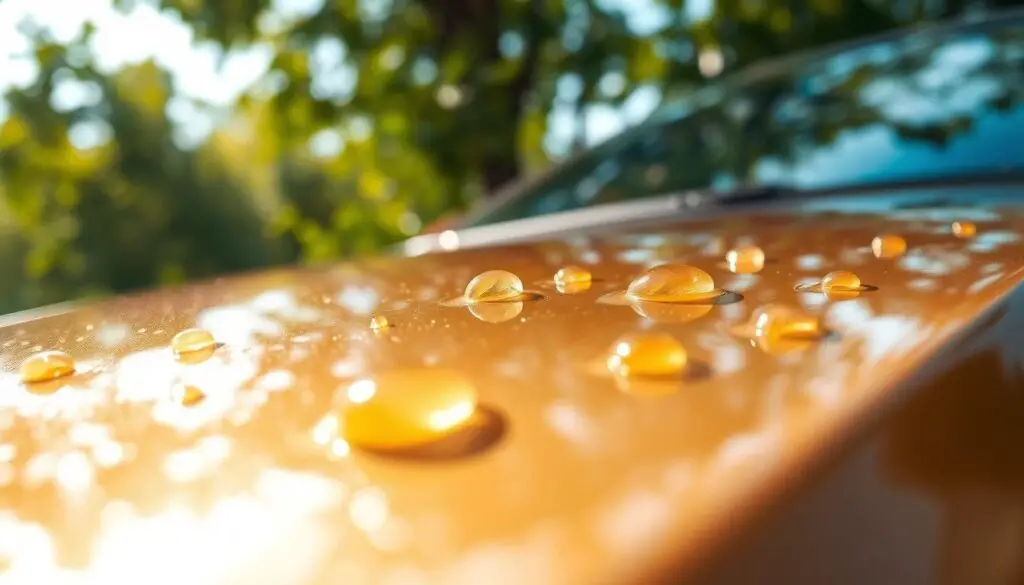
Tree sap is a natural substance that trees produce for various purposes, including sealing wounds and protecting against environmental stressors. However, when it comes into contact with car paint, it can cause significant damage due to its sticky and acidic nature. As Dr. John Smith, an automotive expert, notes, “Tree sap can etch into the paint if left untreated, leading to costly repairs.”
Different Types of Tree Sap and Their Properties
Different tree species produce sap with varying properties. For instance, pine trees produce a sap that is particularly sticky and difficult to remove. Understanding the type of sap your vehicle is exposed to can help in choosing the right removal techniques.
Chemical Composition and Paint Interaction
The chemical composition of tree sap includes various organic compounds that can react with car paint. These reactions can lead to discoloration, etching, and other forms of damage. Regular car maintenance, including waxing and applying protective coatings, can help mitigate these risks.
By understanding the risks associated with tree sap and taking proactive measures, car owners can protect their vehicles from potential damage. Regular maintenance and prompt removal of sap are key to preserving the appearance and integrity of car paint.
How Long Does It Take for Tree Sap to Damage Car Paint: Timeline and Factors
The duration for tree sap to damage car paint varies based on several factors, including the type of tree sap, environmental conditions, and the paint’s finish. Understanding this timeline is crucial for car owners to take timely action.
Immediate Effects (First 24-48 Hours)
Within the first 24 to 48 hours, tree sap can start to bond with the car’s paint, potentially causing minor damage. If the sap is not removed during this period, it can harden and become more challenging to remove.
Short-Term Damage (1-2 Weeks)
If tree sap remains on the car’s paint for one to two weeks, it can start to etch into the clear coat, leading to more severe damage. Regular washing and waxing can help mitigate this effect.
Long-Term Consequences (1 Month and Beyond)
Leaving tree sap on car paint for an extended period can result in permanent damage, including discoloration and pitting. In such cases, professional repair may be necessary.
Environmental Factors That Accelerate Damage
Environmental factors such as direct sunlight, high temperatures, and rainfall can accelerate the damage caused by tree sap. For instance, UV rays can cause the sap to harden faster, while rain can spread the sap, increasing the affected area.
| Factor | Impact on Damage |
|---|---|
| Direct Sunlight | Accelerates hardening of sap |
| High Temperatures | Increases sap’s bonding with paint |
| Rainfall | Spreads sap, increasing affected area |
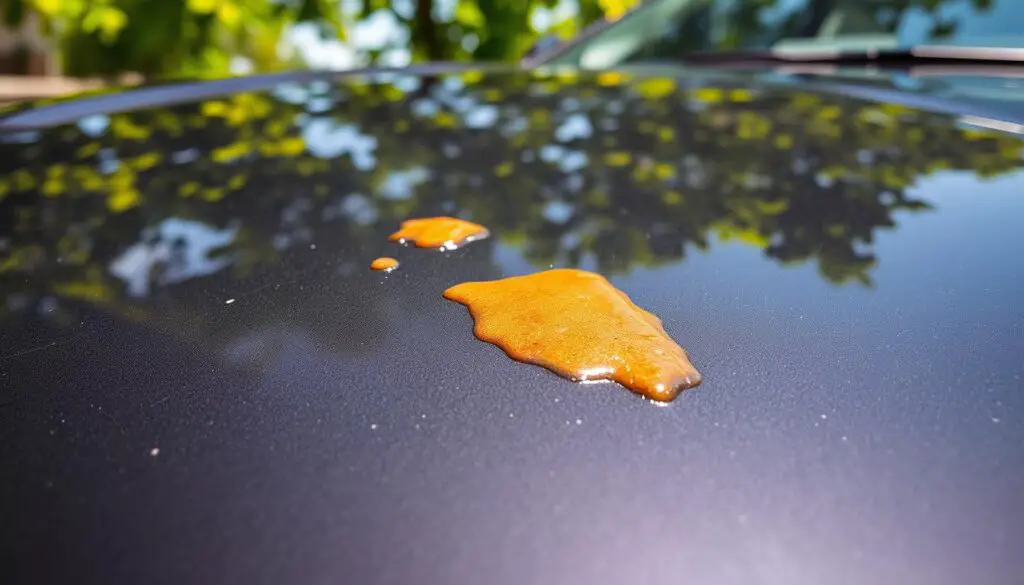
By understanding the timeline and factors that influence tree sap damage, car owners can take proactive steps to protect their vehicle’s paint and prevent costly repairs.
Identifying Tree Sap on Your Vehicle
Tree sap can be a nuisance for car owners, and recognizing it early is key to preventing damage. Tree sap can stick to various parts of your vehicle, potentially harming the paint if not addressed promptly.
Visual Characteristics of Fresh vs. Hardened Sap
Fresh tree sap is typically sticky and translucent, making it quite noticeable on your car’s surface. Over time, it hardens and becomes more brittle and darker in color, making it easier to identify but harder to remove.
Common Areas Where Sap Accumulates
Tree sap often accumulates on areas of the vehicle that are directly under or near trees, particularly on the hood, roof, and trunk. These areas are more prone to sap falling from overhanging branches.
Distinguishing Sap from Other Substances
It’s essential to distinguish tree sap from other substances like bird droppings or tar. Unlike these substances, tree sap is usually more sticky and can leave a residue when it dries. Proper identification ensures you use the correct removal techniques.
Step-by-Step Guide to Removing Fresh Tree Sap
When it comes to removing fresh tree sap, acting quickly is crucial to avoid long-term damage to your vehicle’s paint job. Fresh tree sap can bond with the paint if left untreated, making removal more difficult. In this section, we’ll walk you through the necessary steps to safely remove fresh tree sap from your car.
Supplies and Tools You’ll Need
Before you start, gather the necessary supplies to ensure a smooth removal process. You’ll need:
- A soft, microfiber cloth
- A mild soap or automotive detergent
- Warm water
- A sap removal product (optional)
- A clean, dry microfiber towel for drying
Preparation Steps
Preparation is key to successful sap removal. Start by:
- Parking your car in a shaded area to prevent the sap from hardening further.
- Gently washing the affected area with mild soap and warm water to remove any loose debris.
Safe Removal Techniques
There are two primary methods for removing fresh tree sap: the hand washing method and using commercial sap removal products.
Hand Washing Method
This method involves using a mixture of warm water and mild soap to gently dissolve the sap.
- Soak a microfiber cloth in the soapy water, wring it out thoroughly.
- Gently rub the sap stain with the damp cloth, working from the outside in.
- Rinse the cloth frequently to avoid re-depositing the sap.
Commercial Product Method
For more stubborn sap, consider using a commercial sap removal product.
- Follow the product’s instructions for application and removal.
- Typically, you’ll apply the product to the sap, let it sit for a few minutes, and then wipe it away with a clean microfiber cloth.
What NOT to Do When Removing Sap
Avoid using harsh chemicals, abrasive materials, or excessive force, as these can damage your car’s paint. Never use:
- Household cleaners or strong detergents.
- Scouring pads or rough cloths.
- High-pressure washes directly on the sap.
By following these steps and avoiding common mistakes, you can effectively remove fresh tree sap from your vehicle and protect its paint.
Tackling Hardened or Aged Sap Deposits
Removing hardened or aged tree sap from your vehicle’s paint can be a challenging task, but there are several effective methods to tackle it. When sap has had time to harden, it becomes more difficult to remove, potentially causing damage to the paint if not addressed properly.
Specialized Products for Hardened Sap
There are various commercial products designed specifically for removing hardened tree sap. These products typically contain solvents that break down the sap, making it easier to remove without damaging the vehicle’s paint. Some popular options include:
- Tree sap removers
- Adhesive removers
- Specialty automotive cleaning products
Professional Removal Options
For particularly stubborn sap deposits or for those who are unsure about attempting removal themselves, professional detailing services are a viable option. Professionals have the necessary experience and equipment to safely remove hardened sap without damaging the vehicle’s paint.
DIY Methods for Stubborn Sap
For car owners who prefer to tackle the issue themselves, there are several DIY methods that can be effective.
Clay Bar Technique
The clay bar technique involves using a detailing clay bar to gently lift the sap off the paint surface. This method is effective for removing sap that has not deeply penetrated the paint.
Isopropyl Alcohol Method
Isopropyl alcohol can be used to dissolve and remove hardened sap. It’s essential to use it carefully and test it on a small, inconspicuous area first to ensure it doesn’t damage the paint.
Safety Precautions During Removal
Regardless of the removal method chosen, it’s crucial to take safety precautions to avoid damaging the vehicle’s paint or harming oneself. This includes wearing protective gloves, working in a well-ventilated area, and avoiding the use of harsh chemicals or abrasive materials.
By understanding the available methods and taking the necessary precautions, car owners can effectively remove hardened or aged tree sap deposits from their vehicles, protecting the paint and maintaining the vehicle’s appearance.
Preventative Measures to Protect Your Car’s Paint
Protecting your car’s paint from tree sap requires a proactive approach. By implementing the right strategies, you can significantly reduce the risk of damage and maintain your vehicle’s appearance.
Regular Waxing and Sealants
One of the most effective ways to protect your car’s paint is through regular waxing and applying sealants. A good wax or sealant creates a barrier between the paint and external contaminants like tree sap, making removal easier and reducing the risk of damage. It’s recommended to wax your car every 2-3 months, depending on the environment it’s exposed to.
Ceramic Coatings and Paint Protection Films
For enhanced protection, consider applying ceramic coatings or paint protection films (PPF). Ceramic coatings provide a durable, hydrophobic layer that repels contaminants, while PPF offers a physical barrier against sap and other debris. Both options require professional application but offer long-term benefits.
Car Covers and Parking Strategies
Using a car cover when your vehicle is parked for extended periods can prevent sap from coming into contact with the paint. Additionally, choosing parking spots away from trees or using parking garages can minimize exposure to sap. When parking under trees is unavoidable, try to park under trees with less sap-producing tendencies.
Seasonal Considerations for Sap Protection
Tree sap production varies by season, with some trees producing more sap during warmer months. Being aware of these seasonal changes can help you adjust your protective measures accordingly. For instance, applying a more durable coating before the sap-producing season can offer enhanced protection.
Repairing Paint Damage Caused by Tree Sap
When tree sap damages your car’s paint, understanding the extent of the damage is crucial for effective repair. Tree sap can cause significant harm if not addressed promptly.
Assessing the Extent of Damage
The first step in repairing paint damage is to assess its extent. Inspect your car’s paint carefully to identify all areas affected by tree sap. Check for discoloration, etching, or any other signs of damage.
DIY Touch-Up Options
For minor damage, DIY touch-up options are available. You can use touch-up paint that matches your car’s original color. Always follow the manufacturer’s instructions for the best results.
When to Seek Professional Help
If the damage is extensive or you’re unsure about how to proceed, it’s advisable to seek professional help. Professionals have the tools and expertise to repair paint damage effectively.
Cost Considerations for Repairs
The cost of repairs varies widely depending on the extent of the damage and the method of repair chosen. DIY repairs are generally less expensive, while professional services can be more costly. Consider your options carefully to balance cost and quality.
Conclusion
Understanding the risks associated with tree sap and its impact on car paint is crucial for maintaining your vehicle’s appearance and longevity. As discussed, tree sap can cause significant damage if not addressed promptly.
To mitigate tree sap risks, it’s essential to implement effective car paint protection strategies. Regular waxing, using ceramic coatings, and applying paint protection films can significantly reduce the risk of damage.
When it comes to vehicle protection tips, being proactive is key. Regularly inspecting your vehicle for sap, using car covers, and parking in sap-free zones can help prevent damage. If you do encounter sap, knowing how to remove it safely is vital.
By combining these strategies and staying informed, you can protect your vehicle’s paint and maintain its overall health. Effective protection and prompt removal techniques are the best defenses against the potentially costly damage caused by tree sap.
FAQ
What is tree sap, and how does it damage car paint?
Tree sap is a sticky substance produced by trees, and it can damage car paint by bonding with the paint’s surface, causing discoloration, and etching into the clear coat.
How long does it take for tree sap to damage car paint?
The time it takes for tree sap to damage car paint varies depending on factors like the type of sap, environmental conditions, and the paint’s finish. Generally, it can start causing damage within 24-48 hours.
How can I identify tree sap on my vehicle?
Tree sap can be identified by its sticky texture, yellow or brown color, and tendency to accumulate on surfaces. Fresh sap is typically soft and gooey, while hardened sap is more brittle and crumbly.
What is the best way to remove fresh tree sap from my car?
The best way to remove fresh tree sap is by using a gentle hand washing method or a commercial sap removal product, followed by a thorough wash and wax to protect the paint.
Can I use household products to remove tree sap from my car?
While some household products like isopropyl alcohol or WD-40 can help dissolve tree sap, they may not be suitable for all paint types and can potentially damage the finish. It’s recommended to use specialized products or consult a professional.
How can I prevent tree sap from damaging my car’s paint?
Preventative measures include regular waxing, applying ceramic coatings or paint protection films, using car covers, and parking in sap-free areas. Seasonal considerations, like avoiding parking under trees during sap-heavy seasons, can also help.
What are the costs associated with repairing paint damage caused by tree sap?
The cost of repairing paint damage caused by tree sap varies depending on the extent of the damage, the type of repair needed, and whether you DIY or seek professional help. Touch-up options can be relatively inexpensive, while extensive repairs can be costly.
Are there any DIY methods for removing hardened or aged sap deposits?
Yes, DIY methods for removing hardened or aged sap deposits include using clay bars, isopropyl alcohol, or specialized products. However, caution should be exercised to avoid damaging the paint, and safety precautions should be taken.