This introduction lays out clear, usable facts and figures so readers can compare parts without guesswork. Forum chatter often mixes shipped kit mass with the bare panel, which creates a big difference when you shop on a product page.
Expect common ranges: many modern compacts use a stock hood near the low-30 lbs mark, while older steel units and larger vehicles trend heavier. Very light composite panels can save pounds but may bow or dimple under high-speed airflow, so weight alone is not the full story.
This article will show how to read listed numbers, measure parts at home or in a shop, and balance weight with fitment, longevity, and safety. Use the steps ahead to avoid surprises from inflated specs or forum estimates.
Key Takeaways
- Listed mass may include packaging or hardware; confirm what the number covers.
- Typical stock ranges: modern compact panels in the low-30 lbs area; heavier on older steel designs.
- Very light composites can deform at speed—consider durability with weight savings.
- Use consistent measurement conditions to avoid conflicting numbers from forums.
- By the end, you will know how to verify, measure, and choose the right hood for street or track use.
How Much Does a Car Hood Weigh in Real-World Use
A practical baseline comes from hands-on weigh-ins rather than repeated posts or product pages.
Typical stock hood numbers: For many compact models, a stock hood sits around 30–35 pounds (about 32 lbs commonly cited). Trim, model year, insulation, and attached latch or hinge hardware can push that number up or down by several pounds.
Vendor pages or long forum threads sometimes list 50–60 lbs. That often reflects the shipping box plus padding, not the bare part. One Civic Si thread shows a 58 lbs listing likely including packaging, while members report ~32 pounds for the panel alone.
Reading claims on posts and threads
- Ask whether the poster weighed the panel alone or with hardware.
- Look for scale photos, date, and whether the original member confirmed the number.
- Treat repeated figures as estimates until verified by a measured result.
| Source | Listed weight | Likely real weight |
|---|---|---|
| Vendor page (boxed) | ~58 lbs | ~32–36 lbs |
| Member post with photo | ~33 lbs | ~32–34 lbs |
| Unverified reply | Varies | Approximate until measured |
Practical tip: If you plan a swap for weight savings, use measured figures. Honest numbers save time and prevent surprises when comparing parts and upgrades.
How to Measure Hood Weight Accurately at Home or in a Shop
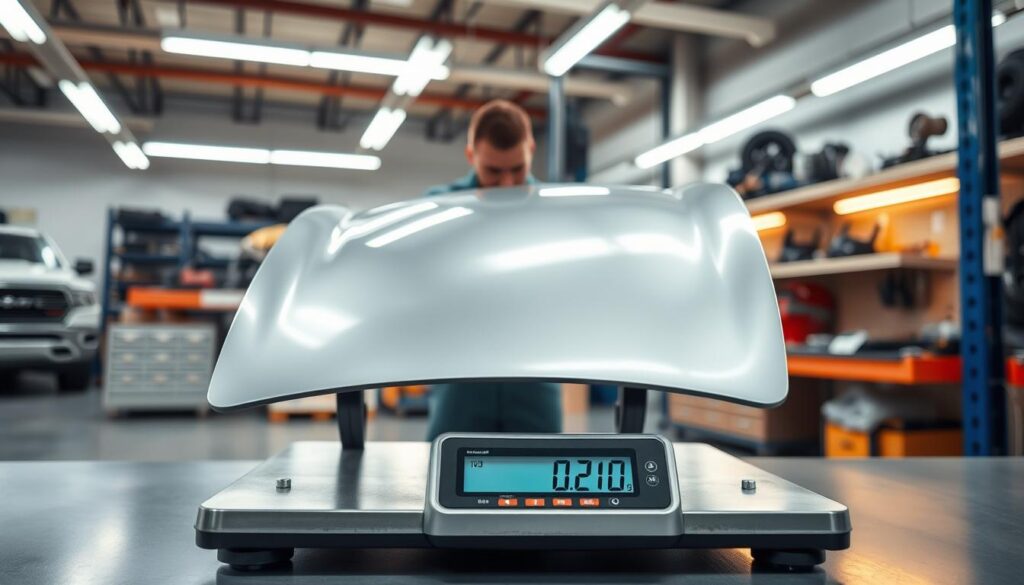
A reliable weigh-in starts with the right gear and a consistent test setup. Below are three real-world methods that work in most garages and shops.
Tools and setups that work
- Bathroom scale + board: Place a rigid board on the scale, zero it, set the panel and read the number. This limits board flex and gives a stable reading.
- Hanging scale with straps: Use web straps at anchor points and lift straight up. Watch strap angles so the load is vertical for accurate lbs.
- Two-person method: One hand steadies the panel while the hanging scale carries the load. This reduces wobble and yields repeatable numbers.
Removing the panel from the front safely
- Mark hinge positions on both sides to preserve alignment.
- Protect fenders with towels and keep the engine bay clear to avoid scratches to the engine or paint.
- Disconnect washer nozzle hose and any wiring, then unbolt hinges with a helper to control the panel as it comes free.
Recording and confirming your result
Weigh the panel alone, then again with latch, hinges, or vents attached. Note the stock hood or aftermarket version, list which parts were included, and record the final lbs reading.
| What to note | Why it matters |
|---|---|
| Stock hood vs aftermarket version | Allows fair comparison to vendor posts and member replies |
| Included parts (latch, hinges, vents) | Explains any difference between listings and your number |
| Photo of setup | Serves as proof in threads and saves time on rechecks |
Troubleshooting inconsistent readings
If numbers vary, check scale calibration, strap angle, and board flex. Repeat the weigh-in immediately with the same setup; that second reading confirms accuracy and saves time.
Pro tip: Document the setup and final reading with a photo. That makes your post or reply credible and helps others reproduce your method without extra back-and-forth.
What Changes Hood Weight Most: Steel vs Fiberglass vs Carbon Fiber
Material choice and internal structure drive most of the final mass for aftermarket panels. Base density, skin thickness, and inner bracing set the primary difference between steel, fiberglass, and carbon fiber versions.
Steel uses thicker metal and built-in ribs for strength. That adds weight but keeps fitment and impact resistance high. Steel suits daily driving and preserves stock alignment with minimal work.
Fiberglass cuts mass by using thinner skins and fewer internal supports. This yields good weight savings but can flex under high-speed air loads. Expect some fitment work and possible long-term cracking without reinforcement.
Carbon fiber often gives the best weight-to-stiffness ratio when well made. Poor layups or ultra-thin shells sacrifice durability. Community reports show ultra-light panels can bow or dimple from air pressure at speed.
- Weight gains or cuts come from material density, thickness, and latch/brace design.
- Composites save pounds by removing inner structure; that lowers stiffness unless cores are added.
- Foam inserts or honeycomb cores prevent dimpling and keep shape under track loads.
| Material | Pros | Cons |
|---|---|---|
| Steel | Fitment, durability | Higher weight |
| Fiberglass | Low cost, lighter | More flex, fitment work |
| Carbon fiber | Lightest, stiff | Costly, layup quality matters |
Choose by goal: street use favors durable fit and consistent gaps. Race builds prioritize max weight savings and may accept cosmetic trade-offs. Getty Design and other testers show that reinforcement choices matter as much as headline weight.
Choosing the Right Hood for Your Goals: Stock Hood, Street Panels, and Race Panels
Pick a panel that matches your driving goals before chasing the lowest number on a spec sheet.
When keeping the stock hood makes sense: For daily use, the stock hood offers the best fit and predictable latch and hinge behavior. It reduces alignment time and limits finish work over many miles. Owners report fewer issues with gap consistency and weather seals when they stay stock.
Race Panels vs Street Panels
Race panels remove inner structure to save pounds. Expect minimal reinforcement, rough finish, and possible flex at speed. These excel on the track but often need extra work for street fit.
Street panels balance stiffness and finish. They keep better gaps, resist heat cycles, and usually include reinforcements like foam or honeycomb to limit dimpling. Street parts cost more but save time and frustration.
Vendor quality tiers from the community
Forum feedback groups vendors into tiers:
- GT-Racing — ultra-light, race-focused; low mass but poor street durability.
- American International Racing — mid-tier compromise; better fit, slightly heavier.
- Getty Design — premium; durable layups, foam inserts, and strong fit reputation.
High-speed airflow and panel integrity
Aerodynamic loading can cause bowing or dimpling if the panel lacks support. Reinforcement such as foam cores matters more than chasing minimal listed weight. For track use, prioritize stiffness and tested inserts over headline savings.
Planning total savings
Think of hood savings in context: wheels, exhaust, battery, and seats often offer equal or greater mass reductions. Compare measured numbers and set realistic goals before ordering parts.
| Type | Typical trade-off | Best use | Community pick |
|---|---|---|---|
| Stock hood | Best fit, heavier | Daily driver, long-term reliability | OEM |
| Street panel | Moderate savings, better finish | Street/track mix | American International Racing |
| Race panel | Max savings, low stiffness | Competition only | GT-Racing |
| Premium composite | Light and stiff, costlier | Show, serious track builds | Getty Design |
Validate claims: read multiple posts, compare replies, and trust measured numbers over repeated estimates. Then confirm on your own scale or with documented photos.
Conclusion
Final numbers matter only when you know exactly which pieces were on the scale. Confirm whether the panel alone, added hardware, or the shipping box produced the listed figure before you rely on it.
Use a repeatable setup: weigh the panel alone, note included items, then repeat the test. Document photos and notes so posts or replies can be verified quickly.
Material choices carry real trade-offs: steel keeps fit and durability, fiberglass saves mass but can flex, and carbon fiber can be light and stiff when well made. For street-driven use, prioritize panel strength and stability over chasing the lowest number.
Next step: weigh your current hood, set clear goals for the build, and use verified data to pick parts that deliver real results without surprises. For related measurement tips, see small block Chevy mass guide.
FAQ
What is the typical stock hood weight in pounds or lbs?
Most factory hoods for compact and midsize cars weigh between 25–60 lbs. Full-size sedans and SUVs often range from 40–80 lbs depending on steel gauge and sound deadening. Performance cars with thicker reinforcements can push higher.
Why can listed weight be misleading on product pages and forums?
Listed weights sometimes reflect the shell only, exclude hardware, or show shipping weights. Forum posts and vendor pages may not specify whether hinges, latches, or reinforcement are included, so the number can understate the in-use mass.
How does packaging affect the weight you see when a hood ships in a box?
Shipping weight adds crate, foam, brackets, and fasteners. Boxes, padding, and pallet straps can add 10–30 lbs or more, so unpacked hood weight will be noticeably lower than the billed shipping weight.
What tools work best to measure hood weight at home or in a shop?
Use a heavy-duty bathroom scale for an assisted two-person lift, a hanging scale with webbing, or a shop floor scale if available. A friend or an engine hoist helps keep measurements safe and steady.
What is the quick, safe process for removing a hood from the front?
Support the hood with a prop or helper, disconnect the latch cable and washer lines, unbolt the hinges one side at a time, and have someone hold the hood while you remove the last fasteners. Protect the fenders and paint with soft cloths or tape.
How should I record a reliable weight number and note differences?
Log the measurement, include whether hinges, latch, strut, or insulation were attached, and note if it’s a stock or aftermarket version. Also record model year and vendor to compare apples-to-apples later.
How can I confirm my hood weight without wasting time on repeated checks?
Weigh twice in the same setup and average the results. If using a bathroom scale, perform two lifts with consistent support points. If results differ more than a few pounds, check for attached hardware or loose components and reweigh.
What material differences drive the most weight variation and savings?
Steel is the heaviest but strong and inexpensive. Fiberglass is midweight and cheaper than carbon fiber. Carbon fiber offers the largest weight savings per piece but costs more and can require reinforcement to resist flex.
How does carbon fiber compare to fiberglass for durability and cost?
Carbon fiber typically offers superior stiffness and lower weight but at a higher price. Fiberglass costs less and is easier to repair, yet it can flex and chip more easily under stress or repeated impacts.
Why do some aftermarket hoods include foam or reinforcement cores?
Foam cores, honeycomb, or composite reinforcements prevent bowing, reduce vibration, and stop dimpling at high speeds. They add structural stiffness without the weight penalty of full metal reinforcements.
How should priorities differ between street and race hood choices?
For daily driving prioritize fit, noise insulation, and longevity—stock or high-quality street panels work best. For track use prioritize weight savings, stiffness, and proper mounting even if you need extra fitment work.
When does keeping the stock hood make the most sense?
Retain the stock hood if you need perfect fit, OEM insulation, and corrosion resistance for daily driving. Stock panels also require no extra mounting hardware and maintain resale value.
What should I expect from race panels versus street panels for weight, flex, and finish?
Race panels prioritize weight reduction and stiffness; they often need custom fitment and may have a raw finish. Street panels balance look and fit with moderate weight savings and typically come primed or painted.
Which vendor tiers are common in the community for aftermarket hoods?
Brands like Seibon, VIS Racing, and APR are known for higher-end carbon options. More budget tiers include companies like Amazing, Duro, and generic fiberglass makers. Research build quality, mounts, and warranty before buying.
How do high-speed airflow issues affect hood selection?
At speed, insufficient stiffness can cause panel flex, dimpling, or flutter. Choose designs with proper reinforcement, vents, or anchors to manage aerodynamic loads and prevent long-term damage.
How should I plan total weight savings when replacing a hood?
Consider the hood in the context of overall vehicle weight. A few dozen pounds saved up front may or may not materially change handling unless combined with other reductions. Also factor in the cost and any added reinforcements or hardware.