Everyday driving in the United States raises a common question: does added mass at the road contact points change fuel use enough to matter? This short guide lays out the facts for commuters and city drivers.
Two main mechanisms determine the effect. First, rolling resistance steals energy as a tire rolls. Second, heavier rotating assemblies demand extra energy to spin. Both raise fuel consumption, especially in stop-and-go traffic.
Per tire the MPG change is usually modest. Still, four corners and many miles add up. Shopping choices often change more than one factor at once: wheel material, tire size, and load rating influence total mass.
This guide will help you pick efficient tires, keep correct pressure, avoid inefficient upsizing, and estimate real-world mpg changes for your vehicle without brand hype.
Key Takeaways
- Rolling resistance and rotational mass are the two main causes of extra fuel use.
- City driving shows the largest effect; highway impact is smaller.
- Small per-tire changes can add up across four wheels and thousands of miles.
- Wheel choice, size, and load rating often change total tire mass together.
- Maintaining pressure and choosing low-rolling-resistance options gives the best returns.
Why tire weight and tire design matter for fuel economy in the United States
The way tires interact with pavement often dictates a car’s real fuel performance. Tires are the only vehicle parts that stay in constant contact with the road. That contact turns engine output into motion and makes design choices more influential than many drivers expect.

Tires as the only components touching the road
Every rotation links engine work to pavement friction. Construction, tread pattern, rubber compound, and size change responsiveness, stability, and overall vehicle performance.
How rolling resistance turns into higher fuel use
Rolling resistance is the drag a tire creates as it deforms and recovers with each turn. That deformation wastes energy as heat.
When resistance rises, the powertrain must supply extra energy to keep speed. Over long commutes and mixed city driving in the U.S., small losses add up and reduce fuel economy.
| Design factor | Effect on performance | Typical effect on economy |
|---|---|---|
| Tread depth & pattern | Better traction, more rolling resistance | Moderate decrease |
| Rubber compound | Softer compounds boost grip, raise heat loss | Small to moderate decrease |
| Size and construction | Larger or heavier builds change rotation effort | Variable decrease |
Designs that favor traction— aggressive tread or softer rubber—often raise resistance and cut economy. The next sections show how to balance grip, durability, and efficiency for real-world gains.
How rolling resistance affects MPG under real driving conditions
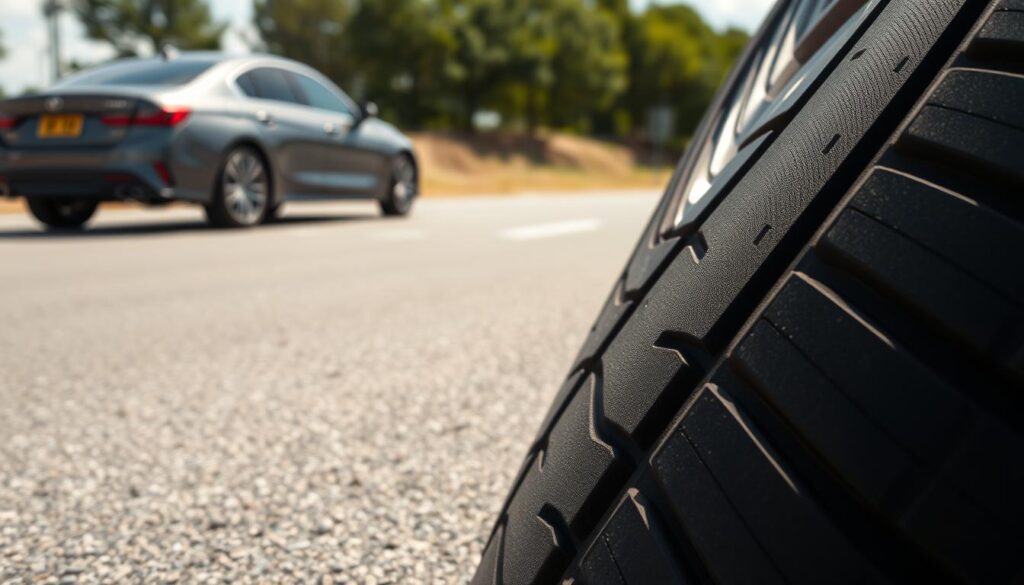
Tire deformation converts usable power into heat, which raises fuel demand during real trips. This loss matters in daily driving because small, repeated losses add up over thousands of miles.
Energy loss from deformation and heat buildup
The physics is straightforward: as the rubber flexes at the contact patch, some energy becomes heat. That energy is no longer available to move the car, so the engine must supply more fuel to keep speed.
How contact patch size changes resistance on the road
A larger contact patch — caused by wider tires or low pressure — increases the area that deforms. More deformation means higher resistance and higher fuel use under many road conditions.
Why low-rolling-resistance designs can improve efficiency
Manufacturers tune compounds and structure to cut deformation without removing needed grip. Low-rolling-resistance options reduce wasted energy and can raise overall efficiency modestly when combined with good maintenance.
Realistic outcomes: gains are small in percent terms but consistent. Next, we will separate resistance effects from rotating-mass effects, which show up most during acceleration and braking.
How much tire weight impacts your MPG – Explained!
Adding mass at the wheels forces the powertrain to work harder each time you accelerate. That extra load translates directly into higher fuel use in many daily driving situations.
Why heavier tires require more engine energy to accelerate
Heavier wheels need more torque from the engine to reach speed. The engine must supply extra energy to both move the vehicle’s mass and spin the rotating assemblies. Over many starts, that added demand lowers fuel efficiency.
Moment of inertia: why rotating mass matters more than static weight
Mass located far from the hub raises inertia. A pound at the rim costs more to spin than a pound inside the cabin. This difference makes wheel and tire choices critical for lively performance and economy.
Stop-and-go driving: where extra wheel weight tends to hurt most
City commuting multiplies acceleration cycles. Each stop requires fresh energy to spin heavy wheels again, so losses add up faster than on steady highway trips.
Balancing tire weight with durability, grip, and ride handling
Light wheels can improve responsiveness and save fuel, but you may trade off durability or traction. Choose options that match vehicle use—a few pounds per corner can change handling and long‑term economy.
- Acceleration: heavier wheels increase fuel demand at starts.
- Braking & hills: extra rotating mass raises the energy a vehicle must manage.
- Buyer tip: when choosing between similar models, prefer lighter wheel + tire combos if efficiency and quick response matter.
How vehicle weight and tire weight interact to change miles per gallon
Adding mass to a vehicle changes both the steady drag the car carries and the effort needed to spin its wheels. That combined effect reduces fuel economy more than static load alone.
Inertia and the added force needed to get moving
Mass at the rim adds rotational inertia, so a small increase in wheel mass can cost more fuel during acceleration than the same mass inside the cabin. Vehicles in city traffic feel this most, since repeated starts demand extra engine energy.
Heavier loads compress tires more and raise rolling resistance
Extra cargo, passengers, or towing raises vehicle load and compresses the tires. Increased deformation grows resistance and can lower fuel at steady speeds as well as during acceleration.
Rule of thumb and practical guidance
As a practical estimate, expect about a 1% drop in fuel economy for every 100 pounds added. This is a rule of thumb, not a guarantee; actual results vary by vehicle, driving conditions, and tire design.
- For trucks and SUVs: added payload plus heavy all-terrain wheels can stack losses from both load and resistance.
- Quick win: check tire pressure next—it’s the fastest control to cut unnecessary resistance.
Tire pressure: the fastest way to protect MPG from unnecessary resistance
Tire air pressure directly controls how much rubber meets the road and how hard the engine must work.
How underinflation increases contact area and fuel consumption
Underinflated tires flatten more at the contact road patch. That extra contact raises rolling resistance and forces the engine to burn extra fuel during normal commutes.
Drivers see the hit most in city driving with frequent starts and stops.
Why overinflation can reduce grip and cause uneven wear
Overinflation can shave a bit of resistance by narrowing the contact patch. But it also reduces grip and concentrates wear in the center tread.
Less grip harms safety and can raise long‑term costs, which offsets short-term efficiency gains.
How to find manufacturer-recommended pressure
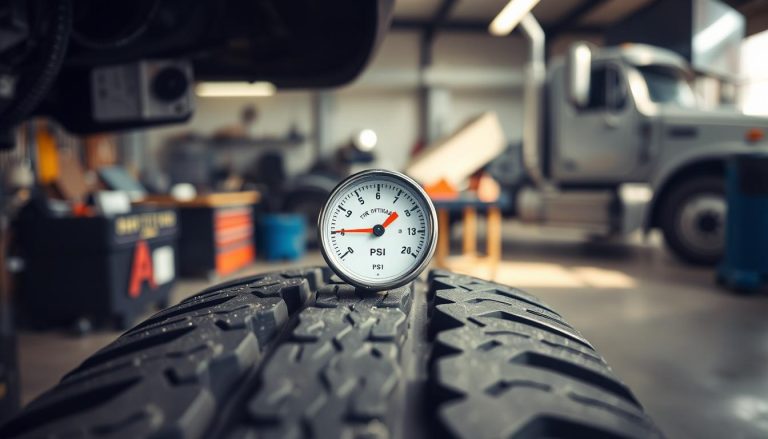
Use the placard on the driver’s door jamb or the owner’s manual. Do not use the max PSI molded on the sidewall as your target.
Best practice: check pressure monthly and before long trips
Check tires monthly and before long drives. Temperature swings and slow leaks are common in varied U.S. conditions, so regular checks protect mpg, safety, and tire life.
- Quick win: proper pressure is the lowest-cost way to cut resistance and improve efficiency.
- Correct air level supports both fuel economy and longer tire life.
Tread depth, tread pattern, and compound choices that can raise or reduce fuel use
What sits on the road—tread blocks, grooves, and rubber—can quietly shift fuel consumption on daily drives.
Deep tread vs. shallow tread: deeper tread increases squirm and deformation. That extra movement raises rolling resistance and can reduce efficiency, even as it helps water evacuation and traction in wet conditions.
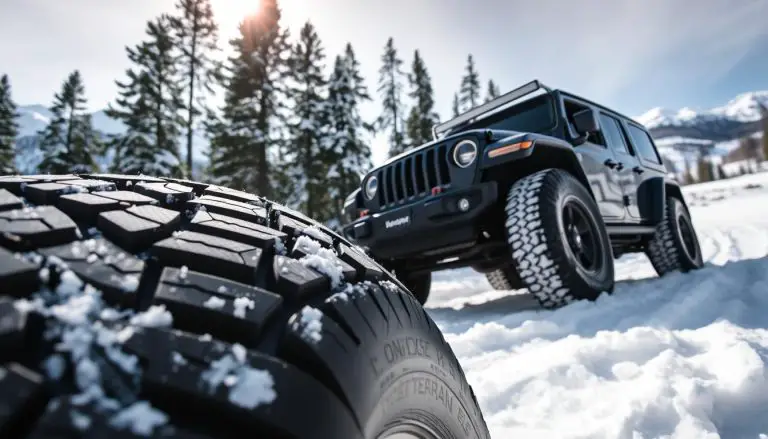
Aggressive patterns: winter and off‑road designs use large voids and chunky blocks. These patterns improve grip on snow and mud but raise resistance on dry pavement, which can increase fuel use during typical commuting.
Compound trade-offs: softer materials boost grip and braking performance but usually raise rolling resistance. Harder compounds lower resistance and often last longer, improving long‑term fuel and cost benefits.
- Safety vs. efficiency: the safest choice for local climate is often worth a small fuel penalty.
- Match needs: pick tread and materials for regular driving conditions, not rare extremes.
- Long-term benefit: the right combo can cut fuel costs and delay premature replacement.
Tire size and width: when bigger wheels cost you MPG
Upsizing wheels and tires often brings a visible style change — and a quiet penalty at the pump.
Larger-diameter wheels usually add rotating mass. Extra weight far from the hub raises the energy needed to accelerate and slows recovery during stops.
Wider tires increase the contact area on the road. More surface touching pavement means more rolling resistance and reduced efficiency during city and mixed driving.
Why larger sizes often cost fuel
Not every size change is equal. Small increases may show little difference, but large jumps in diameter or width can create a noticeable change at the pump.
Stick to OEM sizing to protect performance
Manufacturer sizing balances efficiency, ride, and safety. Non‑OEM combos can alter braking distances, upset stability controls, and distort speedometer readings.
- Shopping takeaway: avoid upsizing purely for looks if fuel economy matters.
- Selection tip: choose wheel and tire combos that match intended use — city commuting, highway mileage, or rough roads.
- Safety note: larger or wider fits can affect hydroplaning resistance and braking performance.
Choosing tire types for the best balance of efficiency, traction, and performance
Different tire types trade traction, comfort, and economy in distinct ways drivers should weigh.
All-season vs. performance options
All-season tires aim to balance grip and daily fuel use. They use compounds and tread that keep rolling resistance moderate while offering safe handling in a range of U.S. conditions.
By contrast, performance tires favor grip and handling. Softer compounds and aggressive tread raise rolling resistance and can reduce fuel economy during normal commuting.
Winter tires and real-world trade-offs
Winter models use deeper tread and softer rubber to bite on snow and ice. That design often increases resistance and lowers economy, but the safety benefits in snowy states usually outweigh the extra fuel cost.
Eco-friendly, low-rolling-resistance choices
Low-rolling-resistance options are tuned to cut energy loss and boost fuel economy. They may cost more up front but can deliver long-term savings through better mileage and, in some cases, longer wear.
- Total cost of ownership: weigh purchase cost against expected fuel savings and tread life.
- Pick for real use: choose based on where you drive most — highway, city, or winter roads — not just branding.
How to compare tire and wheel weight before you buy
Before you buy, compare specs for wheel mass and tire mass. Check published numbers so you know which option keeps fuel use low while meeting load needs.
What to check on product specs
Look for three clear items:
- Listed wheel mass and listed tire mass.
- Load rating — higher load-rated tires can add extra mass.
- Size and rim diameter — upsizing often hides heavier assemblies.
Where rotating mass shows up
Heavier assemblies need more engine power during acceleration and demand more energy to slow down. That raises fuel use on on-ramps, at stoplights, and when climbing hills.
Smart selection and upsizing caution
When two options match for traction and durability, pick the lighter wheel + tire combo for better efficiency. Avoid upsizing purely for looks; larger diameters can add mass and harm braking feel.
| Spec | What to compare | Effect on efficiency |
|---|---|---|
| Wheel mass | Manufacturer listed pounds | Higher mass raises rotational demand |
| Tire mass | Per-unit weight and load rating | Heavier tires increase rolling loss and braking energy |
| Size | Diameter and width | Upsizing can reduce efficiency and change handling |
Maintenance actions that keep tire efficiency high over time
Small maintenance habits can preserve tire efficiency and protect fuel economy over time. Regular care reduces hidden losses in rolling resistance and keeps a car’s ride and handling predictable.
Tire rotation to support even wear and a consistent contact patch
Rotate tires on the schedule in your owner’s manual. Even wear keeps the contact patch uniform, which steadies resistance and helps maintain efficiency across all four wheels.
Alignment and balancing to reduce drag and uneven resistance
Proper alignment prevents feathering and edge wear that raise rolling resistance. Balancing removes vibration that can hurt ride quality and speed up irregular wear on the vehicle.
Regular inspections for damage and abnormal tread wear
Check tires often for uneven tread, nails, bulges, and sidewall cuts. These faults increase drag and risk failure during daily driving.
Simple schedule: check pressure monthly, rotate every 5,000–7,500 miles, and realign after pothole hits or suspension work. Proper maintenance delivers smoother ride, steadier handling, and more consistent fuel use.
| Action | Benefit | When to do it |
|---|---|---|
| Tire rotation | Even tread, stable contact patch, steady efficiency | Every 5,000–7,500 miles |
| Alignment & balancing | Lower drag, improved handling, less vibration | Annually or after impacts |
| Visual inspection | Detect nails, bulges, uneven wear early | Monthly and after rough roads |
How to estimate your real-world MPG change from tire and weight changes
Start by listing the car’s curb mass, then add passengers, cargo, and any trailer load to find true operating mass. This gives a clear baseline to judge changes and set realistic expectations.
Apply the simple rule of thumb: expect about a 1% loss in mpg per 100 pounds of added weight. Use that percentage to estimate likely savings or the expected difference after swapping wheel and tire combinations.
Remember outside factors. Road surfaces, hills, and higher speeds increase aerodynamic and rolling demands. These factors can mask small gains from lighter or low-resistance setups.
Practical tracking method
Measure fuel economy over several fill-ups using the same fill level method and similar routes. Track for several weeks so normal variation in traffic and weather evens out.
- Record vehicle weight before and after changes.
- Apply the 1% per 100 lb rule to set expectations.
- Note roads and speeds for each test period.
- Compare results over time to confirm real savings.
Patience pays. Small differences require consistent measurement across time to separate true gains from ordinary noise in driving conditions and habits.
Real-world examples: what studies and drivers report after changing tires
Field data and owner reports offer practical context for lab numbers. Below are common outcomes drivers and controlled studies note when swapping tire types on U.S. roads.
Sedans and hybrids: typical gains with low-rolling-resistance models
Many sedans and hybrids record roughly a 2–3% MPG improvement after fitting low-rolling-resistance tires.
Why hybrids often show clear gains: their high baseline efficiency makes small rolling-loss reductions more visible in everyday driving.
SUVs and trucks: bigger effects in stop-and-go urban use
SUVs and light trucks can see improvements up to about 4% in city traffic. Repeated starts multiply rotational and rolling losses, so tire choice matters more for these vehicles.
Winter driving: MPG reduction vs. added traction and braking confidence
Winter models usually cause a fuel reduction due to deeper tread and softer compounds. Still, they deliver better traction and improved braking on snow and ice, which many drivers prefer for safety.
- Reported results: expect modest gains or losses depending on vehicle type and routes.
- Driver experience: smoother roll, slight steering changes, and variable braking feel are common.
- Decision tip: use real-world examples to set expectations, not guarantees; pick based on how and where you drive for best benefits.
Future trends in tire technology that could improve fuel efficiency
Advances in raw materials and factory processes are shaping the next generation of tires. These changes aim to lower environmental impact while improving on-road efficiency and durability.
New sustainable materials and manufacturing approaches
Producers are testing renewable rubber blends and recycled fillers to reduce lifecycle emissions. Better mixing and curing methods also trim waste and energy in production.
Result: lower embodied carbon and modest gains in rolling loss without sacrificing longevity.
Next-generation low-rolling-resistance tread designs
Designs now target reduced deformation in the contact patch. Novel compounds and tuned tread geometry cut energy loss while keeping wet traction and braking.
Expect steady, incremental improvements rather than dramatic leaps, but those gains matter across millions of U.S. vehicles.
| Trend | Benefit | Impact on fuel |
|---|---|---|
| Renewable materials | Lower production emissions | Small long-term fuel gain |
| Precision manufacturing | Less waste, consistent quality | Improved consistency in efficiency |
| Optimized tread designs | Lower rolling resistance, retain grip | Noticeable fuel savings in city driving |
What shoppers can do now: watch for verified low-rolling-resistance ratings, independent test results, and clear spec disclosures. Pair smarter products with correct sizing, pressure, and maintenance for the best vehicle performance and fuel outcomes.
Conclusion
Small changes at the wheel can shift a car’s real fuel use over time. Added rotating mass forces the engine to supply extra energy at every start, so heavier assemblies raise fuel demand more than equal static loads inside the cabin.
Key drivers include rolling resistance, correct pressure, tread design, compound choice, and wheel size. Each can increase or reduce overall efficiency and the net impact shows up most in city driving.
Use a practical rule: expect roughly a 1% fuel loss per 100 pounds of added weight, though results vary by vehicle and route.
Action steps: keep tires inflated to manufacturer specs, avoid unnecessary upsizing, and select low‑rolling‑resistance models when traction needs allow. For fit guidance, consult a reliable wheel and fit guide.
Match choices to climate and driving habits, maintain pressure and alignment, and the long‑term payoff will be lower fuel bills, steadier handling, and more even wear for your car.
FAQ
Do heavier tires really change fuel economy?
Yes. Extra rotating mass increases the engine energy needed to accelerate and maintain speed. Heavier wheels and tires raise inertia and can lower miles per gallon, especially in stop-and-go driving.
Why does rolling resistance affect fuel use?
Rolling resistance is energy lost as tires deform and heat up while contacting the road. More resistance forces the engine to work harder, which raises fuel consumption.
How does tire construction influence rolling resistance?
Tread pattern, compound hardness, and internal construction determine how much a tire deforms. Low-rolling-resistance designs use stiffer sidewalls, optimized tread blocks, and special compounds to reduce energy loss.
Is rotating mass more important than static curb weight?
Often yes. Rotating mass (wheels and tires) requires extra torque to change speed because of moment of inertia. That makes added wheel weight more harmful to acceleration and MPG than the same amount of non-rotating cargo.
Where will added wheel and tire weight hurt MPG the most?
In urban, stop-and-go traffic. Frequent accelerations amplify the fuel penalty from rotating mass. On steady highway cruising, the effect is smaller but still present.
How does vehicle weight interact with tire effects on fuel economy?
Total vehicle mass raises rolling resistance and the energy needed to accelerate. Heavier loads compress tires more, increasing contact area and resistance, so both vehicle and wheel weight combine to reduce efficiency.
Is there a simple rule of thumb for weight and fuel consumption?
A common estimate is roughly a 1% fuel-economy loss for every 100 pounds of added weight, though real results vary with vehicle type, driving style, and speeds.
Can tire pressure really protect MPG?
Yes. Underinflation increases the tire’s contact patch and deformation, raising rolling resistance and fuel use. Maintaining manufacturer-recommended pressure helps preserve efficiency and tread life.
What are the trade-offs between tread depth, pattern, and fuel use?
Deeper or aggressive tread improves traction and durability but typically increases rolling resistance. Shallower, smoother tread reduces resistance but can sacrifice grip in wet or winter conditions.
Do wider or larger-diameter wheels reduce fuel economy?
Larger and wider wheels are often heavier and present a bigger contact patch and aerodynamic drag, which can lower MPG. Staying close to OEM sizing helps balance efficiency and handling.
Which tire types offer the best balance of economy and performance?
All-season tires designed for low rolling resistance tend to offer the best everyday fuel economy. Performance and winter tires trade some efficiency for grip and safety in specific conditions.
What specs should I compare before buying tires or wheels?
Check tire weight, wheel weight, load rating, rolling resistance or EPA/Manufacturer efficiency ratings, and recommended size. Consider the combined rotating mass when evaluating options.
How does maintenance help preserve fuel efficiency?
Regular tire rotation, wheel alignment, balancing, and pressure checks reduce uneven wear and excess drag, keeping rolling resistance—and fuel use—lower over time.
How can I estimate real-world MPG change after switching tires?
Start with curb weight and added masses, apply the weight-to-MPG estimate, then factor in rolling resistance differences from tire specs. Track fill-ups consistently to measure actual changes.
What do studies and drivers report after changing to low-resistance tires?
Many sedan and hybrid drivers report modest MPG gains (often a few percent). Gains may be smaller for heavy trucks and larger SUVs, where driving style and load matter more.
Are there upcoming tire technologies that will improve economy?
Yes. New compounds, sustainable materials, and advanced tread geometries promise lower rolling resistance without sacrificing safety. Manufacturers such as Michelin and Bridgestone are investing in these advances.
How often should I check tire pressure to protect efficiency?
Check pressure at least once a month and before long trips. Temperature changes affect pressure, so more frequent checks in extreme weather help maintain MPG and safety.