Dealing with a lawn mower that refuses to start can be frustrating, especially during peak gardening season. The Honda GCV160 engine is known for its reliability, but like any machine, it can encounter issues. Understanding the root cause of the problem is crucial to getting your mower up and running.
Troubleshooting a Honda GCV160 involves checking several key components. This article will guide you through the process, covering common issues such as fuel problems, ignition system faults, and other potential causes. By following these steps, you’ll be able to identify and potentially fix the issue, getting back to maintaining your lawn with ease.
Key Takeaways
- Identify common causes of GCV160 engine failure
- Learn basic troubleshooting steps for lawn mower repair
- Understand how to inspect and potentially fix fuel and ignition system issues
- Discover additional resources for complex repairs
- Tips for maintaining your Honda lawn mower to prevent future issues
Understanding Your Honda GCV160 Lawn Mower
Familiarizing yourself with the Honda GCV160 engine’s key parts is the first step towards troubleshooting and fixing common problems. The GCV160 is a robust engine used in various Honda lawn mowers, known for its reliability and performance.
Key Components of the GCV160 Engine
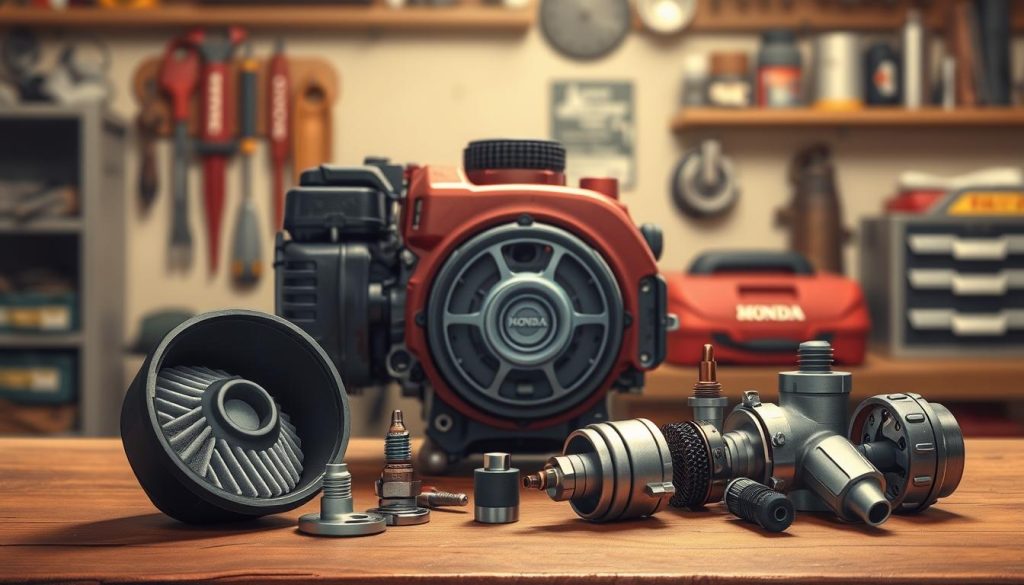
The GCV160 engine consists of several critical components, including the cylinder head, piston, crankshaft, and camshaft. Understanding how these Honda GCV160 engine parts work together is vital for effective diagnosis and repair.
Tools You’ll Need for Troubleshooting
To troubleshoot your Honda GCV160 lawn mower effectively, you’ll need a set of basic tools, including a spark tester, fuel pressure tester, and a multimeter. Having the right lawn mower troubleshooting tools on hand will make the diagnostic process smoother and more efficient.
Identifying Your Mower’s Model and Serial Number
Before proceeding with repairs, it’s essential to identify your mower’s model and serial number. This information, usually found on a plate or sticker on the mower, is crucial for ordering the correct replacement parts and ensuring compatibility. Accurate model number identification is key to successful repairs.
Safety Precautions Before Troubleshooting
Before diving into troubleshooting your Honda GCV160 lawn mower, it’s crucial to take some essential safety precautions to avoid accidents and injuries.
Disconnecting the Spark Plug
One of the first steps in ensuring your safety is to disconnect the spark plug. This prevents the engine from accidentally starting while you’re working on it. To do this, locate the spark plug wire and pull it off the spark plug. Make sure it’s securely positioned away from the spark plug to prevent it from reconnecting during your work.
Working in a Well-Ventilated Area
Always work on your lawn mower in a well-ventilated area to avoid inhaling fumes from fuel or other chemicals. If you’re working in a garage, ensure the garage door is open to provide adequate ventilation.
Proper Handling of Fuel and Oil
When handling fuel and oil, it’s essential to follow proper safety guidelines. Never smoke or have an open flame nearby when working with these flammable liquids. Store them in approved containers and dispose of any rags or materials soaked with fuel or oil properly.
| Safety Precaution | Description |
|---|---|
| Disconnect Spark Plug | Prevents accidental engine start |
| Work in Well-Ventilated Area | Avoids inhalation of harmful fumes |
| Proper Fuel and Oil Handling | Prevents fires and chemical exposure |
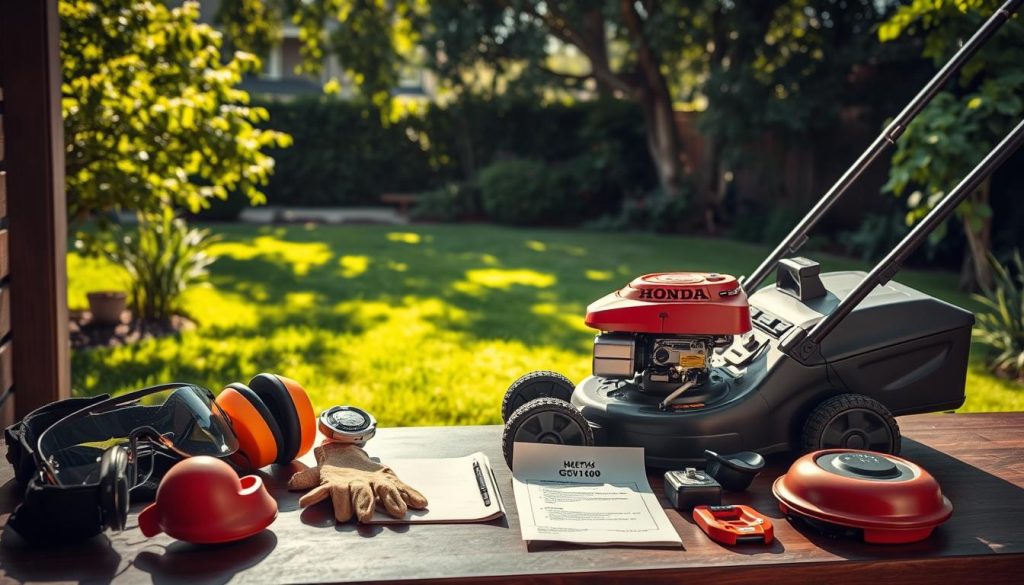
Why Your Honda Lawn Mower GCV160 Will Not Start: Diagnosis Guide
Identifying why your Honda Lawn Mower GCV160 won’t start requires a systematic approach to troubleshooting. By examining key systems and components, you can pinpoint the cause and apply the necessary fix.
Checking the Fuel System
The fuel system is a critical area to inspect when your Honda GCV160 lawn mower fails to start. Issues here can prevent the engine from receiving the fuel it needs.
Inspecting Fuel Quality and Level
First, check the fuel quality and level. Ensure that the fuel is fresh and not contaminated. Old or stale fuel can cause starting issues. Also, verify that the fuel tank is not empty.
Examining the Fuel Filter and Lines
Next, examine the fuel filter and lines for any blockages or damage. A clogged fuel filter can restrict fuel flow, preventing the engine from starting.
Evaluating the Ignition System
The ignition system is another crucial area to evaluate. Problems here can prevent the spark needed for combustion.
Testing the Spark Plug
Begin by testing the spark plug. Remove the spark plug and inspect it for wear or fouling. A spark tester can help determine if the spark plug is functioning correctly.
Inspecting the Ignition Coil
If the spark plug is not the issue, inspect the ignition coil. Ensure that it is in good condition and functioning properly.
Assessing the Air Intake System
The air intake system is vital for providing the air needed for combustion. Issues here can also prevent the engine from starting.
Cleaning or Replacing the Air Filter
Check the air filter and clean or replace it as necessary. A dirty or clogged air filter can restrict airflow, making it difficult for the engine to start.
Checking for Carburetor Issues
Inspect the carburetor for any issues, such as dirt or varnish buildup. Cleaning or adjusting the carburetor may be necessary.
| System | Common Issues | Potential Fixes |
|---|---|---|
| Fuel System | Old fuel, clogged fuel filter | Replace fuel, clean or replace fuel filter |
| Ignition System | Fouled spark plug, faulty ignition coil | Clean or replace spark plug, replace ignition coil |
| Air Intake System | Dirty air filter, carburetor issues | Clean or replace air filter, clean or adjust carburetor |
Testing for Compression Problems
Finally, test for compression problems. Low compression can prevent the engine from starting.
Examining the Recoil Starter
Check the recoil starter for any issues. Ensure that it is functioning correctly and not worn out.
Checking Valve Clearance
Verify that the valve clearance is correct. Incorrect valve clearance can affect engine compression.
By systematically checking these areas, you can diagnose why your Honda Lawn Mower GCV160 won’t start and apply the necessary repairs.
Step-by-Step Repair Solutions
To get your Honda GCV160 lawn mower up and running, follow these step-by-step repair solutions. This guide will walk you through fixing fuel-related problems, resolving ignition issues, addressing air system problems, and fixing compression and mechanical issues.
Fixing Fuel-Related Problems
Fuel-related issues are common in lawn mowers. Here are some steps to diagnose and fix these problems:
Draining Old Fuel and Adding Fresh Gasoline
Old fuel can cause starting issues. Drain the old fuel and replace it with fresh gasoline. Ensure you dispose of the old fuel properly.
Cleaning the Carburetor
A dirty carburetor can prevent your mower from starting. Remove and clean the carburetor thoroughly. For detailed instructions, you can refer to resources like Troy-Bilt TB110 repair guide, which may offer similar troubleshooting steps.
Replacing the Fuel Filter
A clogged fuel filter can restrict fuel flow. Replace the fuel filter if it’s dirty or clogged.
- Check the fuel filter for dirt or debris.
- Replace the filter if necessary.
Resolving Ignition Issues
Ignition problems can also prevent your lawn mower from starting. Here are some steps to resolve these issues:
Cleaning or Replacing the Spark Plug
A faulty spark plug can cause ignition issues. Clean or replace the spark plug as needed.
Testing and Replacing the Ignition Coil
A malfunctioning ignition coil can prevent your mower from starting. Test the ignition coil and replace it if necessary.
- Check the spark plug for wear or fouling.
- Test the ignition coil using a multimeter.
Addressing Air System Problems
Air system issues can affect your mower’s performance. Here are some steps to address these problems:
Proper Air Filter Maintenance
A dirty air filter can restrict airflow. Clean or replace the air filter as needed.
Carburetor Adjustment and Cleaning
A misadjusted or dirty carburetor can cause air system problems. Adjust and clean the carburetor according to the manufacturer’s instructions.
Fixing Compression and Mechanical Issues
Compression and mechanical issues can be more complex. Here are some steps to diagnose and fix these problems:
Repairing the Recoil Starter
A faulty recoil starter can prevent your mower from starting. Repair or replace the recoil starter as needed.
Adjusting Valve Clearance
Incorrect valve clearance can affect engine performance. Adjust the valve clearance according to the manufacturer’s specifications.
- Check the recoil starter for wear or damage.
- Adjust the valve clearance as per the manual.
By following these step-by-step repair solutions, you should be able to diagnose and fix common issues with your Honda GCV160 lawn mower.
Conclusion
Diagnosing and repairing a Honda Lawn Mower GCV160 that won’t start can be a straightforward process if you follow a systematic approach. By understanding the key components of the GCV160 engine and taking necessary safety precautions, you can identify and fix common issues.
The troubleshooting guide provided in this article covers checking the fuel system, evaluating the ignition system, assessing the air intake system, and testing for compression problems. By following the step-by-step repair solutions, you can address fuel-related problems, resolve ignition issues, and fix compression and mechanical issues.
In summary, a Honda GCV160 troubleshooting summary involves checking the fuel, ignition, and air systems, as well as compression. This lawn mower repair summary provides a comprehensive overview of the process, enabling you to confidently diagnose and repair your Honda Lawn Mower GCV160.
By applying these principles, you can get your lawn mower up and running efficiently, ensuring a well-manicured lawn throughout the season.
FAQ
What are the common reasons why a Honda Lawn Mower GCV160 won’t start?
Common reasons include issues with the fuel system, ignition system, air intake system, and compression problems.
How do I check the fuel quality and level in my Honda GCV160 lawn mower?
Check the fuel level by looking at the fuel tank, and inspect the fuel quality by checking for contamination or stale fuel.
What tools do I need to troubleshoot my Honda Lawn Mower GCV160?
You’ll need basic tools like a spark plug socket, fuel filter wrench, and air filter cleaning brush, among others.
How do I identify my Honda GCV160 lawn mower’s model and serial number?
The model and serial number can be found on the identification plate, usually located on the engine or mower deck.
Why is it essential to disconnect the spark plug before troubleshooting my Honda lawn mower?
Disconnecting the spark plug ensures your safety by preventing the engine from accidentally starting while you’re working on it.
How do I test the spark plug on my Honda GCV160 lawn mower?
Remove the spark plug, and use a spark tester to check for spark, or ground the spark plug against the engine to check for a spark.
What are the steps to clean or replace the air filter on my Honda lawn mower?
Remove the air filter, clean it with compressed air or replace it with a new one if it’s damaged or dirty.
How do I adjust the valve clearance on my Honda GCV160 lawn mower?
Consult your owner’s manual for the correct procedure, as it may vary depending on the model and engine type.
What are the common issues with the recoil starter on Honda lawn mowers?
Common issues include a broken or worn-out recoil starter, which may need to be repaired or replaced.
How do I properly maintain my Honda lawn mower to prevent starting issues?
Regular maintenance includes checking and maintaining the fuel system, ignition system, air intake system, and other critical components.