A lawn mower that backfires and refuses to start can be a frustrating problem for homeowners. This issue can stem from various underlying causes, including problems with the ignition system, fuel supply, or engine mechanics.
To effectively troubleshoot and fix the issue, it’s essential to understand the potential causes and follow a systematic approach. For instance, checking the spark plug and fuel filter can often resolve the problem. In some cases, more complex issues may require professional assistance, such as those described in the guide for Troy-Bilt TB110 troubleshooting.
By identifying the root cause of the problem, you can take the necessary steps to repair your lawn mower and get it running smoothly again.
Key Takeaways
- Identify common causes of a lawn mower backfiring and not starting
- Understand the importance of regular maintenance for small engine repair
- Learn how to troubleshoot ignition system and fuel supply issues
- Discover when to seek professional help for complex lawn mower problems
- Take steps to repair your lawn mower and prevent future issues
Understanding Why Lawn Mowers Backfire and Won’t Start
A lawn mower that backfires and fails to start is not only inconvenient but also indicative of an underlying issue that needs to be addressed. To tackle this problem effectively, it’s crucial to comprehend the reasons behind the backfiring and the failure to start.
The Science Behind Engine Backfiring
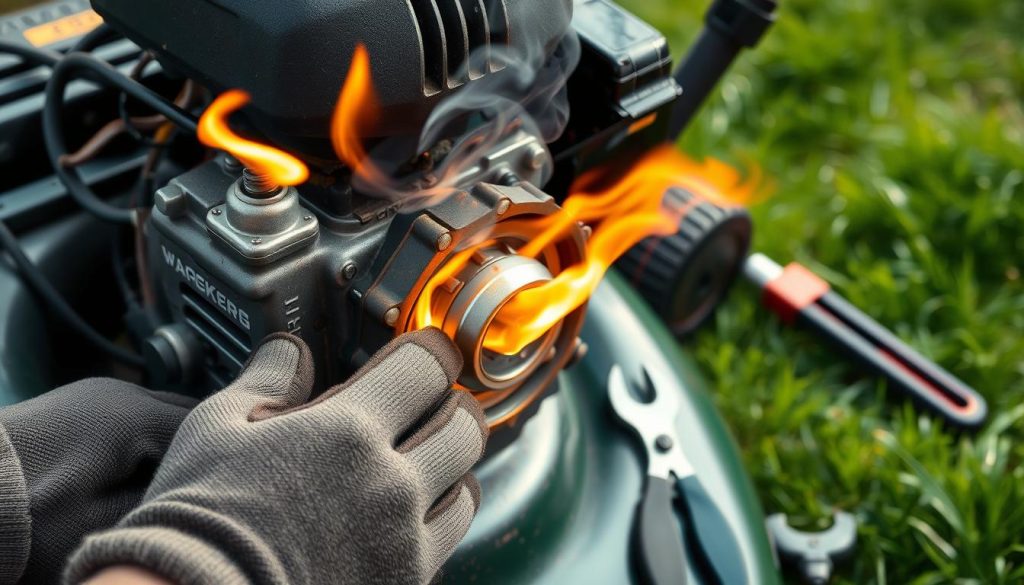
Engine backfiring in lawn mowers is often related to the combustion process. When the fuel-air mixture in the engine doesn’t ignite properly, it can cause the engine to backfire.
Combustion Process Explained
The combustion process involves the ignition of a fuel-air mixture inside the engine’s combustion chamber. For this process to occur correctly, the mixture must be precisely balanced, and the ignition timing must be accurate.
Timing and Fuel Mixture Issues
Issues with the timing and fuel mixture can lead to backfiring. If the fuel mixture is too rich or too lean, or if the ignition timing is off, it can cause the engine to misfire, resulting in a backfire.
Common Causes of Starting Failures
Several factors can cause a lawn mower to fail to start. Understanding these causes is key to resolving the issue.
Fuel-Related Problems
Fuel-related issues, such as stale fuel, clogged fuel lines, or a dirty carburetor, can prevent a lawn mower from starting.
Ignition System Failures
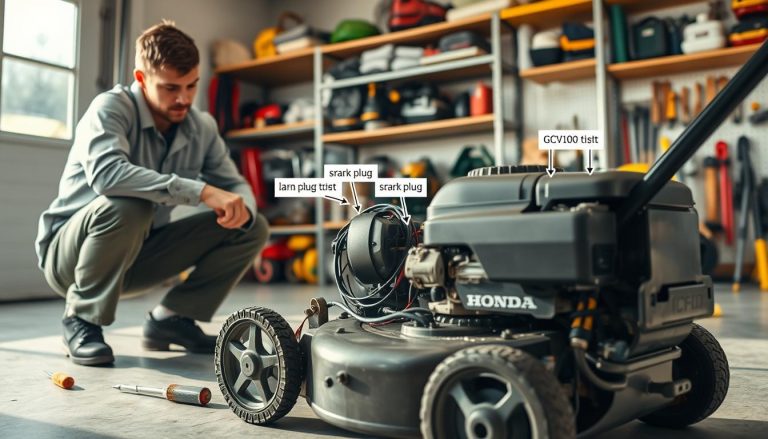
Failures in the ignition system, including faulty spark plugs or ignition coils, can also prevent the engine from starting.
Mechanical Complications
Mechanical issues, such as a seized engine or problems with the valve train, can make it difficult or impossible to start the lawn mower.
By understanding these potential causes, you can take the necessary steps to diagnose and fix the problem, getting your lawn mower running smoothly again.
Essential Tools and Safety Precautions
To effectively fix a lawn mower that backfires and fails to start, one must first assemble the essential tools and adhere to critical safety measures.
Required Tools for Lawn Mower Repair
Having the right tools is crucial for a successful repair. This includes:
Basic Hand Tools
- Screwdrivers (price on Amazon)
- Pliers (price on Amazon)
- Wrenches (price on Amazon)
Diagnostic Equipment
- Multimeter for electrical diagnostics (price on Amazon)
- Compression gauge (price on Amazon)
Safety Measures Before Beginning Repairs
Safety precautions are vital to prevent injuries. Key measures include:
Disconnecting the Spark Plug
Always disconnect the spark plug wire to prevent accidental engine start.
Proper Workspace Setup
Ensure a clean, well-lit workspace.
Personal Protective Equipment
Diagnosing When Your Lawn Mower Backfires and Will Not Start
A backfiring lawn mower that refuses to start can be frustrating, but diagnosing the problem is the first step towards a solution. To effectively diagnose the issue, it’s essential to understand the different types of backfires and perform a basic diagnostic check.
Identifying Different Types of Backfires
Lawn mower backfires can occur in different forms, and identifying the type is crucial for diagnosis. The two primary types of backfires are exhaust backfires and intake backfires.
Exhaust Backfires vs. Intake Backfires
- Exhaust Backfires: These occur when the fuel-air mixture ignites in the exhaust system, often producing a loud bang. Exhaust backfires are typically caused by an improper fuel-air mixture or a faulty ignition system.
- Intake Backfires: These happen when the fuel-air mixture ignites in the intake manifold, often accompanied by a popping sound. Intake backfires can be due to a faulty intake valve or improper carburetor adjustment.
Timing of the Backfire
The timing of the backfire is also crucial. Backfires can occur when starting the mower, during operation, or when shutting off the engine. Understanding when the backfire happens can help narrow down the cause.
Performing a Basic Diagnostic Check
A basic diagnostic check involves a visual inspection and listening for problematic sounds.
Visual Inspection Steps
- Check the air filter for dirt or damage.
- Inspect the spark plug for wear or fouling.
- Examine the fuel line for leaks or blockages.
Listening for Problematic Sounds
Pay attention to unusual sounds when starting or operating the mower. Grinding, clicking, or hissing sounds can indicate specific problems, such as a faulty starter or a leak in the system.
When to Call a Professional
While many issues can be diagnosed and fixed at home, some problems require professional attention.
Signs of Major Engine Damage
- Excessive smoke or unusual noises.
- Significant loss of power or performance.
Complex Electronic Issues
Modern lawn mowers with electronic ignition systems or complex fuel injection systems may require specialized tools and expertise to diagnose and repair.
Fuel System Issues and Solutions
Diagnosing fuel system issues is a key step in fixing a lawn mower that backfires and won’t start, involving checks on fuel quality, fuel lines, and the carburetor. The fuel system is a critical component of a lawn mower’s engine, and problems within this system can lead to backfiring and starting issues.
Checking and Replacing Old Fuel
Old or stale fuel can cause significant problems in a lawn mower engine, including backfiring. It’s essential to check the fuel’s condition and replace it if necessary.
Draining the Fuel Tank Properly
Draining the fuel tank is a straightforward process that requires some care. First, ensure the mower is turned off. Then, locate the fuel tank and drain it into a suitable container. Always refer to your mower’s manual for specific instructions.
Selecting the Right Fuel Type
Using the correct type of fuel is vital for the longevity and performance of your lawn mower. Check your mower’s manual to determine the recommended fuel type.
Cleaning Clogged Fuel Lines
Clogged fuel lines can prevent the proper flow of fuel to the engine, leading to backfiring and starting issues. Locating and accessing these lines is the first step in cleaning them.
Locating and Accessing Fuel Lines
Fuel lines are typically found running from the fuel tank to the carburetor. Consult your mower’s manual or diagram to locate them on your specific model.
Safe Cleaning Methods
To clean clogged fuel lines, use a fuel line cleaning kit or compressed air. Be cautious not to damage the lines during the cleaning process.
Carburetor Troubleshooting and Cleaning
The carburetor mixes air and fuel for the engine. A dirty carburetor can cause backfiring and starting problems.
Disassembly Process
Before cleaning, the carburetor needs to be disassembled. Remove the bowl and float, taking care not to damage any components.
Cleaning Techniques
Soak the disassembled parts in a carburetor cleaning solution. Use compressed air to clear any remaining debris.
Reassembly Tips
When reassembling, ensure all parts are securely in place. Refer to your mower’s manual for specific reassembly instructions.
| Issue | Symptoms | Solution |
|---|---|---|
| Old Fuel | Backfiring, hard starting | Drain and replace fuel |
| Clogged Fuel Lines | Engine stalls, won’t start | Clean or replace fuel lines |
| Dirty Carburetor | Backfiring, poor performance | Clean or rebuild carburetor |
Ignition System Repairs
Ignition system repairs are crucial for fixing a lawn mower that backfires and fails to start. The ignition system is responsible for generating the spark that ignites the fuel in the engine. When any part of this system fails, it can lead to starting issues.
Spark Plug Inspection and Replacement
The spark plug is a critical component of the ignition system. Inspecting and replacing it when necessary can resolve many starting issues.
Reading Spark Plug Conditions
A spark plug in good condition should have a light tan or gray color on the insulator. If it’s fouled with carbon or wet with fuel, it may need to be replaced. Regular inspection can prevent starting issues.
Selecting the Correct Replacement
Choosing the right spark plug (on Amazon) is essential. Refer to your lawn mower’s manual for the correct type and gap specification. Using the wrong spark plug can lead to poor engine performance.
Setting Proper Gap
The spark plug gap should be set according to the manufacturer’s specifications. A gap that is too wide or too narrow can affect engine performance. Use a gap gauge to ensure accuracy.
Checking the Ignition Coil
The ignition coil (on Amazon) generates the voltage needed for the spark plug to ignite the fuel. Testing it with a multimeter can help determine if it’s functioning correctly.
Testing with a Multimeter
Set the multimeter to the ohms setting to measure the resistance of the ignition coil. Compare the reading to the manufacturer’s specifications to determine if it’s within the acceptable range.
Replacement Procedures
If the ignition coil is faulty, it needs to be replaced. Ensure you purchase a coil that matches the specifications of your lawn mower’s engine. For more complex issues, like those found in automotive engines, you can refer to resources such as why is my Ford F150 turning over but not for additional troubleshooting tips.
Addressing Timing Issues
Timing issues can also affect the ignition system. Inspecting the flywheel key and adjusting the timing can resolve backfiring and starting problems.
Flywheel Key Inspection
A sheared or damaged flywheel key can cause timing issues. Inspect it for any signs of damage and replace it if necessary.
Timing Adjustment Methods
Adjusting the timing involves setting the correct position of the flywheel in relation to the ignition coil. Consult your lawn mower’s manual for specific instructions on how to adjust the timing correctly.
Air Intake and Compression Problems
Diagnosing air intake and compression problems is crucial when dealing with a lawn mower that backfires and won’t start. These issues can significantly impact the performance and efficiency of your lawn mower.
Cleaning and Replacing Air Filters
A dirty or clogged air filter can cause a lawn mower to backfire and fail to start. To address this, you need to locate, clean, or replace the air filter.
Locating the Air Filter
The air filter is typically found on the side of the lawn mower or on top of the carburetor. Consult your lawn mower’s manual for the exact location.
Cleaning vs. Replacement Decision
If the air filter is dirty, you can clean it with compressed air. However, if it’s damaged or excessively dirty, replacement is the best option.

Checking for Compression Issues
Low compression can cause starting issues. To check compression, you’ll need a compression tester.
Using a Compression Tester
Attach the compression tester to the spark plug hole and crank the engine. The gauge will show the compression level.
Interpreting Test Results
A reading below 90 PSI may indicate a compression issue. Check for leaks or damaged piston rings.
Valve Adjustment Procedures
Improper valve clearance can affect engine performance. Adjusting the valves requires accessing them first.
Accessing the Valves
Remove the valve cover to access the valves. Be sure to follow the manufacturer’s instructions.
Setting Proper Clearances
Use a feeler gauge to check the clearance. Adjust the valves according to the manufacturer’s specifications.
| Issue | Symptoms | Solution |
|---|---|---|
| Dirty Air Filter | Backfiring, hard starting | Clean or replace air filter |
| Low Compression | Won’t start, poor performance | Check for leaks, repair or replace engine parts |
| Improper Valve Clearance | Poor performance, backfiring | Adjust valves to manufacturer’s specs |
Conclusion: Maintaining Your Lawn Mower to Prevent Future Backfiring
Regular lawn mower maintenance is crucial to prevent future backfiring and ensure your equipment runs smoothly. By following the steps outlined in this article, you can identify and address common issues that cause backfiring, such as fuel system problems, ignition system faults, and air intake issues.
To keep your lawn mower in good condition, prioritize small engine care by checking and replacing old fuel, cleaning clogged fuel lines, and inspecting spark plugs. Regularly cleaning and replacing air filters will also help prevent backfiring and maintain optimal engine performance.
By incorporating these lawn mower maintenance tasks into your routine, you can prevent backfiring, reduce the risk of engine damage, and extend the lifespan of your equipment. Proper care and attention will ensure your lawn mower continues to operate efficiently, allowing you to maintain a well-manicured lawn with ease.
Preventing backfiring is just one aspect of overall lawn mower maintenance. By staying on top of regular maintenance tasks, you can enjoy a reliable and efficient mowing experience.
FAQ
Why does my lawn mower backfire when I try to start it?
Lawn mower backfiring can be caused by issues such as improper fuel mixture, ignition timing problems, or a faulty spark plug. Checking these components can help identify the root cause.
How do I diagnose a lawn mower that won’t start?
To diagnose a lawn mower that won’t start, begin with a visual inspection of the fuel system, ignition system, and air filter. Check for any blockages, worn-out parts, or signs of damage.
What are the common causes of fuel-related problems in lawn mowers?
Common causes of fuel-related problems include old or stale fuel, clogged fuel lines, and a dirty carburetor. Regular maintenance, such as checking and replacing old fuel, can help prevent these issues.
How do I clean a clogged fuel line in my lawn mower?
To clean a clogged fuel line, first locate and access the fuel line. Then, use a fuel line cleaning kit or compressed air to safely remove any blockages.
What safety precautions should I take when repairing my lawn mower?
Before starting repairs, disconnect the spark plug to prevent accidental engine start. Ensure a proper workspace setup, and wear personal protective equipment, such as gloves and safety glasses.
How do I check the ignition coil in my lawn mower?
To check the ignition coil, use a multimeter to test its resistance. Compare the reading to the manufacturer’s specifications to determine if the coil is functioning properly.
What are the signs of major engine damage in a lawn mower?
Signs of major engine damage include excessive smoke, unusual noises, or a significant decrease in performance. If you notice any of these symptoms, it’s recommended to seek professional help.
How often should I maintain my lawn mower to prevent backfiring?
Regular maintenance, such as checking and replacing old fuel, cleaning or replacing the air filter, and inspecting the spark plug, can help prevent backfiring. Refer to your owner’s manual for recommended maintenance schedules.