Experiencing Jeep reverse gear problems can be frustrating, but addressing them is crucial for safe and efficient vehicle operation.
Fixing Jeep transmission issues, including reverse gear malfunctions, can be a cost-effective and rewarding DIY project.
By undertaking DIY Jeep repair, owners can gain a deeper understanding of their vehicle’s mechanics and develop the skills needed to tackle future maintenance tasks.
Key Takeaways
- Understanding the causes of Jeep reverse gear problems
- Benefits of DIY repair for Jeep transmission issues
- Essential tools and skills required for DIY Jeep repair
- Step-by-step guide to fixing Jeep reverse gear
- Tips for maintaining a healthy Jeep transmission
Understanding Reverse Gear Problems in Jeeps
Understanding the causes of reverse gear problems is crucial for Jeep owners. Reverse gear failure can manifest in different ways, depending on whether your Jeep has a manual or automatic transmission.
Common Symptoms of Reverse Gear Failure
Common symptoms include grinding noises, difficulty engaging reverse, or the gear slipping out of reverse. In some cases, the vehicle may not engage reverse at all. Identifying these symptoms early can prevent further damage.
How the Reverse Gear System Works
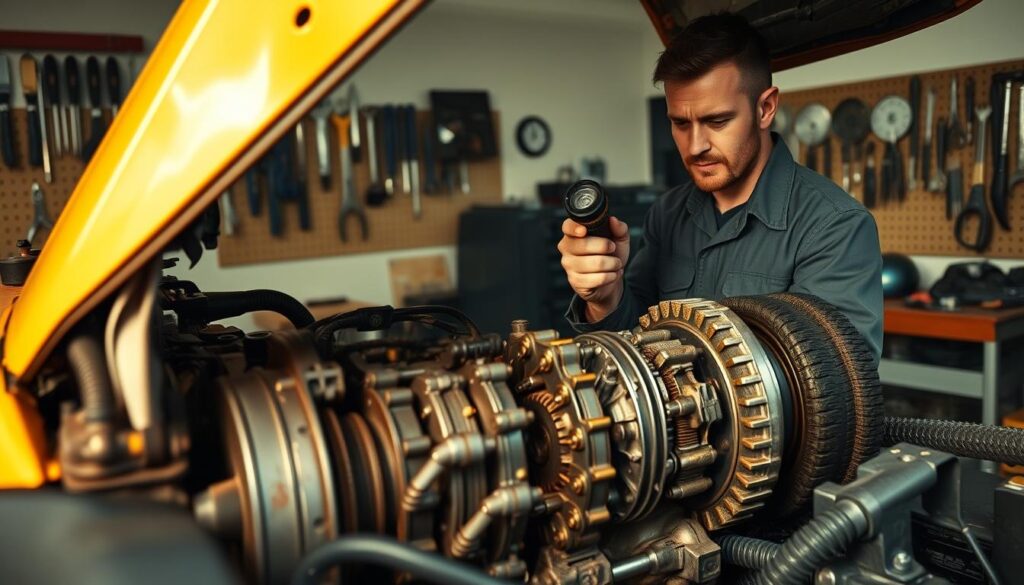
The reverse gear system in Jeeps involves a complex interplay of mechanical components. In manual transmissions, it involves the synchronizer and gear sets, while in automatics, it’s related to the planetary gear set and clutch packs. Understanding this system is key to diagnosing issues.
Differences Between Manual and Automatic Transmission Issues
Manual transmissions often experience issues like worn clutch components or synchronizer damage. Automatic transmissions, on the other hand, may suffer from problems like faulty solenoid packs or worn clutch packs. The table below summarizes these differences:
| Transmission Type | Common Issues |
|---|---|
| Manual | Worn clutch, synchronizer damage |
| Automatic | Faulty solenoid packs, worn clutch packs |
By understanding these differences, Jeep owners can better diagnose and address reverse gear problems in their vehicles.
Tools and Materials Needed
To successfully repair your Jeep’s reverse gear, you’ll need to have the right tools and materials at hand. This ensures a smooth and efficient repair process.
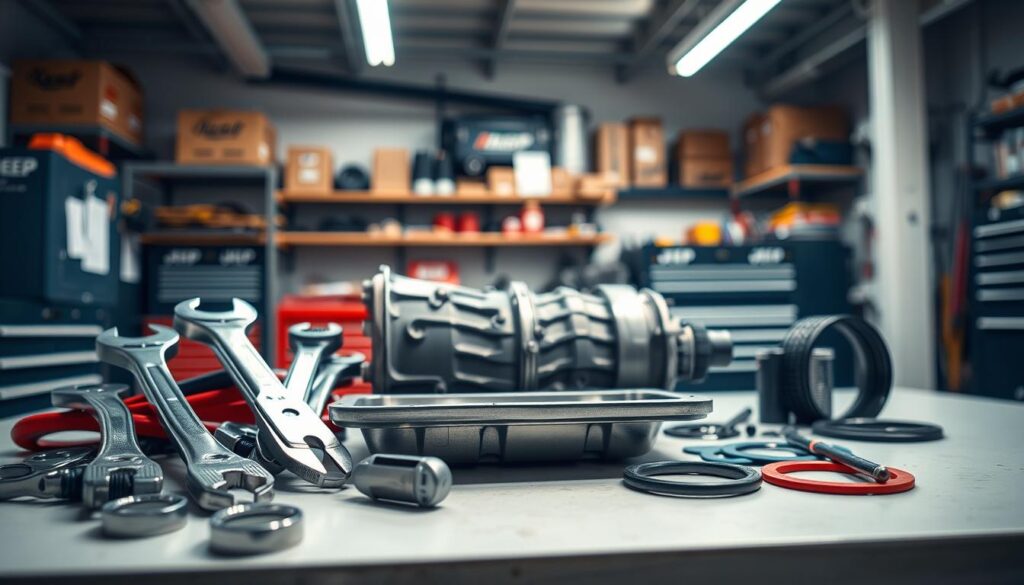
Essential Tools for Transmission Work
For transmission work, you’ll need a set of basic and specialized tools. Basic tools include a socket set, wrenches, and pliers. Specialized tools may include a transmission jack, bearing puller, and gear puller. Having these transmission repair tools on hand will make the job easier.
Safety Equipment Requirements
Safety should be your top priority when working on your Jeep. Essential safety equipment for DIY repair includes gloves, safety glasses, and a fire extinguisher. Additionally, a creeper and jack stands are crucial for safely accessing the transmission. Ensuring you have the proper Jeep maintenance tools and safety gear will protect you from potential hazards.
Diagnosing the Specific Reverse Issue
Diagnosing the reverse issue in your Jeep requires a systematic approach to identify the root cause of the problem. This process involves checking several key components of your vehicle’s transmission system.
Checking Transmission Fluid Levels and Condition
The transmission fluid plays a crucial role in the smooth operation of your Jeep’s transmission. Low fluid levels or contaminated fluid can lead to various transmission problems, including issues with the reverse gear. To check the transmission fluid, locate the dipstick under the hood, pull it out, and wipe it clean. Insert it back into the transmission and pull it out again to check the level and condition of the fluid.
Inspecting Linkage and Shifter Mechanism
The linkage and shifter mechanism are critical in engaging the reverse gear. Worn-out or damaged linkage can prevent the gear from engaging properly. Inspect the linkage and shifter for any signs of wear or damage. Check for any loose connections or misalignments that could be affecting the reverse gear’s operation.
Testing for Electrical Problems
Modern Jeeps rely on complex electrical systems to control transmission functions. Faulty sensors or wiring issues can cause problems with the reverse gear. Use a multimeter to test the voltage and resistance in the transmission’s electrical circuit. Consult your Jeep’s repair manual for specific guidance on testing procedures.
How to Fix the Reverse on a Jeep: Step-by-Step Guide
Repairing the reverse on a Jeep requires a systematic approach to ensure a successful fix. This guide will walk you through the necessary steps to diagnose and repair issues with your Jeep’s reverse gear.
Preparing Your Jeep for Repair
Before starting the repair, it’s essential to prepare your Jeep. Begin by ensuring the vehicle is on a level surface and apply the parking brake. Engage the transmission in park (if it’s an automatic) or in gear (if it’s a manual) to prevent any accidental movement.
Next, gather the necessary tools and materials as outlined in Section 3 of this guide. Having everything ready will streamline the repair process.
Accessing the Transmission
Accessing the transmission is a critical step in the repair process. For most Jeep models, this involves removing the transmission pan to inspect the internal components.
The process can vary depending on whether your Jeep has a manual or automatic transmission. Consult your repair manual for specific instructions on how to access the transmission on your particular model.
| Transmission Type | Access Procedure |
|---|---|
| Manual | Remove the transmission pan and inspect the clutch and gear components. |
| Automatic | Remove the transmission pan and filter to inspect the internal components. |
Safety Precautions During Repair
Safety is paramount when working on your Jeep’s transmission. Always wear protective gear, including gloves and safety glasses, to prevent injury. Ensure the workspace is well-ventilated to avoid inhaling harmful fumes from cleaning products or transmission fluid.
Additionally, be mindful of the weight and complexity of transmission components. Use proper lifting techniques and consider having a helper when handling heavy parts.
Fixing Linkage and Shifter Problems
The linkage and shifter system plays a vital role in the proper functioning of the reverse gear in your Jeep. Issues within this system can lead to difficulties in engaging reverse, making it essential to inspect and repair any faults.
Adjusting the Shift Linkage
One of the common issues with the linkage system is misalignment or wear, which can cause problems in shifting into reverse. Adjusting the shift linkage involves checking the connection between the shifter and the transmission. To adjust it, you’ll need to loosen the linkage at the transmission end, move the shifter into reverse, and then tighten the linkage while maintaining the shifter’s position.
Replacing Worn Bushings and Components
Over time, bushings and other components within the linkage and shifter mechanism can wear out, leading to play or misalignment. Replacing worn bushings and other damaged parts is crucial for restoring the proper operation of the reverse gear. Inspect each component carefully and replace any that show signs of wear.
Verifying Proper Linkage Operation
After making adjustments or replacements, it’s essential to verify that the linkage is operating correctly. Check that the reverse gear engages smoothly and that there’s no excessive play in the shifter. Testing the linkage under different conditions will help ensure that the repair is effective.
Some key steps to verify proper linkage operation include:
- Checking for smooth engagement of reverse gear
- Ensuring there’s no unusual noise or vibration
- Verifying that the shifter returns to its neutral position correctly
Addressing Internal Transmission Issues
Tackling internal transmission issues in your Jeep requires a thorough understanding of its transmission system. Internal transmission repairs can be complex and challenging, but with the right guidance, they can be managed effectively.
Reverse Gear and Synchronizer Repairs
Reverse gear and synchronizer repairs are critical when dealing with internal transmission issues. Worn or damaged synchronizers can cause grinding or difficulty shifting into reverse. Replacing these components involves disassembling the transmission and requires precision to ensure proper alignment and function.
Dealing with Worn Clutch Components
Worn clutch components can lead to slipping or failure to engage gears properly, including reverse. Inspecting and replacing clutch packs or bands is essential. For more information on diagnosing transmission issues, you can visit this resource.
Model-Specific Considerations for Jeep Wrangler, Cherokee, and Grand Cherokee
Different Jeep models have unique transmission characteristics. For instance, the Wrangler’s transmission is designed for off-road durability, while the Grand Cherokee’s transmission is optimized for both on-road comfort and off-road capability. Understanding these differences is key to effective repairs.
| Model | Transmission Type | Common Issues |
|---|---|---|
| Jeep Wrangler | Manual/Automatic | Worn clutch, synchronizer damage |
| Jeep Cherokee | Automatic | Slipping gears, faulty solenoid |
| Jeep Grand Cherokee | Automatic | Transmission overheating, worn clutch packs |
When to Seek Professional Help
DIY enthusiasts can tackle many Jeep repairs, but complex reverse gear issues often require professional expertise. While attempting a DIY fix can be cost-effective, it’s crucial to recognize when the problem exceeds your capabilities.
Signs the Repair Is Beyond DIY Capability
If you notice any of the following signs, it may be time to seek professional help: persistent slipping or harsh shifting, unusual noises during transmission operation, or visible leaks of transmission fluid. Additionally, if your Jeep’s reverse gear issue is accompanied by other transmission problems, it’s likely a sign that the repair is beyond DIY capability.
Estimated Professional Repair Costs
The cost of professional repairs for Jeep transmission issues can vary widely, depending on the model, type of transmission, and the nature of the problem. On average, you can expect to pay between $500 and $1,500 for transmission repairs. For more complex issues, such as rebuilding or replacing the transmission, costs can range from $1,500 to $3,000 or more.
Conclusion
Successfully fixing the reverse gear on your Jeep is just the first step in maintaining your vehicle’s overall health. By following the DIY repair guide outlined in the previous sections, you’ve taken a significant step towards ensuring your Jeep’s transmission continues to function smoothly. Remember, fixing Jeep reverse gear issues promptly can prevent more severe problems from developing.
Achieving DIY repair success requires patience, the right tools, and a thorough understanding of your Jeep’s transmission system. By applying the knowledge gained from this guide, you’ll be better equipped to tackle future maintenance tasks and keep your Jeep running at its best.
To maintain your Jeep’s transmission and avoid future issues, consider implementing regular Jeep maintenance tips, such as checking transmission fluid levels regularly and inspecting the linkage and shifter mechanism for signs of wear. By staying proactive, you’ll be able to identify potential problems early and keep your Jeep’s transmission in top condition.
FAQ
What are the common symptoms of reverse gear failure in my Jeep?
Common symptoms include grinding or clunking noises when shifting into reverse, difficulty engaging reverse, or the gear slipping out of reverse. You may also experience vibrations or unusual sounds when reversing.
How do I check the transmission fluid levels in my Jeep?
To check the transmission fluid levels, locate the transmission dipstick under the hood, pull it out, and wipe it clean. Insert it back into the transmission and pull it out again to check the fluid level. The level should be between the “MIN” and “MAX” marks on the dipstick.
What tools do I need to fix the reverse gear on my Jeep?
Essential tools include a socket set, Torx bits, a transmission fluid pump, and safety equipment like gloves and safety glasses. You may also need a repair manual specific to your Jeep model.
Can I fix the reverse gear issue on my Jeep Wrangler, Cherokee, or Grand Cherokee myself?
Yes, many reverse gear issues can be fixed DIY, but it depends on the complexity of the problem. If you’re comfortable with transmission work and have the necessary tools, you can attempt the repair. However, if you’re unsure or the issue is severe, consider seeking professional help.
How do I know if the repair is beyond my DIY capability?
If you’re unsure about the diagnosis, lack experience with transmission repairs, or the issue involves complex internal transmission components, it’s best to seek professional help. Signs like excessive leakage, severe wear, or unusual noises may also indicate the need for professional assistance.
What are the estimated costs for professional repair of reverse gear issues in my Jeep?
Estimated costs vary depending on the Jeep model, type of transmission, and the nature of the problem. On average, you can expect to pay between 0 to ,000 or more for professional repairs, including parts and labor.
Are there any model-specific considerations for fixing reverse gear issues in Jeep Wrangler, Cherokee, and Grand Cherokee?
Yes, different Jeep models have unique transmission designs and configurations. For example, the Wrangler’s transmission may require different repair approaches compared to the Cherokee or Grand Cherokee. Consult a repair manual specific to your Jeep model for detailed guidance.