A dead battery can leave you stranded, especially when you’re in a hurry. Knowing how to jump start your vehicle is crucial, particularly for Jeep Grand Cherokee owners.
A dead battery can occur due to various reasons such as leaving headlights on, a faulty alternator, or age. Regardless of the cause, being able to jump start your vehicle can get you back on the road quickly.
Understanding the process of jump starting a Jeep Grand Cherokee is essential for any owner. It’s not just about having someone to give you a jump; it’s about being prepared and knowing what to do in such situations.
Key Takeaways
- Understanding the causes of a dead battery in your Jeep Grand Cherokee.
- The importance of knowing how to jump start your vehicle.
- Basic steps involved in jump starting a Jeep Grand Cherokee.
- Safety precautions to take when jump starting your vehicle.
- The role of proper maintenance in preventing dead batteries.
What You Need to Jump Start Your Jeep Grand Cherokee
Before you can jump start your Jeep Grand Cherokee, it’s essential to understand what equipment you’ll need for the task. Jump starting a vehicle is not a complicated process, but it does require some specific tools and a basic understanding of how they are used.
Jumper Cables or Jump Starter
The most critical piece of equipment for jump starting your Jeep Grand Cherokee is either a set of jumper cables or a portable jump starter. Jumper cables are the traditional method, connecting your dead battery to another vehicle’s battery to borrow some power. On the other hand, a portable jump starter is a more modern and convenient solution, providing a self-contained power source to jump start your vehicle without needing another vehicle.
Quality Jumper Cable Specifications
When choosing jumper cables, it’s crucial to select a pair that is of high quality and appropriate for your vehicle’s battery size. Here are some key specifications to look for:
- Gauge Thickness: A lower gauge number indicates thicker cables, which can handle more current. For most vehicles, 4-gauge or 6-gauge cables are sufficient.
- Length: Ensure the cables are long enough to reach between vehicles but not so long that they become unwieldy. Typically, 10 to 20 feet is a good range.
- Clamp Quality: The clamps should be sturdy, well-insulated, and have a good grip on the battery terminals.
Portable Jump Starter Benefits
A portable jump starter offers several benefits over traditional jumper cables, including:
- Convenience: No need to find another vehicle to jump start yours.
- Safety: Reduced risk of electrical shock or damage to your vehicle’s electrical system.
- Additional Features: Many portable jump starters come with additional features like USB charging ports, flashlights, and more.
A Working Power Source
For jumper cables, you’ll need another vehicle with a working battery that can act as a donor. Ensure this vehicle’s battery is compatible with yours in terms of voltage (most are 12V) and that it is in good condition.
Safety Equipment and Tools
Safety should always be your top priority when working with batteries and electrical systems. Essential safety equipment includes:
- Protective Gloves (check price on Amazon): To prevent electrical shock and skin irritation.
- Safety Glasses (check price on Amazon): To protect your eyes from battery acid or electrical sparks.
By gathering the necessary equipment and understanding their uses, you’ll be well-prepared to safely jump start your Jeep Grand Cherokee.
Safety Precautions Before Jump Starting
Before attempting to jump start your Jeep Grand Cherokee, it’s crucial to take necessary safety precautions to avoid potential hazards. Ensuring your safety and the safety of others around you is paramount.
Inspect the Battery for Damage
Inspecting the battery for any signs of damage is a critical step before proceeding with a jump start. A damaged battery can pose serious risks, including explosions or electrical shock.
Signs of a Damaged Battery
- Cracks or breaks in the battery casing
- Leaking acid
- Corroded terminals
- Swollen or bloated battery case
If you notice any of these signs, it’s advisable to replace the battery rather than attempting to jump start it. For more information on starting your Jeep Grand Cherokee, you can refer to this guide.
Position Both Vehicles Correctly
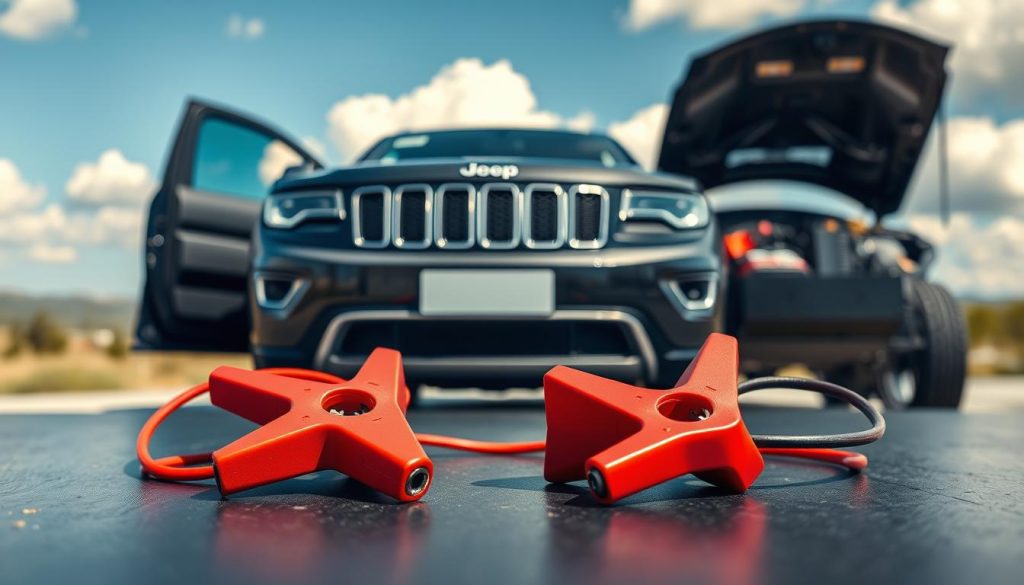
Positioning both vehicles correctly is vital for a safe jump start. Ensure that both vehicles are parked on level ground, with the engines turned off and in neutral or park gear. The vehicles should be close enough for the jumper cables to reach, but never touching.
Turn Off All Electrical Systems
Turning off all electrical systems in both vehicles can prevent a surge of power when the jump start is successful. This includes headlights, radios, and air conditioning units.
Wear Protective Gloves and Eyewear
Wearing protective gloves and eyewear is essential to protect yourself from potential electrical shock or battery acid splashes. Safety should always be your top priority when dealing with vehicle batteries.
How to Jump Start a Jeep Grand Cherokee
To get your Jeep Grand Cherokee back on the road, follow these straightforward steps for a successful jump start. Jump starting your vehicle is a relatively simple process, but it requires attention to safety and the correct sequence of actions.
Step 1: Locate Your Jeep Grand Cherokee Battery
The first step in jump starting your Jeep Grand Cherokee is to locate the battery. The battery location can vary depending on the model year of your vehicle.
Battery Location by Model Year
For most Jeep Grand Cherokee models, the battery is located in the engine compartment. However, some models may have the battery in different locations. For instance, in some later models, the battery might be in the trunk or under the floor. Consult your owner’s manual or manufacturer’s documentation to determine the exact location for your model year.
Step 2: Position the Donor Vehicle
Next, position the donor vehicle (the vehicle providing the jump) close enough to your Jeep Grand Cherokee so that the jumper cables can reach between the two batteries. Ensure both vehicles are in neutral or park gear and apply the parking brake.
Step 3: Connect the Positive Red Cable
Begin by connecting one end of the positive (red) jumper cable to the positive terminal of your Jeep Grand Cherokee’s dead battery.
Proper Terminal Connection
Ensure the clamp is securely attached to the correct terminal. The positive terminal is usually marked with a “+” sign or a red color. Then, connect the other end of the positive (red) jumper cable to the positive terminal of the donor vehicle’s battery.
Step 4: Connect the Negative Black Cable
Connect one end of the negative (black) jumper cable to the negative terminal of the donor vehicle’s battery.
Ground Connection Point
Then, connect the other end of the negative (black) jumper cable to a solid metal ground on your Jeep Grand Cherokee, such as a bolt on the engine or the frame. Avoid connecting it directly to the negative terminal of the dead battery.
Step 5: Start the Donor Vehicle
Start the engine of the donor vehicle and let it run for a few minutes. This will allow the dead battery to charge a bit.
Step 6: Attempt to Start Your Jeep Grand Cherokee
Once the donor vehicle has been running for a few minutes, try to start your Jeep Grand Cherokee. If it doesn’t start right away, allow the working vehicle’s engine to run for a few more minutes and try again.
Step 7: Remove the Jumper Cables in Reverse Order
After your Jeep Grand Cherokee is started, remove the jumper cables in the reverse order that they were attached: Disconnect the negative (black) cable from your Jeep’s ground, then from the donor vehicle, followed by disconnecting the positive (red) cable from your Jeep and finally from the donor vehicle.
Step 8: Let Your Jeep Run to Recharge
Let your Jeep Grand Cherokee run for several minutes to recharge the battery. If the battery was simply dead, this should be enough to get you back on the road. However, if the battery won’t hold a charge, it may need to be replaced.
Troubleshooting When Your Jeep Grand Cherokee Won’t Start
A Jeep Grand Cherokee that won’t start can be due to various issues, which can be diagnosed through systematic troubleshooting. Understanding the potential causes can help guide your repair efforts and get your vehicle back on the road.
Engine Cranks but Won’t Turn Over
If your engine cranks but fails to turn over, it could be due to a lack of fuel or spark. Check your fuel level and ensure your spark plugs are in good condition. Faulty spark plugs or a clogged fuel filter can prevent your engine from starting.
No Response or Only Clicking Sounds
A complete lack of response or just clicking sounds when turning the key often indicates a battery or starter motor issue. Check your battery terminals for corrosion and ensure your battery is fully charged. If the problem persists, it might be a sign of a failing starter motor.
Battery Drains Quickly After Jump Start
If your battery drains quickly after a jump start, there could be an underlying issue. Let’s explore some potential causes.
Alternator Problems
A malfunctioning alternator can fail to recharge your battery, leading to quick drainage. Have your alternator tested to ensure it’s functioning correctly.
Parasitic Drain Issues
Parasitic drain occurs when something in your vehicle continues to draw power from the battery even when the engine is off. Common culprits include interior lights, phone chargers, or faulty electrical components. Identifying and addressing parasitic drain can prevent future starting issues.
| Issue | Possible Cause | Solution |
|---|---|---|
| Engine Cranks but Won’t Turn Over | Lack of fuel or spark | Check fuel level, spark plugs, and fuel filter |
| No Response or Clicking Sounds | Battery or starter motor issue | Check battery terminals, charge battery, or replace starter motor |
| Battery Drains Quickly | Alternator or parasitic drain issue | Test alternator, check for parasitic drain |
When to Seek Professional Assistance
If you’re unable to diagnose or fix the issue yourself, it’s time to seek professional help. A certified mechanic can provide a detailed diagnosis and repair, ensuring your Jeep Grand Cherokee is running reliably.
Conclusion
Jump starting a Jeep Grand Cherokee requires careful attention to safety precautions and a clear understanding of the process. By following the steps outlined in this article, you can successfully recover your vehicle and get back on the road.
Regular car maintenance is crucial to preventing battery drain and other issues that may leave you stranded. This includes checking your battery terminals, keeping your electrical system in good condition, and being prepared for emergencies.
Understanding how to perform vehicle recovery techniques, such as jump starting, is an essential skill for any Jeep Grand Cherokee owner. By being prepared and knowledgeable, you can minimize downtime and ensure your vehicle remains in good working condition, supporting overall Jeep Grand Cherokee maintenance.