Modern vehicles have evolved significantly, incorporating advanced technologies to enhance the driving experience. One such innovation is the paddle shifters, which have revolutionized the way drivers interact with their vehicles’ transmissions.
Paddle shifters offer drivers more control over driving techniques and vehicle performance. By allowing manual gear shifts without the need for a traditional clutch, paddle shifters provide a more engaging and responsive driving experience.
This comprehensive guide will explore the ins and outs of using paddle shifters, helping you to maximize your vehicle’s potential.
Key Takeaways
- Understand the basics of paddle shifters and their role in modern vehicles.
- Learn effective driving techniques using paddle shifters.
- Discover how paddle shifters can enhance vehicle performance.
- Explore tips for getting the most out of your paddle shifters.
- Understand the benefits of using paddle shifters in different driving conditions.
What Are Paddle Shifters?
Paddle shifters represent a technological advancement in automotive transmission systems, offering drivers a more hands-on experience. These devices allow drivers to manually shift gears without the need for a traditional clutch pedal, enhancing the driving experience.
Definition and Purpose
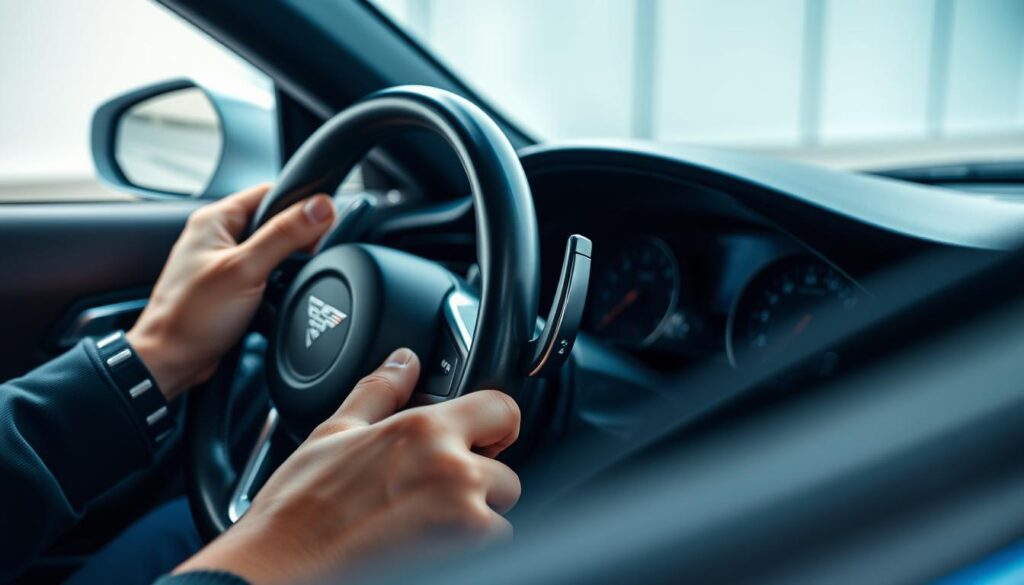
Paddle shifters are controls mounted on the steering wheel that enable drivers to shift gears manually in vehicles equipped with semi-automatic or automatic transmissions. Their primary purpose is to provide drivers with more control over gear shifting, thereby enhancing driver engagement and vehicle performance.
Evolution of Paddle Shifters in Modern Vehicles
Initially introduced in high-performance vehicles, paddle shifters have become increasingly common in various car models, including luxury and sports cars. Their evolution is marked by improvements in design and functionality, making them more intuitive and user-friendly.
Different Types of Paddle Shifter Systems
There are various types of paddle shifter systems, including those integrated into semi-automatic transmissions and others that work with advanced automatic transmissions. Some systems offer a fully manual mode, while others provide a semi-automatic mode where the driver can manually shift gears but with electronic control limiting certain actions to prevent damage.
The diversity in paddle shifter systems caters to different driving preferences and vehicle types, making them a versatile feature in modern automotive technology.
Benefits of Using Paddle Shifters
By providing a more direct connection to the vehicle, paddle shifters improve driving control and enjoyment. This direct interface allows drivers to have a more engaging experience, particularly in situations that demand quick and precise control over the vehicle’s gearing.
Enhanced Driving Control
Paddle shifters offer drivers the ability to manually control gear shifts, which can be particularly beneficial in various driving conditions. This level of control enables drivers to:
- Adjust gear shifts according to road conditions
- Optimize vehicle performance during acceleration and deceleration
- Enhance overall driving technique by being more engaged with the vehicle’s operation
Improved Performance in Specific Conditions
In certain driving conditions, such as mountainous terrain or during high-performance driving, paddle shifters can significantly enhance vehicle performance. By allowing drivers to manually shift gears, paddle shifters help in maintaining optimal engine speed and torque, thus improving the vehicle’s responsiveness and agility.
Driver Engagement and Enjoyment
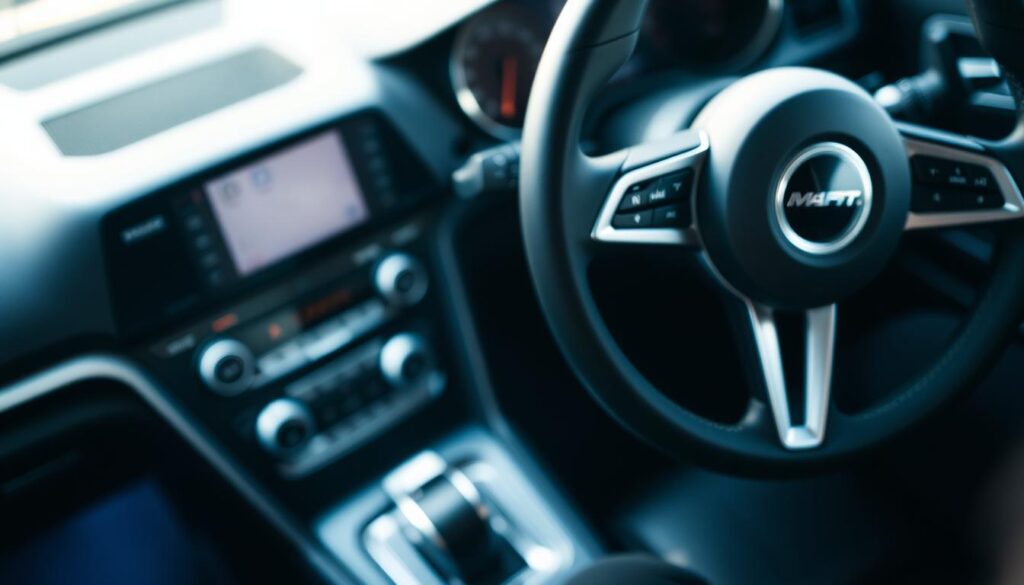
The use of paddle shifters can also increase driver engagement and enjoyment. By being more involved in the driving process, drivers can experience a more satisfying connection to the vehicle. This can lead to a more enjoyable driving experience, as drivers feel more in control and connected to the road.
How to Use Paddle Shifters: Basic Operation
Understanding how to properly use paddle shifters is key to unlocking their full potential. Paddle shifters are designed to provide a more engaging and controlled driving experience, allowing drivers to manually shift gears without the need for a traditional clutch pedal.
Locating and Activating Paddle Shifters
Paddle shifters are typically located behind the steering wheel, within easy reach of the driver’s fingers. To activate them, simply pull or push the paddle towards you or away from you. The paddle shifters are usually marked with a “+” for upshifting and a “-” for downshifting.
Upshifting with the “+” Paddle
To upshift, pull the “+” paddle towards you. This will shift the gear into the next highest gear, allowing you to smoothly accelerate. It’s essential to use the correct timing when upshifting to avoid jerking the vehicle.
Downshifting with the “-” Paddle
To downshift, pull the “-” paddle towards you. Downshifting is useful for slowing down or preparing for a turn. As one driving expert notes, “Downshifting before entering a turn can help maintain control and stability.”
“The art of downshifting is not just about slowing down; it’s about being in control.” –
Returning to Automatic Mode
To return to automatic mode, simply press the “Auto” button or pull and hold the “+” paddle for a few seconds, depending on your vehicle’s specifications. This allows you to seamlessly switch between manual and automatic modes.
By mastering the basic operation of paddle shifters, drivers can enjoy a more engaging and controlled driving experience. Whether you’re driving on the highway or navigating twisty roads, paddle shifters offer a unique level of control and flexibility.
Mastering Paddle Shifter Techniques
Mastering paddle shifter techniques can significantly enhance your driving experience and vehicle performance. To achieve this, it’s crucial to understand several key aspects of using paddle shifters effectively.
Reading Your Tachometer
One of the fundamental skills is reading your tachometer accurately. The tachometer indicates your engine’s RPM, helping you determine when to shift gears for optimal performance. Keeping an eye on the tachometer allows you to anticipate and execute shifts at the right moment.
Understanding Optimal Shift Points
Understanding the optimal shift points is vital for maximizing your vehicle’s performance. This involves knowing when to upshift or downshift based on your engine’s RPM and the driving conditions. Optimal shift points vary depending on whether you’re driving on the highway, navigating through city traffic, or driving on hilly terrain.
Timing Your Shifts for Smooth Operation
Timing your shifts correctly is essential for smooth operation. This means coordinating your use of the paddle shifters with your vehicle’s speed and the engine’s RPM. Proper timing helps in achieving a seamless driving experience and prevents jerky movements that can be uncomfortable.
Engine Braking Techniques
Engine braking is another important technique to master when using paddle shifters. It involves downshifting to use the engine’s resistance to slow down the vehicle, rather than relying solely on the brakes. This technique can be particularly useful when driving downhill or approaching a stop.
By mastering these techniques, you can enhance your driving skills and get the most out of your vehicle’s automotive technology.
When to Use Paddle Shifters
Understanding when to use paddle shifters can significantly improve your vehicle’s performance and your driving skills. Paddle shifters offer a level of control that can be particularly beneficial in various driving scenarios.
Driving on Varied Terrain
When driving on hilly or mountainous terrain, paddle shifters allow you to control your vehicle’s gearing more effectively, helping to maintain speed and control. This is especially useful when descending steep grades, where engine braking can help reduce wear on your brakes.
Highway Passing and Merging
Paddle shifters are also handy when you need to quickly accelerate on the highway, such as when passing another vehicle or merging onto a busy road. They enable you to downshift and gain more power quickly.
Performance Driving Scenarios
In performance driving scenarios, such as on a track or twisty roads, paddle shifters allow you to maintain optimal engine RPM, improving acceleration and handling.
Adverse Weather Conditions
In adverse weather conditions like snow or ice, paddle shifters can help you maintain better control over your vehicle by allowing you to manage your speed more effectively through gear control.
| Driving Scenario | Benefit of Paddle Shifters |
|---|---|
| Varied Terrain | Control over gearing for maintaining speed and control |
| Highway Passing | Quick downshifting for more power |
| Performance Driving | Optimal engine RPM for better acceleration and handling |
| Adverse Weather | Better speed control through gear management |
Paddle Shifters Across Different Vehicles
As automotive technology advances, paddle shifters are being integrated into a wider range of vehicles, enhancing driver control. This shift has led to a diverse implementation of paddle shifters across different vehicle segments.
Luxury vs. Sports vs. Economy Cars
Paddle shifters are found in various car categories, each with its unique characteristics. For instance:
- Luxury cars often feature paddle shifters as part of a premium driving experience, emphasizing comfort and advanced technology.
- Sports cars utilize paddle shifters to provide drivers with rapid gear changes, enhancing performance and driver engagement.
- Economy cars may also include paddle shifters, offering a sportier driving mode and improved fuel efficiency through better transmission systems.
Manufacturer-Specific Differences
Different manufacturers implement paddle shifters in distinct ways, reflecting their design philosophies and technological capabilities. For example, some brands may focus on seamless gear transitions, while others may prioritize driver feedback.
Dual-Clutch vs. Traditional Automatic Transmissions
The type of transmission used with paddle shifters significantly affects vehicle performance. Dual-clutch transmissions (DCTs) are known for their quick shifting, while traditional automatics may offer smoother transitions. Understanding these differences is crucial for maximizing the benefits of paddle shifters.
Common Mistakes and Safety Considerations
While paddle shifters offer enhanced driving control, their improper use can lead to safety issues and decreased vehicle performance. To maximize the benefits of paddle shifters, it’s essential to understand and avoid common mistakes.
Over-Revving the Engine
One of the most common errors when using paddle shifters is over-revving the engine. This occurs when a driver shifts gears too aggressively or fails to listen to the engine’s response, potentially causing damage. To avoid this, drivers should be mindful of their engine’s RPM range and shift gears accordingly.
- Monitor your tachometer closely to avoid entering the red zone.
- Gradually increase your speed rather than making abrupt shifts.
Improper Downshifting Techniques
Downshifting is a critical aspect of using paddle shifters effectively, but it can be misused. Improper downshifting can lead to loss of control, especially on slippery roads. Drivers should downshift smoothly and appropriately for their current speed and road conditions.
Ignoring Built-in Safeguards
Modern vehicles equipped with paddle shifters often come with built-in safeguards to prevent misuse. Ignoring these safeguards can lead to unsafe driving practices. For instance, some systems may limit downshifting if the engine RPM would exceed a certain threshold.
Maintaining Focus on the Road
A crucial aspect of safe driving with paddle shifters is maintaining focus on the road. Drivers should avoid distractions and keep their attention on driving, as the dynamic nature of paddle shifters requires constant awareness of speed and gear.
“The key to safe driving is not just in the technology you use, but in how you use it.”
By being aware of common mistakes and adhering to safety considerations, drivers can enjoy the enhanced driving experience that paddle shifters provide while minimizing risks.
Mastering Paddle Shifters for Enhanced Driving
Effective use of paddle shifters can significantly enhance your driving experience, offering improved vehicle performance and driving techniques. By understanding how to properly operate paddle shifters, drivers can enjoy a more engaging and controlled drive.
Paddle shifters provide a range of benefits, from enhanced driving control to improved performance in specific conditions. By mastering the techniques outlined in this guide, you can optimize your vehicle’s performance and enjoy a more responsive driving experience.
Whether you’re driving a luxury vehicle or a sports car, paddle shifters can elevate your driving experience. By applying the knowledge gained from this comprehensive guide, you’ll be well on your way to becoming a proficient paddle shifter user, capable of handling various driving scenarios with confidence.
FAQ
What are paddle shifters and how do they work?
Paddle shifters are a type of manual gear-shifting mechanism used in modern vehicles, allowing drivers to manually shift gears without using a traditional manual transmission. They work by using a pair of paddles, typically located on the steering wheel, to signal the transmission to upshift or downshift.
What are the benefits of using paddle shifters?
The benefits of using paddle shifters include enhanced driving control, improved performance in specific conditions, and increased driver engagement. They allow drivers to have more control over the vehicle, particularly in situations such as driving on varied terrain or highway passing.
How do I use paddle shifters in my vehicle?
To use paddle shifters, locate the paddles on the steering wheel, typically marked with “+” and “-” symbols. To upshift, pull the “+” paddle towards you, and to downshift, pull the “-” paddle towards you. You can return to automatic mode by pressing a button or switching to a different driving mode.
Can I use paddle shifters in any driving mode?
Paddle shifters are typically available in certain driving modes, such as sport or manual mode. The availability of paddle shifters may vary depending on the vehicle and transmission type. Consult your vehicle’s owner’s manual for specific information on using paddle shifters in your vehicle.
Are paddle shifters available in all types of vehicles?
Paddle shifters are available in various types of vehicles, including luxury, sports, and economy cars. However, the implementation and functionality of paddle shifters may vary between manufacturers and transmission types.
What are some common mistakes to avoid when using paddle shifters?
Common mistakes to avoid when using paddle shifters include over-revving the engine, improper downshifting techniques, and ignoring built-in safeguards. It’s essential to maintain focus on the road and use paddle shifters responsibly to ensure safe and enjoyable driving.
Can I use paddle shifters in adverse weather conditions?
Yes, paddle shifters can be used in adverse weather conditions, such as rain or snow. However, it’s crucial to exercise caution and adjust your driving accordingly. Paddle shifters can help improve control and stability in certain situations, but it’s essential to drive safely and responsibly.
How do I master paddle shifter techniques?
To master paddle shifter techniques, practice reading your tachometer, understanding optimal shift points, and timing your shifts for smooth operation. You can also develop engine braking techniques to improve your driving skills.