The Adaptive Suspension feature in contemporary vehicles empowers drivers to modify their vehicle’s suspension settings in response to varying driving environments, thus elevating the overall driving experience to new heights.
Grasping the nuances of the Adaptive Suspension Button can profoundly impact the vehicle’s comfort and handling capabilities.
This comprehensive guide aims to elucidate the significance of the Adaptive Suspension feature and offer a preview of the forthcoming content.
Key Takeaways
- Learn how to adjust your vehicle’s suspension settings for different driving conditions.
- Understand the benefits of using the Adaptive Suspension feature.
- Discover how to effectively use the Adaptive Suspension Button.
- Find out how to enhance your overall driving experience with Adaptive Suspension.
- Explore the importance of Adaptive Suspension in modern vehicles.
Understanding BMW Adaptive Suspension
BMW Adaptive Suspension represents a cutting-edge innovation, dynamically modulating suspension parameters in real-time to enhance both ride comfort and handling precision. This advanced technology is engineered to seamlessly adapt to diverse driving environments, guaranteeing a refined and responsive driving experience.
What is Adaptive Suspension?
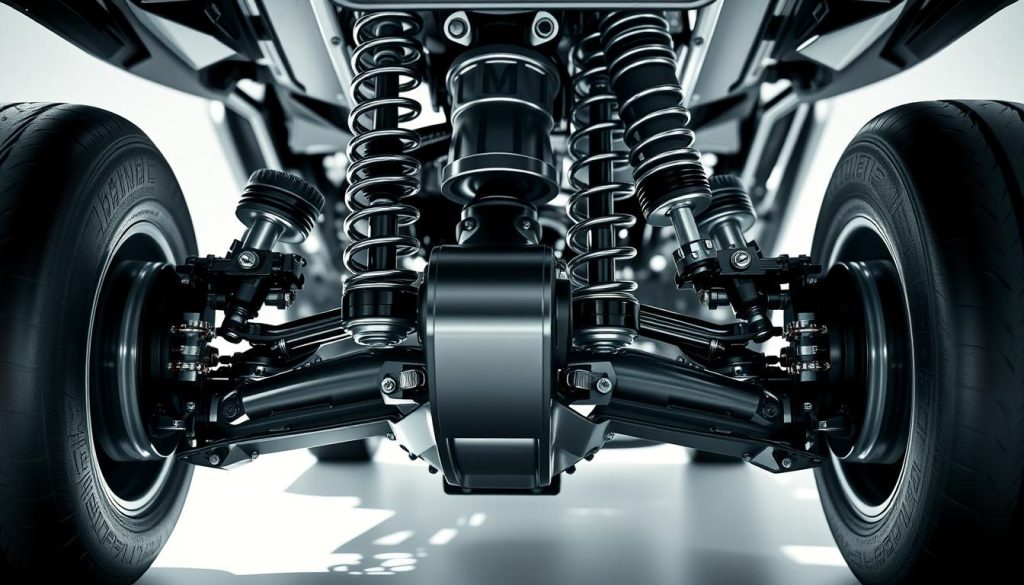
Adaptive Suspension constitutes a highly advanced suspension system, continuously assessing and adjusting the damping coefficients of shock absorbers. This sophisticated technology empowers the vehicle to adeptly respond to varied road surfaces, driving maneuvers, and individual driver preferences.
How Adaptive Suspension Works
The Adaptive Suspension mechanism leverages a sophisticated network of sensors to track the vehicle’s velocity, ride height, and road conditions. This data is then utilized to instantaneously modify the suspension settings, ensuring optimal ride quality and handling performance.
Benefits of Adaptive Suspension
The incorporation of Adaptive Suspension yields several notable advantages, including enhanced ride comfort, superior handling, and augmented driving dynamics. By dynamically adjusting to different driving scenarios, the system delivers a more responsive and stable driving experience. Notably, Adaptive Suspension also contributes to diminished driver fatigue during extended drives.
In summary, BMW’s Adaptive Suspension technology marks a pivotal advancement in suspension engineering, offering drivers a more comfortable, responsive, and pleasurable driving experience.
Locating the BMW Adaptive Suspension Button
The Adaptive Suspension system in BMW vehicles is managed through a specific button, accessible in various positions across different models. Identifying the precise location of this button is crucial for drivers to fully exploit its capabilities.
Common Locations in Different BMW Models
The Adaptive Suspension Button is generally situated within the center console or on the dashboard. In certain models, it may be embedded within the iDrive controller or positioned as a standalone button adjacent to the gear selector.

Button Design and Symbols
The Adaptive Suspension Button’s design may differ across models, yet it is frequently adorned with a symbol indicative of suspension or an adjustable suspension vehicle.
Display Indicators on Dashboard
Upon activation of the Adaptive Suspension Button, the dashboard indicators will display the current suspension configuration. These indicators offer visual confirmation of the selected mode, whether it be Comfort, Sport, or another setting.
| Mode | Dashboard Indicator | Description |
|---|---|---|
| Comfort | Green Light | Optimized for comfort |
| Sport | Red Light | Enhanced performance |
| Auto | Blue Light | Adaptive mode |
The BMW Adaptive Suspension Button: Functions and Features
Delving into the intricacies of the BMW Adaptive Suspension Button can profoundly elevate your driving experience. This button is deeply intertwined with the vehicle’s Driving Dynamics Control system, facilitating a more bespoke driving experience.
Primary Functions
The primary role of the BMW Adaptive Suspension Button is to empower drivers to modify the suspension settings according to their personal preferences or the prevailing driving conditions. Such adjustments can profoundly influence the vehicle’s handling, comfort, and overall performance.
Integration with Driving Dynamics Control
The Adaptive Suspension Button collaborates seamlessly with the Driving Dynamics Control system, a sophisticated system that fine-tunes various vehicle parameters. These include suspension, throttle response, and steering, to deliver a customized driving experience. Through this integration, the Adaptive Suspension Button enables drivers to transition between distinct driving modes. These modes, such as Comfort, Sport, and Sport+, each offer a distinct driving experience tailored to different driving preferences and conditions.
Available Suspension Settings
BMW vehicles equipped with Adaptive Suspension present a range of suspension settings that can be adjusted via the Adaptive Suspension Button. These settings empower drivers to select between comfort-oriented and sport-oriented suspension configurations. The available settings typically encompass Comfort, Sport, and Sport+ modes, each designed to meet diverse driving preferences and conditions.
By comprehending and leveraging the BMW Adaptive Suspension Button effectively, drivers can significantly enhance their vehicle’s performance and their overall driving experience.
Step-by-Step Guide to Using the Adaptive Suspension Button
To optimize your BMW’s Adaptive Suspension, adhere to this comprehensive guide on employing the Adaptive Suspension Button. This innovation is engineered to customize your driving experience, adjusting suspension configurations based on your preferences and environmental conditions.
Activating the System
Initiate the Adaptive Suspension system by identifying the Adaptive Suspension Button within your BMW. This control is commonly situated on the center console or adjacent to the gear lever. Engage the button to activate the system, anticipating a brief delay as it commences operation.
Switching Between Modes
Post-activation, navigate through various Suspension Modes by repeatedly pressing the Adaptive Suspension Button. Modes encompass Comfort, Sport, Sport+, and Adaptive/Auto, each tailored for distinct driving scenarios. Select the mode that aligns with your current driving requirements.
Reading Dashboard Indicators
As modes are toggled, the Dashboard Indicators will exhibit the current mode and supplementary data. Monitor these indicators to verify the system’s correct response to your inputs. The dashboard will typically display the mode designation and possibly additional metrics like suspension firmness and damping settings.
Confirming Mode Changes
Verify the mode transition by listening for auditory signals, such as a beep, and observing the Dashboard Indicators. The display should refresh to reflect the updated mode. Should you encounter any malfunctions or the system fails to respond as anticipated, consult your BMW’s user manual or seek assistance from a certified BMW service center.
By diligently adhering to these guidelines, you can proficiently utilize the Adaptive Suspension Button to refine your driving experience and adapt to diverse road conditions.
Understanding Different Suspension Modes
The comprehension of various suspension modes within your BMW is paramount for the optimization of your driving experience. The Adaptive Suspension system, integral to BMW vehicles, presents a multitude of modes, each tailored to specific driving conditions and preferences.
Comfort Mode: Features and Best Uses
Comfort Mode is engineered to deliver a smooth ride, making it the quintessential choice for daily urban driving. It prioritizes comfort over sportiness, rendering it exemplary for extended highway journeys or traversing the rough terrain of city roads.
Sport Mode: Features and Best Uses
Sport Mode refines the suspension to be more responsive, thus enhancing the driving dynamics of your BMW. It is most beneficial when seeking a more engaging driving experience, such as on winding roads or during track driving.
Sport+ Mode: Features and Best Uses
Sport+ Mode further stiffens the suspension settings, maximizing the vehicle’s performance capabilities. This mode is optimal for high-performance driving or navigating extremely challenging roads.
Adaptive/Auto Mode: Features and Best Uses
Adaptive/Auto Mode empowers the BMW’s computer to dynamically adjust the suspension in response to driving conditions. It is ideal for those desiring a balance between comfort and performance, as it automatically adapts to varying driving scenarios.
By grasping and utilizing these suspension modes, BMW drivers can substantially elevate their driving experience. Whether cruising down the highway or pushing their vehicle to its limits on a track, the utilization of these modes is transformative.
Customizing Your Suspension Settings
The BMW iDrive system presents a sophisticated method for personalizing your vehicle’s suspension settings. This customization enables a driving experience tailored to your preferences and the specific conditions of your driving environment.
Using iDrive to Personalize Settings
To initiate customization, access the iDrive menu and navigate to the “Vehicle Settings” or “Suspension Settings” section, contingent upon your BMW model. Within this realm, you can modify various parameters to refine your suspension settings.
Key settings to adjust include: damping control, ride height (if available), and suspension mode preferences.
Creating and Saving Driver Profiles
BMW’s iDrive system empowers you to create and save multiple driver profiles, each with its own suspension settings. This capability is notably beneficial for families or when the vehicle is shared among multiple drivers.
To create a driver profile, proceed to the “Driver Profiles” section in the iDrive menu and adhere to the on-screen directives.
Fine-tuning Individual Parameters
For more advanced customization, you can fine-tune individual suspension parameters. This encompasses adjusting the responsiveness of the suspension and the overall firmness.
Resetting to Factory Defaults
If you desire to revert to the original suspension settings, you can reset to factory defaults through the iDrive system. This is advantageous if you’ve made numerous adjustments and wish to commence anew.
To reset, navigate to the “Suspension Settings” menu and select “Reset to Default” or a similar option, contingent upon your BMW’s software version.
BMW Models with Adaptive Suspension Technology
BMW has integrated Adaptive Suspension technology into a range of its models, significantly improving their performance and comfort. This innovative suspension system adjusts to different driving conditions, providing a smoother ride and more responsive handling.
3 Series and 5 Series Implementation
The 3 Series and 5 Series are among the most popular BMW models equipped with Adaptive Suspension. These sedans offer a blend of comfort and agility, making them ideal for both daily driving and spirited performance.
X Series SUV Applications
BMW’s X Series SUVs, including the X5 and X7, also feature Adaptive Suspension. This technology enhances their capability on various terrains, from smooth highways to rough off-road trails.
M Series Performance Enhancements
The M Series, known for its high-performance capabilities, benefits from Adaptive Suspension by offering more precise handling and stability at high speeds.
Model Year Differences
It’s worth noting that the implementation and features of Adaptive Suspension can vary across different model years. Newer models often come with enhanced features and improved performance.
| BMW Model | Adaptive Suspension Features |
|---|---|
| 3 Series | Enhanced comfort and handling |
| 5 Series | Improved ride quality and stability |
| X Series | Adaptability to various terrains |
| M Series | High-performance handling and stability |
Optimal Scenarios for Each Suspension Mode
To maximize the benefits of your BMW’s Adaptive Suspension, it is imperative to select the correct mode for various driving environments. This system is engineered to deliver a harmonious blend of comfort and agility, dynamically adjusting to the nuances of road surfaces and driving methodologies.
City Driving Recommendations
In urban settings, the Comfort mode emerges as the preferred choice. It optimizes the ride quality, mitigating the effects of potholes and irregularities, thus enhancing the driving experience within metropolitan confines.
Highway Driving Recommendations
On highways, the decision between Comfort mode and Adaptive/Auto mode hinges on personal preference for ride quality versus adaptive responsiveness. Both modes are crafted to provide a stable and serene ride at elevated speeds.
Performance Driving Recommendations
For an exhilarating drive, notably on winding roads or when seeking to revel in the BMW’s dynamic handling, Sport mode is the recommended setting. It stiffens the suspension, diminishing body roll and augmenting cornering prowess.
Rough Terrain Considerations
On rugged or unpaved terrains, employing Comfort mode or a dedicated rough terrain mode is advisable. This configuration aids in shock absorption and preserves vehicle stability.
By adeptly selecting the appropriate suspension mode for diverse driving contexts, one can profoundly elevate their driving experience. This ensures a balance between comfort and performance, tailored to the specific demands of each scenario.
Troubleshooting Common Issues with the BMW Adaptive Suspension Button
Addressing malfunctions with the BMW Adaptive Suspension Button is paramount for preserving the vehicle’s suspension integrity and guaranteeing a refined driving experience. This advanced feature, though sophisticated, may occasionally encounter problems such as a non-responsive button, system warning notifications, or difficulties with mode transitions.
Button Not Responding
A non-responsive Adaptive Suspension Button could stem from either a software anomaly or a hardware malfunction. Restarting the vehicle might rectify the issue by systemically resetting the functionality. Should the problem endure, an examination of the button’s electrical connections or professional consultation may be imperative.
System Warning Messages
System alerts concerning the Adaptive Suspension system often signify a spectrum of problems, from sensor malfunctions to failures in suspension components. It is essential to consult the vehicle’s manual to decipher the specific warning and the appropriate corrective action. In certain instances, a visit to a BMW service center may be indispensable.
Mode Switching Problems
Challenges in toggling between suspension modes might arise from a defective control module or malfunctioning suspension actuators. Ensuring the vehicle’s software is current can sometimes alleviate these issues. Should the problems persist, professional intervention is advisable.
When to Seek Professional Help
In the event that troubleshooting endeavors fail to resolve the issue or if the approach to resolution is unclear, professional assistance is warranted. BMW dealerships and certified technicians possess the requisite tools and knowledge to accurately diagnose and rectify intricate problems with the Adaptive Suspension Button.
Integrating Adaptive Suspension with Other BMW Systems
Adaptive Suspension is an integral component within a sophisticated ensemble of BMW technologies, designed to deliver an unparalleled driving experience. Its synergy with other systems significantly elevates vehicle performance, safety, and comfort levels.
Working with Dynamic Stability Control
Dynamic Stability Control (DSC) is a pivotal safety mechanism that collaborates with Adaptive Suspension. DSC ensures vehicle stability during various maneuvers, while Adaptive Suspension dynamically adjusts damping rates to complement this stability. This synergy guarantees a refined ride quality and enhanced handling precision.
Interaction with Driving Experience Control
Driving Experience Control, another integral system, integrates seamlessly with Adaptive Suspension. It empowers drivers to select from a range of driving modes, which in turn modulate the suspension settings for peak performance. For example, in Sport mode, the suspension becomes firmer to enhance handling, whereas in Comfort mode, it softens for a more luxurious ride.
Compatibility with Active Steering
Active Steering, a feature that dynamically adjusts steering ratios in response to vehicle speed, synergizes with Adaptive Suspension to offer a more responsive and stable driving experience. This integration ensures the vehicle’s agility and composure, whether navigating intricate corners or traversing the highway.
Integration with BMW’s Intelligent All-Wheel Drive
BMW’s Intelligent All-Wheel Drive system optimizes power distribution between the front and rear wheels for superior traction. When paired with Adaptive Suspension, it significantly enhances vehicle stability and control, proving invaluable in adverse weather conditions or on uneven terrain.
| System | Function | Benefit with Adaptive Suspension |
|---|---|---|
| Dynamic Stability Control | Stabilizes vehicle during maneuvers | Enhanced stability and smooth ride |
| Driving Experience Control | Allows selection of driving modes | Optimized suspension settings for chosen mode |
| Active Steering | Adjusts steering ratios based on speed | More responsive and stable driving |
| Intelligent All-Wheel Drive | Distributes power for optimal traction | Enhanced stability and control in various conditions |
Conclusion
The mastery of the BMW Adaptive Suspension Button is pivotal in elevating the driving experience to unprecedented heights. By fine-tuning suspension settings to align with diverse driving environments, one can achieve a bespoke and agile driving experience. This capability is instrumental in personalizing the vehicle’s response to the road, ensuring a more dynamic and engaging drive.
The synergy between the BMW Adaptive Suspension Button and other advanced systems, such as Dynamic Stability Control and Driving Experience Control, is crucial. It enables the vehicle to adapt seamlessly to different driving scenarios, whether it’s the urban jungle or challenging off-road terrains. This integration empowers drivers to customize their vehicle’s performance, aligning it with their driving preferences and style.
By leveraging the Adaptive Suspension Button, drivers can effortlessly switch between various suspension modes. These modes, including Comfort, Sport, and Sport+, allow for a tailored suspension adjustment, catering to individual driving preferences. This flexibility, when combined with other BMW systems, unlocks the vehicle’s full potential. It results in a driving experience that is not only more responsive but also more engaging and personalized.
FAQ
What is the purpose of the BMW Adaptive Suspension Button?
The BMW Adaptive Suspension Button enables drivers to modify their vehicle’s suspension settings, adapting to diverse driving environments. This enhancement significantly improves the driving experience.
How do I locate the Adaptive Suspension Button in my BMW?
The Adaptive Suspension Button’s location differs across BMW models. It is generally situated on the center console or dashboard. For precise information, consult your vehicle’s manual.
What are the different suspension modes available in BMW vehicles?
BMW vehicles offer various suspension modes, including Comfort, Sport, Sport+, and Adaptive/Auto. Each mode is tailored for specific driving conditions and preferences.
Can I customize my suspension settings using the iDrive system?
Yes, the iDrive system empowers you to tailor suspension settings. It also enables the creation and saving of driver profiles, allowing for the fine-tuning of individual parameters.
How does the Adaptive Suspension system integrate with other BMW technologies?
The Adaptive Suspension system harmonizes with Dynamic Stability Control, Driving Experience Control, Active Steering, and Intelligent All-Wheel Drive. This integration ensures a seamless driving experience.
What should I do if the Adaptive Suspension Button is not responding?
If the Adaptive Suspension Button fails to respond, refer to your vehicle’s manual for troubleshooting guidance. If necessary, seek professional assistance from a mechanic.
Are there any specific driving scenarios where I should use a particular suspension mode?
Yes, specific suspension modes are designed for particular driving scenarios. For instance, Comfort mode is optimal for city driving, whereas Sport mode is more suitable for performance driving.
Can I reset my suspension settings to their factory defaults?
Yes, resetting your suspension settings to their factory defaults is possible through the iDrive system. For detailed instructions, consult your vehicle’s manual.
Which BMW models come equipped with Adaptive Suspension technology?
Adaptive Suspension technology is featured in a range of BMW models, including the 3 Series, 5 Series, X Series SUVs, and M Series performance vehicles.
How does the Adaptive Suspension system affect my vehicle’s handling and ride comfort?
The Adaptive Suspension system optimizes both ride comfort and handling by dynamically adjusting suspension settings. This provides a more responsive and comfortable driving experience.