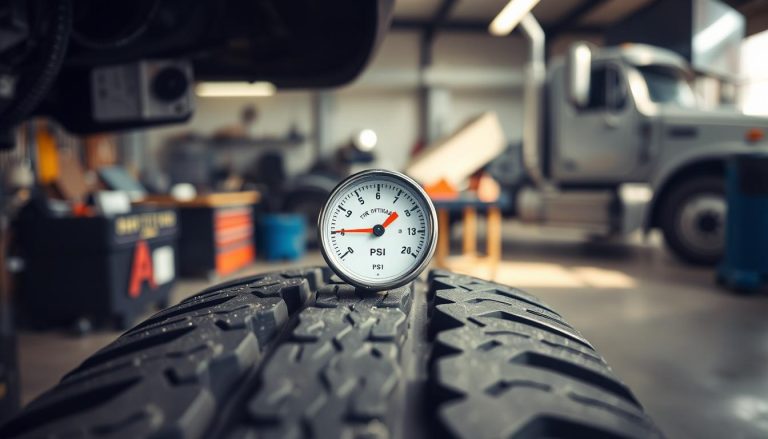
Choosing the right tires for your vehicle is crucial for both performance and safety. Two popular types of tires are Highway Terrain (HT) and All-Terrain (AT) tires, each designed for different driving conditions and preferences.
HT tires are designed for on-road use, offering a smooth ride and good fuel efficiency. In contrast, AT tires are built for both on-road and off-road driving, providing traction on various surfaces, including mud, sand, and rocks.
Understanding the differences between these tire classifications is essential to ensure you select the best tires for your driving habits and vehicle type.
Key Takeaways
- HT tires are ideal for on-road driving, offering a comfortable ride and fuel efficiency.
- AT tires are designed for both on-road and off-road driving, providing versatility and traction.
- The choice between HT and AT tires depends on your driving habits and vehicle type.
- Understanding tire classification is crucial for making an informed decision.
- Selecting the right tires enhances vehicle performance and safety.
Understanding Tire Classifications
When it comes to choosing the right tires, understanding HT and AT tire classifications is essential. Tire classification determines the suitability of tires for specific driving conditions and vehicle types.
What are HT (Highway Terrain) Tires?
HT tires are designed for on-road use, providing a comfortable ride, good handling, and fuel efficiency. They are ideal for drivers who spend most of their time driving on paved roads.
What are AT (All-Terrain) Tires?
AT tires are designed for both on-road and off-road driving. They offer a balance between on-road comfort and off-road capability, making them suitable for drivers who frequently drive on unpaved roads or engage in outdoor activities.
Primary Design Differences
The primary design differences between HT and AT tires lie in their tread patterns, sidewall constructions, and rubber compounds. AT tires have more aggressive tread patterns and tougher sidewalls to withstand the rigors of off-road driving. To understand more about the differences in tire sizes, such as between 265/65R18 and 275/65R18, you can check out Automotive Simple’s comparison.
Key Differences Between HT vs AT Tires
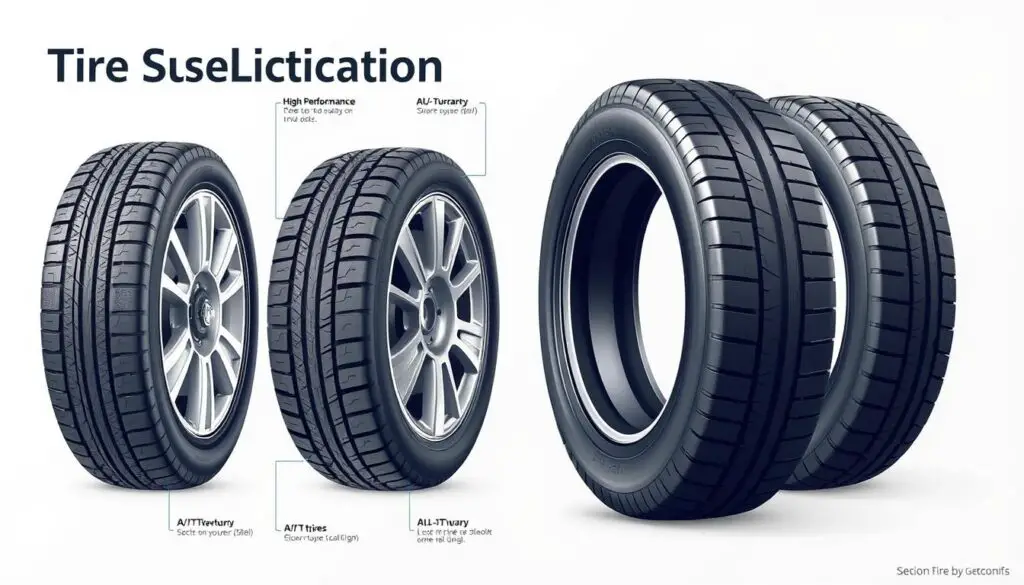
When deciding between HT and AT tires, understanding their key differences is crucial. The main distinctions lie in their tread pattern, sidewall construction, and rubber compound, which significantly impact their performance and durability.
Tread Pattern and Depth Comparison
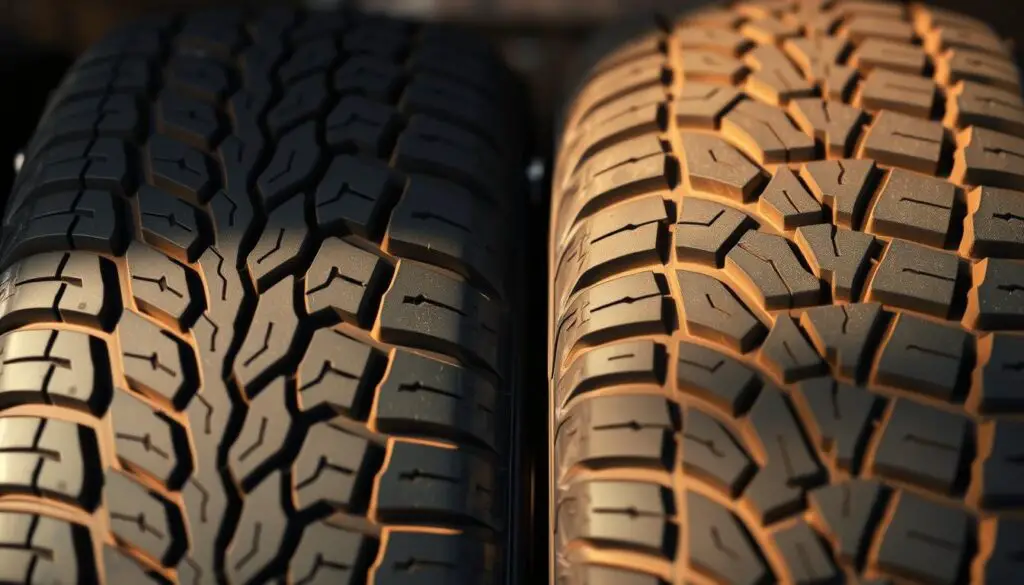
HT tires feature a less aggressive tread pattern with shallower tread depths, typically around 10/32″, optimized for smooth highway driving. In contrast, AT tires have a more aggressive tread pattern with deeper tread depths, often 15/32″ or more, designed to handle off-road terrains.
Sidewall Construction and Puncture Resistance
AT tires generally have a more robust sidewall construction to withstand the rigors of off-road driving, including rocks and debris. This added strength enhances puncture resistance but can make the ride harsher on paved roads.
Rubber Compound Differences
The rubber compound used in HT and AT tires varies significantly. HT tires use a compound optimized for durability and fuel efficiency on highways, while AT tires use a compound that provides better traction on various off-road surfaces.
Temperature Sensitivity
HT tires are more sensitive to extreme temperatures, performing best within a moderate temperature range. AT tires, on the other hand, are designed to be more versatile across different temperatures.
Wear Characteristics
The wear characteristics of HT and AT tires differ due to their design purposes. HT tires tend to wear more evenly and last longer on paved roads, whereas AT tires may wear faster on highways but are built to withstand the abrasive nature of off-road terrains.
| Feature | HT Tires | AT Tires |
|---|---|---|
| Tread Depth | 10/32″ | 15/32″ or more |
| Sidewall Construction | Less robust | More robust |
| Rubber Compound | Optimized for highways | Versatile for off-road |
On-Road Performance Evaluation
The on-road performance of HT and AT tires differs in several key areas, including handling, traction, and comfort. Understanding these differences is crucial for determining which tire type is best suited for your driving needs.
Dry Pavement Handling and Cornering
HT tires generally offer superior handling and cornering capabilities on dry pavement due to their tread compound and design. AT tires, while capable, may not provide the same level of responsiveness and precision.
Wet Road Traction and Hydroplaning Resistance
AT tires tend to perform better on wet roads due to their more aggressive tread pattern, which helps to evacuate water and reduce the risk of hydroplaning. However, HT tires have made significant strides in wet traction technology.
Ride Comfort and Noise Levels
HT tires typically provide a smoother ride and lower noise levels compared to AT tires, thanks to their less aggressive tread pattern and softer sidewalls.
Fuel Economy Impact
HT tires are generally more fuel-efficient due to their lower rolling resistance. AT tires, with their more robust construction and aggressive tread, can lead to slightly higher fuel consumption.
Off-Road Capability Assessment
For those who enjoy exploring beyond paved roads, understanding the off-road capabilities of HT and AT tires is crucial. While HT tires are designed for on-road comfort, they can handle occasional forays onto gravel or dirt roads. However, their capabilities are limited compared to AT tires, which are engineered for more serious off-road adventures.
Gravel and Dirt Road Performance
HT tires can manage well on smooth gravel roads but may struggle with rougher terrain. In contrast, AT tires are more adept at handling uneven surfaces, providing better traction and control.
Sand, Mud, and Snow Traction
AT tires excel in sand, mud, and snow due to their aggressive tread patterns and specialized rubber compounds. For instance, visiting reliable tire brands can provide insights into the best AT tires for these conditions.
Rock Crawling Abilities
When it comes to rock crawling, AT tires are the clear winner, offering the necessary durability and traction. Their reinforced sidewalls and unique tread designs enable them to navigate challenging rocky terrain.
Recovery from Challenging Terrain
In situations where a vehicle becomes stuck, AT tires are generally easier to recover due to their design and construction. They provide better grip and are more forgiving in difficult conditions.
Seasonal Performance Considerations
The performance of HT and AT tires varies significantly with the seasons, affecting their suitability for different driving conditions. As weather conditions change, the capabilities of these tires are put to the test, making it essential to understand their seasonal performance.
Winter Driving Comparison
When it comes to winter driving, AT tires generally offer better traction due to their more aggressive tread patterns and deeper tread depths. HT tires, while capable on snowy roads, may not perform as well as AT tires in extreme winter conditions.
Hot Weather Performance
In hot weather, HT tires tend to perform better due to their optimized tread compound, which provides better handling and traction on dry pavement. AT tires, while still capable, may experience slightly reduced performance due to their softer compound.
Wet Season Adaptability
During the wet season, AT tires demonstrate superior adaptability due to their more aggressive tread patterns, which help to evacuate water and reduce the risk of hydroplaning. HT tires, however, are designed to handle wet conditions but may not be as effective as AT tires in very wet or flooded conditions.
| Season | HT Tires | AT Tires |
|---|---|---|
| Winter | Good traction on snowy roads | Excellent traction in extreme winter conditions |
| Hot Weather | Excellent handling and traction | Good performance, slightly reduced handling |
| Wet Season | Good wet condition handling | Excellent adaptability, reduced hydroplaning risk |
Longevity and Value Analysis
Assessing the longevity and value of HT versus AT tires helps vehicle owners understand their long-term implications. When evaluating these tire types, several factors come into play.
Expected Tread Life Comparison
HT tires generally offer a longer tread life due to their design for highway use, with some lasting up to 80,000 miles or more. In contrast, AT tires, while durable, typically have a shorter tread life because of their more aggressive tread pattern.
Maintenance Requirements
AT tires require more frequent maintenance due to their construction and the terrains they are used on. Regular checks for damage and proper inflation are crucial for extending their lifespan.
Price-to-Performance Ratio
While HT tires are often cheaper upfront, AT tires provide value through their versatility and capability in various conditions, affecting their overall price-to-performance ratio.
Warranty Differences
Tire warranties vary significantly between manufacturers and tire types. Generally, HT tires have longer warranty periods due to their expected longer tread life and durability.
Vehicle Compatibility Guide
Understanding whether your vehicle is compatible with HT (Highway Terrain) or AT (All-Terrain) tires is essential for optimal performance. The right tire choice depends on your vehicle’s specifications, driving habits, and the terrain you frequently encounter.
Ideal Vehicles for HT Tires
SUVs and Crossovers
Most SUVs and crossovers are suited for HT tires, especially those who primarily drive on paved roads. HT tires offer better handling, fuel efficiency, and a smoother ride on highways.
Light Trucks and Vans
Light trucks and vans that are used for daily commuting or hauling light loads are also ideal for HT tires, providing a comfortable ride and good traction on dry pavement.
Vehicles Best Suited for AT Tires
Off-Road Enthusiast Vehicles
For vehicles used in off-road adventures, such as rock crawling or mud bogging, AT tires are the better choice. They offer superior traction and durability in challenging terrains.
Work Trucks and Utility Vehicles
Work trucks and utility vehicles that frequently navigate rough terrains or carry heavy loads benefit from the ruggedness of AT tires.
| Vehicle Type | Recommended Tire Type |
|---|---|
| SUVs/Crossovers (on-road) | HT Tires |
| Light Trucks/Vans (on-road) | HT Tires |
| Off-Road Enthusiast Vehicles | AT Tires |
| Work Trucks/Utility Vehicles | AT Tires |
Choosing the Right Tire for Your Needs
When deciding between HT vs AT Tires, consider your driving habits and vehicle requirements. If you prioritize on-road comfort and fuel efficiency, HT tires might be the better choice. For those who frequently venture off-road or require enhanced traction on various terrains, AT tires offer superior versatility.
A thorough tire comparison reveals that HT tires excel on paved roads, providing a smoother ride and better handling. In contrast, AT tires are designed to handle challenging off-road conditions, making them ideal for adventurous drivers. Ultimately, the decision hinges on your specific needs and preferences.
For a more detailed comparison of specific tire models, such as the Toyo Open Country AT3 vs Cooper, you can explore further resources. By weighing the characteristics of HT and AT tires, you can make an informed decision that suits your driving lifestyle.
FAQ
What is the main difference between HT and AT tires?
The primary difference lies in their design and functionality, with HT (Highway Terrain) tires optimized for on-road performance and AT (All-Terrain) tires designed for both on-road and off-road capabilities.
Are AT tires suitable for daily driving?
Yes, AT tires can be used for daily driving, but they may not provide the same level of comfort and fuel efficiency as HT tires due to their more aggressive tread pattern and stiffer sidewalls.
Can I use HT tires for off-road driving?
While HT tires can handle some light off-road driving, they are not designed for extreme off-road conditions and may not provide the necessary traction or durability, making AT tires a better choice for frequent off-road adventures.
How do HT and AT tires perform in snowy conditions?
AT tires generally perform better in snowy conditions due to their more aggressive tread pattern and larger tread blocks, which provide better traction. However, some HT tires are designed with winter capabilities in mind and may still offer good performance in snow.
What are the implications of choosing AT tires over HT tires for fuel efficiency?
AT tires typically have a more aggressive tread pattern and are made with a harder compound to withstand off-road conditions, which can lead to slightly reduced fuel efficiency compared to HT tires, which are optimized for on-road use and have less rolling resistance.
Are there specific vehicle types that are better suited for HT or AT tires?
Yes, HT tires are generally recommended for SUVs, crossovers, and vehicles that spend most of their time on paved roads, while AT tires are better suited for off-road enthusiast vehicles, work trucks, and utility vehicles that frequently venture off the pavement.
How do the tread life expectations compare between HT and AT tires?
HT tires tend to have a longer tread life due to their less aggressive tread pattern and softer compound, which wears down more evenly on paved roads. AT tires, with their more aggressive tread and harder compound, may have a varied tread life depending on the terrain they are used on.
Can the choice between HT and AT tires affect the overall cost of ownership?
Yes, the choice between HT and AT tires can impact the overall cost of ownership, considering factors such as fuel efficiency, tread life, and maintenance needs. AT tires might be more expensive upfront and potentially have higher maintenance costs, but they offer durability and performance in off-road conditions.