Drivers and techs often ask whether two common oil names are truly interchangeable during a/c service. That question matters because a mismatch can harm a compressor even if cooling seems normal.
Confusion grows in the US when labels use legacy or proprietary names like SP-15 while parts shelves list PAG 46, 100, or 150. This gap leads many owners to assume a single standard applies when topping up refrigerant systems.
We will define PAG oil and explain viscosity, decode what SP-15 typically means in real systems, and offer a short checklist to help match oils to compressors. Expect clear steps on where to find specs and when to consider alternatives such as ester oil in niche cases.
Key Takeaways
- Match oil type to compressor spec, not internet advice.
- Labels may use legacy names; double-check part docs.
- Wrong oil can reduce reliability even with good cooling.
- R-134a refrigerant does not set a single oil viscosity.
- Follow a simple checklist to lower risk of compressor damage.
Understanding A/C Compressor Oil: PAG Oil, Viscosity, and Why Names Get Confusing
Many service errors start when technicians guess which synthetic oil fits an A/C compressor. That choice affects longevity and performance more than most owners realize.
PAG stands for Polyalkylene Glycol. It is a synthetic lubricant used to coat bearings, vanes, and shafts inside an automotive a/c system. Most newer cars ship with this lubricant because it mixes with refrigerant and resists heat better than older oils.
Viscosity numbers like PAG 46, PAG 100, and PAG 150 describe thickness and flow, similar to motor oil grades. A thicker oil flows slower at startup but can protect under high load. A thinner grade circulates quickly but may give less boundary protection.
Names get confusing because labels sometimes show proprietary names instead of a simple viscosity number. Modern practice is to match the lubricant to the compressor manufacturer, not the vehicle badge. For example, Denso supplies compressors across many makes and often uses the same lubricant spec.
- Key points: match oil type and quantity to compressor specs.
- Technicians confirm viscosity and volume before adding oil.
- Close-but-not-exact choices can cause long-term damage.
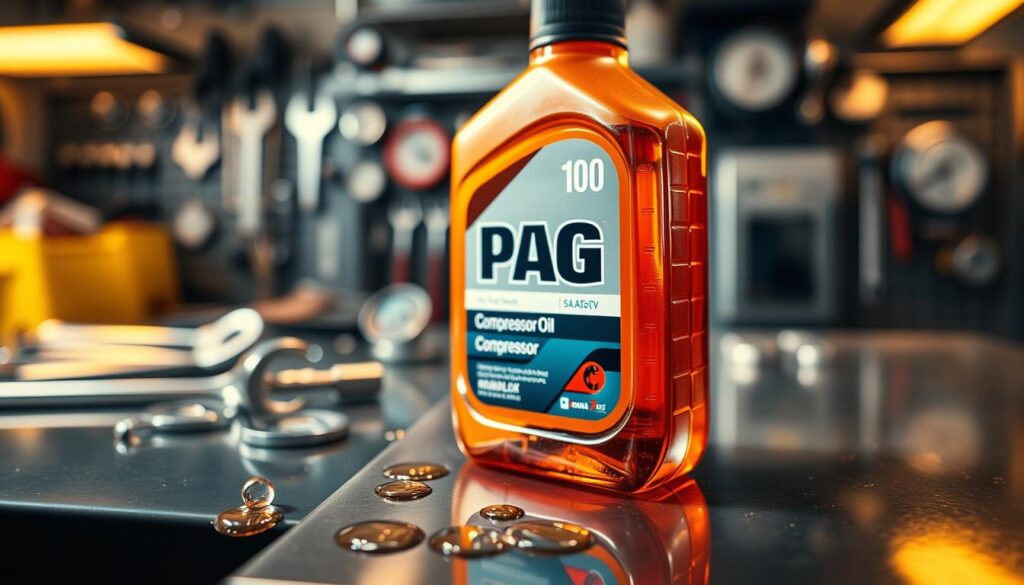
Is Pag 100 the Same As Sp-15? Which Is Better For Your Vehicle?
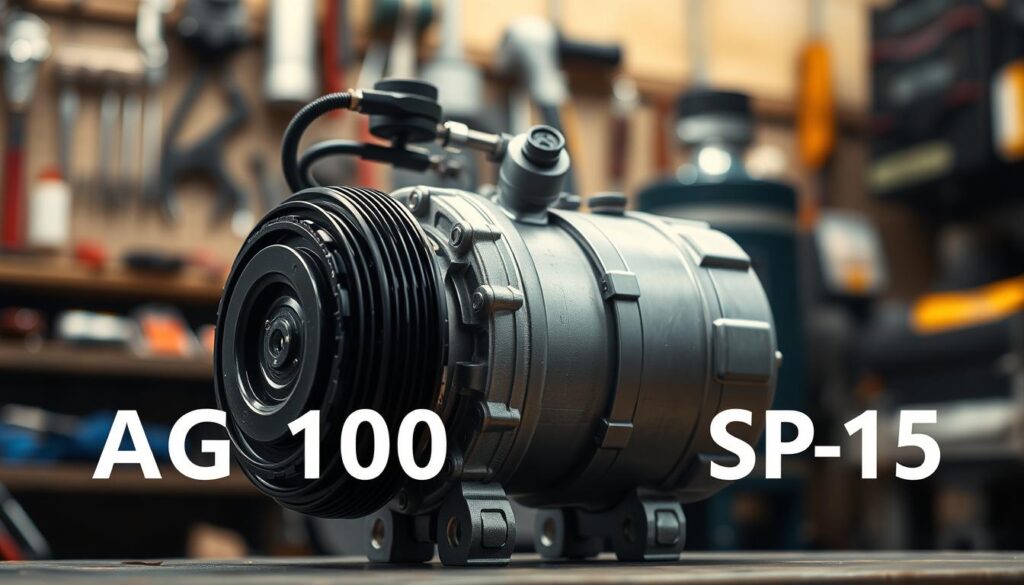
A compressor label that lists SP-15 usually points to a manufacturer-defined lubricant spec. This mark often maps to a known PAG viscosity or a specific OEM family, so the chemistry may match common retail oils.
Compare by specification, not by label name. Check viscosity numbers and cross-reference the compressor manufacturer’s specifications. That confirms whether a unit accepts PAG 100, PAG 150, or another grade.
Practical guidance
- Confirm the compressor maker’s requirements before adding oil.
- If SP-15 is scarce, use an approved equivalent from a reputable shop or supplier.
- Technicians verify specs because wrong viscosity can cut cooling and cause damage.
| Label | Typical Meaning | Service Action |
|---|---|---|
| SP-15 | Manufacturer lubricant spec; may map to a PAG viscosity | Cross-reference compressor manual; source approved equivalent |
| PAG 100 | Medium-viscosity PAG used in many compressors | Use when compressor spec lists PAG 100 or equivalent |
| PAG 150 | Thicker grade for select high-load compressors | Only use if manufacturer recommends higher viscosity |
How to Choose the Right Compressor Oil for Your Vehicle’s A/C System
Verify exact specifications for the vehicle make, model, and year before any A/C service. That single check stops costly errors and keeps technicians on-spec.
- Lookup: Start with factory or compressor documentation to find oil type, viscosity, and quantity. Use the compressor tag and service manual as primary sources.
- Match: Match the lubricant to the compressor manufacturer and system requirements. Confirm the compressor calls for the correct lubricant a/c rating and the exact oil quantity to add.
- Measure: Record oil removed during repair and add only the measured replacement. Avoid mixing oils or guessing by volume.
Ester oil is used mainly in retrofit work when older R12 systems convert to R-134a. Ester tolerates trace CFCs and can help avoid contamination problems in vintage systems.
| Situation | Typical lubricant | Action |
|---|---|---|
| Newer systems | PAG or approved oils | Follow compressor manufacturers requirements |
| Retrofit R12 → r-134a | Ester oil | Use only if system shows legacy refrigerant residue |
| Unknown history | Confirm before adding | Shop inspection and measured replacement |
- Risks: Wrong oil causes accelerated wear, noisy operation, poor cooling, seal failure, and repeat compressor replacement.
- Best practices: Do not mix oils, measure removed oil, and follow manufacturer specs rather than standard assumptions.
- Consumer note: Treat A/C oil selection like routine conditioning or a tire check—spec-first discipline saves money and damage.
Conclusion
The right choice starts with compressor specifications, not label shorthand. Confirm published specifications from manufacturers before adding any lubricant.
PAG oil and similar pag oils often match a listed viscosity, but SP-15 or other tags are not automatic swaps. Use the compressor tag, then verify make, model, and year.
Use ester oil when retrofit work shows legacy refrigerant or contamination. Otherwise, modern a/c systems typically take PAG-type oils matched to a specified viscosity and quantity.
Quick checklist: confirm compressor label, verify system specifications by vehicle details, choose correct viscosity, then proceed with service and refrigerant charging. Correct oil selection protects air conditioning performance and reduces costly repeat failures.