The Jeep Grand Cherokee is a popular SUV known for its performance and durability. However, like any vehicle, it can experience transmission issues that affect its overall performance.
Addressing transmission problems is crucial to maintaining your vehicle’s health and ensuring a smooth driving experience. Common issues include slipping, hesitation, and unusual noises.
This article will provide an overview of common transmission problems in Jeep Grand Cherokee vehicles and offer practical fixes and tips to help you maintain your vehicle’s transmission.
Key Takeaways
- Common transmission issues in Jeep Grand Cherokee vehicles include slipping and hesitation.
- Regular maintenance is key to preventing transmission problems.
- Understanding the signs of transmission issues can help you address them early.
- Practical fixes and tips will be provided to help maintain your vehicle’s transmission.
- Proper care can extend the lifespan of your Jeep Grand Cherokee’s transmission.
Common Jeep Grand Cherokee Transmission Problems
The Jeep Grand Cherokee is known for its ruggedness, but transmission issues can undermine its performance. Transmission problems can manifest in various ways, causing frustration and concern among owners.
Identifying Transmission Failure Symptoms
Recognizing the symptoms of transmission failure is crucial for early intervention. Common signs include slipping gears, delayed shifting, and unusual noises during gear transitions. If your Jeep Grand Cherokee exhibits these behaviors, it’s essential to investigate further to prevent minor issues from becoming major problems.
Most Affected Model Years and Transmission Types
Certain model years of the Jeep Grand Cherokee are more prone to transmission issues. The 2011-2013 models with the 845RE automatic transmission have been reported to have higher instances of transmission problems. Understanding which model years and transmission types are more susceptible can help owners be more vigilant.
Understanding Transmission Warning Signs and Error Codes
Modern vehicles like the Jeep Grand Cherokee are equipped with sophisticated diagnostic systems. Transmission warning signs often manifest as error codes on the dashboard or through diagnostic tools. Codes related to transmission issues can indicate problems such as solenoid malfunctions or fluid pressure issues. Being able to understand and interpret these codes is vital for diagnosing transmission problems accurately.
Diagnosing Specific Transmission Issues
To keep your Jeep Grand Cherokee running smoothly, it’s essential to diagnose transmission issues promptly. Transmission diagnostics is a critical step in identifying and fixing problems with your vehicle.
Using OBD Scanners for Transmission Diagnostics
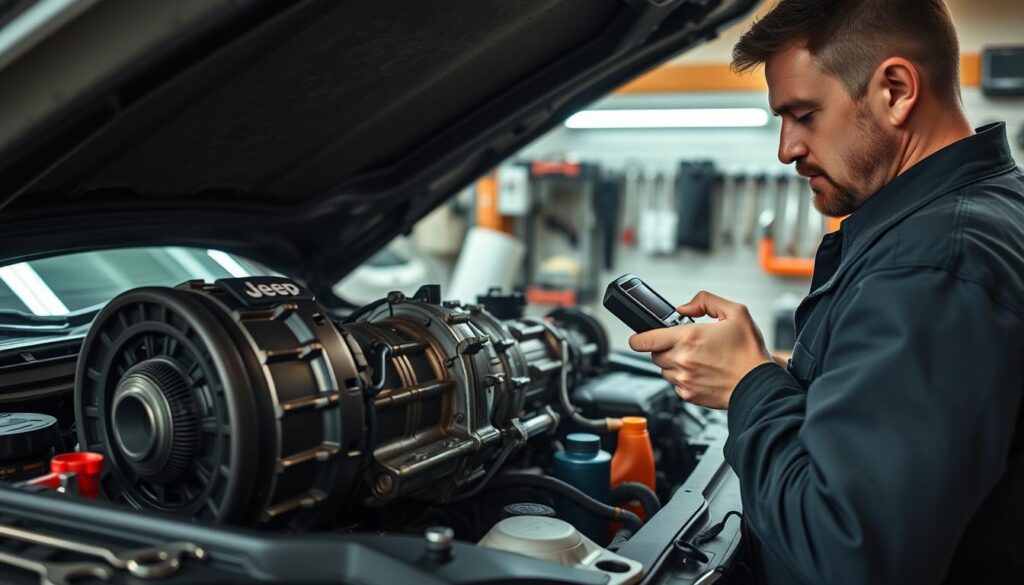
Modern vehicles like the Jeep Grand Cherokee are equipped with onboard diagnostics (OBD) systems that can be accessed using OBD scanners. These scanners provide valuable information about the transmission’s performance and can help identify issues such as delayed shifting or slipping gears.
By connecting an OBD scanner to your vehicle’s OBD port, you can retrieve trouble codes and live data that aid in diagnosing transmission problems. This information is crucial for determining the root cause of the issue and deciding on the necessary repairs.
Delayed Shifting and Hesitation Problems
Delayed shifting and hesitation are common transmission issues that can significantly affect your vehicle’s performance. These problems can be caused by a variety of factors, including low transmission fluid levels, faulty solenoids, or worn-out clutch packs.
When experiencing delayed shifting, it’s essential to check the transmission fluid level and condition. If the fluid is low or dirty, it may need to be changed or topped off.
Slipping Gears and Erratic Behavior
Slipping gears and erratic behavior are indicative of more serious transmission problems. Slipping gears occur when the transmission fails to engage the correct gear, leading to a loss of power or unusual noises.
Erratic behavior, such as sudden surges or drops in speed, can also be a sign of transmission issues. In both cases, a thorough diagnosis using OBD scanners and a visual inspection is necessary to determine the cause.
Fluid Leaks and Contamination Detection
Fluid leaks are another common issue that can lead to transmission problems. Leaks can occur due to damaged seals, loose connections, or cracked transmission pans.
Detecting fluid leaks involves inspecting the transmission and surrounding areas for signs of leakage. Contamination can also occur if the transmission fluid is not changed regularly, leading to the deterioration of transmission components.
DIY Solutions for Jeep Grand Cherokee Transmission Problems
Addressing transmission issues in your Jeep Grand Cherokee can be daunting, but several DIY solutions can help mitigate these problems. By taking a proactive approach to maintenance and repairs, owners can potentially avoid costly fixes down the line.
Transmission Fluid Change and Flush Procedures
One of the most crucial DIY tasks for maintaining your Jeep Grand Cherokee’s transmission is changing and flushing the transmission fluid. Over time, transmission fluid can become contaminated with debris and lose its lubricating properties, leading to increased wear on transmission components.
To perform a transmission fluid change, you’ll need to locate the transmission pan, drain the old fluid, and replace the filter if your model is so equipped. It’s essential to use the correct type of transmission fluid as specified in your owner’s manual.
Installing Auxiliary Transmission Coolers
High temperatures can significantly affect transmission performance and longevity. Installing an auxiliary transmission cooler can help regulate transmission temperature, especially for owners who tow frequently or drive in hot climates.
When selecting an auxiliary cooler, consider the size and type that best fits your needs. Some coolers are designed for specific applications, such as heavy-duty towing or extreme temperatures.
Solenoid Replacement and Electrical Repairs
Transmission solenoids play a critical role in controlling the flow of fluid and pressure within the transmission. If a solenoid fails, it can cause erratic shifting or other transmission problems.
Replacing a transmission solenoid typically involves removing the transmission pan and accessing the solenoid pack. It’s crucial to consult a repair manual or professional guidance to ensure the replacement is done correctly.
Preventative Maintenance Schedule and Tips
Preventative maintenance is key to extending the life of your Jeep Grand Cherokee’s transmission. Regular checks and maintenance tasks can help identify potential issues before they become major problems.
| Maintenance Task | Interval | Notes |
|---|---|---|
| Transmission Fluid Check | Every 5,000 miles | Use dipstick to check level and condition |
| Transmission Fluid Change | Every 30,000 to 60,000 miles | Consult owner’s manual for type and capacity |
| Transmission Filter Inspection | Every 30,000 miles | Replace if clogged or damaged |
By following these DIY solutions and maintaining a regular maintenance schedule, Jeep Grand Cherokee owners can help ensure their vehicle’s transmission operates smoothly and efficiently.
When to Seek Professional Transmission Repair
Transmission problems in your Jeep Grand Cherokee can be daunting, and knowing when to call in a professional is vital. While DIY solutions can be cost-effective for minor issues, complex transmission problems often require specialized expertise and equipment.
Cost Estimates for Common Transmission Repairs
The cost of transmission repairs can vary widely depending on the nature of the problem and the type of repair needed. For instance, a simple transmission fluid change can cost between $100 to $300, while a complete transmission overhaul can range from $1,500 to $3,500 or more. Understanding these costs can help you plan financially for potential repairs.
Dealership vs. Independent Transmission Specialists
When deciding where to take your Jeep Grand Cherokee for transmission repair, you have two primary options: a dealership or an independent transmission specialist. Dealerships offer the advantage of manufacturer-specific training and genuine parts, but their services can be more expensive. Independent specialists, on the other hand, may offer more competitive pricing and personalized service, but it’s crucial to research their reputation and experience.
Rebuilt vs. Remanufactured Transmission Options
If your transmission needs to be replaced, you’ll face the decision between rebuilt and remanufactured transmissions. A rebuilt transmission is repaired using a combination of new and used parts, tailored to your vehicle’s specific needs. Remanufactured transmissions, however, are completely disassembled, inspected, and rebuilt to meet original equipment manufacturer (OEM) specifications, often coming with a warranty.
Warranty Considerations for Transmission Work
Warranty considerations are a critical aspect of transmission repair. When having your transmission repaired or replaced, inquire about the warranty offered by the service provider. A comprehensive warranty can provide peace of mind and protect your investment. Typically, a reputable repair shop will offer a warranty that covers parts and labor for a specified period.
Conclusion: Maintaining Your Jeep Grand Cherokee Transmission
Proper transmission maintenance is crucial for the longevity and performance of your Jeep Grand Cherokee. By understanding common transmission problems and taking proactive steps, you can prevent costly repairs and ensure a smooth driving experience.
Regular transmission fluid changes, installing auxiliary transmission coolers, and addressing issues promptly are key to maintaining your vehicle’s transmission. Jeep Grand Cherokee transmission issues can be complex, but with the right knowledge and maintenance schedule, you can mitigate potential problems.
By following the DIY solutions and knowing when to seek professional help, you can keep your Jeep Grand Cherokee running efficiently. Prioritizing transmission maintenance will help extend the life of your vehicle and prevent future transmission-related issues.
FAQ
What are the most common transmission problems in Jeep Grand Cherokee?
Common transmission problems in Jeep Grand Cherokee include delayed shifting, hesitation, slipping gears, erratic behavior, and fluid leaks.
How do I identify transmission failure symptoms in my Jeep Grand Cherokee?
To identify transmission failure symptoms, look out for warning signs such as unusual noises, vibrations, or error codes on your dashboard. You can also use an OBD scanner to diagnose transmission issues.
What model years and transmission types are most affected by transmission problems?
Certain model years of Jeep Grand Cherokee, particularly those with specific transmission types, are more prone to transmission problems. Research your vehicle’s model year and transmission type to determine if it’s susceptible to common issues.
Can I fix transmission problems in my Jeep Grand Cherokee myself?
Some transmission problems can be addressed through DIY solutions, such as changing transmission fluid, installing auxiliary transmission coolers, or replacing solenoids. However, more complex issues may require professional assistance.
How much does it cost to repair a Jeep Grand Cherokee transmission?
The cost of transmission repair varies depending on the type of repair, labor costs, and the transmission specialist you choose. You can expect to pay anywhere from a few hundred to several thousand dollars for transmission repairs.
Should I choose a dealership or independent transmission specialist for my Jeep Grand Cherokee?
Both dealerships and independent transmission specialists have their pros and cons. Dealerships may offer warranty coverage and OEM parts, while independent specialists may provide more competitive pricing and personalized service.
What is the difference between rebuilt and remanufactured transmission options?
Rebuilt transmissions are repaired and restored to working condition, while remanufactured transmissions are completely disassembled, inspected, and rebuilt to meet original manufacturer specifications. Remanufactured transmissions often come with a warranty.
How can I maintain my Jeep Grand Cherokee’s transmission to prevent problems?
Regular maintenance, such as changing transmission fluid, checking for leaks, and addressing issues promptly, can help prevent transmission problems. Following a preventative maintenance schedule can also help extend the life of your transmission.
Are there any warranty considerations for transmission work on my Jeep Grand Cherokee?
Yes, warranty considerations vary depending on the type of repair, the transmission specialist, and the parts used. Be sure to ask about warranty coverage and duration when seeking transmission repairs.
Can auxiliary transmission coolers really help with transmission problems?
Yes, auxiliary transmission coolers can help regulate transmission temperature, which can contribute to transmission problems. Installing an auxiliary transmission cooler can be a useful DIY solution for some Jeep Grand Cherokee owners.