Choosing between a two-door and a four-door model shapes how you use the vehicle every day. This guide helps shoppers weigh off-road agility against highway comfort, passenger needs, cargo space, and budget.
The core difference is structural: many generations share height and width, but the longer wheelbase and extra mass on the four-door change stability, turning radius, and interior layout. Expect roughly 20 inches more wheelbase and about 200 pounds added on the larger model in several generations.
We preview how road and trail behavior shift with wheelbase and weight, and we summarize rear seating, access, and cargo trade-offs so you can match a model to family, gear, or weekend trails.
Later sections will click expand into specs, comfort, trail performance, ownership costs, and test‑drive tips to help you reach a confident choice across years and trims.
Key Takeaways
- The two-door favors agility and lower entry cost; the four-door adds space and stability.
- Many models share width and height; wheelbase and weight drive on-road feel.
- Four-door offers easier rear access and more cargo room for families and pets.
- Both options remain capable off-road with Trail Rated engineering in recent years.
- Test drives that mimic parking, loading, and trail use clarify which model fits your routine.
Choosing Between Two Doors and Four: What Shoppers Need to Know Right Now
Deciding between a two-door and a four-door model starts with how you actually use the vehicle each day. Consider highway miles versus trail time, how many riders you carry, and how much gear you load before choosing.
If you’re short on time, prioritize access and seating. The four door makes daily driving and rear entry simple for families, pets, and car seats. The two door favors nimbleness and slightly better fuel economy.
Both body styles share core off-road capability, so the question is less about “can it go?” and more about “how often and how comfortably?” Test drives should include a parking and loading drill that mirrors your routine — groceries, bikes, or camping gear.
Budget and trims matter today: two-doors typically start lower in price while many options stay similar across models. Weight differences give the shorter model playful character, while the longer model adds on-road stability for commuting.
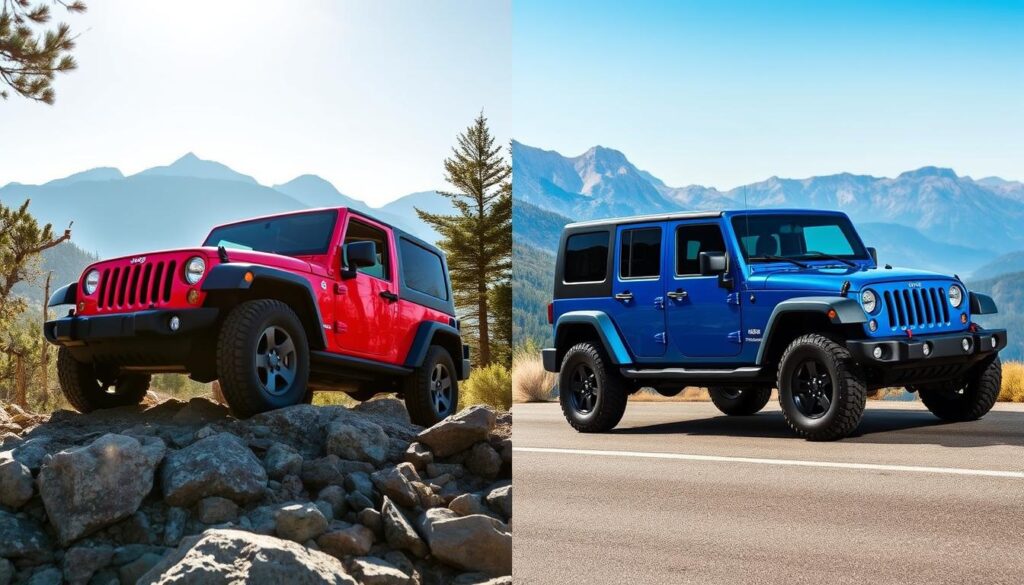
- Assess weekend plans: regular back-seat use usually favors the four-door layout.
- Inventory gear and storage needs so cargo fits without constant reloading.
- Remember: the only structural difference is the extra pair of doors plus length and weight — not a different lineage, avoiding any “door door” confusion.
Core Specs and Dimensions: Where the Differences Start
Dimensions and mass set the stage for how each model behaves on road and trail. A longer wheel base—about a 20-inch stretch—gives the larger variant a planted feel on highways but changes agility where space is tight.
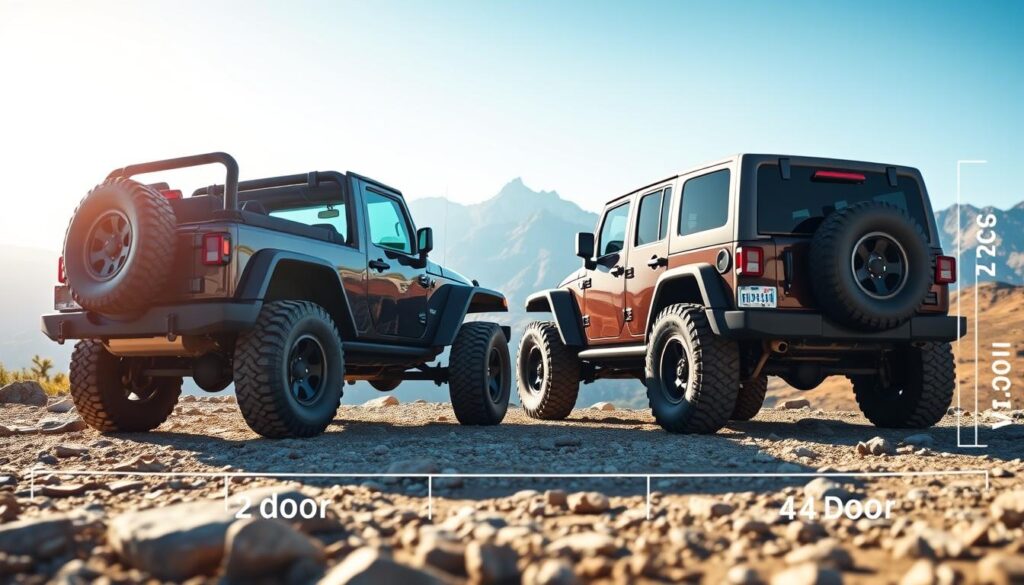
Wheelbase and weight impacts
The four-door adds roughly 200 pounds compared with the shorter body. That extra weight alters damping and braking, so manufacturers fit higher-rate suspension springs to support load and reduce sag.
Turning radius and breakover
A shorter wheelbase improves turning radius and mid-belly clearance on crests. On technical lines, the compact layout makes tight pivots and switchbacks easier to negotiate.
Tuning and build considerations
Years of development kept width and height similar across generations while length and wheel changes tuned ride character. Rear overhang and breakover geometry matter when planning tires or lift kits.
- Trade-off: longer wheelbase = straight-line stability; shorter = sharper turning and less chance of high-centering.
- Some owners “click expand” capability on the compact model by fitting JKU take‑off springs for a modest lift.
On-Road Ride, Comfort, and Daily Driving
Daily driving exposes clear trade-offs between a planted highway carriage and a nimble urban footprint. Choose the layout that fits how much interstate cruising you do versus tight city turns.
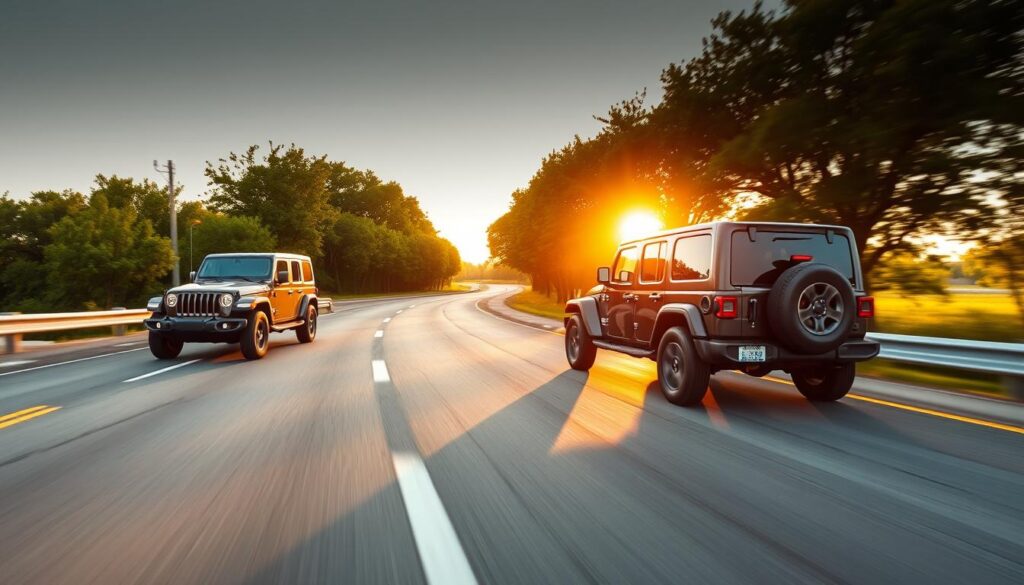
Highway stability vs. urban agility
A longer wheelbase calms the chassis on open road travel, so the larger model feels more planted and relaxed at speed. Lane changes and emergency maneuvers feel more stable with the added mass and length.
By contrast, the shorter layout delivers a playful, fun on‑street character. Its lower weight and compact footprint make quick direction changes and parking easier, aided by a tighter turning radius.
Fuel economy, comfort, and practical tips
The lighter variant often returns slightly better fuel economy, which adds up for high‑mileage commuters. Still, both share a rugged, body‑on‑frame ride that reads more like an SUV than a car.
Pick tires and set pressures with care: they influence cabin noise, ride harshness, and effective space for passengers. During a rush‑hour test loop, evaluate seating ergonomics, visibility, and cargo access to confirm daily comfort.
- Tip: If highway calm matters most, prioritize the longer wheelbase for steadier tracking.
- Tip: If city parking and quick turns are frequent, the compact layout rewards tighter radius and easier curb‑to‑curb maneuvering.
Off-Road Capability and Trail Performance
Trail performance depends on geometry, setup, and how you drive the line. Narrow corridors reward compact length and a tight turning radius, while long climbs favor stability from a stretched wheelbase.
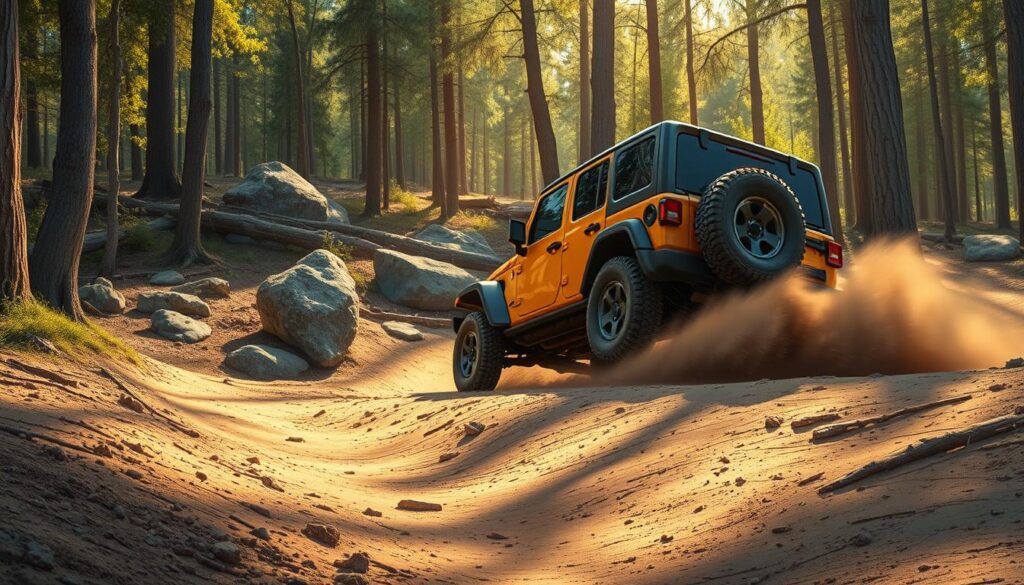
Maneuverability in tight terrain
The shorter model shines in technical sections. Its compact length and small turning radius let the vehicle thread between trees, rocks, and ledges with fewer multi‑point maneuvers.
That shorter wheel base also lowers the chance of high centering on sharp crests, so you clear breakovers more often.
Steep climbs and descents
A longer wheelbase reduces pitch on grades and makes extended climbs and descents feel more composed.
However, extra length can force back‑and‑fill turns in tight spots. Choose based on the grades you run most and whether stability or tight turning matters more.
Tires, lift, and clearance
Lift height, tire diameter, and wheel offset work together to reclaim approach, departure, and breakover angles. A modest lift and correct wheel/tire sizing improve clearance on either body style.
Heavier builds benefit from stiffer suspension springs and upgraded shocks to manage load and maintain articulation.
- Pick mud‑terrain for deep traction; all‑terrain for mixed trails and better on‑road manners.
- Plan recovery gear: added length can complicate extraction angles—choose anchor points wisely.
- Test obstacles from both directions to find lines that reduce back‑and‑fill maneuvers.
| Capability | Shorter model | Longer model |
|---|---|---|
| Turning radius | Tighter — easier threading in tight corridors | Wider — may need multi‑point turns |
| Breakover clearance | Better naturally due to compact length | Improves with lift and tire choices |
| Stability on grades | Less planted on long climbs | More composed and less pitch |
| Suspension needs | Standard tune often sufficient | May need heavier springs and upgraded shocks |
Passengers and Cargo Space Realities
Passenger comfort and daily packing often decide which body layout fits a household best.
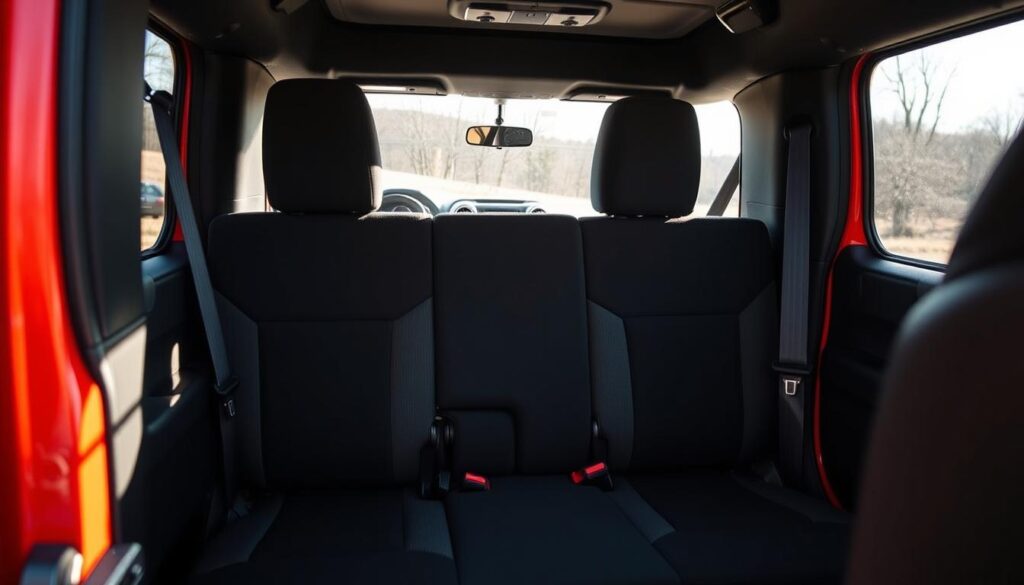
Rear Seat Access and Capacity
The shorter model seats four total with two belts in the rear. Getting into the back requires tilting and sliding the front seat.
Taller riders may find legroom tight for long trips. Frequent back-row use usually favors the longer body with its dedicated rear doors.
Cargo Space and Storage
The longer model seats five and gives substantially more cargo volume, especially when the rear seat folds or is removed.
Both layouts allow folding or removing the rear seat to expand usable cargo space for road trips and errands.
- Everyday packing—strollers, coolers, and sports gear—fits with fewer compromises in the longer model.
- The shorter cargo area demands careful stacking and creative storage for bulky stuff.
- Interior cubbies, seatback pockets, and floor tie‑downs help secure gear on rough trails.
| Feature | Shorter layout | Longer layout |
|---|---|---|
| Rear seating | Two belts (four total) | Three belts (five total) |
| Rear access | Front seat tilt/slide required | Dedicated rear doors for easy entry |
| Cargo flexibility | Fold/remove seat, tighter area | More room with folded seat, easier packing |
| Pet and kennel loading | Requires more maneuvering | Simpler and safer in the back row |
Practical tip: do a test pack with your actual gear to confirm room, visibility, and comfort before you buy.
Cost, Trims, and Total Ownership Considerations
Budgeting for purchase price, insurance, and upkeep reveals the true cost of ownership.
Pricing logic matters. A shorter model usually starts lower at the dealer because it uses fewer panels and less assembly time. That lower starting MSRP is often the clearest savings.
Options and trim parity
Most features move across both models, so option lists are similar. Some trims may be limited to one body style, so confirm availability before you spec a vehicle.
Insurance, maintenance, and resale
Insurance varies by trim, usage, and added gear. Specialty bumpers, larger tires, and roof racks can raise premiums.
Plan maintenance over the years. Bigger tires and extra weight from accessories increase wear on brakes, suspension, and alignment.
- Financing: include fuel, tire rotations, and aftermarket upgrades in your monthly plan.
- Highway drivers: test road manners—comfort affects long‑term satisfaction.
- Storage: longer bodies simplify roof racks and cargo systems for overlanding.
- Resale: strong demand for jeeps keeps used values resilient across trims.
| Cost Item | Shorter body | Longer body |
|---|---|---|
| Starting MSRP | Lower | Higher |
| Option parity | Mostly similar | Mostly similar (some trims exclusive) |
| Insurance impact | Depends on add‑ons | Depends on add‑ons |
| Long‑term wear | Less sheer weight load | Higher load, may need heavier tune |
Bottom line: match price and trim to how you use the vehicle today to avoid regret and costly swaps later.
Jeep Wrangler 2 Door Vs 4 Door: Models, Generations, and What’s New
Lineage from JK/JKU to JL/JLU traces how short and long bodies shared packaging while receiving distinct structural changes.
From JK/JKU to JL/JLU: platform similarities and practical differences
The JK (2007–2018) introduced the stretched JKU alongside the original two‑door. Both kept similar height and width, which simplified parts sharing.
Practical difference: the longer wheelbase and extra door structures change turning radius, interior access, and load distribution.
Present day: 2026 tech, Trail Rated capability, and quick‑release hinges
On current models the platform still supports Trail Rated capability and modern infotainment and safety gear.
Click expand on 2026 updates: quick‑release door hinges, open‑air configurations, and refined driver assists make daily use easier.
Limited editions and Mopar upgrades: personalization and heavy‑duty parts
Special editions such as the 2026 Willys ’41 come with 33‑inch tires, rear axle locker, and steel bumpers plus unique trim and color choices.
Mopar performance parts add rock rails, winches, suspension upgrades, and steel bumpers so owners can tailor storage and gear fit‑outs.
| Topic | Key notes | Owner impact |
|---|---|---|
| Generations | JK/JKU → JL/JLU: shared width/height; length differs | Parts compatibility, similar drivetrains |
| 2026 updates | Trail Rated, quick‑release hinges, advanced infotainment | Easier open‑air use, improved tech and safety |
| Limited editions | Willys ’41: 33″ tires, lockers, steel bumpers | Better off‑road kit out of the gate |
| Aftermarket | Mopar rock rails, lifts, winches, wheels/tires | Customize suspension and storage to match goals |
How to use this: match editions and parts to your needs—winter traction, overlanding storage, or daily comfort—then confirm fitment and mounting length before buying.
Family, Pets, and Lifestyle Fit
Practical daily use matters more than looks. Families and pet owners should test how easily a child seat or carrier loads into the rear. Try buckling kids and closing a door with one hand to see what feels natural.
Pet travel is easier when the back entry is wide and low. Dedicated rear doors let you slide crates and secure harnesses fast. A compact model can still work for occasional trips with small carriers, but repeated loading favors the larger layout.
Audit your typical gear before you buy. Measure strollers, backpacks, surfboards, and camping kits to confirm room. If your weekends include long drives with friends or full quiver setups, prioritize cargo flexibility.
- Bring family members to the test drive to check buckle speed and rear access.
- Consider pet barriers, leash points, and durable seat covers for longer road use.
- City drivers often prize a compact footprint; suburban households usually want extra doors and space.
| Need | Compact option | Larger option |
|---|---|---|
| Rear access | Front seat tilt required | Dedicated rear doors |
| Pet crates | Works for small carriers | Easier for full-size crates |
| Gear loading | Tight packing, creative stacks | More room and simpler organization |
Bottom line: Choose the body that matches who rides most days, how much gear travels, and whether daily driving convenience outweighs trail agility.
Modifications and Performance Parts
A balanced modification plan starts with matching spring rates to the load you carry most. Four‑door models come with higher‑rate springs from the factory to handle added mass and gear. Some compact owners borrow JKU take‑off springs as a low‑cost way to gain a mild lift.
Spring swaps, lift choices, and tire sizing
Why spring rate matters: proper springs prevent sag, keep ride height, and maintain alignment under load. If you add steel bumpers, winches, or heavy storage, uprated coils are often required.
- Lift options: spacer lifts are cheap and keep stock geometry; coil springs increase travel; long‑arm kits restore alignment and improve articulation.
- Tire tradeoffs: 33s give clearance with minor gearing change; 35s are a common middle ground; 37s demand regear and more suspension work and affect turning radius and on‑road manners.
- Shock pairing: match valving to vehicle weight and intended use for control on washboards and technical rock sections.
| Mod | Impact | Notes |
|---|---|---|
| JKU spring swap | +1–1.5″ lift | Budget lift for compact builds; check bump stops |
| Long‑arm kit | Better articulation | Requires alignment and track‑bar correction |
| Wheel offset/backspacing | Controls rub | Adjust to protect fenders and steering feel |
Test articulation after any lift on ramps or controlled obstacles to verify brake line slack, bump stop contact, and sway bar geometry. Add rock rails, steel bumpers, and winches knowing they increase mass and demand suspension tuning.
Storage and recovery: plan secure mounts for straps, shackles, a compressor, and a recovery kit so gear is accessible without cluttering the cabin.
Bottom line: build to balance clearance, weight, tire size, and daily drivability based on your chosen door count and trip profiles.
Test-Drive Checklist and Buying Tips
Drive like you live: a short course with tight corners and a highway sprint shows practical differences fast.
Parking and turning — build a route that includes a tight lot and a narrow street. Perform three‑point turns to compare turning radius and steering effort when backing into spaces and curbs.
Parking, Loading, and Trail Mock-Ups: Simulate your real-life use cases
Load real gear—coolers, strollers, or camping bins—to see how cargo and storage behave. Fold the rear seats and check how flat the load floor is, then measure key lengths for your longest items.
Include a highway stint to judge tracking, wind sensitivity, and cabin noise at your normal cruising speed. Drive a rough back road to listen for rattles and assess ride control with the tires you plan to run.
- Practice a trail mock‑up on a safe ramp to test approach, departure, and breakover; note any high‑center tendencies.
- “Click expand” this checklist with family or pets aboard to test real access, buckling, and room in the back.
- Check visibility with your usual top and door setup and verify mirror and camera coverage when parking.
| Check | Why it matters | What to record |
|---|---|---|
| Turning & parking | Daily maneuvering ease | Number of maneuvers, curb clearance |
| Cargo & storage | Packing efficiency | Long item fit, floor flatness |
| Highway run | Stability at speed | Tracking, noise, wind sensitivity |
Final tip: compare price, warranty, financing, and accessory plans only after the test drive proves the layout meets your daily and weekend needs. For drivetrain or rear‑end fit questions, consult a rear‑end swap guide like this rear‑end swap guide.
Conclusion
Pick the body that matches your daily routine and weekend gear—this choice shapes every drive.
Two-door models reward nimble trail performance, a tight turning radius, and better breakover. The four-door model gives easier rear access, more rear seat room, and extra cargo space thanks to a longer wheelbase and added weight.
Match suspension, tire size, and a mild lift to your typical load and terrain so ride and control stay balanced. Both the jeep wrangler variants keep Trail Rated capability and modern quick-release hinges for open-air use.
Click expand your test drive: simulate parking, loading gear, and highway runs to confirm the right door count for daily driving and long-term ownership.