This article opens a clear look at the PRV 2.85L V6 that powered the DMC model sold in the U.S. The motor paired classic styling with practical choices for emissions and cost. It shaped real-world pace and maintenance needs for owners and fans.
The layout placed the V6 behind two seats, helping packaging while creating cooling and service limits. Brushed stainless steel panels and gull-wing doors made the design stand out, and Giorgetto Giugiaro’s touch boosted brand recognition.
Key specs included 130 hp, 153 lb-ft, Bosch K-Jetronic fuel injection, and either a 5-speed manual or 3-speed automatic. Period tests showed 0–60 mph in about 10.5 seconds and a top speed near 110 mph, marking the car as more grand tourer than outright racer.
This piece will move from this high-level view into transmission choices, chassis support, cooling and exhaust, and common upgrades that improve reliability and power delivery for modern ownership.
Key Takeaways
- The 2.85L PRV V6 served as the heart of the DMC example sold to U.S. buyers.
- Rear-mounted layout influenced packaging, cooling, and service access.
- Stainless-steel body and gull-wing doors defined design and brand identity.
- Official output was 130 hp and 153 lb-ft with Bosch mechanical injection.
- Real-world performance favored GT comfort over raw acceleration.
- Later sections will cover transmission, suspension, and common upgrades.
Overview: The DeLorean as a 1981-1983 Rear-Engine Sports Car for the U.S. Market
Conceived by John DeLorean’s company and built in Northern Ireland, the model targeted the American market with a rear-engine, rear-wheel-drive layout. Production ran from January 21, 1981 through December 1982, covering model years 1981–1983 and totaling roughly 8,975 cars.
The body used brushed SAE 304 stainless steel over a fiberglass understructure mounted to an epoxy-coated steel backbone chassis influenced by Lotus. This construction gave the vehicle a unique look but raised manufacturing costs during the short production years.
Gull-wing doors became the signature feature. They relied on torsion bars and gas struts developed with Grumman Aerospace. The doors offered drama and tight cabin access through compact cutout windows, yet early fitment and sealing issues were common.
Price climbed from about $25,000 in 1981 to $34,000 by 1983 as market pressures, rising interest rates, and economic downturns strained company sustainability. Interior trim and wheels saw small running changes during the brief run, which improved comfort and quality over time.
Many enthusiasts still call the original DeLorean “DMC-12,” a name tied to the people and project rather than dealer branding. That identity, plus Giugiaro’s design, helped the vehicle become more GT-like in feel—showing that chassis and body choices mattered as much as the delorean motor for real-world driving.
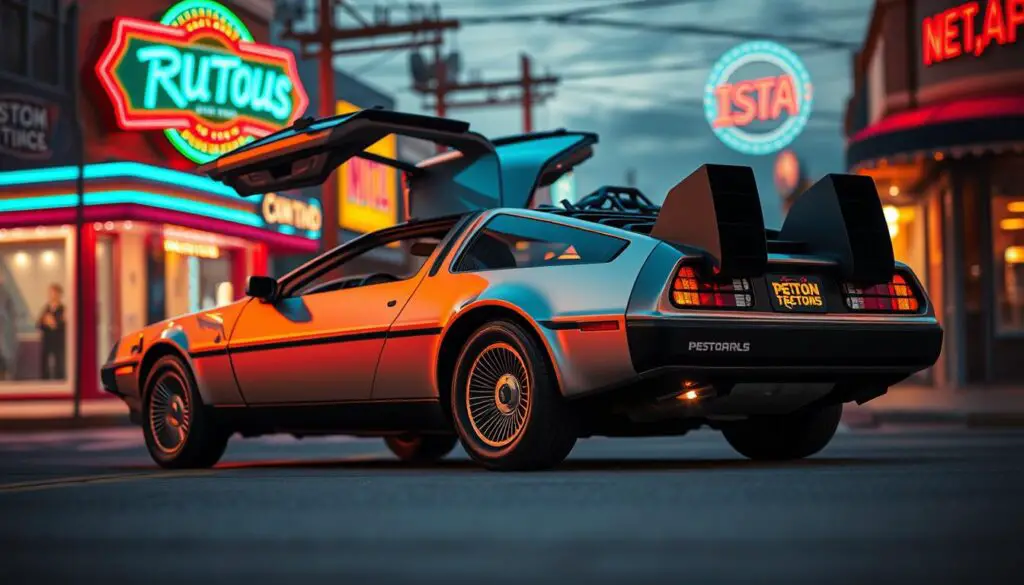
- Factory: Dunmurry, Northern Ireland
- Designers: John DeLorean’s company and Giorgetto Giugiaro
- Notable: stainless steel body, gull-wing doors, Lotus-influenced chassis
What Engine is in a DeLorean: Unveiling the Iconic Sports Car’s Powertrain
Under the stainless skin, the PRV ZMJ-159 2.85L SOHC V6 balanced packaging, durability, and emissions-era needs for road use. This 90-degree design used a light-alloy block with cast-iron liners and cross-flow aluminum heads to cope with a rear-mounted installation.
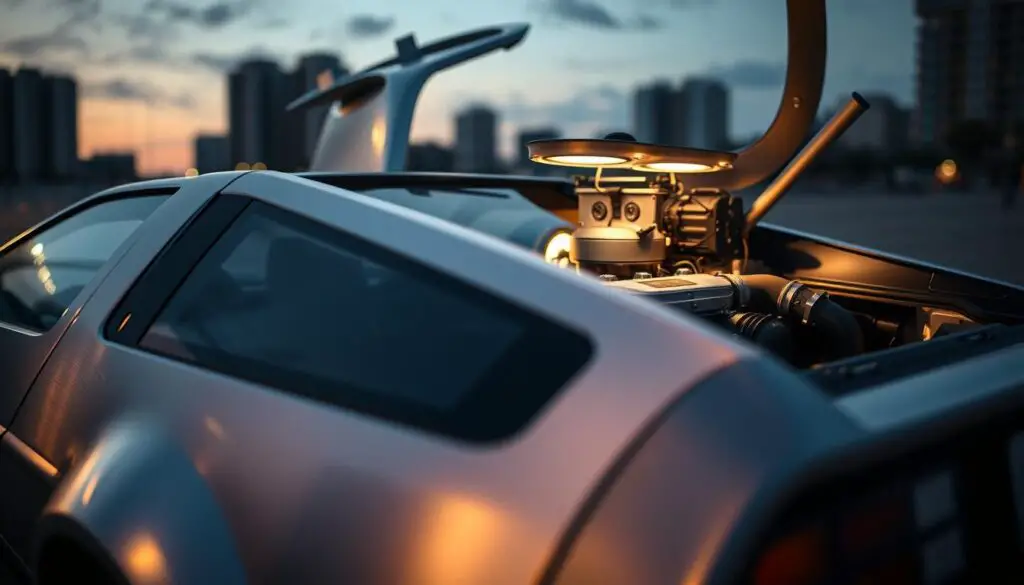
The PRV ZMJ-159 2.85L SOHC V6 at a Glance
U.S. cars wore catalyst equipment and were rated at 130 hp at 5,500 rpm and 153 lb-ft at 2,750 rpm. A few European examples kept about 154 hp due to lighter emissions calibration.
Origins and Why DMC Picked It
DeLorean’s company chose the PRV after vetting other options. Availability, emissions compliance, and engineering resource limits made the V6 a pragmatic fit for production.
Key Geometry and Fuel System
The unit uses Bosch K-Jetronic mechanical fuel injection, a 91 mm bore and 73 mm stroke, and 8.8:1 compression. These traits improved cold-start and idle stability while tolerating period fuel and emissions constraints.
- Real-world feel: torque peak low in the band gave GT-style in-traffic responsiveness rather than outright sprint numbers.
- Drivetrain: paired to either a 5-speed manual or 3-speed automatic with 3.44:1 final drive, affecting cruising mph and shift behavior.
From Prototype to Production: How the DeLorean Ended Up Rear-Engined
Initial concepts pushed for novel power units, but practical limits steered the team toward proven placement and parts.
The program first flirted with a compact Wankel rotary, then examined the Ford Cologne V6. Engineers also trialed the Citroën CX 2000 inline-four. Each option failed to meet emissions, power, or reliability targets for U.S. production.
Abandoned concepts and why they fell short
Wankel showed promise for packaging but lacked streetwise durability and emissions control.
The Ford V6 offered torque but introduced supplier complexity. The Citroën drivetrain proved underpowered for planned turbo work and heavy U.S. rules.
Lotus engineering and backbone chassis
Colin Chapman’s team reworked the program. Lotus applied a steel backbone chassis from Esprit practice and moved the power unit rearward by Prototype 2.
Fiberglass-bodied mules—often called “black cars”—sped development. They let engineers test packaging, cooling, and service access before factory tooling.
| Concept | Main Issue | Outcome |
|---|---|---|
| Wankel rotary | Emissions and reliability | Abandoned for road use |
| Ford Cologne V6 | Supplier and packaging | Rejected for production timelines |
| Citroën CX 2000 | Low power for turbo plans | Not selected |
| Lotus-backed PRV rear layout | Proven engineering | Adopted for production |
Choosing a rear layout changed weight balance, trunk space, and cooling runs. These decisions, plus supplier shifts and Dunmurry factory ramp-up, forced compromises that shaped final models and the name recognition tied to John DeLorean.
Fuel and Induction: Bosch K-Jetronic and Emissions Tuning
Fuel delivery and emissions calibration shaped how the PRV V6 breathed and made power on U.S. roads.
How continuous injection worked
Bosch K-Jetronic used continuous mechanical injection to meter fuel steadily to each cylinder. That design gave reliable idling and simple throttle response without electronic control.
This steady metering helped meet emissions goals but limited aggressive tuning. U.S. catalyst plumbing and conservative timing produced the certified 130 hp and 153 lb-ft figures.
Compression, geometry, and tuning trade-offs
The 8.8:1 compression ratio, plus a 91 mm bore and 73 mm stroke, favored safe combustion and knock resistance. The over-square layout supported smoother revving and stable idle across climates.
- Regional note: a few European models kept 154 hp due to lighter emissions calibration.
- Drivetrain: both transmissions used a 3.44:1 final drive, affecting mph at cruise and fuel use.
Regular maintenance matters: clean injectors, fresh seals, and correct fuel quality restore original performance and starting behavior. Owners often renew pumps and lines to avoid lean conditions that harm longevity.
Why DMC chose compliance: prioritizing warranty predictability and production consistency meant favoring emissions and reliability over peak output. That decision shaped the car’s real-world character and preserved serviceability over time.
Transmissions and Final Drive: 5-Speed Manual vs 3-Speed Automatic
Selecting either a close-ratio box or a relaxed automatic changed how the car behaved on streets and highways.
5-speed manual: offered more driver involvement and crisper acceleration. Period testers reported about 0–60 mph in 10.5 seconds with the five-speed, thanks to closer ratios that keep rpm in the usable band during shifts.
3-speed automatic: felt smoother and more relaxed for daily use. It traded briskness for ease, letting owners cruise without frequent shifts at the expense of outright speed and midrange punch.
How the 3.44:1 Final Drive Changes Behavior
Both gearboxes used a 3.44:1 final drive. That common ratio sets engine rpm at highway mph and shapes shift points.
With the manual, closer gears keep the PRV near peak torque during overtakes. With the automatic, wider spacing lets the engine settle sooner but can leave you down on rpm when you need quick response.
- Launches: rear weight bias helped traction off the line in some conditions despite modest overall performance.
- Steering and low-speed: no factory power steering and a quick 14.9:1 ratio made parking heavier. Enthusiasts often preferred the manual for that direct feel.
- Doors and ergonomics: gull-wing access pairs with transmission choice—automatic suits stop‑and‑go city routines, manual fits weekend drives.
| Feature | 5-Speed Manual | 3-Speed Automatic |
|---|---|---|
| Driver involvement | High | Low |
| Acceleration tendency | Better 0–60 and midrange | Smoother, slower shifts |
| Highway rpm | Higher under load, more flexible | Lower cruising rpm, less immediate throttle response |
| Urban use | Engaging but heavier steering | Relaxed and convenient |
Performance Numbers in Period Testing vs Manufacturer Claims
Period test sheets and factory brochures painted different pictures for straight-line figures and top-end claims. DMC literature quoted 0–60 mph in 8.8 seconds and a 130 mph top speed. Independent testers, notably Road & Track, recorded about 10.5 seconds to 60 mph and roughly 110 mph at the top end.
0–60 mph, top speed, and why it felt more GT than a pure sports model
The curb weight near 2,718 lb and the 35/65 front-to-rear split gave strong traction off the line but limited briskness. Gearing, drag, and the measured power output combined to produce steady, not explosive, acceleration.
Weight, aerodynamics, and the 35/65 distribution
Rear bias helped highway stability and predictable cornering. That balance favored comfort and composure over raw track aggression. Reviewers praised ride quality and fuel economy while noting that peak speed and sprint times matched grand touring expectations rather than competition-grade sports cars.
- Claim vs test: marketing numbers were optimistic; independent times were repeatable and realistic.
- Real-world: production variance could nudge times slightly, but character stayed consistent.
- Cultural note: film scenes and soundtracks inflated public perception beyond measured capability.
Cooling, Exhaust, and Ancillary Systems That Define the PRV’s Character
Because coolant must travel far from the rear-mounted motor, hose quality and clamp integrity are more than routine concerns. Long runs demand a front-mounted radiator and twin thermostatically controlled electric fans to pull heat through the system.
Exhaust routing and the catalytic package shaped underbody layout and heat shields. That routing kept exhaust temps away from wiring and the engine bay, but it also complicates access for service.
Ancillary systems — alternator capacity, fan relays, and control wiring — were known weak points on early builds. Modern alternator upgrades and solid‑state fan controllers reduce electrical stress and intermittent faults.
“Regular bleeding, strong clamps, and updated relays turn a temperamental installation into a reliable daily driver.”
- Fuel and ignition: a healthy K-Jetronic supply and sound spark keep throttle response crisp and power delivery stable.
- Preventative care: replace coolant hoses, belts, and connectors on schedule to avoid drivability dips.
- Access: body cutouts and service panels ease or hinder routine work; thoughtful engineering here pays dividends.
Chassis, Suspension, and Brakes: How the Platform Supports the Powertrain
Chassis tuning and suspension geometry set the tone for on-road composure and driver confidence.
Front double wishbones, rear multi-link, and handling character
The front double-wishbone layout gave clear camber control and precise steering feel. At the rear, a multi-link setup with coil springs and telescopic shocks kept the rear axle predictable during throttle transitions. Together, these systems matched the PRV’s grand-tour temperament and aided steady speed changes without nervous reactions.
Brakes, pedal feel, and 1981–1983 expectations
Power-assisted four-wheel disc brakes were standard, with 10-inch rotors up front and 10.5-inch at the rear. Pedal travel felt linear for period sports models, giving confident stopping distances when combined with the rearward weight bias.
- Stability: the 35/65 front/rear split aided traction at launch and helped corner exit under power.
- Nose‑high stance: early cars showed a raised front ride height due to conservative spring rates and material tolerances, not regulatory changes.
- Design tradeoffs: suspension and spring choices favored comfort and usable handling over razor-edge lap times.
Body interaction mattered. The steel backbone and body apertures for gull-wing doors required precise alignment to maintain ride quality and handling over time. Misalignment can change load paths and amplify body motions.
Owner upgrades often replace springs and dampers to correct stance and tighten control while keeping everyday comfort. Those changes help the platform support the torque curve and braking requirements of period production models.
Production Realities: Model-Year Running Changes That Touched the Engine Bay
Early production runs saw steady part swaps and fit tweaks as the factory chased reliability and delivery targets. That approach meant changes came by VIN range and shipment, not formal model-year updates.
Visible updates affected the engine bay, ancillaries, and service access over short spans of time. Hood styles moved from grooved panels with a fuel flap to a flat top with an emblem. Wheel finishes and interior pull-strap hardware also evolved during those runs.
Factory recalls addressed sticking throttle linkages, front suspension concerns, and faulty inertia switches. Many early cars required quality assurance rework before delivery. These actions tightened fit and improved under‑hood routing for hoses and wiring.
Supplier limits and tooling lessons drove parts revisions. Fiberglass remedies, improved body seals, and better latch plates reduced leaks and rattles. Doors and weather seals saw iterative fixes to speed assembly and cut warranty claims.
How owners identify versions: VIN ranges, hood type, wheel finish, and small interior cues form a quick list for shops and restorers. MSRP rose from about $25,000 to $29,825 and then $34,000 as spec and quality climbed over the years.
| Area | Early Detail | Later Revision | Service Note |
|---|---|---|---|
| Hood | Grooved with fuel flap | Flat panel with emblem | Check VIN window trim |
| Wheels | Brushed/varied finish | Standardized finish | Match by delivery year |
| Doors & seals | Loose latch plates early | Reinforced plates, better seals | Inspect weather seals |
| Under‑hood | Routing rework, recalls | Improved clamps, relays | Upgrade hoses and relays |
The company learned fast. As public interest later rose again with back future fame, those steady production improvements helped keep more cars on the road and easier to maintain.
Quality, Reliability, and Known Powertrain Weak Points Over the Years
Factory teething problems forced repeated rework and several recalls that focused attention on drivability and safety. Early production demanded long QA hours as engineering teams and dealer service departments resolved issues.
Early build issues, recalls, and later improvements
Initial model runs required four factory recalls covering throttle linkages, front suspension, and an inertia switch. That led to heavy shop time for many cars and friction between dealers and the company.
By later years, better assembly checks and updated parts reduced repeat failures. Improved factory documentation and supplier changes shortened repair times.
Aging components: alternator, relays, fans, and fuel delivery
Common weak points include alternators, aging relays, cooling fans, and fuel delivery parts. These components wear with time and often cause intermittent faults.
Electrical connectors and original harnesses suffer corrosion and looseness. Modern replacements and upgraded relays improve reliability without altering originality.
- Alignment & suspension: incorrect setup boosts tire wear and odd handling; later service guidance corrected geometry and ride height.
- Community help: people and specialist shops now share parts lists and best fixes, cutting diagnosis times.
| Area | Common Fault | Symptom | Recommended Action |
|---|---|---|---|
| Alternator | Weak output | Battery drains, dim lights | Test output, replace with upgraded unit |
| Relays & connectors | Corrosion, stickiness | Intermittent fans, starter faults | Install modern relays and sealed connectors |
| Cooling fans | Motor failure | Overheating at idle | Fit high-flow fans and solid-state controls |
| Fuel system | Pump/lines age | Poor starts, hesitation | Replace pump, hoses, and filters on schedule |
Prioritized checklist for new owners: inspect alternator output, refresh relays, verify fan control, replace old fuel hoses, and confirm suspension alignment. These steps reduce roadside failures and extend service intervals.
Upgrades Owners Choose Today: Power, Drivability, and Reversible Mods
Owners often choose bolt-on updates that refine daily drivability while keeping the original look intact. Many of these changes come from specialist shops that reproduce parts to original drawings and tooling.
Suspension, Ride Height, and Power Steering
Revised springs and shocks correct ride height and body control without altering comfort. Classic DMC reproduces these components to restore stance and reduce nosing or squat.
Electric power steering kits cost roughly $2,000 and improve low-speed maneuvering. Install times are moderate and most kits leave the original steering geometry unchanged.
PRV Tuning, Fuel Modules, and Transmission Tech
Performance work on the PRV typically ranges $2,000–$10,000 and focuses on throttle response and midrange torque rather than peak output.
About 25% of cars now use Classic DMC’s microprocessor-controlled fuel pump/sender module. It improves fuel accuracy, resists contamination, and reduces start/idle faults.
The updated automatic-transmission control unit smooths shift logic and boosts durability, pairing well with the motor company’s conservative torque curve.
- Reversible focus: most upgrades are invisible or removable to preserve originality and value.
- Balanced gains: suspension, fuel, and transmission updates raise usability without compromising model character.
Support Network in the Present: Classic DMC (Texas) Parts, Service, and Restorations
Classic DMC in Texas functions like a specialized motor company that combines parts warehousing, service bays, and restoration under one roof.
The company holds the DeLorean Motor Company name and moved millions of items into a 40,000‑sq‑ft facility near Houston. Original pen drawings and tooling from Kapac let staff reproduce NLA parts accurately.
From drawings to finished parts
Techs convert legacy sketches into 3D CAD, print prototypes, and validate fit before batch production. This workflow keeps form true while improving materials where sensible.
Costs, lead times, and expectations
Full restorations typically take 14–18 months. Shops often run 40+ cars with a multi-month queue, so owners plan staged projects and transport in advance.
“Maintaining original fit while modernizing weak points is our priority.”
| Service | Typical Lead Time | Notes |
|---|---|---|
| Parts reproduction | Varies by item (weeks–months) | Batch runs grow on-hand stock |
| Full restoration | 14–18 months | 40+ cars often in shop |
| Upgraded modules | Available now | Fuel modules, AT controls |
- Inventory depth: millions of SKUs support ongoing production of rare parts.
- Community: owner clubs and gatherings reinforce trust in the brand and name continuity.
- Service approach: combines production-era knowledge with modern diagnostics to cut downtime.
Back to the Future vs Reality: Movie Sound, 88 mph, and Real PRV Output
Film production choices — from sound swaps to stunt rigs — made the screen version feel faster than reality.
On set, editors often replaced onboard audio with a Porsche 911 roar to add punch. Crews built multiple version cars: driving rigs for stunts, close-up shells for actors, and interior frames for cab shots.
88 mph became a memorable narrative number, a lore tied to time travel rather than car test sheets. Real-world testing recorded about 110 mph top speed and roughly 10.5 seconds for 0–60 mph.
Stainless steel panels and gull-wing doors made the model look futuristic on camera. That bold design, plus careful staging, cemented pop-culture status even though performance leaned toward grand‑tour behavior.
“Movie magic amplified presence; mechanical reality kept character.”
- Multiple cars preserved the silhouette across scenes while meeting practical needs.
- Sound design and edits sold speed; period specs set true limits.
- Museum cars and seven screen-used examples keep both legacies alive.
Respect both sides: enjoy film thrills and also appreciate the original delorean driving experience for its real-world charm.
Buying and Restoring in the U.S. Market Today: Value, Originality, and Engine Health
A smart purchase starts with a clear list of inspections focused on originality and mechanical health. This helps match goals—whether you want a driver car or a concours restoration.
What to Inspect: Stainless Panels, Fuel System, Cooling, and Electronics
Check stainless body panels for consistent brushing and hidden dings. Verify gull-wing doors operate smoothly and that torsion bars and struts hold position.
Fuel checks: inspect the tank for contamination, test pump and sender function, and confirm line integrity. Look for injector issues and delayed starts.
Cooling diagnostics matter. Confirm fan engagement, relay health, and hose condition to avoid overheating during traffic or shakedown drives.
Test alternator output and scan for weak relays or corroded connectors. Electrical faults often cause intermittent drivability problems.
Where to Find Cars and Parts: Classic DMC, Auctions, and Specialist Shops
Sources: Classic DMC lists restored cars and parts and reduces risk with company-backed inventory. Auctions (Bring a Trailer, Hemmings) and specialist shops offer varied choices and pricing.
“Budget realistically: values often start near $60,000 and rise past $100,000 for top-condition or movie-style examples.”
Research provenance tied to Northern Ireland and factory build dates; those clues explain running changes and help confirm authenticity. Talk with people in owner clubs for vendor referrals and pre-purchase advice.
| Source | Typical Lead Time | Risk | Best Use |
|---|---|---|---|
| Classic DMC | Parts in stock; restorations scheduled | Low | Restoration parts, turnkey cars |
| Auctions | Immediate availability | Medium | Finding bargains or rare models |
| Specialist Shops | Weeks–months | Low–Medium | Pre-purchase inspections, driver-quality builds |
| Owner Clubs | Varies | Low | Advice, vendor recommendations, local listings |
Conclusion
John DeLorean left a clear marker in automotive history: a striking design wrapped in brushed steel and dramatic doors. The brief production run gave the world a car that reads like both a museum piece and a daily driver.
This article summed up why the PRV-based engine, fuel and cooling choices, transmissions, and chassis tuning made it feel more like a comfortable grand tourer than an all‑out racer. Maintenance and sensible upgrades keep many cars on the road today.
Back to the Future amplified fame and turned the name into global lore, but Classic DMC and owner communities keep this model usable through parts and service. In short, the appeal lives where engineering, design, and storytelling meet.
FAQ
What powerplant did the original 1981–1983 DeLorean use?
The production vehicle used the PRV ZMJ-159 2.85L single overhead cam V6 developed by Peugeot-Renault-Volvo. It produced about 130 horsepower and 153 lb-ft of torque in U.S.-market tune, featured a 90-degree layout with an aluminum alloy block and iron cylinder liners, and was paired with Bosch K-Jetronic mechanical fuel injection and emissions hardware for compliance.
Why did DeLorean Motor Company select the PRV V6 instead of other engines?
DMC weighed several options during development, including Wankel and Ford Cologne V6 proposals and inline fours from Citroën. The PRV offered a commercially available, compact V6 package that met packaging needs for the rear-engine layout, fit cooling and exhaust constraints, and was cost-effective for a small-volume sports car built in Northern Ireland.
How did the PRV layout influence vehicle balance and handling?
The rear-mounted PRV contributed to a rear-biased 35/65 front-rear weight distribution. That delivered GT-like behavior rather than a razor-sharp sports feel. Engineers tuned the suspension — front double wishbones and a rear multi-link — to manage the “nose-high” stance and achieve stable handling for touring rather than track-focused agility.
What fuel and induction system did the car use, and how did emissions affect power?
U.S. cars used Bosch K-Jetronic continuous mechanical fuel injection with catalytic converters and emissions calibration for federal standards. Catalyst hardware and conservative timing reduced peak output versus European specs, contributing to the 130-hp figure rather than a higher advertised rating seen in non-U.S. trims.
Which transmissions were offered and how do they change driving character?
The DeLorean shipped with either a five-speed manual gearbox or a three-speed automatic. The manual delivers a more engaged, controlled feel and better acceleration timing. The automatic offers smoother operation but with slower shifts and reduced acceleration, reinforcing the car’s GT personality in everyday driving.
What were real-world performance numbers compared with factory claims?
Period tests typically reported 0–60 mph times in the low-to-mid 10-second range and top speeds around the low 120s mph, slower than some promotional figures. Heavier curb weight, aerodynamics, and emissions tuning made the DeLorean feel more like a grand tourer than an out-and-out sports car.
What cooling, exhaust, and ancillaries define PRV behavior in the DeLorean?
Cooling layout required careful routing because of the rear-engine package; twin fans, routed coolant lines, and exhaust manifolds in tight quarters shaped thermal behavior. Ancillary parts such as alternators, relays, and fuel pumps are known service items on aging cars and affect reliability when worn.
Which powertrain weak points should owners watch for?
Early-build issues included fitment and electrical quirks. Known long-term wear items are alternators, cooling fans and thermostats, fuel delivery components, and some relay/connector corrosion. Regular inspection of hoses, belts, and the cooling system reduces risk of engine overheating or failure.
What upgrades do owners commonly choose to improve drivability and power?
Reversible mods are popular: tuned intake and exhaust manifolds, updated ignition components, modern fuel pumps and sender units, and ECU/management improvements where compatible. Suspension fixes, ride-height corrections, and adding power steering are common to improve comfort and control without compromising originality.
Where can parts and support be found for restorations in the U.S.?
Classic DMC in Texas and specialist vendors supply reproduction tooling, NOS inventory, and engineering drawings. Auctions, enthusiast clubs, and DMC restorers provide components and service. Costs and lead times vary; owners should budget for seasonal delays on rare items.
How does the movie portrayal compare with the real PRV output and capabilities?
Film scenes emphasized 88 mph and dramatic effects; in reality, the PRV-equipped DeLorean was a moderate performer by modern standards. The car’s sound and on-screen presence outshine straight-line performance figures, which reflect period emissions tuning and the vehicle’s touring focus.
What should buyers inspect when evaluating a DeLorean for purchase or restoration?
Inspect stainless-steel body panels for dents and fit, fuel system components and sender modules, cooling hoses and radiator condition, electrical relays and wiring integrity, transmission operation, and suspension bushings. Check service records for PRV maintenance and verify parts provenance through Classic DMC or specialist suppliers.