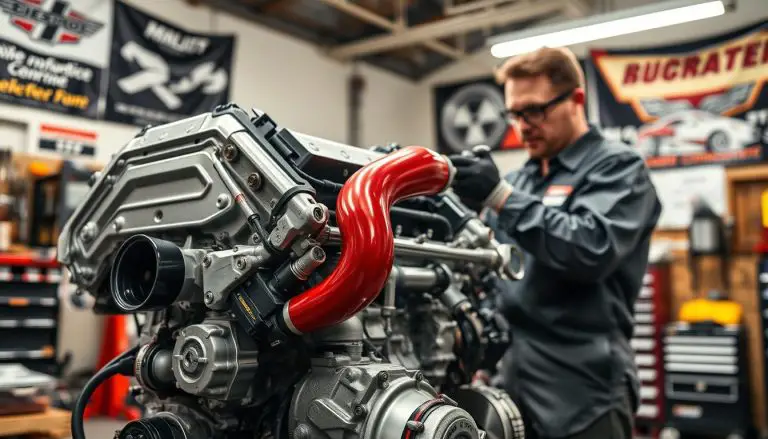
The Chevrolet Small-Block V8, a stalwart in automotive performance for decades, presents two significant iterations: the LS Engine and the LT Engine. These engines have captivated the attention of car aficionados and builders alike, each with its distinct attributes and capabilities.
The LS Engine, celebrated for its versatility and widespread adoption, has emerged as a preferred choice for engine swap projects. In contrast, the LT Engine embodies a more contemporary approach, showcasing advancements in technology and performance.
This article endeavors to offer a detailed comparison between the LS and LT Engines, delving into their pros and cons to facilitate an informed decision regarding which engine aligns with your requirements.
Key Takeaways
- Overview of LS and LT Engines
- Key differences between the two engines
- Performance and technological advancements
- Considerations for choosing between LS and LT Engines
- Implications for engine swap projects and automotive enthusiasts
Understanding the LS and LT Engine Platforms
The Chevrolet Small-Block V8 engines have traversed a trajectory of technological advancement, epitomized by the LS and LT series. This narrative is a testament to the relentless pursuit of excellence, fueled by innovations and shifts in consumer preferences.
The Evolution of Chevrolet’s Small-Block V8 Engines
Since its inception in the 1950s, the Chevrolet Small-Block V8 engine has been a quintessential symbol of American automotive prowess. The LS and LT engines, introduced in the late 1990s and more recently, respectively, signify a paradigm shift. The LS engine distinguished itself with its aluminum engine block and sophisticated engine management systems. The LT engine, a subsequent refinement, incorporates direct fuel injection and advanced engine controls, further enhancing its capabilities.

Key Technological Differences
The LS and LT engines, though sharing a common lineage, exhibit notable technological disparities. The LS engine is renowned for its lightweight construction and high-performance attributes, resonating with engine builders and enthusiasts. In contrast, the LT engine integrates variable displacement technology in certain variants, boosting its efficiency and performance. These innovations reflect Chevrolet’s dedication to advancing performance and efficiency.
General Market Positioning
In the market, the LS and LT engines are categorized as high-performance variants, catering to a broad spectrum of consumers. The LS engine, with its robust aftermarket support, is often preferred for its modification potential. The LT engine, on the other hand, represents a more contemporary and efficient choice, aligning with the current demand for enhanced fuel economy and reduced emissions.
The LS Engine: A Closer Look
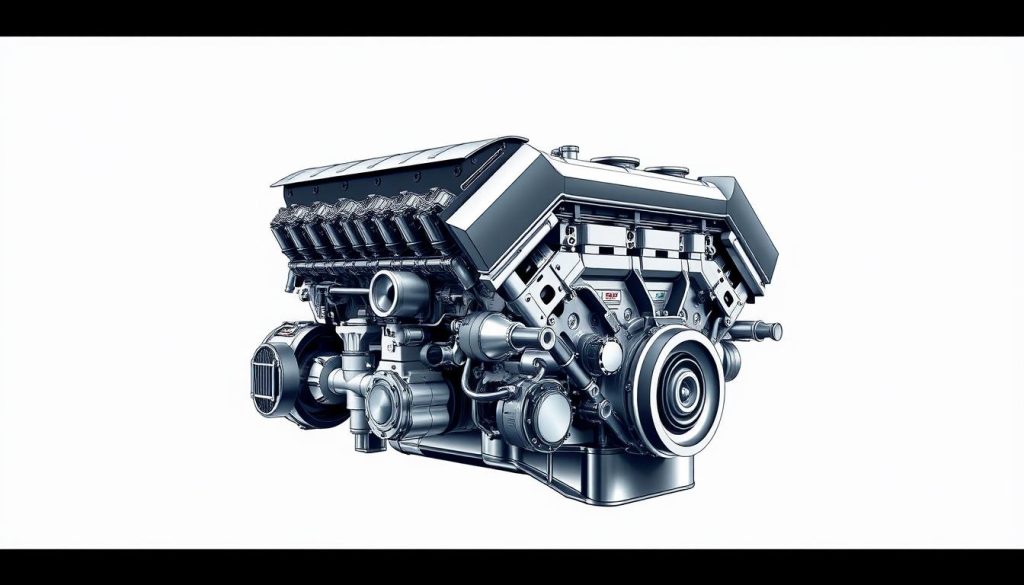
The LS engine, a cornerstone in the automotive sector, has garnered a significant following. Its versatility and robust performance have cemented its reputation. Developed by General Motors, the LS engine series is celebrated for its compact design, lightweight construction, and impressive power output.
LS Engine Specifications and Popular Variants
The LS engine series spans a range of displacements, from 4.8L to 7.0L, catering to diverse performance requirements. Notable variants include the LS1, LS6, and LQ9, each distinguished by its unique specifications and applications.
- LS1: Renowned for its 5.7L displacement and 350 horsepower, the LS1 was employed in vehicles such as the Chevrolet Corvette.
- LS6: A high-performance iteration with 405 horsepower, the LS6 was featured in the Chevrolet Corvette Z06.
- LQ9: With a 6.0L displacement, the LQ9 was utilized in GM trucks and SUVs, offering a harmonious balance of power and torque.
Advantages of the LS Platform
The LS engine boasts several advantages:
- Compact Design: Its compact design makes it an ideal candidate for engine swaps and modifications.
- Lightweight Construction: Contributing to better power-to-weight ratios, its lightweight construction enhances overall vehicle performance.
- Strong Aftermarket Support: The LS engine enjoys a vast aftermarket, providing a plethora of performance parts and accessories.
Limitations and Drawbacks of LS Engines
Despite its numerous advantages, the LS engine also presents certain limitations:
- Complexity: Its advanced technology can render it more complex to repair and maintain for some users.
- Cost: High-performance variants and aftermarket parts can be prohibitively expensive.
Common Applications and Vehicles
The LS engine has been employed in a variety of vehicles, including:
- Chevrolet Corvette: The LS1 and LS6 engines were prominently featured in various Corvette models.
- GM Trucks and SUVs: Engines like the LQ9 were used in trucks and SUVs, providing robust performance.
- Aftermarket Projects: Its popularity in engine swap projects stems from its compact size and high performance capabilities.
The LT Engine: Modern Innovation
The LT engine marks a significant advancement in modern engine technology, building upon the LS engine’s foundation. It incorporates advanced features and improvements, appealing to automotive enthusiasts and manufacturers. This new generation of engines represents a leap forward in engine technology.
Specifications and Key Variants
The LT engine comes in several variants, each with specifications tailored to different applications. Key variants include the LT1, LT2, and LT4, with displacements ranging from 6.2L to 6.6L. These engines boast direct injection, variable valve timing, and advanced engine management systems. These features optimize performance and efficiency.
| Engine Variant | Displacement | Horsepower | Torque |
|---|---|---|---|
| LT1 | 6.2L | 460 HP | 465 lb-ft |
| LT2 | 6.2L | 490 HP | 470 lb-ft |
| LT4 | 6.2L | 640 HP | 630 lb-ft |
Advantages of the LT Platform
The LT engine surpasses its predecessor in several areas, including improved fuel efficiency, increased power output, and enhanced engine reliability. The incorporation of advanced materials and technologies, such as aluminum engine blocks and direct fuel injection, underpins these improvements.
“The LT engine’s advanced technology and design make it an attractive option for those seeking a balance between performance and efficiency.”
Limitations and Drawbacks
Despite its advancements, the LT engine faces limitations. Users have reported higher maintenance costs compared to the LS engine, attributed to the complexity of its modern technologies. The LT engine’s advanced systems also pose challenges for repair, requiring specialized knowledge.
Common Applications and Vehicles
The LT engine is utilized in various vehicles, including the Chevrolet Camaro, Corvette, and some GM trucks. Its versatility and performance capabilities make it suitable for a range of applications, from daily driving to high-performance driving.
LS vs LT Engine: Head-to-Head Comparison
Engaging in a comprehensive analysis of the LS and LT engine platforms necessitates a detailed examination of their performance, efficiency, and other critical aspects. This evaluation is pivotal in facilitating an informed decision-making process, tailored to meet specific requirements and preferences.
Performance and Power Output
The LS engine is celebrated for its exceptional performance and power output. Its diverse models cater to a broad spectrum of performance needs, with the LS7 engine boasting 505 horsepower, ideal for high-performance applications.
Conversely, the LT engine also showcases impressive performance capabilities, with certain variants incorporating direct injection and advanced engine management systems. The LT1, for instance, generates 455 horsepower, underscoring its suitability for high-performance driving.
Fuel Efficiency and Emissions Standards
The LT engine holds a competitive advantage in terms of fuel efficiency, attributed to its incorporation of direct fuel injection and more efficient engine designs. This results in enhanced fuel economy and reduced emissions.
While the LS engine is renowned for its power, it generally consumes more fuel, a characteristic exacerbated in its higher-performance variants. Notwithstanding, certain LS models have been optimized for improved fuel efficiency, rendering them more economical for everyday use.
| Engine | Fuel Efficiency (mpg) | Emissions Standards |
|---|---|---|
| LS Engine | 15-20 | Meets EPA standards |
| LT Engine | 18-25 | Exceeds EPA standards |
Aftermarket Support and Modification Potential
The LS engine boasts a vast aftermarket support network, with numerous manufacturers offering performance parts and upgrades. This facilitates extensive modification to align with diverse performance objectives.
The LT engine, being relatively newer, is also gaining traction in the aftermarket scene. Despite its comparative lack of historical data, it still presents significant modification potential, driven by the increasing popularity of LT-based vehicles.
Reliability and Longevity
Both engines have demonstrated reliability and longevity, contingent upon proper maintenance. The LS engine has a proven track record, with many units enduring well over 200,000 miles.
The LT engine, with its modern engineering and materials, is anticipated to match or surpass the LS engine’s longevity. Adherence to manufacturer guidelines and regular maintenance are paramount for maximizing its lifespan.
Cost Considerations: Purchase, Installation, and Maintenance
The cost of acquiring and installing an LS or LT engine varies significantly, influenced by the specific model, condition, and application. Generally, LS engines are more readily available and potentially more cost-effective for initial purchase.
Maintenance costs for both engines are relatively comparable, with the LT engine potentially incurring slightly higher expenses due to its more complex modern technology. Notwithstanding, its potentially superior fuel efficiency could offset some of these costs over time.
Conclusion: Which Engine Is Right for You?
In the context of engine selection, a thorough understanding of your specific requirements is paramount. The LS engine, renowned for its robust aftermarket support and versatility across various applications, strikes a commendable balance between performance and economic viability. In contrast, the LT engine presents a suite of modern technological enhancements, superior fuel efficiency, and elevated performance capabilities, catering to those who prioritize these attributes.
Engaging in a meticulous evaluation of your vehicle’s intended application, financial constraints, and desired technological sophistication is essential. This process enables a well-informed decision-making regarding engine selection, aligning with your specific needs. Whether your focus lies in raw power, fuel economy, or dependability, each engine variant offers distinct benefits. A comprehensive analysis of these factors ensures the selection of an engine that not only meets but exceeds your expectations, culminating in an enhanced driving experience.
The process of engine selection necessitates a detailed examination of your requirements and preferences. By meticulously considering the attributes of both the LS and LT engines, you can make a choice that fulfills your expectations and elevates your driving experience to new heights.
FAQ
What are the main differences between the LS and LT engines?
The LS and LT engines exhibit distinct technological disparities, manifesting in their design and performance capabilities. The LT engine incorporates contemporary innovations such as direct injection and an enhanced design, positioning it as a paragon of efficiency. In contrast, the LS engine is celebrated for its dependability and robust aftermarket support, making it a preferred choice for many.
Which engine is more fuel-efficient, the LS or LT?
The LT engine is generally more fuel-efficient, attributed to its cutting-edge technology, including direct injection and advanced engine management systems. Yet, the actual fuel efficiency is contingent upon the specific application, vehicle, and driving conditions, rendering it variable.
Are LS engines still a good choice for performance upgrades?
Affirmatively, LS engines remain a favored option for performance enhancements, thanks to their extensive aftermarket support. Their adaptability for significant power increases makes them a staple among enthusiasts and professionals alike.
What are the cost implications of choosing an LT engine over an LS engine?
The LT engine’s cost can surpass that of the LS, notably for newer models or specific variants. A comprehensive evaluation of the total cost, encompassing purchase, installation, and maintenance, is imperative to determine the most economical choice based on individual circumstances and requirements.
Can I swap an LS engine into a vehicle that originally came with an LT engine, or vice versa?
Engine swapping between LS and LT configurations is feasible but demands meticulous consideration of compatibility, encompassing engine mounts, wiring, and other ancillary systems. Professional consultation is advisable to gauge the feasibility and complexity of such an endeavor.
How do the LS and LT engines compare in terms of reliability?
Both LS and LT engines are renowned for their reliability, with the LT engine’s contemporary design and technology potentially offering advantages in terms of reduced maintenance and extended longevity. Notwithstanding, individual experiences are influenced by maintenance practices, driving conditions, and specific engine variants.
Are there significant differences in maintenance requirements between the LS and LT engines?
Maintenance requirements for both engines are similar, yet the LT engine’s advanced technology may necessitate specialized tools and expertise for certain repairs. The LS engine, with its well-established aftermarket, may offer more straightforward maintenance and repair options.

![5.3 vs 6.2 Engine [Which Chevy V8 is Better?]](https://automotivesimple.com/wp-content/uploads/2026/03/5.3-vs-6.2-Engine-Which-Chevy-V8-is-Better-768x439.jpeg)