Repairing a damaged windshield can be a cost-effective solution, especially when dealing with minor chips. A windshield chip, if left unrepaired, can spread and compromise the structural integrity of your vehicle’s windshield. Fortunately, with the right techniques and materials, you can undertake this repair yourself.
For those unfamiliar with the process, it can seem daunting. However, our step-by-step guide will walk you through the process, making it manageable. Whether you’re a seasoned DIY enthusiast or a novice, you’ll find the information you need to successfully repair your windshield. For more complex issues or larger damages, such as those requiring a full windshield replacement like in a Toyota Tacoma, it’s advisable to seek professional help.
Key Takeaways
- Assessing the damage is crucial before starting the repair.
- Cleaning the area around the chip is essential for a successful repair.
- Using the right repair kit can make a significant difference.
- Following a step-by-step guide can simplify the process.
- Knowing when to seek professional help is important.
Understanding Windshield Chips and Their Risks
The integrity of a vehicle’s windshield is compromised when chips occur, posing potential risks. Windshield chips are a common problem that can arise from various factors, including road debris and extreme weather conditions.
Types of Windshield Damage
Windshield damage can manifest in different forms, such as chips, cracks, and pits. Chips are typically small and circular, while cracks can be longer and more varied in shape. Understanding the type of damage is crucial for determining the appropriate repair method.
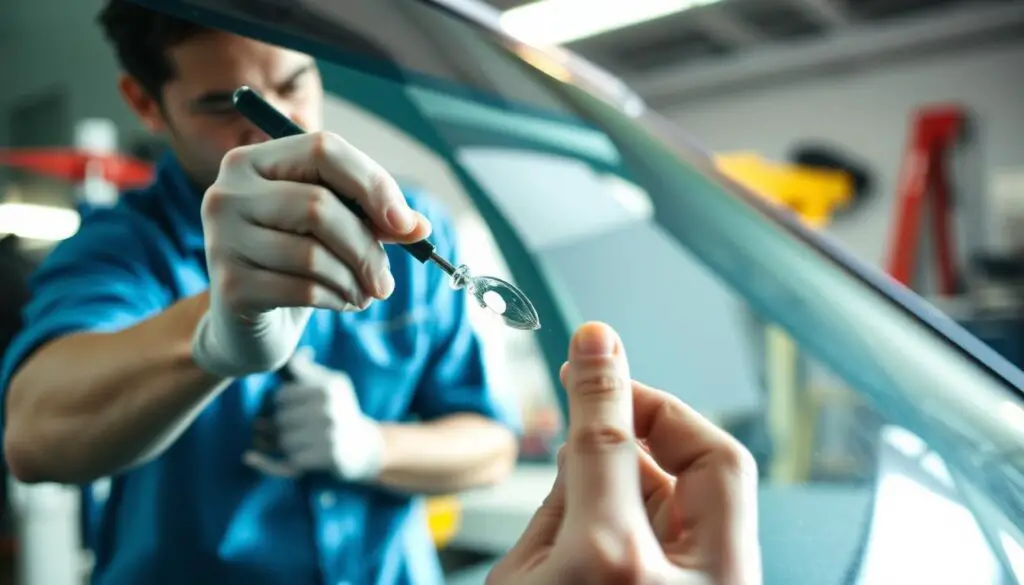
Why Immediate Repair Is Important
Immediate repair of windshield chips is vital to prevent further damage. As noted by auto repair experts, “Delaying repair can lead to the chip spreading into a crack, which is more difficult and costly to fix.”
How Chips Can Spread into Cracks
Chips can spread into cracks due to various factors, including temperature fluctuations, road vibrations, and further debris impact. If not addressed, a small chip can quickly become a larger crack, compromising the windshield’s integrity.
Safety Implications of Damaged Windshields
Damaged windshields pose significant safety risks. A compromised windshield can impair the driver’s visibility and, in the event of an accident, may fail to provide the necessary structural support, potentially leading to injuries. As
“A damaged windshield is not just a cosmetic issue; it’s a safety concern that requires prompt attention.”
By understanding the risks associated with windshield chips and taking prompt action to repair them, drivers can ensure their safety on the road and prevent more costly repairs down the line.
Assessing If You Can Fix the Chip Yourself
The decision to repair a windshield chip personally or seek professional help hinges on a few critical considerations. When evaluating whether you can fix the chip yourself, several factors come into play.
Size and Depth Considerations
The size and depth of the chip are crucial in determining if a DIY repair is feasible. Chips that are smaller than a quarter and not too deep can often be repaired at home. However, larger or deeper chips may require professional attention.
Location of the Chip
The location of the chip is another important factor. Chips directly in the driver’s line of sight or on the edge of the windshield are generally more challenging to repair and may necessitate professional help.

Age of the Damage
The age of the damage also plays a significant role. Fresh chips are typically easier to repair than older ones, which may have become contaminated with dirt and debris.
When to Seek Professional Repair Instead
If you’re unsure about any aspect of the repair or if the chip is in a critical location, it’s best to seek professional help. Professionals have the necessary tools and expertise to ensure a safe and effective repair.
| Factor | DIY Feasible | Professional Recommended |
|---|---|---|
| Size | Less than a quarter | Larger than a quarter |
| Location | Away from driver’s line of sight | In driver’s line of sight or on edge |
| Age | Fresh damage | Old or contaminated damage |
Materials and Tools Needed for Windshield Repair
When it comes to repairing a small chip in your windshield, having the right materials and tools is crucial for a successful DIY windshield repair. The process requires attention to detail and the correct equipment to ensure a durable and safe fix.
Comparing Windshield Repair Kits
Windshield repair kits are available in various configurations, each containing different materials and tools. A typical kit includes a resin, applicator, and curing strip. When comparing kits, consider the quality of the resin, ease of application, and the kit’s compatibility with your windshield type.
| Kit Features | Basic Kit | Advanced Kit |
|---|---|---|
| Resin Quality | Standard | High-grade |
| Ease of Use | Simple Application | Adjustable Settings |
| Additional Tools | Minimal | Includes extra applicators and curing strips |
Essential Tools for the Job
For a successful chip repair, you’ll need a few essential tools. These include a windshield repair kit, a clean cloth or paper towels, and a razor blade or scraper for removing debris.
Optional Equipment That Makes Repair Easier
Optional equipment can enhance the repair process. Consider using a windshield repair bridge for better stability, a UV curing lamp for faster resin curing, and safety gloves to protect your hands from chemicals.
Safety Gear Recommendations
Safety should be a priority during the repair. Wear protective gloves and safety glasses to prevent injury from sharp objects or chemical splashes. Ensure your work area is well-ventilated to avoid inhaling fumes from the resin.
Preparing Your Vehicle and Work Area
A well-prepared vehicle and work area are essential for a successful windshield chip fix. Before you start the repair process, ensure that your environment is conducive to a quality fix.
Selecting the Ideal Temperature and Environment
The temperature and environment play a crucial role in repairing windshield damage. Ideally, the repair should be done in a dry, cool place, away from direct sunlight. Extreme temperatures can affect the repair resin’s curing process, so it’s best to work in temperatures between 60°F to 90°F (15°C to 32°C).
Properly Cleaning the Damaged Area
Cleaning the damaged area is vital for a successful repair. Use a glass cleaner and a lint-free cloth to remove any dirt or debris. This ensures that the repair resin adheres properly to the glass.
Positioning Your Vehicle for Optimal Repair
Position your vehicle in a way that allows easy access to the damaged area. If the chip is on the driver’s side, park in a manner that gives you comfortable access. You may need to adjust the vehicle’s position or use a different angle to facilitate the repair.
Protecting Surrounding Car Surfaces
Protect the surrounding surfaces of your vehicle from accidental spills or drips of the repair resin. Use masking tape and paper or a protective cover to shield the paint and trim around the windshield.
By following these steps, you can ensure a clean, safe, and effective windshield chip fix.
How to Fix Small Chip in Windshield: The Repair Process
The process of repairing a small windshield chip involves several key steps that, when followed correctly, can restore your windshield to its original condition. This guide will walk you through the setup of the repair kit, application of the resin, creation of proper suction, and curing of the resin.
Setting Up the Repair Kit
Before you start the repair, it’s essential to set up your windshield repair kit correctly. This involves assembling the applicator and attaching it to the windshield.
Assembling the Applicator
To assemble the applicator, follow the instructions provided with your repair kit. Typically, this involves attaching the suction cup to the bridge, ensuring it’s securely locked in place.
Attaching to the Windshield
Carefully position the applicator over the chip, ensuring it’s centered. Gently press the suction cup onto the windshield, making sure it’s secure and even. Proper alignment is crucial for a successful repair.
Applying the Resin
With the applicator in place, the next step is to apply the resin to the chip. This involves using the right injection techniques and managing the pressure.
Injection Techniques
Using the syringe provided with the kit, inject the resin into the chip, starting with a small amount. It’s better to start with less resin and add more as needed. Ensure the resin fills the chip completely.
Managing Pressure
Apply gentle pressure to the applicator to ensure the resin spreads evenly throughout the chip. Be cautious not to apply too much pressure, which can cause the resin to spread beyond the damaged area.
Creating Proper Suction
Once the resin is applied, creating proper suction is vital to draw the resin into the chip, ensuring a thorough repair. Make sure the suction cup is firmly attached and adjust as necessary to maintain suction.
Curing the Resin
The final step in the repair process is curing the resin. This can be done using a UV light, and the timing is crucial.
UV Light Application
Place the UV light over the repaired area, following the manufacturer’s instructions for distance and duration. UV light is essential for curing the resin properly.
Timing Considerations
The curing time will depend on the type of resin and UV light used. Typically, it ranges from a few minutes to half an hour. Be patient and allow the full recommended time for the resin to cure completely.
Finishing Touches and Clean-Up
Once the resin is applied, finishing touches are necessary to ensure a seamless repair. This stage is crucial for the overall appearance and durability of the fix.
Removing Excess Resin Safely
After the resin has cured, use a razor blade to carefully remove any excess resin from the surface. Hold the blade at a shallow angle to avoid scratching the windshield.
Polishing the Repaired Area
To restore clarity and shine, polish the repaired area using a glass polish. Apply the polish with a soft cloth, rubbing in a circular motion.
Final Inspection Techniques
Inspect the repair under different lighting conditions to check for any remaining imperfections. Ensure the repair is not visible and does not obstruct the driver’s view.
When to Wait Before Driving
It’s recommended to wait at least 30 minutes to an hour after completing the repair before driving. This allows the resin to fully cure.
| Task | Time Required | Tools Needed |
|---|---|---|
| Removing Excess Resin | 5 minutes | Razor Blade |
| Polishing the Area | 10 minutes | Glass Polish, Soft Cloth |
| Final Inspection | 5 minutes | – |
By following these steps, you can ensure a professional-looking windshield chip fix, enhancing both the safety and appearance of your vehicle.
Preventing Future Windshield Damage
Preventing windshield damage is crucial for maintaining your vehicle’s integrity and ensuring your safety on the road. By adopting a few simple habits, you can significantly reduce the risk of chips and cracks.
Safe Following Distances
Maintaining a safe following distance is one of the most effective ways to prevent windshield damage. This allows you to avoid debris kicked up by the vehicle in front of you. It’s recommended to keep at least a 3- to 4-second gap.
Avoiding Gravel Roads When Possible
Gravel roads are notorious for causing windshield damage due to the loose stones and debris. When possible, opt for paved roads to minimize the risk of damage.
Temperature Management Practices
Extreme temperatures can cause windshield stress, making it more susceptible to damage. Using sunshades and parking in shaded areas can help manage temperature fluctuations.
Windshield Protective Products
There are various windshield protective products available, such as windshield films and coatings, that can provide an additional layer of protection against chips and cracks.
Conclusion
Repairing a small windshield chip is a straightforward process that can significantly enhance your vehicle’s safety and appearance. By following the steps outlined in this guide, you can effectively fix minor damage and prevent it from spreading into more extensive cracks. A successful windshield chip fix not only restores your windshield’s integrity but also ensures a clear view while driving.
Properly repairing windshield damage is crucial for maintaining your vehicle’s overall condition. By addressing chips promptly, you can avoid more costly repairs down the line. The process involves assessing the damage, preparing your vehicle, and applying a repair kit. With the right tools and a bit of patience, you can achieve professional-looking results.
By taking the time to learn how to fix small chips in your windshield, you can enjoy a safer and more enjoyable driving experience. Regular maintenance, including checking for and repairing windshield damage, is an essential part of vehicle care. Take the first step towards a safer drive by applying the knowledge gained from this guide to your windshield repair needs.
FAQ
What is the best way to repair a small windshield chip?
The best way to repair a small windshield chip is by using a windshield repair kit, which typically includes a resin that is injected into the chip to fill it and prevent it from spreading.
Can I drive my vehicle immediately after repairing a windshield chip?
No, it’s recommended to wait for a certain period of time, usually specified in the repair kit instructions, to allow the resin to cure completely before driving your vehicle.
How do I know if a windshield chip can be repaired or if it needs to be replaced?
The decision to repair or replace a windshield chip depends on its size, location, and depth. Generally, chips smaller than a quarter and not in the driver’s line of sight can be repaired, while larger or more strategically located chips may require replacement.
What are the risks of not repairing a windshield chip?
Failing to repair a windshield chip can lead to the chip spreading into a larger crack, which can impair visibility and compromise the structural integrity of the windshield, potentially leading to more costly repairs or even a safety hazard.
Can extreme temperatures affect the windshield repair process?
Yes, extreme temperatures can affect the repair process. It’s generally recommended to perform repairs in moderate temperatures, as extreme heat or cold can affect the resin’s curing process.
Are there any preventive measures I can take to avoid future windshield damage?
Yes, maintaining a safe following distance, avoiding gravel roads when possible, managing temperature extremes, and using windshield protective products can help prevent future windshield damage.
How long does a typical windshield repair take?
A typical windshield repair can take anywhere from 30 minutes to an hour, depending on the size and complexity of the chip, as well as the specific repair kit being used.
Is it necessary to use a UV light to cure the resin during windshield repair?
Yes, many windshield repair kits require the use of a UV light to cure the resin. The UV light helps to harden the resin, ensuring a strong and durable repair.