Selecting the proper pipes for your vehicle can transform how it sounds and performs. Many truck owners prefer a single exhaust system for simple tasks and daily commuting. This choice assists the engine in running smoothly while keeping overall weight low.
On the other hand, a dual exhaust system offers a bold look and a deep growl. This configuration helps high-power engines breathe better during fast acceleration. This remains a popular upgrade for those wanting a sportier feel and better style on the road.
This comparison helps you decide which path fits your budget and goals. We examine maintenance costs, power gains, and long-term durability for every American driver. Finding the right balance helps ensure a happy driving experience today.
Key Takeaways
- Better gas mileage for lighter vehicle setups.
- Enhanced engine sound and aggressive style.
- Potential horsepower increases for larger motors.
- Differences in installation and part prices.
- Impact on total weight and flow.
Understanding Single Exhaust Systems
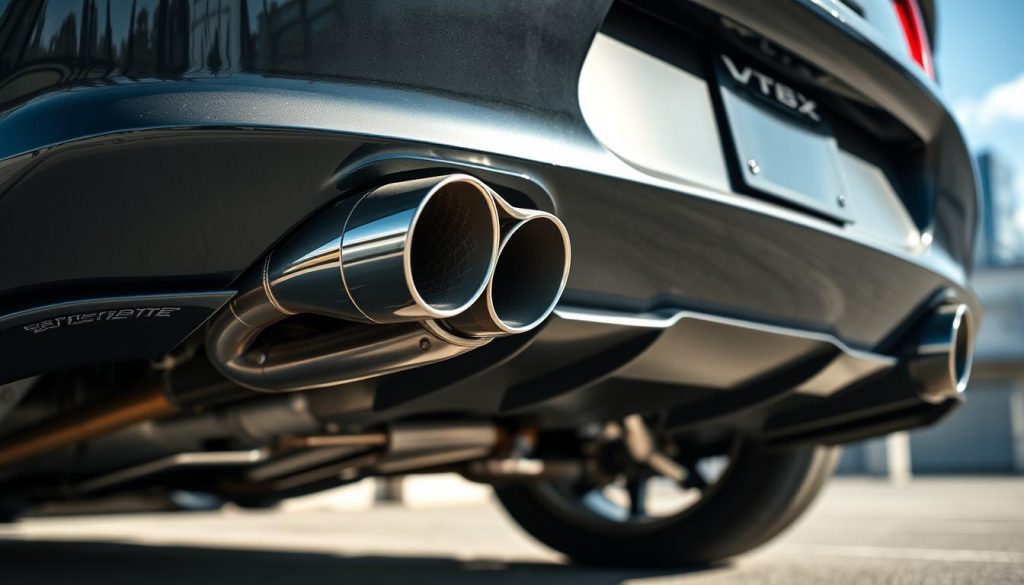
A single exhaust system is characterized by its simplicity, utilizing one exhaust pipe to manage the exhaust gases from the engine. This setup is common in many vehicles and is designed to provide a straightforward solution for exhaust gas management.
What Is a Single Exhaust System?
A single exhaust system consists of a single pipe that collects exhaust gases from the engine’s cylinders and directs them away from the vehicle. This system typically includes a catalytic converter to reduce emissions and a muffler to minimize noise.
The simplicity of a single exhaust system makes it a cost-effective option for many vehicle manufacturers. It is also relatively easier to maintain and repair compared to more complex exhaust configurations.
How Single Exhaust Systems Work
The operation of a single exhaust system begins with the collection of exhaust gases from the engine’s cylinders. These gases are then channeled through the exhaust manifold into a single pipe, which carries them through the catalytic converter and muffler before releasing them into the atmosphere.
The efficiency of a single exhaust system depends on various factors, including the design of the exhaust manifold, the diameter and length of the exhaust pipe, and the presence of any bends or restrictions in the system.
Advantages of Single Exhaust Systems
Single exhaust systems offer several benefits, including:
- Cost-effectiveness: They are generally less expensive to manufacture and install.
- Simplicity: Fewer components mean less complexity, making maintenance and repairs more straightforward.
- Weight reduction: With fewer components, the overall weight of the vehicle can be reduced, potentially improving fuel efficiency.
Disadvantages of Single Exhaust Systems
Despite their advantages, single exhaust systems also have some drawbacks:
- Performance limitations: A single exhaust system can be restrictive, potentially limiting the engine’s performance, especially in high-performance vehicles.
- Increased backpressure: The single pipe configuration can lead to increased backpressure, which may negatively affect engine efficiency and power output.
Understanding Dual Exhaust Systems
In the realm of automotive performance, dual exhaust systems stand out for their ability to potentially increase horsepower and enhance the overall driving experience. A dual exhaust system is designed to improve engine efficiency by providing a more straightforward path for exhaust gases to exit the engine.
What Is a Dual Exhaust System?
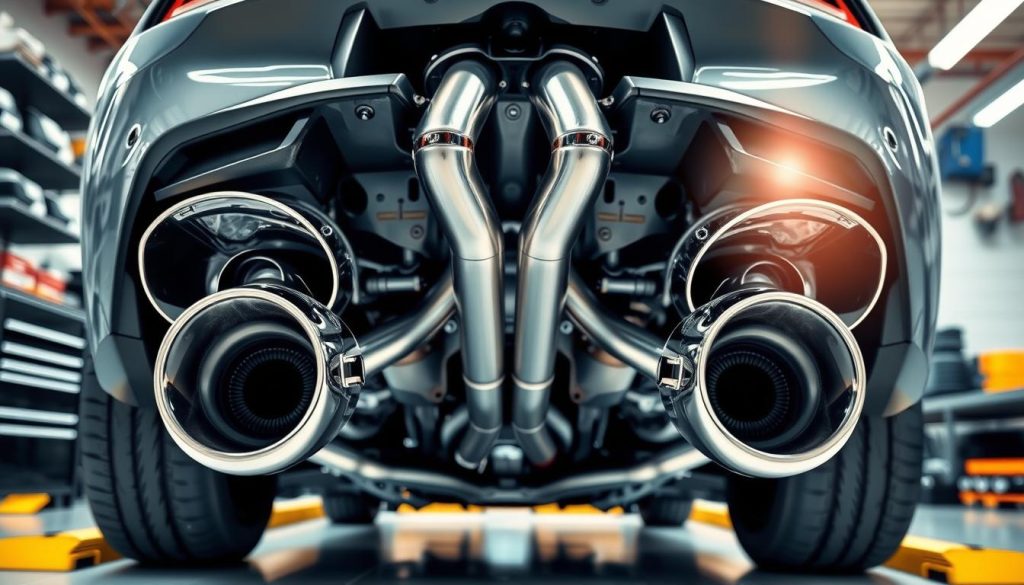
A dual exhaust system is characterized by the use of two separate exhaust pipes and mufflers, one for each bank of the engine in a V-type configuration, or sometimes simply as a design choice for other engine types. This setup is distinct from a single exhaust system, where all exhaust gases are funneled through a single pipe and muffler.
Types of Dual Exhaust Configurations
Dual exhaust systems come in various configurations, each with its unique characteristics and benefits.
True Dual Exhaust Systems
A true dual exhaust system features two completely separate exhaust paths from the headers or exhaust manifolds all the way to the rear of the vehicle, with no connection between the two exhaust streams until they exit. This setup is prized for its potential to significantly improve engine performance.
Dual Rear Exit Exhaust Systems
Dual rear exit exhaust systems, on the other hand, may or may not have completely separate exhaust paths internally but are characterized by having two exhaust tips at the rear, enhancing the vehicle’s appearance and sometimes its sound.
Advantages of Dual Exhaust Systems
Dual exhaust systems offer several advantages, including:
- Improved Performance: By reducing backpressure and improving exhaust flow, dual exhaust systems can potentially increase horsepower and torque.
- Enhanced Sound: Many enthusiasts prefer the sound of a dual exhaust system, which can be deeper and more aggressive.
- Aesthetic Appeal: The dual exhaust tips can add to the vehicle’s visual appeal, making it look more sporty or performance-oriented.
| Configuration | Performance Impact | Aesthetic Impact |
|---|---|---|
| True Dual Exhaust | Significant potential for performance gain | High |
| Dual Rear Exit | Variable, depends on internal configuration | High |
Disadvantages of Dual Exhaust Systems
While dual exhaust systems offer several benefits, they also have some drawbacks:
- Increased Cost: Dual exhaust systems are generally more expensive to purchase and install than single exhaust systems.
- Complexity: With more components, there’s potentially more that can go wrong, and maintenance might be more complicated.
Understanding these aspects is crucial for vehicle owners considering an upgrade to a dual exhaust system. By weighing the advantages against the disadvantages, individuals can make an informed decision that best suits their needs and preferences.
Performance Comparison: Single vs Dual Exhaust
The choice between single and dual exhaust systems significantly impacts a vehicle’s performance, with each configuration offering distinct advantages and disadvantages. A comprehensive comparison of these systems is essential to understand their effects on vehicle performance.
Horsepower and Torque Differences
One of the primary considerations when evaluating exhaust systems is their impact on horsepower and torque. Dual exhaust systems are often associated with increased power output due to reduced backpressure and improved exhaust flow. For instance, a study on the best exhaust for 3.6 Colorado revealed that dual exhaust systems can provide a noticeable increase in horsepower and torque compared to single exhaust setups.
In contrast, single exhaust systems, when properly tuned, can also offer competitive performance. The key lies in the design and engineering of the exhaust system, including factors such as pipe diameter, muffler design, and catalytic converter efficiency.
Engine Efficiency and Backpressure Management
Engine efficiency is closely linked to backpressure management. Backpressure refers to the resistance that the exhaust system presents to the engine’s exhaust gases. Dual exhaust systems typically reduce backpressure by providing two pathways for exhaust gases to exit, potentially leading to improved engine efficiency and performance.
However, a well-designed single exhaust system can also manage backpressure effectively, especially in smaller engines where the additional complexity and cost of a dual exhaust system may not be justified.
Exhaust Flow and Scavenging Effect
The scavenging effect is another critical aspect of exhaust system performance. It refers to the phenomenon where the exhaust gases from one cylinder help to extract exhaust gases from another cylinder, improving overall engine efficiency. Dual exhaust systems can enhance the scavenging effect, particularly in V6 and V8 engines, by separating the exhaust paths for each bank of cylinders.
Sound Quality and Volume
Lastly, the choice between single and dual exhaust systems affects the sound quality and volume. Dual exhaust systems often produce a more aggressive and louder exhaust note, which can be a desirable trait for some vehicle enthusiasts. On the other hand, single exhaust systems can be tuned to produce a deeper, more subdued sound.
The sound characteristics of an exhaust system are influenced by various factors, including muffler design and the presence of resonators. As such, both single and dual exhaust systems can be customized to achieve the desired sound profile.
Cost Analysis: Installation and Maintenance
The cost analysis of single and dual exhaust systems involves several key factors, including installation, maintenance, and fuel efficiency. When evaluating these systems, it’s crucial to consider not only the initial costs but also the long-term financial implications.
Initial Purchase and Installation Costs
The initial purchase price of a dual exhaust system is typically higher than that of a single exhaust system due to the additional components required, such as extra exhaust pipes, mufflers, and potentially more complex installation hardware. Installation costs can also vary significantly depending on the vehicle’s make and model, as well as the exhaust system’s complexity.
For instance, installing a dual exhaust system on a high-performance vehicle may require additional labor and customization, increasing the overall cost. In contrast, a single exhaust system might be more straightforward to install, potentially reducing labor costs.
Long-Term Maintenance and Repair Expenses
Maintenance and repair costs are another critical aspect to consider. Dual exhaust systems, with their additional components, may require more frequent maintenance and potentially higher repair costs over time. However, the redundancy of having two exhaust paths can sometimes mitigate the impact of a failure in one system, allowing the vehicle to continue operating until repairs can be made.
On the other hand, single exhaust systems, being less complex, might have lower maintenance costs. Yet, if a component fails, the vehicle may be more significantly impacted, potentially leading to higher repair costs or longer downtime.
Fuel Efficiency Impact
Fuel efficiency is a vital consideration for many vehicle owners. While the exhaust system itself does not directly consume fuel, its efficiency can impact the engine’s overall performance and, consequently, fuel consumption. A well-designed dual exhaust system can potentially improve engine efficiency by reducing backpressure and enhancing scavenging, which might lead to better fuel economy under certain driving conditions.
Conversely, a single exhaust system, if not properly optimized, might result in increased backpressure, potentially decreasing fuel efficiency. However, modern single exhaust systems are often designed to minimize such effects.
Resale Value and Aesthetic Appeal
The choice between a single and dual exhaust system can also affect a vehicle’s resale value and aesthetic appeal. Dual exhaust systems are often associated with high-performance vehicles and can enhance a vehicle’s appearance, potentially increasing its appeal to buyers looking for performance upgrades.
On the other hand, a single exhaust system, especially if it’s a standard or upgraded OEM configuration, might be viewed more favorably by buyers seeking reliability and lower maintenance costs. The perceived value of each system type can vary based on the target market and vehicle type.
Single Exhaust vs Dual Exhaust: Which Exhaust System Is Best?
When it comes to selecting the best exhaust system, understanding the differences between single and dual exhaust configurations is crucial. The choice between a single exhaust and a dual exhaust system is not straightforward and depends on various factors including the vehicle’s engine size, cylinder configuration, type, and intended use.
Best Scenarios for Single Exhaust Systems
Single exhaust systems are often preferred for their simplicity and cost-effectiveness. They are typically suited for smaller vehicles with less powerful engines, where the exhaust flow is not overly demanding.
Key benefits of single exhaust systems include lower purchase and installation costs, as well as reduced maintenance expenses over time.
Best Scenarios for Dual Exhaust Systems
Dual exhaust systems, on the other hand, are generally favored for their ability to improve engine performance by reducing backpressure and enhancing exhaust flow. They are particularly beneficial for larger vehicles or those with high-performance engines.
The advantages of dual exhaust systems include improved horsepower and torque, better engine efficiency, and a more aggressive sound quality.
Engine Size and Cylinder Configuration Considerations
The size of the engine and its cylinder configuration play significant roles in determining the most appropriate exhaust system. Larger engines or those with more cylinders can often benefit from dual exhaust systems due to their increased exhaust flow requirements.
| Engine Size/Cylinder Configuration | Recommended Exhaust System | Reason |
|---|---|---|
| Small Engine ( | Single Exhaust | Cost-effective, sufficient for lower exhaust flow |
| Medium Engine (2.0L – 3.5L, 6 cylinders) | Single or Dual Exhaust | Depends on performance requirements and vehicle type |
| Large Engine (>= 3.5L, 8 cylinders or more) | Dual Exhaust | Improved performance, reduced backpressure |
Vehicle Type and Intended Use
The type of vehicle and its intended use are also critical factors. For instance, vehicles used for racing or high-performance driving typically benefit from dual exhaust systems, while standard commuter vehicles might be adequately served by single exhaust systems.
Conclusion
Choosing between a single exhaust and a dual exhaust system depends on several factors, including performance needs, budget constraints, and personal preferences. The exhaust system comparison highlights that single exhaust systems are generally more cost-effective and simpler to maintain, making them suitable for most standard vehicles.
In contrast, dual exhaust systems offer enhanced performance, particularly for high-performance vehicles or those with larger engines. The single exhaust vs dual exhaust debate ultimately comes down to the specific requirements of the vehicle and its intended use.
By understanding the advantages and disadvantages of each system, vehicle owners can make an informed decision that aligns with their needs. Whether prioritizing performance, budget, or aesthetics, selecting the right exhaust system is crucial for optimizing vehicle performance and overall driving experience.
FAQ
Will upgrading to a dual exhaust system significantly increase my vehicle’s horsepower?
Yes, transitioning to a dual exhaust system can increase horsepower and torque by reducing backpressure. By providing two separate paths for exhaust gases to exit, brands like Borla and MagnaFlow allow the engine to “breathe” more freely, which is particularly beneficial for high-performance V8 engines. However, the gains on a standard four-cylinder commuter car may be negligible compared to the increased weight.
What is the primary difference between a “True Dual” exhaust and a dual rear exit system?
A True Dual exhaust system features two entirely independent pipes running from the engine manifolds to the rear bumper, often incorporating an X-pipe or H-pipe to balance pressure. In contrast, a dual rear exit system typically uses a single main pipe that splits into two tips at the muffler. While the dual exit provides a symmetrical aesthetic, the True Dual configuration offers superior exhaust flow and performance benefits.
How does a single exhaust system manage engine backpressure differently than a dual setup?
A single exhaust system is designed to maintain a specific level of backpressure to optimize scavenging, which helps pull exhaust gases out of the cylinder chambers at lower RPMs. This makes single systems highly efficient for daily driving and light-duty trucks. Dual systems, conversely, focus on maximizing flow volume at higher RPMs, which can sometimes result in a slight loss of low-end torque if the pipe diameter is too large.
Is a dual exhaust system more expensive to maintain than a single exhaust?
Generally, yes. Because a dual system doubles the number of components—including catalytic converters, mufflers, and piping—the long-term maintenance and repair expenses are higher. Replacing a worn-out system from a manufacturer like Flowmaster will cost more in parts and labor than a standard single-pipe setup. Furthermore, the added weight of the extra hardware can slightly impact fuel efficiency.
Does the sound quality change between single and dual exhaust configurations?
Absolutely. A single exhaust tends to produce a quieter, more subdued tone suitable for standard passenger vehicles. A dual exhaust system provides that iconic, deep growl often associated with muscle cars and performance trucks. The inclusion of an X-pipe often results in a higher-pitched, exotic tone, while an H-pipe delivers a traditional, low-frequency rumble.
Which exhaust system is better for fuel economy?
For most stock vehicles, a single exhaust system is better for fuel economy. It is lighter and provides the necessary velocity for efficient gas expulsion at cruising speeds. While a dual system can improve efficiency by reducing the engine’s workload at high speeds, the initial cost and the added weight of the secondary pipes usually offset any marginal gains in MPG for the average driver.
Can I install a dual exhaust on a vehicle that originally came with a single exhaust?
Yes, many enthusiasts use aftermarket kits from companies like Gibson Performance to convert single systems to dual. However, you must consider the vehicle type and undercarriage clearance. Professional installation is recommended to ensure that the new piping doesn’t interfere with the fuel tank, spare tire, or suspension components, and to ensure the mandrel bending of the pipes maintains optimal flow.