Proper engine maintenance is crucial for the longevity and performance of your vehicle. Two products often used in this process are starting fluid and carb cleaner, each serving distinct purposes.
While both are used to address issues related to engine performance, they have different applications. Understanding the differences between them is essential for effective engine maintenance.
Key Takeaways
- Starting fluid and carb cleaner are used for different engine maintenance tasks.
- Understanding their distinct purposes is crucial for effective engine care.
- Proper use of these products can enhance engine performance and longevity.
- Misuse can lead to engine damage, emphasizing the need for correct application.
- Regular engine maintenance is vital for vehicle health.
Understanding Engine Starting Problems
Understanding the root causes of engine starting issues is crucial for effective troubleshooting. Engine starting problems can manifest in various ways, often leaving vehicle owners perplexed.
Common Cold Weather Starting Issues
Cold weather significantly impacts engine starting. Low temperatures thicken engine oil, making it harder for the engine to turn over. Batteries also lose power in cold conditions, further complicating the starting process.
Fuel System Complications
Fuel system complications are another major cause. Clogged fuel filters or faulty fuel pumps can prevent the proper flow of fuel, while dirty injectors can disrupt the fuel-air mixture, making combustion difficult.
Identifying the Root Cause
To address starting issues, it’s essential to identify the root cause. A systematic check of the battery, starter motor, fuel system, and ignition components can help diagnose the problem accurately.
| Cause | Symptoms | Solution |
|---|---|---|
| Cold Weather | Hard starting, slow crank | Use block heater, change oil to thinner viscosity |
| Fuel System Issues | Engine stalls, hard starting | Check fuel filter, clean or replace fuel injectors |
What Is Starting Fluid?
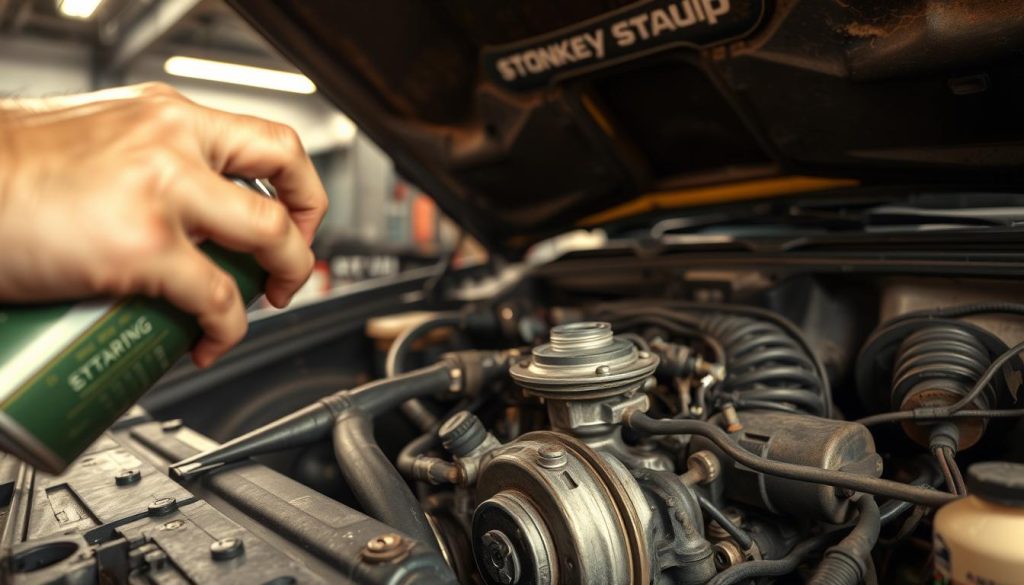
Starting fluid is a volatile liquid used to help engines start more easily. It is particularly useful in cold weather or when the engine is having trouble turning over. The use of starting fluid can be a temporary solution to get the engine running, allowing the driver to diagnose other potential issues.
Chemical Composition and Properties
Starting fluid typically contains ether, a highly volatile compound that ignites easily. The chemical composition is designed to provide a quick burst of energy to help turn the engine over. The properties of starting fluid make it highly flammable, so it must be handled with care.
How Starting Fluid Works in Engines
When sprayed into the engine’s air intake, starting fluid vaporizes quickly, creating a highly combustible mixture. This mixture is then ignited by the spark plugs, providing the necessary energy to start the engine. The use of starting fluid can be particularly helpful in engines that are cold or have been sitting for an extended period.
Proper Application Methods
To use starting fluid effectively, it should be sprayed into the air intake or carburetor. It’s essential to follow the manufacturer’s instructions and use the recommended amount. Overuse can lead to engine damage, so caution is advised. Proper application ensures the engine starts safely without causing harm to the engine components.
What Is Carburetor Cleaner?
Carburetor cleaner is a specialized chemical solution designed to remove deposits and contaminants from carburetors. It is an essential tool in maintaining the performance and longevity of engines that utilize carburetors.
Chemical Composition and Properties
The effectiveness of a carburetor cleaner lies in its chemical composition. Typically, these cleaners contain a mixture of solvents, such as acetone, toluene, or methyl ethyl ketone, which are effective at dissolving varnish, gum, and other deposits. The properties of these chemicals allow them to break down tough contaminants without damaging the carburetor’s components.
How Carb Cleaner Dissolves Deposits
Carburetor cleaner works by dissolving deposits that can clog the carburetor. When sprayed into the carburetor, the cleaner breaks down varnish and gum, allowing for a cleaner flow of fuel. This process helps restore the engine’s performance and efficiency.
Proper Application Techniques
To use carburetor cleaner effectively, it’s crucial to follow the manufacturer’s instructions. Typically, the cleaner is sprayed into the carburetor through the air intake or directly into the carburetor bowl. After application, the engine should be run for a few minutes to allow the cleaner to circulate and take effect.
Starting Fluid Vs Carb Cleaner: Which One Will Save Your Engine?
When it comes to reviving a struggling engine, two products often come into consideration: starting fluid and carb cleaner. Understanding the differences between these two can be crucial in selecting the right solution for your engine troubles.
Key Differences in Formulation and Purpose
Starting fluid and carb cleaner serve distinct purposes. Starting fluid is designed to help engines start more easily, especially in cold weather or when the engine is having trouble turning over. On the other hand, carb cleaner is formulated to dissolve varnish, gum, and other deposits that can clog carburetors and fuel systems.
Effectiveness Comparison for Different Problems
The effectiveness of starting fluid versus carb cleaner largely depends on the nature of the engine problem. For instance, if the issue is a stubborn engine that won’t start, starting fluid might be the more effective solution. However, if the problem lies in a clogged carburetor or fuel system, carb cleaner is the better choice. Here are some key considerations:
- If the engine is hard to start, starting fluid can provide a quick solution.
- If there are signs of carburetor or fuel system clogging, carb cleaner is more appropriate.
Engine Type Considerations
The type of engine you’re dealing with is also a critical factor. For older engines with carburetors, both starting fluid and carb cleaner can be useful. However, for modern fuel-injected engines, the use of starting fluid is generally not recommended due to potential risks of damaging sensitive engine components. In such cases, diagnosing the root cause of the problem is essential.
In conclusion, the choice between starting fluid and carb cleaner should be based on a thorough understanding of your engine’s specific needs and the nature of the problem you’re trying to solve.
Potential Risks of Using Starting Fluid
While starting fluid can be a lifesaver for engines struggling to start, it’s crucial to understand the potential risks associated with its use. The convenience of starting fluid comes with several caveats that can impact both engine performance and safety.
Short-term Engine Damage Concerns
Using starting fluid can lead to short-term engine damage if not applied correctly. The primary concerns include:
- Potential for cylinder wash-down due to the solvent properties of starting fluid, which can lead to lubrication issues.
- Risk of engine knock or pinging because the fluid can cause the fuel-air mixture to ignite prematurely.
Long-term Effects on Engine Components
Repeated use of starting fluid can have long-term effects on engine components. These include:
- Deterioration of engine seals and gaskets due to the corrosive properties of some starting fluid ingredients.
- Potential damage to catalytic converters from unburned starting fluid.
Safety Hazards and Precautions
It’s essential to take safety precautions when using starting fluid. Key safety considerations include:
- Using starting fluid in well-ventilated areas to avoid inhaling fumes.
- Avoiding the use of starting fluid near open flames or sparks.
Potential Risks of Using Carb Cleaner
Carb cleaner, while effective, poses several risks to engine health. While it’s designed to clean carburetors, its strong chemicals can have adverse effects on various engine components.
Impact on Sensitive Engine Components
Using carb cleaner on sensitive engine parts can lead to damage or deterioration. The chemicals in carb cleaner can strip away protective coatings or harm rubber and plastic components. It’s essential to avoid spraying carb cleaner directly on electrical components or sensitive mechanical parts.
Long-term Effects of Regular Use
Regular use of carb cleaner can have long-term consequences on engine health. Overuse can lead to the degradation of engine materials and potentially cause issues like leaks or corrosion. A comparison of the effects of regular and moderate use is shown below:
| Usage Frequency | Potential Long-term Effects |
|---|---|
| Regular | Material degradation, potential leaks |
| Moderate | Minimal long-term risks, effective cleaning |
Safety Hazards and Handling Precautions
Handling carb cleaner requires caution due to its flammable nature and potential health risks. It’s crucial to use carb cleaner in a well-ventilated area and avoid inhaling its fumes.
Best Practices for Engine Troubleshooting
When dealing with engine troubles, adopting a methodical troubleshooting strategy can save time and resources. This approach ensures that the root cause of the problem is identified and addressed effectively.
Diagnostic Steps Before Using Chemical Solutions
Before resorting to chemical solutions like starting fluid or carb cleaner, it’s essential to perform basic diagnostic checks. These include checking the battery voltage, fuel level, and spark plug condition. Identifying the root cause helps in applying the right fix.
Situations That Call for Starting Fluid
Starting fluid is typically used when an engine fails to start due to cold weather or a weak spark. It’s a temporary solution that helps initiate engine combustion. However, it should be used cautiously to avoid damaging engine components.
Situations That Call for Carb Cleaner
Carb cleaner is used to remove varnish and deposits from carburetors, improving engine performance. It’s ideal for engines showing signs of poor idling, stalling, or decreased power. Regular use can help maintain optimal engine function.
| Issue | Recommended Solution |
|---|---|
| Engine won’t start | Starting Fluid |
| Poor engine performance | Carb Cleaner |
Conclusion
Understanding the differences between starting fluid and carb cleaner is crucial for effective engine maintenance. While both products can help resolve engine issues, they serve distinct purposes and should be used accordingly.
Proper engine maintenance is essential to prevent issues that may require the use of starting fluid or carb cleaner. Regularly checking and maintaining your vehicle’s fuel system, ignition system, and air filter can help prevent starting problems and other engine issues.
When deciding between starting fluid and carb cleaner, consider the specific problem you’re trying to solve. If your engine is having trouble starting, starting fluid may be the better choice. However, if you’re dealing with a clogged carburetor, carb cleaner is the more suitable option.
By using these products judiciously and following proper engine maintenance procedures, you can help ensure your engine runs smoothly and efficiently. This approach will also help minimize the risk of engine damage and reduce the need for costly repairs.
FAQ
What is the main difference between starting fluid and carb cleaner?
Starting fluid is designed to help engines start, particularly in cold weather, while carb cleaner is used to clean the carburetor and remove deposits.
Can I use starting fluid on a carbureted engine?
Yes, starting fluid can be used on a carbureted engine, but it should be used sparingly and in accordance with the manufacturer’s instructions.
Is carb cleaner safe to use on sensitive engine components?
Carb cleaner can be harsh on some engine components, so it’s essential to use it carefully and avoid spraying it on sensitive parts.
Can I use carb cleaner as a substitute for starting fluid?
No, carb cleaner is not a suitable substitute for starting fluid, as it is not designed to help engines start and can potentially cause damage.
How often should I use starting fluid or carb cleaner?
The frequency of use depends on the specific issue you’re trying to address; it’s recommended to use these products only as needed and in accordance with the manufacturer’s instructions.
Are there any safety precautions I should take when using starting fluid or carb cleaner?
Yes, when using either product, ensure good ventilation, avoid spraying near open flames or sparks, and wear protective gloves and eyewear.
Can using starting fluid or carb cleaner cause long-term damage to my engine?
If used improperly or excessively, starting fluid or carb cleaner can potentially cause damage to your engine, so it’s crucial to follow the manufacturer’s guidelines.
How do I know whether to use starting fluid or carb cleaner for my engine issue?
Diagnose the root cause of your engine problem; if it’s a starting issue, starting fluid might be appropriate, while carb cleaner is better suited for cleaning a clogged carburetor.