Parking at the curb is about balance and precision. Many U.S. locations expect a vehicle to sit within a narrow range. This helps keep traffic flowing and sidewalks clear.
A practical target of 6–12 inches often works for street parking. That range reduces tickets and cuts risk of wheel scrapes. Small changes in gap can affect passing clearance and pedestrian space.
This guide explains why distance matters, what target ranges to aim for, simple visual cues to judge the gap, and a repeatable step-by-step technique. It suits new drivers studying for a test and experienced drivers wanting a quick refresher.
Key Takeaways
- Strive for a tight, consistent gap to avoid hazards and fines.
- In many U.S. areas, 6–12 inches is a practical rule of thumb.
- Precision in inches matters for traffic flow and sidewalk access.
- Visual markers and a simple backing routine improve repeatability.
- Both novice and seasoned drivers benefit from a consistent approach.
Why curb distance matters for safety, legality, and traffic flow
Clear curb positioning matters for safety, traffic flow, and local rules.
Common guidance in many U.S. towns lands near 6–12 inches, while some training standards allow up to 18 inches depending on road width and testing criteria.
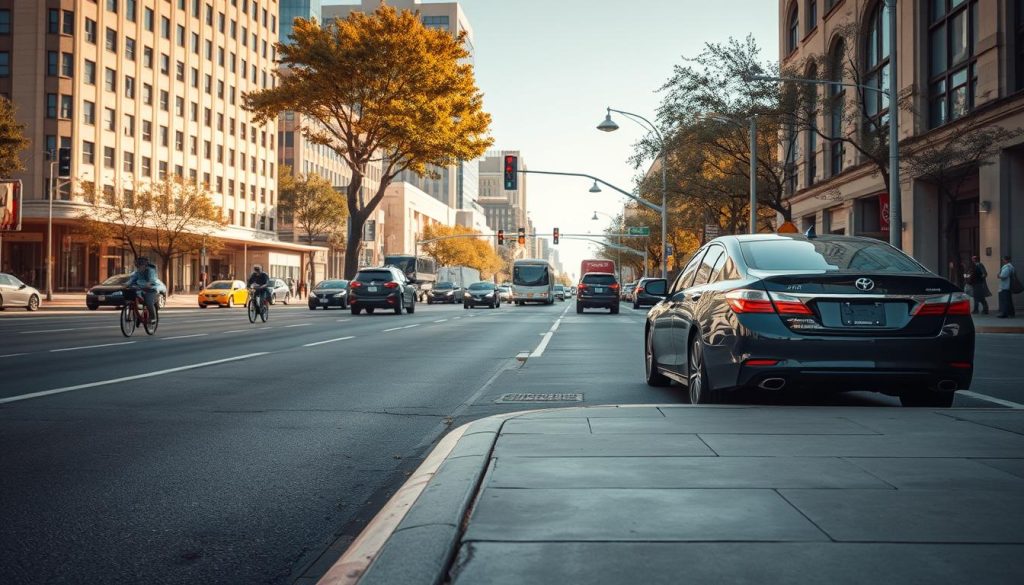
Real-life inches and practical cues
A small gap that looks fine while seated can still push passing vehicles into the next lane. Picture a 6–12 inches gap: it should leave room for mirrors without forcing others to swerve.
Risks of parking too far or too close
- Too far: narrows the travel lane, raises sideswipe and cyclist conflict risks, and obstructs traffic flow on a narrow road.
- Too close: tire sidewall scrubs, wheel rim damage, alignment problems, and accidental curb nudges during settling or door opening.
Pedestrian access and accessibility
Keep sidewalks and ramps clear so wheelchairs and strollers have safe room. Disability-access zones need extra side space—avoid blocking ramps or usable doorway approaches.
| Issue | Typical inches | Driver impact | Pedestrian impact |
|---|---|---|---|
| Recommended range | 6–12 inches | Predictable placement, fewer tickets | Sidewalks remain clear |
| Wide allowance | Up to 18 inches | May pass certain tests; risk on narrow streets | Can reduce walking room |
| Too close | Under 3 inches | Tire/wheel damage, curb strikes | Doors may block ramps |
| Too far | Over 18 inches | Lane obstruction, sideswipe danger | May force pedestrians into street |
How Far Should Your Car Be from the Curb for proper curbside parking
Aim for a consistent gap that keeps parked vehicles predictable for passing traffic.
Typical target ranges: For most U.S. street parking, set an everyday aim of 6–12 inches. Driver training may allow up to 18 inches, but the narrower range reduces ticket risk and keeps sidewalks clear.
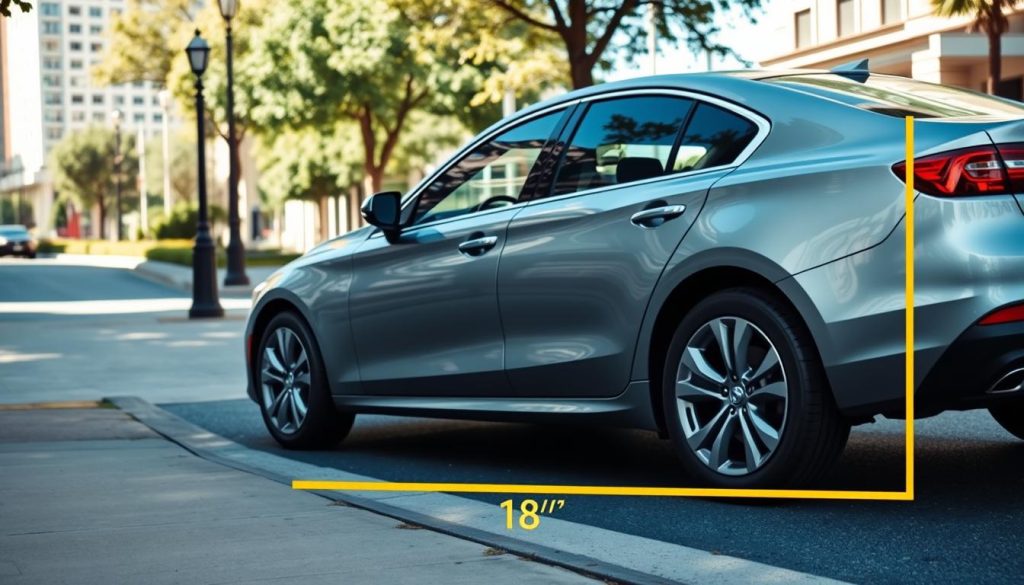
Visual cues using side mirror and tires
Use the side mirror to judge the curb line against the vehicle’s lower edge. If you see a steady gap, you likely have room to move closer without contact.
Train the eye so the front tire looks parallel to the curb line. When tires and body track evenly, the vehicle sits straight rather than angling into traffic.
Making small adjustments and condition-based tips
If parked too far out, pull forward while staying parallel, then ease in. If too close, move forward and steer away gently to reset without scraping.
At night or in rain, prioritize visibility and safe margins. Add an extra inch or two to avoid sliding into the curb, but avoid occupying excessive space that narrows the travel lane.
| Situation | Recommended inches | Driver action |
|---|---|---|
| Everyday aim | 6–12 inches | Keep predictable, close finish |
| Training tolerance | Up to 18 inches | Acceptable for tests; use caution on narrow roads |
| Poor visibility (night/rain) | 7–14 inches | Increase margin slightly; ensure visibility |
Step-by-step curbside parking technique drivers can repeat every time
Start with planning. Identify a safe spot three to six car lengths ahead. Check curb markings, signs, hydrants, and driveways before slowing.
Spot selection and early planning
Approach at a shallow angle. A shallow line reduces last-second steering and helps the vehicle finish parallel. Pre-planning keeps your final position consistent.
Signaling and observation sequence
Signal right early so traffic understands your intent. Then perform a full check: center mirror, side mirror, and an over-the-shoulder glance to clear blind spots.
Speed control and alignment
Slow to about 5–10 mph as you move toward the curb. Once close, unwind the wheel to straighten and use the mirror to confirm gap in inches.
Fine-tuning without contact
Make small forward rolls and slight steering corrections. Re-straighten and re-check until you hold a predictable distance without scraping wheels.
Final safety checks
Confirm space around parked vehicles and leave room for door opening. Check mirrors for cyclists and traffic before you exit.
| Step | Action | Why it matters |
|---|---|---|
| Spot scan | Look 3–6 car lengths ahead | Avoids illegal or obstructed spots |
| Signal & check | Signal, mirror, shoulder check | Clears blind spots per PennDOT guidance |
| Approach | 5–10 mph, shallow angle | Controls movement and reduces curb strikes |
| Final | Fine-tune, confirm inches gap | Protects wheels and keeps sidewalks clear |
Conclusion
Keep a steady, measured gap when pulling up along a street to protect wheels and keep lanes clear.
Practical target: aim near 6–12 inches in many U.S. spots, while training rules may allow up to 18 inches. This range helps a vehicle stay predictable without risking curb contact.
Good results come from repeatable steps. Scan early, signal, check blind spots, and finish with a slow, mirror-based approach. These habits help drivers place cars consistently and reduce ticket or damage risk.
Think beyond a single parking move. Proper placement aids passing traffic, cyclists, and pedestrian access. For related fitment notes, see our wheel offset guide.
Rule to remember: close enough for predictability, far enough to avoid scrape, and always verify before stepping into traffic.
FAQ
What is the ideal distance between a parked vehicle and the curb?
Aim to park roughly 6 to 12 inches from the curb. This range keeps your tires close enough to avoid obstructing traffic while leaving enough room to prevent tire or wheel damage. Local ordinances may set specific limits, so check city rules when parking in unfamiliar areas.
Why does curb distance matter for safety and legality?
Proper spacing helps maintain smooth traffic flow and protects cyclists and pedestrians. Parking too far can force moving vehicles into other lanes, while parking too close risks curb strikes and impedes wheelchair ramps. Violating local parking codes can lead to citations or towing.
How do common U.S. curb-parking guidelines translate into inches?
Many U.S. cities recommend 6–18 inches, with 12 inches as a common target. Residential streets often expect closer parking, while busy urban corridors may enforce stricter limits. Signs and municipal codes clarify the enforced distance for each block.
What risks arise from parking too far off the curb?
Parking too far reduces street capacity, increases collision risk with passing vehicles, and can obstruct bike lanes. It also raises the chance of tickets and causes congestion during peak hours, especially on narrow streets.
What damage can occur if I park too close to the curb?
Hitting the curb can scuff tires, damage alloy rims, and misalign suspension components. Repeated curb strikes shorten tire life and may require costly wheel repair or replacement.
How do I keep sidewalks and accessibility needs clear when parking?
Leave adequate space for curb cuts, ramps, and pedestrian flow. Do not block curb ramps, driveways, or crosswalks. Respecting access points protects people with mobility devices and avoids fines for obstructing public ways.
What target ranges should I use when preparing to park curbside?
Use 6–12 inches as a general target. On narrow streets, err closer to 6 inches to preserve lane width. In heavy-traffic areas or where signage specifies, follow posted distance limits.
What visual cues help judge distance using mirrors and tire position?
Align your side mirror so you can see the curb’s edge, then use the lower corner of the mirror or the tire’s relation to the curb as a reference. When you can just see the curb along the wheel well or mirror frame, you’re typically within the desired range.
How should I adjust my position at night or in wet weather?
Reduce speed and rely on slower, incremental steering adjustments. Use reflective road markers and curb reflectors where available. Keep hazard awareness high—wet roads reduce visibility and make curb strikes more likely.
What steps should I follow each time I parallel park by a curb?
Choose a safe spot, signal, and check mirrors and blind spots. Pull alongside the vehicle ahead, reverse at a controlled pace while turning the wheel toward the curb, then straighten and inch forward or backward to center your vehicle within the space.
How do I perform signaling and checks before merging toward the curb?
Signal well in advance, check mirrors, and perform an over-the-shoulder glance to confirm no cyclists or pedestrians are in your blind spot. Clear communication with other road users reduces surprises and prevents collisions.
What speed should I use as I approach and straighten parallel to the curb?
Move slowly—typically under 5 mph—so you can react and fine-tune steering. Low speed gives you better control for smooth alignment without abrupt corrections that could lead to a curb strike.
How do I fine-tune my position without hitting the curb?
Use short, gentle forward and reverse adjustments. Turn the wheel incrementally and pause between moves to assess distance. If unsure, get out and visually confirm your spacing before leaving the vehicle.
What final safety checks should I perform after parking next to a curb?
Ensure you left room for adjacent doors to open, confirm the vehicle is in park with the parking brake set, and scan for posted restrictions or permit requirements. Check that you did not block bike lanes, driveways, or curb ramps before exiting.