Ready to upgrade your vehicle’s low end? This 2026 roundup focuses on deep, punchy bass and clean integration across compact under-seat subwoofer solutions and 2-way component sets.
We tested real-world specs and tuned designs to balance continuous RMS power against inflated peak claims. The result is a curated view of options that deliver steady low-frequency authority without muddying midrange vocals or instruments.
Expect slim enclosures, thermal-smart Class D amps, carbon-fiber cones, and remote bass controls. We spotlight models like the JBL BassPro SL, Rockville SS10P, and NVX 6.5″ components and explain how frequency response down toward 20–30 Hz creates visceral impact while keeping clarity.
Whether you want under-seat stealth, pre-tuned trunk boxes, or component sets for doors, the guide helps you compare specs, match power handling and tuning features, and pick what fits your space and budget. For fit guidance on door installs, see this quick fit reference at Toyota Tacoma door speaker size.
Key Takeaways
- High RMS handling and wide frequency range matter more than inflated peak numbers.
- Look for advanced cone materials and sturdy surrounds to keep distortion low at high power.
- Compact under-seat subs and vented boxes give strong bass without sacrificing space.
- Adjustable filters, phase control, and remote/app knobs make tuning on the move easy.
- Thermal design and Class D amps sustain performance for longer listening sessions.
- Frequency down to 20–30 Hz adds punch while preserving midrange clarity.
Editor’s note: How we chose the best bass-forward car speakers for 2026
Our selection prioritized components that prove steady output under real driving conditions. We favored clear, published RMS ratings over flashy peak claims to reflect sustained power and everyday durability. Lab checks and road listening verified continuous output and controlled low-end response.
Targets included deep extension down into the 20–30 Hz range while keeping mids intact. That balance yields impactful low frequencies without masking vocals or instruments in the rest of the sound stage.
Build quality mattered. We screened cones and surrounds, seeking carbon fiber and rubber designs plus cast aluminum shells that cut distortion and shed heat. Connectivity options were required: high-level inputs for factory head units and RCA for aftermarket gear.

- Efficiency: units with built-in Class D amps for tight power use and low heat under seats.
- Tuning: low-pass filters, bass boost, and phase switches for precise integration.
- Fit and protection: slim enclosures, sealed or pre-tuned boxes, and thermal/short/overload safeguards.
- Transparency: we excluded models that listed only max power and vague specs; full sheets and support resources were required.
10 Best Car Speakers for Bass in 2026
Find gear that matches your space and power needs without guesswork. Below are practical options spanning ultra-slim under-seat subwoofers, trunk-ready enclosures, and a 6.5″ component set that adds midbass punch and clear highs.
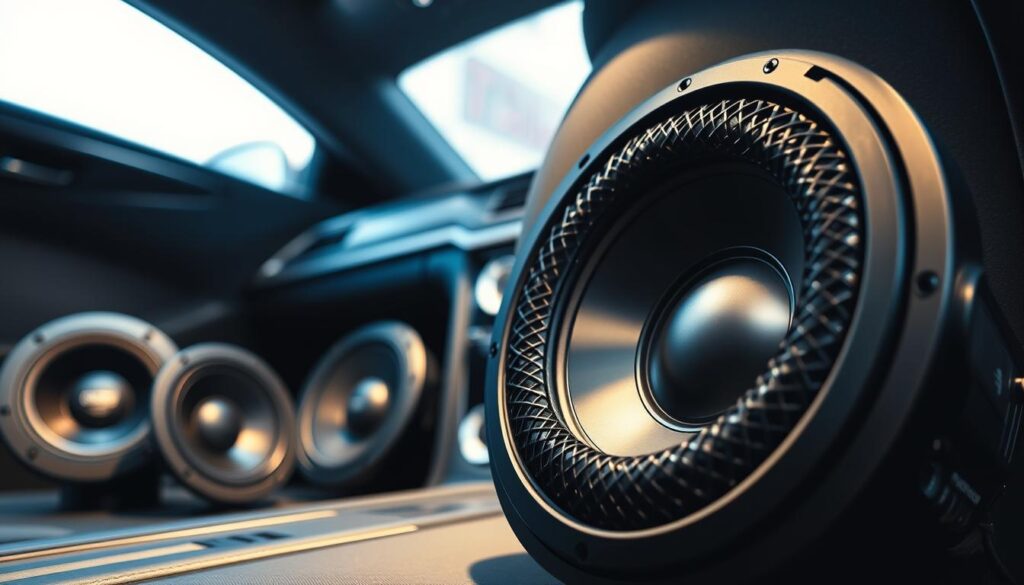
JBL BassPro SL — Compact under-seat subwoofer with a 125W RMS (250W peak) Class D amp and Audio Sense speaker-level inputs. Optional wired remote lets you dial bass without a large head unit install.
1200W Underseat & Lights — Slim 13.58×10.23×2.76 in cast aluminum unit, 300W RMS, LED sync, EQ, and bass boost for a visual and sonic upgrade in tight spaces.
Rockville DK58 — Dual 8″ K5 subs in a vented MDF box tuned to 37 Hz. The matched dB11 amp delivers 350W RMS (1600W peak) with an adjustable crossover and wiring kit for trunk or cargo installs.
Rockville SS10P — 200W RMS under-seat unit with RCA/high-level inputs, remote bass knob, subsonic filter, phase switch, and thermal protection in a cast aluminum enclosure.
NVX 6.5″ Component Set — Carbon fiber cones, rubber surrounds, silk dome tweeters, and switchable 2-/3-way crossovers provide tight midbass and clear highs for door installs.
- 2025 Upgraded 10″ — 220W RMS, app-controlled LED lighting, adjustable bass boost and crossover in a cast aluminum shell.
- Pyle 6.5″ Set — Budget-friendly option with 300W peak per sub, 1″ voice coil, strong magnet, and butyl surround; plan for extra amp and damping.
Integration tips: check under-seat height (some units are as slim as ~2.76–3″) and door depth for component installs. Use speaker-level inputs with auto turn-on, remote bass knobs, and subsonic/phase controls to align the subwoofer with front speakers. View dimensions, RMS, and included wiring to ensure the right power and a tidy install.
Quick comparison by specs: power, frequency response, and form factor
This quick spec comparison highlights how power, frequency, and physical size shape real-world low-end performance.
Power handling: RMS is the benchmark for sustained output and heat control. Treat peak or max power as short-burst numbers that should not set your amp match.
Power handling: RMS vs peak power
Match amps to RMS ratings for clean headroom. A 200–350W RMS subwoofer pairs well with an amp that delivers similar RMS at the right impedance.
Frequency coverage: deep bass and midrange clarity
Target ~20–500 Hz for bass focus. Subwoofers that reach toward 20–30 Hz add physical impact. Component sets supply midbass that keeps vocals and instruments clear.
Form factor and placement
Under-seat units offer stealth and tight transient response. Trunk enclosures gain SPL and deeper tuning thanks to larger air volume. Door component sets improve imaging when mounted and damped correctly.
| Model | RMS / Peak (W) | Freq. Notes | Form Factor |
|---|---|---|---|
| JBL BassPro SL | 125 / 250 | Extends into midbass | Under-seat slim |
| Rockville SS10P | 200 / 800 | Good low-end punch | Under-seat |
| 1200W Underseat | 300 / 1200 | Wide bass reach | Under-seat larger |
| Rockville DK58 | 350 / 1600 | Tuned to 37 Hz (deep) | Vented trunk box |
| NVX 6.5″ components | 300 / 600 | Midbass focus, clear highs | Door component set |
Practical notes: verify subwoofer height and box dimensions before buying. Ultra-slim under-seat units fit around 2.76–3 inches of clearance. Also factor alternator capacity, fusing, and grounding to support continuous power needs.
Buying guide for bass lovers: what matters most in a car audio system
A focused buying checklist helps bass lovers pick systems that deliver impact without muddying vocals. This short guide walks through the practical choices that shape low-end performance and overall sound quality.
Power handling and amplifier matching
Match amp RMS to speaker RMS to ensure stable continuous output and headroom. Treat peak power as a short-burst spec, not the basis for amp selection.
Frequency response priorities
Aim for sub-bass reach near 20–30 Hz and a clean handoff to midbass around 80–120 Hz. Proper crossover points keep the driver stack coherent and tight.
Clarity: crossovers and tweeter choice
External crossovers reduce overlap and distortion. Silk dome tweeters deliver smooth high frequencies without harshness, improving overall clarity.
Materials and build quality
Carbon fiber cones and cast aluminum housings cut distortion and aid thermal control. Good damping and bracing lower panel rattles and preserve transient response.
Fit, wiring, and controls
Confirm under-seat clearance or trunk volume and wiring paths before buying. Look for high/low-level inputs, variable low-pass, phase switches, and app control for on-the-fly tuning.
- Install checklist: measure space, note fuse ratings, plan grounding points, budget for deadening mats.
- Quick tip: built-in amps simplify installs and save trunk space while keeping wiring tidy.
Best for different needs: match your bass goals to the right speaker or subwoofer
Match the speaker or subwoofer to your vehicle’s space and power to avoid wasted money and fit headaches. Decide if stealth, SPL, fidelity, or budget matters most before shopping.

Small cars and commuters
Ultra-slim under-seat subs like the JBL BassPro SL, Rockville SS10P, or the 2025 Upgraded 10″ add low-end without stealing cabin space. These units are plug-and-play and simple to install.
SUVs and trucks
For larger vehicles, pre-engineered enclosure kits such as the Rockville DK58 exploit cargo volume for deeper extension and higher SPL. Expect more wiring and space planning.
Audio purists
Two-way component systems — like NVX 6.5″ with switchable 2/3-way crossovers — deliver precise imaging, cleaner highs, and controlled midbass when paired with external crossovers.
Budget builds
Choose value drivers such as Pyle and allocate savings toward a decent amp and deadening. That approach yields a noticeable upgrade without overspending.
- Quick cues: consider space, desired SPL, and sound signature when choosing a system.
- Portability: under-seat units travel between vehicles more easily than custom trunk enclosures.
- Compatibility: verify high-level inputs and integration with a new car’s infotainment before buying.
Top brands to consider in 2026 for quality sound and durability
Brand-level design choices—cone makeup, motor strength, and crossover quality—shape real-world output. Pick makers whose engineering matches your goals: stealth installs, SPL, or clean fidelity.
Pioneer uses IMPP cones and neodymium magnets for efficient midbass and long-term durability. Their voicing often favors tight, punchy response in small enclosures.
Kenwood pairs Hybrid Surround with carbon-injected cones to control excursion under power. These choices keep clarity when you push volume.
Sony relies on MRC cones to stay stiff and light. That material improves transient response and reduces breakup at higher levels.
Infinity by Harman stands out for tweeters that deliver detail and wide imaging without fatigue. Their higher-tier component lines add refined crossovers.
Kicker offers strong value and user-friendly design. Kicker units integrate well and suit many vehicle options and budgets.
| Brand | Core tech | Typical voicing | Best use |
|---|---|---|---|
| Pioneer | IMPP cones, Neodymium | Balanced, punchy | Under-seat & door installs |
| Kenwood | Hybrid Surround, Carbon-injected | Controlled, clear | High-power setups |
| Sony | MRC cones | Fast, accurate | Component systems |
| Infinity | Advanced tweeters, refined crossovers | Detailed, smooth | Hi-fi imaging |
| Kicker | Robust motors, practical design | Full, fun | Value builds |
Tip: compare measured specs and verified reviews. Shortlist two or three brands and audition where possible to hear how material choices and tweeter balance fit your taste. Also check accessory ecosystems and warranty support when planning a multi-component build.
Tuning for even better bass: setup tips that make or break performance
A few careful setup steps can tighten bass and stop it from muddying vocals. Start with a clean source and work methodically. Small moves yield big gains.
Gain staging and crossover alignment
Set amplifier gain so the signal is loud but never clips. Use test tones and listen for distortion while maximizing usable RMS power.
Choose a low-pass near 70–90 Hz for subs and a matching high-pass on front speakers. This creates a tight handoff and improves overall response.
Phase, time alignment, and filters
Use the phase switch and small time shifts to lock sub energy with the front stage and reduce cancellations. Apply a subsonic filter on ported boxes to protect drivers from inaudible ultra-lows.
Deadening, controls, and verification
Deadening doors and sealing panels reduces rattles and boosts midbass authority. Use remote bass knobs or app EQ to adapt levels to road noise and music.
- Verify grounding and power delivery for clean dynamics.
- Test with incremental tracks and safe SPL levels.
- Document final settings and try small trunk placement changes to find the sweet spot.
| Task | Target | Why it matters |
|---|---|---|
| Gain staging | No clipping, clean RMS | Prevents distortion and protects drivers |
| Crossover | 70–90 Hz low-pass | Tight handoff to front speakers |
| Phase/time | 0–180° / small ms shifts | Reduces cancellations, aligns impact |
| Deadening | Doors & panels | Improves midbass and reduces masking |
Installation and integration: wiring, space planning, and amplifier pairing
Proper install choices make the difference between a tight, reliable low end and a noisy, underperforming setup. Plan wiring, space, and power before you buy so the audio system works reliably and blends with factory components.
High-level vs RCA inputs
High-level inputs and auto turn-on
Use speaker-level inputs when you want to keep a factory head unit and preserve factory features. Many compact under-seat units accept high/low-level inputs and include an auto turn-on circuit so you don’t need a remote wire.
This path keeps steering-wheel controls and vehicle alerts active while simplifying the install.
RCA connections for aftermarket sources
When you have an aftermarket source, use RCA outputs. RCAs reduce noise and provide finer preamp-level control. That yields lower noise floors and simpler gain staging for the amp or powered subwoofer.
Electrical readiness and grounding
Fusing, wire gauge, and continuous power
Always fuse the main power near the battery. Proper fusing protects the vehicle from shorts and matches continuous power draw. Use wire gauges sized to the amplifier’s RMS rating to reduce voltage drop and heat.
For example, mid-hundred watt RMS amps typically need 8–4 AWG; higher RMS demands move toward 2–0 AWG. Solid grounding to bare metal within 18 inches of the amp prevents noise and maintains clean power delivery.
Space planning and safe routing
Measure under-seat clearance (some slim units are ~13.6×9.65×3 in) and check seat rails, airbags, and harnesses. Route power and signal cables away from moving parts and HVAC ducts to avoid wear and interference.
Integrating component speakers and protection
Secure crossovers and route tweeter leads to avoid chafing or interference. Leave service loops and plan a small distribution block for future subwoofer or amp additions.
Choose units with thermal/short/overload protection and allow ventilation around powered enclosures to preserve reliability.
| Task | Recommendation | Why it matters |
|---|---|---|
| Power fuse | Fuse within 12″ of battery | Protects vehicle wiring and gear |
| Wire gauge | Match to amp RMS (8–0 AWG) | Reduces voltage drop, heat |
| Ground | Short, clean chassis ground | Prevents noise and instability |
Final checks
Test polarity and play blended test tones to verify the subwoofer and front speakers sum correctly. Secure all gear to avoid movement during braking and to protect occupants. These steps create a stable, tunable sound that lasts.
Value tiers: budget, midrange, and premium bass upgrades
Deciding between economy, mid-tier, and premium setups starts with a clear use case: stealth, SPL, or fidelity. This helps you pick gear that fits your vehicle and listening goals without overspending.
Budget power: stretch dollars without losing impact
Focus on proven entry drivers like the Pyle 6.5″ sub set. Spend saved cash on deadening and a modest amp to tighten bass response.
Budget builds trade advanced damping and complex crossovers for affordability. That is a fair trade when you plan to upgrade later.
Midrange sweet spot: balance of power and controls
Pick units with solid RMS and cast aluminum enclosures such as Rockville SS10P or JBL BassPro SL. Look for phase switches, subsonic filters, and a remote level control.
These choices give reliable power and tunability while preserving quality and thermal protection for longer sessions.
Premium performance: high headroom and tailored tuning
Premium stacks — Rockville DK58, the 2025 Upgraded 10″ LED, and NVX components — offer higher RMS headroom, tuned boxes, and app-based control ecosystems.
- View full spec sheets and dimensions before buying.
- Match alternator and battery capacity for stable dynamics.
- Upgrade in stages: start with a substage, then add components and amplification.
Tradeoffs: budget options save money but may limit expansion; midrange balances materials and controls; premium focuses on peak performance and refinement. Self-contained under-seat units transfer between vehicles more easily if resale or portability matters.
Where to buy and how to choose: avoiding junk, verifying specs, and getting support
Before you buy, verify that the spec sheet lists continuous RMS, clear frequency curves, and physical dimensions. That simple check separates usable gear from labeled hype and saves install headaches.
Spec sheet red flags
View RMS, impedance, and full-frequency response instead of relying on a single “max power” figure. Be wary when RMS is missing, dimensions are omitted, or frequency ranges lack tolerance details.
Leverage expert help
Many products are junk; experts cherry-pick by category and verify claims with measurements and independent post evaluations. Call mobile technicians at 1.866.961.7781 or email for tailored advice based on your vehicle and goals.
- Buy from retailers with clear return policies and authenticated warranties.
- Plan purchase time around installation windows; check lead times and stock.
- Compare installation quotes to ensure safe wiring, proper tuning, and good quality control.
- Keep all receipts, serials, and paperwork for warranty and resale value.
| Check | Why it matters | Action |
|---|---|---|
| RMS & impedance | Matches amplifier power | View spec sheet; ask for test data |
| Dimensions | Fit into seat or box | Measure install space before purchase |
| Support & returns | Protection against defects | Buy from vetted sellers; keep contact info |
Thanks for doing the homework—your careful choice now pays off later with better sound, fewer surprises, and a smoother install.
Conclusion
Wrap your plan around real RMS ratings and measured frequency response, not flashy peak power claims.
Pair a compact subwoofer with a 2-way component front stage and silk dome tweeters to sharpen imaging and high frequencies while keeping mids clear.
Choose materials such as carbon fiber cones, advanced surrounds, and cast aluminum enclosures to reduce distortion and sustain continuous power over time.
Shortlist options by space, target response, and available controls, then compare verified spec sheets before you buy.
Start small in a new vehicle: an under-seat subwoofer first, then add component fronts and proper amplification. Match amp RMS to speaker RMS, set crossovers, and verify phase for the tightest bass and best sound quality.
Take the next step—pick the setup that fits your car and schedule a consult or install. Thanks for reading; enjoy the music.