A fuel leak can be a serious issue for any vehicle owner. Not only can it lead to decreased fuel efficiency, but it also poses a significant risk of fire and explosion. Diagnosing and repairing a car fuel leak is crucial to ensure your safety on the road.
Understanding the fuel leak diagnosis process is the first step towards resolving the issue. It involves identifying the source of the leak, which can be challenging due to the complexity of modern fuel systems. A thorough inspection is necessary to determine the extent of the problem and the required repairs.
Key Takeaways
- Diagnosing a fuel leak is crucial for safety and efficiency.
- A thorough inspection is necessary to identify the source of the leak.
- Repairing a fuel leak requires professional expertise.
- Ignoring a fuel leak can lead to serious consequences.
- Regular maintenance can help prevent fuel leaks.
Understanding the Dangers of Fuel Leaks
The risks associated with fuel leaks are far-reaching, encompassing fire hazards, environmental degradation, and adverse health effects. Fuel leaks can have devastating consequences if not addressed promptly.
Fire and Explosion Risks
Fuel leaks significantly increase the risk of fires and explosions. A single spark can ignite leaked fuel, potentially causing catastrophic damage to the vehicle and surrounding environment. It’s crucial to address fuel leaks immediately to mitigate this risk.
Environmental Impact
Leaked fuel can contaminate soil and groundwater, posing a significant threat to local ecosystems. The environmental impact of fuel leaks can be long-lasting and difficult to rectify.
Health Hazards
Exposure to leaked fuel can cause health issues, including respiratory problems and skin irritation. Prolonged exposure can lead to more severe health complications.
Financial Consequences
Fuel leaks can result in decreased fuel efficiency, leading to increased fuel costs. Moreover, repairing damage caused by fuel leaks can be expensive, making prompt action essential to minimize financial burdens.
Recognizing the Signs of a Fuel Leak
Recognizing the signs of a fuel leak is vital to prevent accidents and costly repairs. A fuel leak can manifest in various ways, making it crucial for vehicle owners to be aware of the indicators.
Strong Gasoline Odor
A strong gasoline odor is one of the most common signs of a fuel leak. If you notice a persistent smell of gasoline, especially around the fuel tank or engine area, it could indicate a leak. This smell can be more pronounced when the vehicle is in operation or after refueling.
Visible Fuel Puddles Under Vehicle
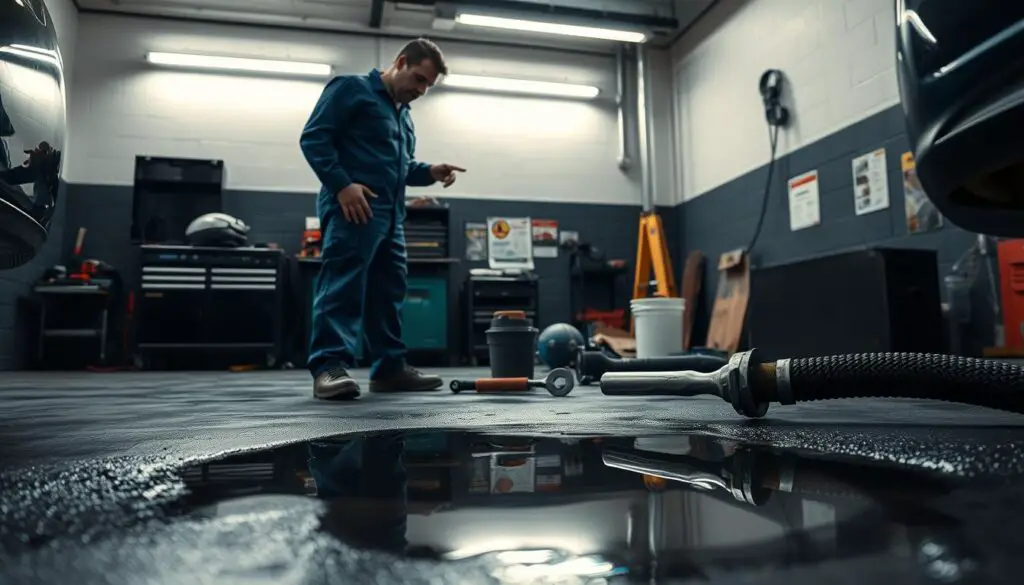
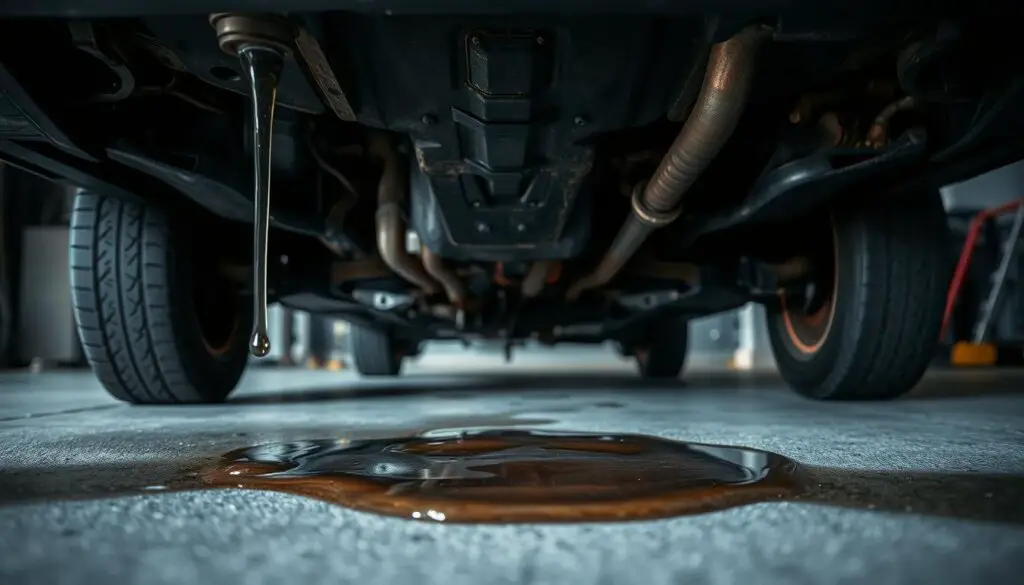
Another clear indicator is the presence of visible fuel puddles under your vehicle. If you notice spots or puddles of fuel on the ground where you park, it’s a sign that there’s a leak somewhere in the fuel system. The location of the puddle can help you narrow down the source of the leak.
Decreased Fuel Efficiency
A fuel leak can also lead to decreased fuel efficiency. If your vehicle is consuming more fuel than usual for the same distance, it might be leaking fuel. Monitoring your fuel consumption can help you detect a leak early.
Engine Performance Issues
Engine performance issues can also be a sign of a fuel leak. Leaks can cause the engine to run lean, leading to problems like rough idling, stalling, or difficulty starting the engine. If you experience any of these issues, it’s worth investigating for a potential fuel leak.
Dashboard Warning Lights
Modern vehicles are equipped with sophisticated diagnostic systems that can detect issues, including fuel leaks. If your dashboard warning lights illuminate, particularly the check engine light, it could be related to a fuel leak. It’s essential to have your vehicle scanned for trouble codes to understand the cause.
Fuel Leaking From Your Car: Common Causes and Fixes
Fuel leaks pose serious risks, including fire hazards and environmental damage, making it essential to diagnose and repair them promptly. Understanding the common causes of fuel leaks is the first step towards fixing the issue.
Damaged Fuel Lines
Damaged fuel lines are a common cause of fuel leaks. Over time, fuel lines can deteriorate due to heat, corrosion, or physical damage, leading to leaks. Inspecting fuel lines regularly and replacing them when necessary can prevent leaks.
Faulty Fuel Injectors
Faulty fuel injectors can also cause fuel leaks. When fuel injectors become clogged or damaged, they can leak fuel into the engine or onto the ground. Cleaning or replacing faulty fuel injectors can resolve this issue.
Deteriorated Gaskets and O-rings
Deteriorated gaskets and O-rings are another common cause of fuel leaks. These components can degrade over time, losing their ability to seal properly. Replacing deteriorated gaskets and O-rings can fix leaks.
Fuel Tank Punctures or Corrosion
Fuel tank punctures or corrosion can lead to significant fuel leaks. Inspecting the fuel tank for damage or corrosion and repairing or replacing it as needed can prevent leaks.
Loose or Damaged Fuel Cap
A loose or damaged fuel cap can cause fuel leaks by allowing fuel to evaporate or spill out. Ensuring the fuel cap is tightened properly or replacing it if damaged can prevent this issue.
Fuel Pressure Regulator Failure
Failure of the fuel pressure regulator can also lead to fuel leaks. This component is responsible for maintaining the correct fuel pressure in the engine. Replacing a faulty fuel pressure regulator can resolve leaks caused by its failure.
By understanding these common causes and implementing the necessary fixes, car owners can address fuel leaks effectively, ensuring their vehicle’s safety and performance.
Diagnosing the Source of a Fuel Leak
The diagnosis of a fuel leak involves a systematic approach, starting with safety precautions to ensure a safe inspection process. Before you begin, it’s crucial to understand the potential hazards and take necessary measures to mitigate risks.
Safety Precautions Before Inspection
To safely diagnose a fuel leak, follow these precautions:
- Ensure the vehicle is parked on a level surface and apply the parking brake.
- Turn off the engine and let it cool down.
- Wear protective gear, including gloves and safety glasses.
- Ensure good ventilation in the work area.
Visual Inspection Techniques
A visual inspection is the first step in diagnosing a fuel leak. Look for:
- Visible signs of fuel leakage under the vehicle.
- Damaged or corroded fuel lines and connections.
- Signs of wear on gaskets and O-rings.
Pressure Testing the Fuel System
Pressure testing can help identify leaks in the fuel system. This involves pressurizing the system and listening for leaks or using a soapy solution to detect bubbles.
Using Diagnostic Tools
Modern vehicles often require the use of diagnostic tools to identify fuel leaks. These tools can help monitor fuel pressure and detect anomalies in the fuel system.
Tracing the Fuel Path
Tracing the fuel path from the tank to the engine can help identify where the leak is occurring. This involves inspecting fuel lines, fuel injectors, and other components along the fuel path.
Step-by-Step Repair Guide for Common Fuel Leaks
Understanding how to fix common fuel leaks is crucial for vehicle safety and performance. Fuel leaks can lead to serious issues, including fire hazards, environmental damage, and decreased fuel efficiency. In this section, we will provide a detailed guide on how to repair common fuel leaks.
Replacing a Fuel Line
One of the most common causes of fuel leaks is a damaged or deteriorated fuel line. Replacing a fuel line requires specific tools and materials, as well as adherence to safety precautions.
Required Tools and Materials
To replace a fuel line, you will need a new fuel line compatible with your vehicle’s make and model, a set of wrenches, and safety gloves. Ensure that the new fuel line is properly sized to avoid any further issues.
Safety Precautions
Before starting the repair, ensure that your vehicle is parked on a level surface and that the engine is cool. Wear protective gloves and eyewear to prevent injury.
Removal and Installation Process
Begin by disconnecting the negative battery cable to prevent any accidental starts. Then, locate the damaged fuel line and disconnect it from the fuel system. Remove the old fuel line and install the new one, ensuring all connections are secure.
Fixing Fuel Injector Leaks
Fuel injector leaks can cause significant problems, including decreased engine performance and fuel efficiency. To fix a fuel injector leak, you need to access the fuel injectors and inspect the O-rings.
Accessing the Fuel Injectors
Consult your vehicle’s repair manual to locate the fuel injectors. Typically, this involves removing the fuel injector rail to access the individual injectors.
Testing and Replacing Injector O-rings
Inspect the O-rings for signs of wear or damage. If damaged, replace the O-rings with new ones, ensuring they are properly seated to prevent future leaks.
Repairing Fuel Tank Issues
Fuel tank punctures or corrosion can lead to serious fuel leaks. Repairing or replacing the fuel tank requires careful consideration.
Patching Small Punctures
For small punctures, a fuel tank repair kit can be used. Follow the manufacturer’s instructions to patch the puncture effectively.
When to Replace the Entire Tank
If the fuel tank is severely damaged or corroded, it may be necessary to replace the entire tank. Consult a professional if you’re unsure about the extent of the damage.
Addressing Fuel Pump and Filter Problems
Fuel pump and filter issues can also contribute to fuel leaks. Regular maintenance, such as replacing the fuel filter, can help prevent these problems.
By following these step-by-step guides, you can effectively repair common fuel leaks and ensure your vehicle’s safety and performance.
Preventative Maintenance to Avoid Future Leaks
To prevent fuel leaks, it’s essential to adopt a proactive approach to maintaining your car’s fuel system. This involves several key strategies that, when implemented together, significantly reduce the risk of future leaks.
Regular Inspection Schedule
Regular inspections are vital for identifying potential issues before they become major problems. Check your fuel system components, including lines and connections, for signs of wear or damage. For more information on diagnosing fuel leaks, you can visit this resource.
Proper Fuel System Care
Proper care of your fuel system includes using the correct type of fuel and fuel additives. This helps maintain the system’s integrity and prevents corrosion.
| Maintenance Task | Frequency | Benefit |
|---|---|---|
| Inspect Fuel Lines | Every 6 months | Identify potential leaks early |
| Check Fuel Cap | Every oil change | Ensure proper sealing |
| Use Fuel Additives | As needed | Clean and protect fuel system |
Quality Fuel Considerations
Using high-quality fuel can help prevent fuel system problems. Quality fuel is less likely to contain contaminants that can damage your fuel system.
Winterizing Your Fuel System
Before winter, ensure your fuel system is prepared. This includes using winter-grade fuel and considering a fuel system cleaner to prevent issues related to cold temperatures.
Conclusion
Diagnosing and repairing fuel leaks is crucial for maintaining your vehicle’s overall health and safety. As discussed, fuel leaks can lead to serious issues, including fire hazards, environmental damage, and decreased fuel efficiency. By understanding the signs of a fuel leak and taking prompt action, you can prevent these problems and ensure your car runs smoothly.
Regular car maintenance is key to avoiding fuel leaks. This includes inspecting your fuel system regularly, using quality fuel, and addressing any issues promptly. By following these steps, you can help prevent fuel leaks and maintain a safe and efficient fuel system.
In conclusion, a well-maintained fuel system is essential for your vehicle’s performance and safety. By being proactive with car maintenance and addressing fuel leaks promptly, you can enjoy a safer and more efficient driving experience. Proper care of your fuel system will ultimately lead to a successful fuel leak conclusion, ensuring your vehicle remains in good condition.
FAQ
What are the signs that indicate a fuel leak in my car?
Common signs include a strong gasoline odor, visible fuel puddles under the vehicle, decreased fuel efficiency, engine performance issues, and dashboard warning lights.
How can I diagnose the source of a fuel leak?
To diagnose the source, start by taking safety precautions, then perform a visual inspection, pressure test the fuel system, use diagnostic tools, and trace the fuel path.
What are the common causes of fuel leaks?
Common causes include damaged fuel lines, faulty fuel injectors, deteriorated gaskets and O-rings, fuel tank punctures or corrosion, loose or damaged fuel cap, and fuel pressure regulator failure.
How can I repair a fuel leak?
Repair methods vary depending on the cause; they may involve replacing a fuel line, fixing fuel injector leaks, repairing fuel tank issues, or addressing fuel pump and filter problems.
What preventative measures can I take to avoid future fuel leaks?
Regular inspection schedules, proper fuel system care, using quality fuel, and winterizing your fuel system can help prevent future leaks.
Can a fuel leak cause a fire or explosion?
Yes, fuel leaks can pose a significant risk of fire and explosion, making it crucial to diagnose and repair leaks promptly.
How often should I inspect my vehicle’s fuel system?
Regular inspections should be performed according to the manufacturer’s schedule or as needed based on the vehicle’s condition and mileage.
What are the environmental impacts of fuel leaks?
Fuel leaks can contaminate soil and groundwater, posing a significant environmental hazard and potentially harming local ecosystems.