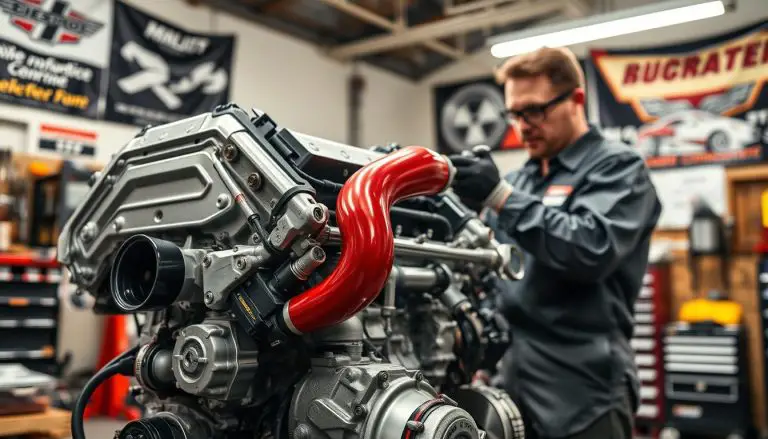
The automotive sector has seen considerable progress in engine technology, with forced induction emerging as a critical innovation. Turbo engines, in particular, have become increasingly popular for their capacity to elevate vehicle performance. But what exactly makes them so attractive?
Turbo engine benefits encompass enhanced fuel efficiency and augmented power output. Yet, grasping the pros and cons of turbo engines is imperative for making well-informed decisions, whether you are a car aficionado or a prospective buyer.
Exploring the realm of turbo engines necessitates a thorough examination of their influence on vehicle performance and the driving experience. This exhaustive review seeks to offer a balanced perspective, underscoring both the benefits and drawbacks.
Key Takeaways
- Turbo engines offer improved fuel efficiency and increased power.
- Forced induction technology enhances engine performance.
- Understanding the pros and cons is crucial for informed decisions.
- Turbo engines have both advantages and disadvantages.
- A comprehensive review helps in making balanced choices.
What Are Turbo Engines?
An exploration into the realm of turbo engines necessitates a comprehensive examination of their historical development and operational mechanics. These engines have emerged as a pivotal component in contemporary automotive engineering, facilitating enhanced performance capabilities without necessitating substantial increases in engine dimensions.
Definition and Basic Principles
The turbocharger, a turbine-driven forced induction apparatus, compresses air into an internal combustion engine, thus augmenting power and efficiency. This fundamental principle leverages the exhaust gases to propel a turbine, which, in turn, drives the compressor. This mechanism forces additional air into the engine’s cylinders, enhancing its performance.
Brief History of Turbocharging
The genesis of turbocharging dates back to the early 20th century, with its initial application in aircraft engines during World War I. Subsequently, it gained widespread acceptance in the automotive sector during the 1970s and 1980s, predominantly in high-performance vehicles.
Types of Modern Turbochargers
Contemporary turbochargers exhibit a variety of configurations, including single turbo, twin turbo, and variable geometry turbochargers. Each variant is meticulously designed to optimize performance under diverse engine operating conditions.
| Type of Turbocharger | Description | Application |
|---|---|---|
| Single Turbo | One turbocharger for the engine | Common in smaller engines |
| Twin Turbo | Two turbochargers, often for larger engines or for specific cylinder banks | Used in high-performance vehicles |
| Variable Geometry Turbo | Turbocharger with adjustable turbine vanes for improved efficiency across the engine’s RPM range | Found in modern diesel engines and some gasoline engines |

How Turbo Engines Work
The intricacies of turbo engines necessitate an exploration into the realm of forced induction, a technique that enhances engine performance by compressing air into the combustion chamber.
The Science Behind Forced Induction
Forced induction is the quintessential feature of turbocharged engines, enabling them to deliver substantial power within a compact engine size. This is realized through the utilization of exhaust gases to propel a turbine, which, in turn, drives the compressor to compress intake air.
Key Components of a Turbocharger System
A turbocharger system comprises several pivotal components, each indispensable to its functionality.
Turbine and Compressor
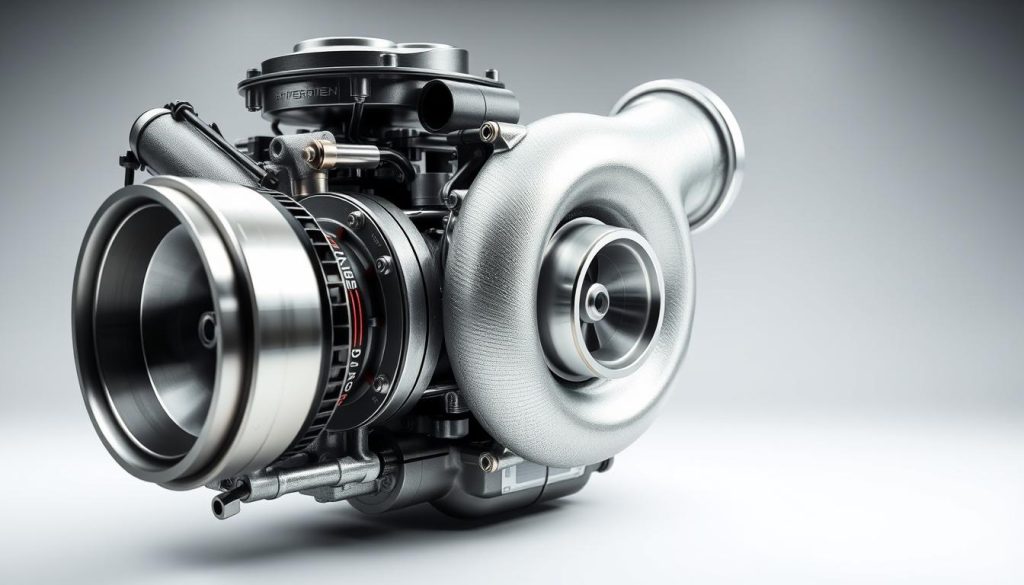
The turbine and compressor form the core of the turbocharger. The turbine is actuated by exhaust gases, whereas the compressor compresses intake air, compelling it into the engine’s combustion chamber.
Wastegate and Blow-Off Valve
The wastegate regulates the exhaust gas flow to the turbine, averting excessive spinning. The blow-off valve discharges surplus pressure when the throttle is closed, safeguarding the turbocharger from potential damage.
Intercooler System
The intercooler system serves to cool the compressed air prior to its entry into the engine, augmenting its density and thus boosting engine performance.
Turbo Lag Explained
Turbo lag, a characteristic delay in power delivery during acceleration, is inherent to turbocharged engines. It arises from the time required for the turbine to attain operational speed. Contemporary turbochargers have addressed this challenge through innovations such as twin-scroll and variable geometry turbochargers.
Pros and Cons of Turbo Engines
Grasping the nuances of turbo engines is paramount for astute decision-making within the automotive sphere. These engines have transformed the landscape by harmonizing power, efficiency, and emission reduction.
Advantages of Turbocharged Engines
Turbocharged engines present a plethora of advantages. Notably, they offer enhanced power and torque, making them quintessential for those who crave performance.
Increased Power and Torque
The turbocharger’s forced induction enables engines to generate more power relative to their size. This enhancement results in superior acceleration and a more dynamic driving experience.
Improved Fuel Economy
These engines boast superior fuel economy by enabling the downsizing of engines without compromising performance. This is notably advantageous in urban environments and for those prioritizing fuel efficiency.
Contemporary turbocharged engines are crafted to adhere to stringent emissions standards. Through optimized combustion and reduced fuel consumption, they manage to minimize emissions while preserving performance.
Smaller Engine Size with Greater Output
The capacity to derive more power from a diminutive engine is a pivotal benefit of turbocharging. This capability empowers manufacturers to proffer potent vehicles without the necessity for large, fuel-inefficient engines.
Disadvantages of Turbocharged Engines
Despite their numerous advantages, turbocharged engines also harbor certain drawbacks. Chief among these is reliability concerns, as the augmented complexity of turbochargers can introduce potential failure points.
Reliability Concerns
The augmented stress on engine components due to forced induction can compromise engine reliability. Vigilant maintenance is imperative to avert these risks.
Heat Management Issues
Turbochargers produce considerable heat, necessitating effective heat management to prevent issues.
Complexity and Repair Costs
The intricate nature of turbocharged engines can escalate repair expenses when malfunctions occur. This is a critical factor for owners who may encounter substantial repair costs in the future.
Performance Inconsistencies
Turbo lag, or the delay in power delivery, is a prevalent challenge with turbocharged engines. While advancements have lessened its impact, it remains a consideration for drivers seeking consistent performance.
Performance Comparison: Turbo vs. Naturally Aspirated
The disparity in performance between turbocharged and naturally aspirated engines is profound, warranting a detailed examination. Turbocharged engines employ a turbine to augment air compression, facilitating an increase in combustion chamber air volume and, consequentially, power output. In contrast, naturally aspirated engines rely exclusively on atmospheric pressure to draw air into the combustion chamber.
Power Delivery Characteristics
Turbocharged engines exhibit a more pronounced power output across a wider RPM spectrum compared to their naturally aspirated counterparts. The turbocharger’s capacity to force additional air into the engine results in a substantial power enhancement, predominantly at elevated RPMs. Turbocharged engines often present a more uniform power delivery, whereas naturally aspirated engines exhibit a more linear yet less potent power curve.
Acceleration and Throttle Response
Turbocharged engines generally facilitate quicker acceleration, attributed to their augmented power output. Notwithstanding, they are susceptible to turbo lag, a phenomenon characterized by a delay in power delivery as the turbocharger accelerates. In contrast, naturally aspirated engines offer immediate throttle response but lack the power augmentation afforded by turbocharging.
Towing and Hauling Capabilities
Turbocharged engines are frequently selected for towing and hauling heavy loads due to their enhanced power and torque. The additional power facilitates the management of substantial trailers or payloads, rendering turbocharged engines a preferred choice for trucks and SUVs.
High-Altitude Performance Benefits
Turbocharged engines also exhibit superior performance at high altitudes. At elevated altitudes, the reduced air pressure can significantly diminish the power output of naturally aspirated engines. Turbocharged engines, by compressing the thinner air, maintain a more consistent performance, thus compensating for the altitude-related power reduction.
Maintenance Requirements and Longevity
Ensuring the longevity of a turbo engine necessitates a profound understanding of its maintenance requisites. Turbo engines, renowned for their enhanced performance, demand meticulous care to guarantee sustained efficiency and prolonged lifespan.
Regular Maintenance Schedule
Adherence to a consistent maintenance regimen is paramount for the enduring functionality of a turbo engine. This regimen encompasses routine oil exchanges, filter substitutions, and the meticulous examination of pivotal engine components. Compliance with the manufacturer’s maintenance guidelines is instrumental in mitigating the likelihood of premature deterioration.
Common Failure Points
Specific components within turbo engines are susceptible to failure if not diligently maintained. These include the turbocharger, oil conduits, and engine bearings. Proactive inspections can preemptively uncover potential malfunctions, averting significant issues.
Oil Quality and Change Intervals
The caliber of oil employed in turbo engines is of paramount importance, alongside the frequency of oil exchanges. Utilizing high-grade synthetic oil, formulated for turbocharged engines, facilitates superior lubrication and preserves engine purity.
Cooling System Importance
The cooling system’s role in preserving turbo engine health is indispensable. Optimal coolant levels and a functional cooling system are imperative to avert overheating, a condition that can precipitate expensive repairs.
Tips for Maximizing Turbo Engine Life
To extend the life of your turbo engine, it is advisable to drive with moderation, eschew extreme temperatures, and ensure the engine is adequately warmed before subjecting it to strenuous conditions. Consistent maintenance and inspections are indispensable for a turbo engine’s prolonged and healthy existence.
Cost Considerations: From Purchase to Resale
The acquisition of turbocharged engines incurs a spectrum of financial implications that transcend the initial transaction. A comprehensive understanding of these expenditures is paramount for a well-informed decision-making process.
Initial Purchase Premium
The primary financial consideration is the premium associated with the initial acquisition of turbocharged engines. Vehicles equipped with such technology are typically more costly than their naturally aspirated counterparts. This disparity is attributed to the sophisticated technology and engineering intricacies inherent in turbocharging.
Fuel Economy Savings Over Time
Despite the elevated initial expenditure, turbocharged engines promise considerable fuel economy advantages over the long term. By augmenting airflow into the combustion chamber, turbochargers enable smaller engines to achieve enhanced power outputs. This capability diminishes the necessity for larger, fuel-intensive engines, thus leading to substantial fuel cost reductions. Such savings are notably pronounced for drivers who traverse extensive distances.
Insurance Rate Factors
Insurance premiums for vehicles equipped with turbocharged engines exhibit variability. The determinants of these premiums encompass the vehicle’s make and model, the driver’s history, and the engine’s power output. Generally, vehicles with turbochargers, due to their elevated power capabilities, may incur higher insurance premiums. This is a consequence of the increased risk of accidents associated with such vehicles.
Maintenance and Repair Expenses
Expenses related to maintenance and repair are of paramount importance. Turbocharged engines, owing to their complexity, may incur higher repair costs compared to non-turbocharged counterparts. Adherence to regular maintenance, such as oil changes, is imperative for the longevity of a turbocharged engine.
Resale Value Analysis
The resale value of vehicles equipped with turbocharged engines is influenced by several factors. These include the engine’s condition, the vehicle’s overall reliability, and market demand for turbocharged vehicles. Typically, turbocharged engines retain their value well, attributed to their performance and efficiency advantages.
| Cost Factor | Turbocharged Engine | Naturally Aspirated Engine |
|---|---|---|
| Initial Purchase Price | Higher | Lower |
| Fuel Economy | Better | Worse |
| Insurance Rates | Potentially Higher | Lower |
| Maintenance Costs | Potentially Higher | Lower |
| Resale Value | Generally Retained Well | Varies |
Conclusion: Is a Turbo Engine Right for You?
In the realm of automotive selection, the decision to opt for a turbo engine is paramount. A thorough examination of the turbo engine’s advantages and disadvantages is essential for a well-informed choice. This discourse has delved into the complexities of turbocharged engines, encompassing their foundational principles, historical evolution, performance attributes, and upkeep necessities.
The turbocharged engine’s prowess lies in its ability to augment power output and enhance fuel economy. Yet, it introduces its own set of hurdles, including the phenomenon of turbo lag and the potential for elevated maintenance expenditures. A careful assessment of these elements will facilitate a determination of whether the turbo engine’s benefits resonate with your driving exigencies and inclinations.
The decision to select a turbo engine is contingent upon your unique requirements, driving patterns, and priorities. Whether your preference leans towards superior performance, enhanced fuel efficiency, or a harmonious blend of both, a comprehensive comprehension of turbocharging’s implications will empower you to make a more judicious choice in your next vehicle acquisition.
FAQ
What is a turbo engine and how does it work?
Turbo engines leverage a turbocharger to compress air into the combustion chamber, enhancing both power and efficiency. The turbocharger’s operation is driven by the engine’s exhaust gases, which power a turbine. This turbine is connected to a compressor, which compresses the air.
What are the benefits of a turbocharged engine?
Turbocharged engines boast several advantages, including augmented power and torque, superior fuel economy, and enhanced emissions performance. Their compact size belies their substantial output, making them a preferred choice among vehicle manufacturers.
What are the common issues with turbocharged engines?
Turbocharged engines are often plagued by reliability concerns, heat management challenges, and increased complexity. Repair costs can also be a significant burden. A common complaint is turbo lag, which refers to the delay in power delivery.
How do I maintain a turbocharged engine?
To ensure the longevity of a turbocharged engine, adherence to a regular maintenance regimen is paramount. This includes routine oil changes and filter replacements. It is also crucial to monitor the engine’s cooling system and address any issues promptly to avert potential damage.
Are turbocharged engines more expensive to repair?
Due to their intricate design and specialized components, turbocharged engines can incur higher repair costs. Yet, many contemporary turbocharged engines are engineered for reliability and durability, thus minimizing the likelihood of costly repairs.
How does a turbocharged engine affect fuel economy?
Turbocharged engines can enhance fuel economy by enabling the use of smaller engine sizes while maintaining or increasing power output. The actual fuel economy, though, is influenced by a variety of factors, including driving habits and environmental conditions.
Can a turbocharged engine be used for towing or hauling?
Yes, turbocharged engines are suitable for towing and hauling, often offering superior performance and capability compared to naturally aspirated engines. It is, though, imperative to adhere to the manufacturer’s guidelines and recommendations for such activities.
What is turbo lag, and how is it addressed?
Turbo lag is the phenomenon of delayed power delivery when the turbocharger is not spinning at a sufficient speed. To mitigate this, manufacturers employ various technologies, including twin-scroll turbochargers, variable geometry turbochargers, and electric turbochargers.
Are turbocharged engines suitable for high-performance driving?
Yes, turbocharged engines are frequently utilized in high-performance vehicles due to their capacity to deliver increased power and torque. It is, though, essential to ensure that the engine is properly tuned and maintained to withstand the stresses associated with high-performance driving.

![5.3 vs 6.2 Engine [Which Chevy V8 is Better?]](https://automotivesimple.com/wp-content/uploads/2026/03/5.3-vs-6.2-Engine-Which-Chevy-V8-is-Better-768x439.jpeg)