Planning to transport your vehicle using U-Haul’s auto transport or tow dolly? Understanding weight limits is crucial for a safe, legal, and damage-free journey. This comprehensive guide covers everything you need to know about U-Haul auto transport weight limits, from specific capacity numbers to calculation methods and safety considerations.
Why U-Haul Auto Transport Weight Limits Matter
Weight limits aren’t just arbitrary numbers – they directly impact your safety, legal compliance, and the condition of both your vehicle and the transport equipment. Exceeding these limits can lead to serious consequences:
Risks of Exceeding Weight Limits
- Compromised braking ability and vehicle control
- Excessive strain on the towing vehicle’s transmission and engine
- Potential for trailer sway and accidents
- Damage to the auto transport equipment
- Possible damage to your transported vehicle
- Traffic citations and fines for overweight loads
- Voided insurance coverage in case of accidents
Understanding and adhering to U-Haul’s weight specifications ensures you’ll have a safe journey while protecting your vehicle and avoiding unexpected costs. Let’s examine the specific weight limits for different U-Haul transport options.
Specific Weight Capacity Limits for U-Haul Auto Transport Models
U-Haul offers several options for transporting vehicles, each with different weight capacities and specifications. Here’s a detailed breakdown of each model:
| Transport Type | Maximum Load Capacity | Empty Weight | Total Weight (Loaded) | Vehicle Size Limitations |
| Auto Transport Trailer | 5,290 lbs | 2,210 lbs | 7,500 lbs | Max length: 17’6″, Width: 6’7″ |
| Tow Dolly | 3,450 lbs | 750 lbs | 4,200 lbs | Front-wheel drive vehicles preferred |
| Toy Hauler | 6,845 lbs | 2,655 lbs | 9,500 lbs | 16′ deck length |
Auto Transport Trailer Specifications
The U-Haul auto transport trailer is designed to carry the entire vehicle with all four wheels off the ground. With a maximum load capacity of 5,290 pounds, it’s suitable for most standard cars, SUVs, and light trucks. The dual-axle design provides stability and even weight distribution.
The auto transport trailer has deck dimensions of 148″ x 79.25″ with a loading ramp length of 77.5″. This accommodates vehicles up to 17’6″ in length and 6’7″ in width.
Tow Dolly Specifications
The tow dolly lifts only the front wheels of your vehicle, leaving the rear wheels on the ground. This option has a lower weight capacity of 3,450 pounds and is primarily designed for front-wheel drive vehicles. For rear-wheel or all-wheel drive vehicles, the driveshaft must be disconnected before transport.
Important: When using a tow dolly, the towing vehicle must weigh at least 750 pounds more than the vehicle being towed for safe operation.
Toy Hauler Specifications
The toy hauler is U-Haul’s heavy-duty option with a maximum load capacity of 6,845 pounds. This flatbed trailer can transport larger vehicles including full-size trucks, SUVs, and off-road vehicles. It features a 16-foot deck with drive-over fenders and three 8-foot loading ramps.
How to Calculate Your Vehicle’s Weight Accurately
Before renting a U-Haul auto transport, you need to know your vehicle’s exact weight. There are several methods to determine this:
Understanding Weight Terminology
- Curb Weight: The weight of your vehicle without passengers or cargo, but including all standard equipment, fluids, and a full tank of gas.
- Gross Vehicle Weight (GVW): The total weight of your vehicle including passengers, cargo, and fluids.
- Gross Vehicle Weight Rating (GVWR): The maximum allowable total weight as specified by the manufacturer.
For U-Haul auto transport purposes, you’ll need to know your vehicle’s curb weight, as this is what will be loaded onto the trailer.
Methods to Determine Your Vehicle’s Weight
Method 1: Vehicle Documentation
Check your vehicle’s owner’s manual or the driver’s side door jamb for a sticker listing the curb weight. This provides the manufacturer’s specified weight.
Method 2: Online Resources
Search your vehicle’s make, model, and year online. Websites like Edmunds, Kelly Blue Book, or the manufacturer’s website typically list vehicle specifications including weight.
Method 3: Weighing Stations
Visit a public weighing station, recycling center, or truck stop with scales. Drive onto the scale to get an accurate measurement of your vehicle’s current weight.
Need Help Determining Your Vehicle’s Weight?
U-Haul offers free vehicle pre-tow inspections at their locations, which include weight verification to ensure your vehicle meets the requirements for safe transport.
Consequences of Exceeding U-Haul Auto Transport Weight Limits
Safety Risks
Exceeding weight limits creates serious safety hazards. An overloaded trailer can cause trailer sway, making it difficult to control your vehicle, especially during emergency maneuvers or in adverse weather conditions. Braking distance increases significantly, and the risk of tire blowouts rises due to excessive heat and pressure.
Legal Implications
Law enforcement officers can stop vehicles they suspect are overloaded. If found to be exceeding weight limits, you may face citations, fines, and even be required to offload the excess weight before continuing your journey. These fines can range from hundreds to thousands of dollars depending on the jurisdiction.
Equipment Damage
Overloading puts excessive strain on the trailer’s frame, axles, suspension, and tires. This can lead to mechanical failures during transport, potentially causing damage to both the trailer and your vehicle. U-Haul’s rental agreement typically holds the renter responsible for damage caused by overloading.
“The most common mistake people make is underestimating their vehicle’s weight or overestimating the trailer’s capacity. Always verify weights before loading to ensure a safe journey.”
Step-by-Step Guide to Determining if Your Vehicle Qualifies for U-Haul Transport
Follow these steps to determine if your vehicle meets U-Haul’s auto transport requirements:
- Determine your vehicle’s weight using one of the methods described earlier (owner’s manual, door jamb sticker, online resources, or weighing station).
- Measure your vehicle’s dimensions including length, width, and ground clearance. For the auto transport trailer, your vehicle should not exceed 17’6″ in length and 6’7″ in width.
- Check your vehicle’s drivetrain type (front-wheel, rear-wheel, or all-wheel drive). This is particularly important if you’re considering a tow dolly.
- Verify your towing vehicle’s capacity if you’re using your own vehicle to tow. The towing vehicle must be rated to handle the combined weight of the trailer and your transported vehicle.
- Compare your vehicle’s specifications to the U-Haul equipment capacities listed in the table above.

Not Sure If Your Vehicle Qualifies?
Use U-Haul’s online reservation tool to input your vehicle’s year, make, model, and features. The system will automatically determine which transport option is best for your vehicle.
Tips for Preparing Your Vehicle for Transport Within Weight Limits
Before Transport Day
- Remove all personal belongings from the vehicle to reduce weight
- Maintain only a quarter tank of gas to minimize weight while ensuring enough fuel for loading/unloading
- Remove or secure loose parts and accessories
- Check tire pressure to ensure proper inflation
- Document any existing damage with photos
- Disable car alarms and toll transponders
Loading Day Preparation
- Arrive at the U-Haul location with sufficient time for the pre-tow inspection
- Bring your driver’s license, registration, and insurance information
- Follow U-Haul staff instructions for proper loading procedures
- Ensure all securing straps and chains are properly fastened
- Double-check all connections before departing
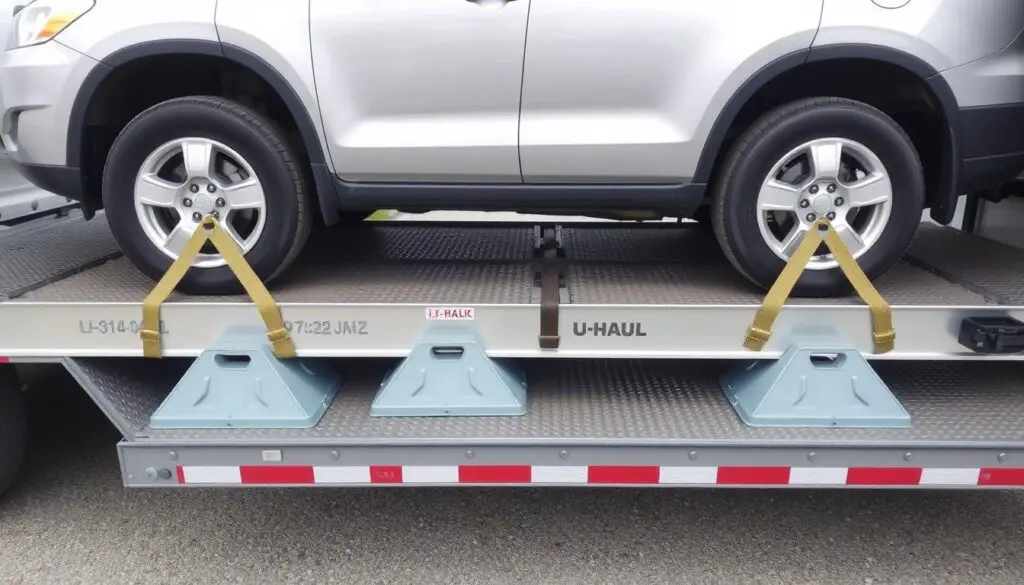
Pro Tip: When loading your vehicle onto the auto transport, position it so that 60% of the vehicle’s weight is in front of the trailer axle. This weight distribution helps prevent trailer sway and ensures better handling.
U-Haul Auto Transport Weight Limits vs. Competitors
How do U-Haul’s weight limits compare to other DIY and professional auto transport options? Here’s a comparative analysis:
| Transport Provider | Maximum Vehicle Weight | Vehicle Size Limitations | Price Range | Additional Notes |
| U-Haul Auto Transport | 5,290 lbs | Up to 17’6″ length | $19.95-$39.95/day + mileage | DIY option, requires towing vehicle |
| Penske Car Carrier | 4,300 lbs | Up to 16′ length | $45-$65/day + mileage | Limited availability, DIY option |
| Budget Tow Dolly | 3,600 lbs | Front-wheel drive only | $25-$50/day + mileage | Limited to front-wheel drive vehicles |
| Professional Auto Transport | 6,000+ lbs | Various options available | $500-$1,500+ depending on distance | Door-to-door service, no DIY required |
U-Haul offers a competitive balance of weight capacity, vehicle size accommodation, and pricing compared to other DIY options. While professional auto transport services can handle heavier vehicles, they come at a significantly higher cost and don’t offer the flexibility of a DIY approach.
Frequently Asked Questions About U-Haul Weight Restrictions
How do I know if my car is too heavy for a U-Haul auto transport?
Check your vehicle’s curb weight in the owner’s manual or door jamb sticker and compare it to the U-Haul auto transport maximum capacity of 5,290 pounds. If your vehicle exceeds this weight, you’ll need to consider alternative transport options such as the toy hauler (capacity 6,845 pounds) or professional auto transport services.
Can I transport an SUV or truck on a U-Haul auto transport?
Many SUVs and smaller trucks can be transported on a U-Haul auto transport as long as they don’t exceed the 5,290-pound weight limit and 17’6″ length limit. Larger SUVs and full-size trucks typically exceed these limits and may require a toy hauler or professional transport services.
What happens if I accidentally exceed the weight limit?
Exceeding weight limits creates safety hazards, potential equipment damage, and legal issues. If you discover your vehicle exceeds the limit during the pre-tow inspection, U-Haul will recommend an alternative transport option. If discovered during transit by law enforcement, you may face fines and be required to find alternative transport before continuing.
Can I put additional items in my car while it’s being transported?
U-Haul recommends against storing items in your vehicle during transport for several reasons: it adds weight that could exceed limits, items can shift and damage your vehicle interior, and most insurance policies won’t cover personal belongings stored in a transported vehicle.
Do weight limits vary by U-Haul location?
No, U-Haul’s weight limits are standardized across all locations. However, equipment availability may vary by location, and some trailers may be designated for local use only rather than one-way rentals.

Real-World Examples: Vehicles Within and Outside U-Haul Limits
Vehicles Typically Within U-Haul Auto Transport Limits (Under 5,290 lbs)
- Toyota Camry (3,310 lbs)
- Honda Civic (2,877 lbs)
- Ford Fusion (3,472 lbs)
- Chevrolet Malibu (3,126 lbs)
- Nissan Altima (3,208 lbs)
- Mazda CX-5 (3,552 lbs)
- Subaru Outback (3,660 lbs)
- Volkswagen Jetta (3,031 lbs)
- Hyundai Sonata (3,120 lbs)
- Kia Optima (3,230 lbs)
Vehicles Typically Exceeding U-Haul Auto Transport Limits (Over 5,290 lbs)
- Ford F-150 (4,700-5,600 lbs depending on configuration)
- Chevrolet Tahoe (5,600 lbs)
- GMC Yukon (5,500+ lbs)
- Toyota Sequoia (5,730 lbs)
- Jeep Grand Wagoneer (6,420 lbs)
- Cadillac Escalade (5,635 lbs)
- Lincoln Navigator (5,685 lbs)
- Nissan Armada (5,900 lbs)
- Dodge Ram 1500 (4,800-6,400 lbs depending on configuration)
- Ford Expedition (5,400+ lbs)
Note: Vehicle weights can vary based on trim level, optional equipment, and model year. Always verify your specific vehicle’s weight rather than relying on general estimates.
Contact Information and Resources for Verifying Vehicle Weights
Need to verify if your specific vehicle meets U-Haul auto transport weight limits? Here are resources to help:
U-Haul Customer Service
Contact U-Haul’s customer service team directly for specific questions about your vehicle and transport options.
Online Reservation System
U-Haul’s online system can automatically determine which transport option is best for your vehicle based on its specifications.
Visit a U-Haul Location
Get a free pre-tow inspection at your local U-Haul center to verify your vehicle’s weight and compatibility with their equipment.
Ready to Transport Your Vehicle?
Now that you understand U-Haul auto transport weight limits, you can make an informed decision about the best option for your vehicle. Reserve your equipment today to ensure availability for your moving date.
Conclusion: Ensuring a Safe Transport Experience
Understanding U-Haul auto transport weight limits is essential for a safe, legal, and successful vehicle transport experience. By accurately determining your vehicle’s weight, choosing the appropriate transport equipment, and following proper loading procedures, you can avoid the risks associated with exceeding weight limits.
Remember that U-Haul offers free pre-tow inspections to verify your vehicle’s compatibility with their equipment. When in doubt, always consult with U-Haul professionals who can guide you to the best transport solution for your specific vehicle and situation.
Whether you’re moving across town or across the country, proper attention to weight limits will help ensure your vehicle arrives safely at its destination without complications along the way.