ParkSense brings together sensors, cameras, and on-screen guidance to simplify low-speed maneuvers. The suite pairs ultrasonic sensing with a rear back-up camera and dynamic guidelines to show intended path and curb distance.
Drivers get prompts during parking and, on select trims, automatic braking through ParkSense Front and Rear Park Assist with Stop. The system also works alongside Blind-Spot Monitoring and Rear Cross Path Detection to boost awareness before and after a maneuver.
Across many U.S. models, from city-focused SUVs to premium trims, these park assist tools improve confidence in tight spots. The Jeep Grand Cherokee Summit highlights the most complete setup with parallel and perpendicular park assist and a stitched overhead view.
Quick note: stay attentive. Even where steering help exists, the driver controls the accelerator and brake and must maintain clear sensors and lenses for best performance.
Key Takeaways
- ParkSense blends sensors and cameras to aid parking and reduce guesswork.
- Dynamic guidelines mirror steering to show path and curb proximity.
- Automatic braking may activate at very low speeds on some trims.
- Integration with blind-spot and cross-path alerts enhances situational awareness.
- Available 360-degree and overhead stitching offer clearer alignment in tight spaces.
What is ParkSense on a Jeep and how the system works today
Today’s parking technology pairs ultrasonic detection with live camera views to guide precise positioning.
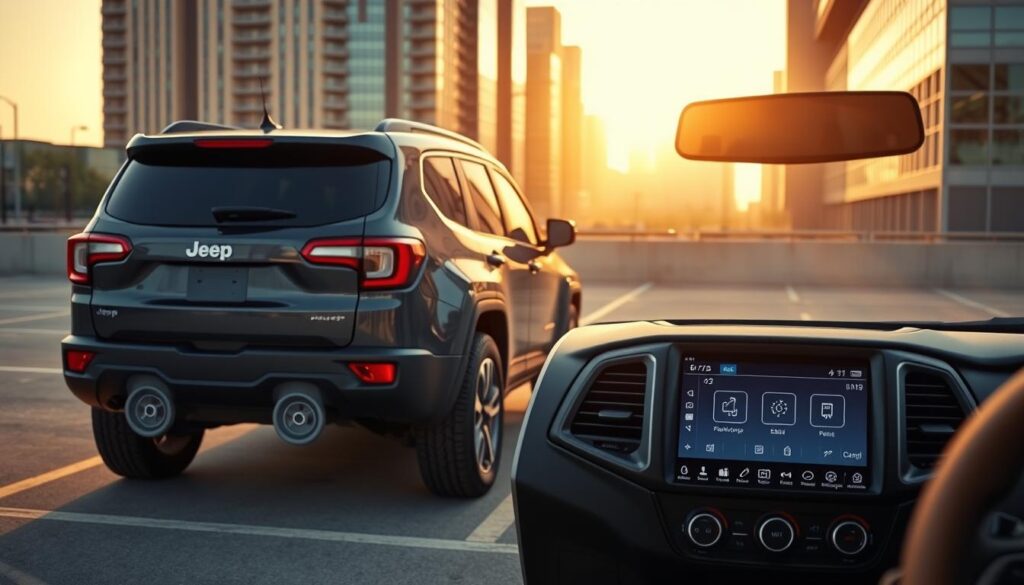
Core components include front and rear ultrasonic sensors that scan for obstacles and a ParkView Rear Back Up Camera that displays a wide live image with dynamic guidelines. Audible tones rise in frequency as distance shrinks. At very low speeds, the rear park assist with stop can apply braking if contact seems imminent.
Semi-autonomy appears on higher trims such as the grand cherokee Summit. When a space is found, parallel perpendicular park routines can steer the vehicle. The driver still handles the accelerator, brake, and gear selection.
Integrated detection links blind-spot monitoring and rear cross path alerts with the parking assist cues. An available 360-degree Surround View offers an overhead composite to aid alignment and curb clearance.
| Component | Function | Typical Cue |
|---|---|---|
| Ultrasonic sensors | Scan front/rear for obstacles | Audible tones, proximity beeps |
| ParkView Rear Back Up Camera | Live rear image with dynamic guidelines | On-screen path and shift prompts |
| Front & Rear Park Assist with Stop | Warns and applies brake at very low speeds | Increasing tone frequency, automatic brake |
| Parallel/Perpendicular park assist | Steers into space; driver controls pedals | On-screen instructions, assist button |
These capabilities are available across many U.S. models — Compass, Wrangler, Grand Cherokee, and Wagoneer among them — making suvs park assist options common for everyday parking. The Active Park Assist control often sits near the center stack for easy access.
What is ParkSense Jeep: Understanding Its Advanced Safety Features in real-world parking
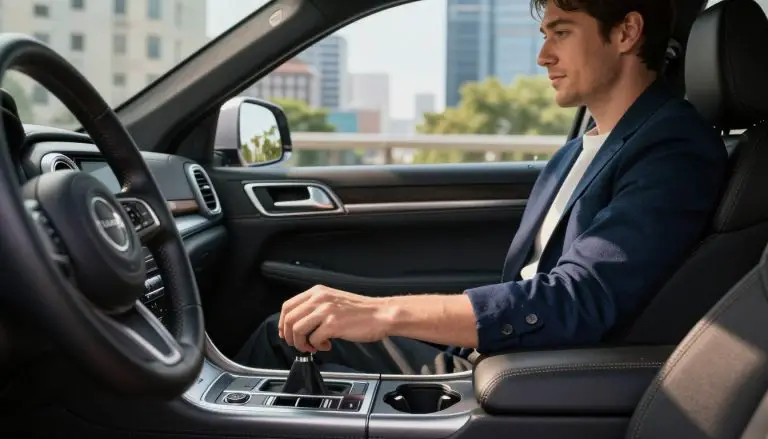
Begin by finding the Active Park Assist control. On most recent models the park assist button shows a steering wheel icon beside a “P” and sits on the center stack or console.
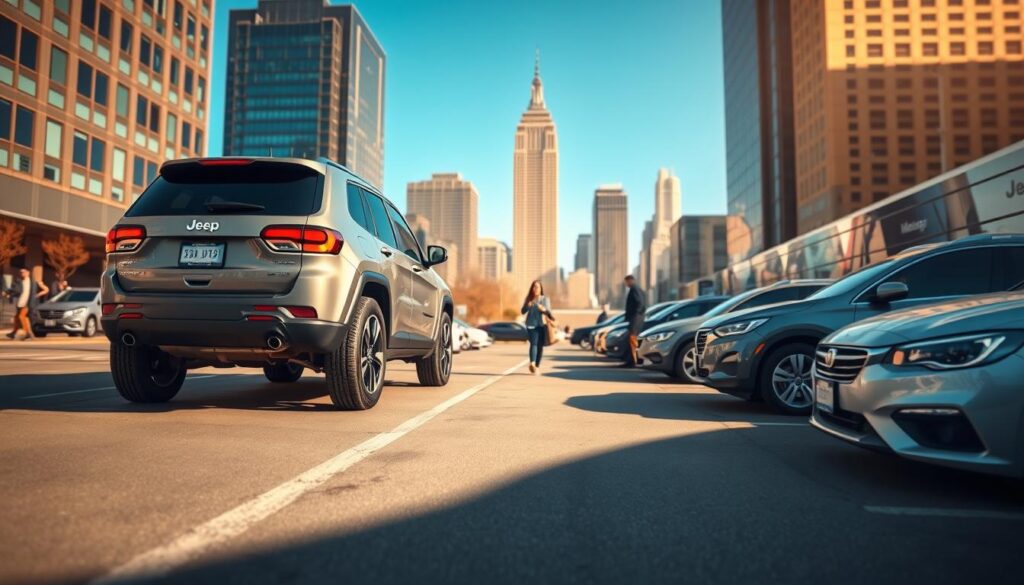
Press the button and drive slowly along a row so the system scans both sides for an open parking space. Use your turn signal to pick driver- or passenger-side search; if you don’t signal the default is passenger.
Using prompts and guided steering
When a suitable spot appears, the display prompts you to stop and shift into the requested gear. Ease off the brake and let the vehicle steer for parallel or perpendicular maneuvers while you control speed and observe surroundings.
Best practices and troubleshooting
Move slowly for accurate detection and keep sensors and lenses clean from ice and grime. If the feature won’t engage, confirm park assist is enabled in settings, check gear position, and ensure the parking brake is released.
“Drivers remain responsible for pedals and surroundings; stay attentive to pedestrians and cross traffic.”
Practice both parallel perpendicular park routines in a quiet lot to build confidence with on-screen guidance and the jeep park assist experience.
Keeping Jeep Park Assist reliable: maintenance, troubleshooting, and model-specific options
Small upkeep steps prevent sensor errors and cloudy camera images during daily parking. Routine care keeps alerts accurate and steering aids ready when you pull into a tight spot.
Maintenance essentials
Clean sensors and the parkview® rear back camera often. Remove ice, mud, and salt that block ultrasonic sensors and blur images.
Keep software up to date. Install firmware and infotainment updates so calibrations and alert logic stay current.
Schedule a professional calibration after windshield service, collisions, or if guidelines look misaligned. Certified shops can realign cameras and sensors for reliable detection.
Quick fixes and in-cabin troubleshooting
If the park assist feature won’t engage, check that it is enabled in settings. Confirm the vehicle is in the requested gear and the parking brake is released.
Also scan around for obstructions like bike racks or heavy grime. Adjust alert volume and sensitivity from the control menu if tones are too quiet or too frequent.
Model highlights and options
The grand cherokee summit pairs self-steering for parallel and perpendicular maneuvers with an available 360-degree Surround View to simplify alignment and curb clearance.
The Renegade complements the park assist tools with Blind-Spot Monitoring, Rear Cross-Path Detection, Lane Departure Warning, and forward collision warning with active braking. That combination boosts low-speed awareness during tight maneuvers.
- Prioritize cleaning sensors to preserve detection accuracy.
- Keep software current and seek professional calibration as needed.
- Consider options packages that add Surround View and extra park assist features for city parking.
“Regular checks and timely service keep electronic park aids predictable and safer to use.”
For practical steps when starting or troubleshooting a Grand Cherokee, see this quick guide on a jeep grand cherokee quick start.
Conclusion
Summing up, the kit blends proximity sensing with on-screen guidance and optional steering aid to make tight spots easier to handle. Practical steps — signal to choose the search side, move slowly for accurate scanning, and keep sensors and lenses clean — keep the system dependable.
Grand Cherokee models, and the Grand Cherokee Summit in particular, show how added surround views and self-steering refine positioning and cut parking time. Pairing these tools with Blind-Spot Monitoring and Forward Collision Warning adds layered protection for everyday driving.
Choose the right model and options for your routine, practice the routines, and maintain the system. Drivers who master these aids gain confidence, save time, and park with better accuracy in crowded urban and suburban environments.
FAQ
What components make up ParkSense on a Jeep and how do they work together?
ParkSense combines front and rear ultrasonic sensors with ParkView® rear backup camera technology to detect obstacles and show visual guidance on the Uconnect or instrument display. Rear Park Assist with Stop can apply braking if an object is detected while reversing. Together, sensors feed distance data while the camera supplies a live view, giving drivers audible alerts and on-screen graphics to help judge clearance.
Which parking modes are available on Grand Cherokee Summit and other models?
Many Grand Cherokee Summit trims and select SUVs offer both parallel and perpendicular park assist modes. Active Park Assist systems scan for suitable spaces while driving slowly, then guide steering during maneuvering. Availability depends on trim and options packages, so check the specific model’s equipment list for confirmation.
Does the system steer and control speed, or does the driver keep control?
Active steering support handles steering inputs when engaged, but drivers retain control of brakes, accelerator, and gear selection. The system prompts when to shift or slow down and will override steering if unsafe, so operators must remain attentive and ready to intervene.
How does ParkSense integrate with other safety technologies?
ParkSense works alongside Blind-Spot Monitoring and Rear Cross Path Detection to enhance low-speed awareness. Some models also provide a 360-degree Surround View camera for a comprehensive visual of the vehicle’s surroundings, improving accuracy during tight maneuvers.
Are these parking aids available across all Jeep SUVs in the United States?
Present-day availability varies by model and trim. Grand Cherokee Summit and higher trims commonly include advanced Park Assist features, while compact models like the Renegade may offer scaled versions of parking sensors and backup cameras. Check dealer specs or the official configurator for specific availability.
How do I activate Active Park Assist and choose parallel or perpendicular modes?
Activate the system using the Park Assist button on the center console or through the vehicle settings menu. After signaling and driving by potential spaces at low speed, the system will scan and then prompt on-screen to select parallel or perpendicular mode. Follow the on-screen and audible instructions to begin guided parking.
What are the step-by-step actions during an automated park assist maneuver?
First, signal to indicate the target side and drive slowly to allow the system to scan for spaces. When a suitable spot is found, accept the prompt. The system guides steering while instructing you when to shift, brake, or accelerate. Maintain control of speed and gear selection and be ready to stop if a hazard appears.
What best practices improve ParkSense accuracy?
Approach slowly, keep sensor areas and camera lenses clean, and follow dynamic guideline cues on the display. Avoid heavy bumper loads or aftermarket accessories that block sensors. Regular maintenance and timely software updates also help maintain reliable performance.
What are the system limits and driver responsibilities when using Park Assist?
Parking aids are supplemental; drivers must stay attentive and supervise all maneuvers. Sensors can be affected by weather, dirt, or low-contrast objects, and moving pedestrians or small obstacles may not be detected. Never rely solely on automated prompts—scan surroundings and intervene when necessary.
How do I maintain and troubleshoot Park Assist features?
Clean sensors and camera lenses regularly, check for warning messages in the instrument cluster, and ensure the vehicle’s software is up to date. If the system flags a fault, consult the owner’s manual for on-screen cues, and schedule professional diagnostics and calibration at a certified Chrysler Dodge Jeep Ram service center if issues persist.
What quick fixes should I try if the system shows errors or reduced function?
Start by cleaning sensors and the backup camera, then cycle the ignition off and on. Verify there’s no visible damage or debris on bumpers. If errors continue, check for stored messages in vehicle settings and contact a dealer for a deeper scan or calibration.
How do Grand Cherokee Summit features compare to safety tech in smaller models like Renegade?
Grand Cherokee Summit typically offers more advanced Park Assist capabilities, including Active Park Assist and available 360-degree cameras, while the Renegade focuses on compact-suv solutions such as rear park sensors and ParkView camera. Both aim to enhance confidence and control but differ in sensor arrays and available driving aids.