Accessing the engine bay of your Jeep Gladiator is essential for maintenance and repairs. The process involves a simple mechanism that allows you to open the hood safely and efficiently.
Understanding the hood release lever and its operation is crucial. By following a few straightforward steps, you can gain access to the engine compartment without hassle.
Key Takeaways
- Understanding the importance of accessing the engine bay.
- Learning the simple steps to open the Jeep Gladiator hood.
- Familiarizing yourself with the hood release lever.
- Ensuring safe and efficient access to the engine compartment.
- Maintaining your vehicle with ease.
Understanding Your Jeep Gladiator’s Hood Mechanism
Understanding the intricacies of your Jeep Gladiator’s hood is crucial for safe and efficient engine bay access. The hood mechanism is a critical component that allows you to inspect and maintain your vehicle’s engine.
The Dual-Latch Hood System of the Jeep Gladiator
The Jeep Gladiator features a dual-latch hood system, designed to provide an additional layer of safety and security. This system requires two separate actions to open the hood: releasing the interior lever and then disengaging the secondary safety latch. The dual-latch mechanism prevents accidental hood openings, ensuring that the hood remains securely closed while driving. 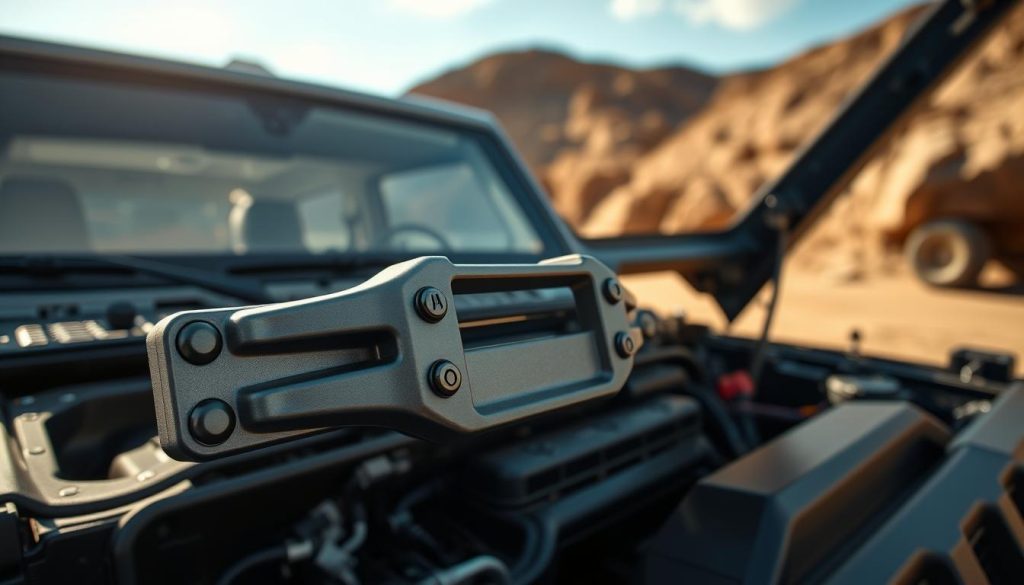
Safety Precautions Before Accessing the Engine Bay
Before accessing the engine bay, it’s essential to take certain safety precautions. Ensure your vehicle is parked on a level surface and apply the parking brake. Never open the hood if the engine is hot, as this can cause injury. Additionally, be cautious of any moving parts or electrical components within the engine bay. By following these guidelines, you can safely inspect and maintain your Jeep Gladiator’s engine.
Common Reasons to Access Your Jeep Gladiator’s Engine Bay
Understanding when and why to access your Jeep Gladiator’s engine bay is essential for maintaining your vehicle’s health. The engine bay is a critical area where various components work together to power your vehicle, and accessing it is necessary for both routine maintenance and emergency situations.
Routine Maintenance Tasks Requiring Hood Access
Regular maintenance is crucial for the longevity and performance of your Jeep Gladiator. Routine tasks such as checking the oil level, inspecting the air filter, and topping off fluids require hood access. Additionally, tasks like replacing the spark plugs, inspecting belts and hoses, and checking the battery condition are essential for preventing potential issues. For more information on maintaining your vehicle, you can refer to guides on opening your BMW hood, which may provide useful insights into general hood release mechanisms.
Emergency Situations When You Need to Open the Hood
In emergency situations, accessing the engine bay quickly can be crucial. For instance, if your vehicle overheats, you’ll need to open the hood to inspect the coolant level or look for signs of leaks. Similarly, if you notice smoke or flames coming from the engine area, immediate hood access is necessary to assess and potentially mitigate the situation. Being familiar with the hood release mechanism can save valuable time in these critical moments.
By understanding the reasons for accessing your Jeep Gladiator’s engine bay, you can ensure you’re prepared for both routine maintenance and unexpected emergencies, keeping your vehicle in optimal condition.
How to Open Jeep Gladiator Hood: Step-by-Step Guide
The Jeep Gladiator’s hood is designed with a dual-latch system, making it secure and easy to open with the right guidance. This system is crucial for safety, ensuring that the hood is not accidentally opened while the vehicle is in motion. To access the engine bay, follow these simple steps.
Step 1: Locating and Pulling the Interior Hood Release Lever
The first step in opening your Jeep Gladiator’s hood is to locate and pull the interior hood release lever. This lever is typically found under the dashboard, on the driver’s side. It’s designed to be easily accessible, allowing you to release the hood’s primary latch from the comfort of your seat. Pull the lever firmly towards you to release the hood.
For more detailed instructions and visual aids, you can refer to resources like this guide on opening your Jeep hood.
Step 2: Finding and Disengaging the Secondary Safety Latch
After pulling the interior hood release lever, you’ll need to find and disengage the secondary safety latch. This latch is a safety feature that prevents the hood from being opened accidentally. It’s usually located at the front of the vehicle, near the center of the hood. You’ll need to slide or push this latch to the side to fully release the hood.
Be cautious when handling the secondary safety latch, as it may be spring-loaded or require a bit of force to disengage.
Step 3: Lifting and Securing the Hood with the Prop Rod
Once the secondary safety latch is disengaged, you can lift the hood and secure it with the prop rod. The prop rod is designed to hold the hood in place, giving you clear access to the engine bay. To secure the hood, locate the prop rod and insert it into the designated slot on the hood’s underside.
Make sure the hood is securely supported by the prop rod before you start working under it. This will prevent any accidents or injuries.
Troubleshooting Common Hood Opening Problems
Troubleshooting hood opening problems in your Jeep Gladiator is simpler than you think, and we’re here to guide you through it. Despite its rugged design, the hood mechanism can sometimes be finicky, leading to frustration when trying to access the engine bay.
Dealing with a Stuck or Frozen Hood Latch
A stuck or frozen hood latch can be a common issue, especially after exposure to harsh weather conditions. To resolve this, apply a penetrating lubricant to the latch and gently manipulate it until it loosens. Avoid using force, as this could damage the latch or surrounding components.
Resolving Hood Release Cable Issues
If the hood release cable is damaged or has become disconnected, it will need to be repaired or replaced. Inspect the cable for any signs of wear or damage, and check the connection points to ensure they are secure. Replacing the cable may require professional assistance if you’re not comfortable with DIY repairs.
Addressing Alignment Problems After Off-Road Use
After off-road adventures, the hood may become misaligned, making it difficult to open or close. To address this, check the hood alignment and adjust the hinges as necessary. Ensure that the hood is properly secured and that the latch is functioning correctly.
By following these troubleshooting steps, you should be able to resolve common hood opening problems with your Jeep Gladiator. Regular maintenance can also help prevent these issues from arising in the future.
Maintaining Your Jeep Gladiator’s Hood Mechanism
Proper maintenance of your Jeep Gladiator’s hood mechanism can prevent future issues and ensure smooth operation. Regular upkeep is essential to extend the lifespan of the hood and its components.
Proper Cleaning and Lubrication Schedule
To maintain your Jeep Gladiator’s hood mechanism, it’s crucial to establish a regular cleaning and lubrication schedule. Dirt and debris can accumulate and cause the latch to stick or malfunction. Use a soft brush or cloth to remove any dirt or debris from the hood latch and hinges. Apply a silicone-based lubricant to the moving parts to keep them running smoothly.
It’s recommended to clean and lubricate the hood mechanism every 6 months or during routine maintenance checks. This will help prevent corrosion and wear on the components.
When to Schedule Professional Latch Inspection
While regular cleaning and lubrication can help maintain the hood mechanism, it’s also important to have a professional inspect the latch periodically. If you notice any signs of wear or damage, such as rust or corrosion, it’s best to have a professional mechanic inspect and repair the latch.
A professional inspection can help identify potential issues before they become major problems. It’s recommended to schedule a professional latch inspection every 2 years or during major maintenance checks.
Pro Tips for Jeep Gladiator Hood Operation and Care
To ensure the longevity of your Jeep Gladiator’s hood, it’s crucial to follow proper hood operation and hood care techniques. Effective hood management not only enhances the overall performance of your vehicle but also prevents potential damage.
Correctly Closing Your Hood to Prevent Damage
When closing your Jeep Gladiator’s hood, make sure to lower it slowly and evenly until it is about 6 inches from the latch, then drop it into place. Avoid slamming the hood, as this can cause unnecessary stress on the hood and its components. Proper alignment is key to preventing damage to the hood and the latch.
Protecting Hood Components During Off-Road Adventures
During off-road adventures, your Jeep Gladiator’s hood components can be exposed to harsh conditions. Regularly inspect the hood latch, release cable, and other components for signs of wear or damage. Consider applying a protective coating to the latch and other metal parts to prevent corrosion.
Conclusion
Understanding how to open and maintain your Jeep Gladiator’s hood is crucial for both routine maintenance and emergency situations. By following the steps outlined in this article, you’re now equipped to access the engine bay safely and efficiently.
The dual-latch hood system of the Jeep Gladiator provides an additional layer of safety, and being aware of this mechanism is key to avoiding potential issues. Regular maintenance, including proper cleaning and lubrication of the hood latch, will ensure smooth operation.
In summary, opening your Jeep Gladiator’s hood is a straightforward process when you know the steps. By combining this knowledge with regular maintenance, you’ll be able to keep your vehicle in top condition, ready for both on-road driving and off-road adventures.
FAQ
How do I open the hood of my Jeep Gladiator?
To open the hood of your Jeep Gladiator, first locate and pull the interior hood release lever, then find and disengage the secondary safety latch, and finally lift and secure the hood with the prop rod.
What is the purpose of the dual-latch hood system in the Jeep Gladiator?
The dual-latch hood system is designed to provide an additional layer of safety by requiring two separate actions to open the hood, preventing accidental opening while driving.
Why is it important to properly maintain the hood mechanism of my Jeep Gladiator?
Proper maintenance of the hood mechanism, including regular cleaning and lubrication, is crucial to ensure smooth operation and prevent issues such as a stuck latch.
What should I do if my Jeep Gladiator’s hood latch is stuck or frozen?
If your Jeep Gladiator’s hood latch is stuck or frozen, try applying a lubricant to loosen it, or gently manipulate the latch to free it. If the issue persists, consider consulting a professional mechanic.
How often should I inspect the hood release cable of my Jeep Gladiator?
It is recommended to inspect the hood release cable during routine maintenance checks, and replace it if you notice any signs of wear or damage.
Can off-road driving affect the alignment of my Jeep Gladiator’s hood?
Yes, off-road driving can potentially cause alignment issues with your Jeep Gladiator’s hood. Inspect the hood and its components after off-road adventures to ensure proper alignment and function.
How do I correctly close the hood of my Jeep Gladiator to prevent damage?
To correctly close the hood, ensure it is properly aligned, then gently lower it until it latches securely, avoiding slamming or forcing it shut.
What are some common reasons to access the engine bay of my Jeep Gladiator?
Common reasons to access the engine bay include routine maintenance tasks such as oil changes, checking fluid levels, and inspecting belts and hoses, as well as addressing emergency situations like a faulty battery or overheating engine.