The intake plenum is the air chamber that sits between the throttle body and the intake manifold. It acts as a small reservoir that evens out pulses of air before the flow reaches each cylinder.
The result is steadier delivery of metered air so the fuel burns more consistently. That steady supply helps the engine make more reliable power and torque across normal driving ranges.
Because valves open and close, airflow at each intake runner is not steady. A reservoir smooths those swings and improves throttle response.
This guide will show where this chamber sits, how size and shape affect distribution to cylinders, and why leaks or poor design show up as drivability issues. It also distinguishes the plenum from the intake manifold so readers can tell each part apart under the hood.
Key Takeaways
- The plenum evens out airflow pulses before air reaches cylinders.
- Steady air delivery supports efficient combustion and stronger torque.
- Size and shape influence power delivery and throttle feel.
- Leaks or uneven distribution cause rough idle and poor throttle response.
- The intake plenum and intake manifold are separate parts with different jobs.
What a Plenum Is on a Car and Where It Sits in the Intake System
A plenum acts as a buffer chamber, holding and evening out air flow for the intake runners. It serves as a shared reservoir that supplies multiple cylinders with a steadier charge during each intake event.
How it connects in the intake chain
The inlet ducting feeds the throttle body, which meters airflow into the plenum. From there, air moves into the runners and then past the intake valve into each cylinder.
The throttle controls flow and creates small pressure changes. The plenum buffers those changes so each runner sees more consistent conditions.
- Practical definition: a shared air reservoir that evens supply to multiple runners.
- Location: downstream of the throttle and upstream of the manifold runners.
- Design note: many engines integrate the plenum into the intake manifold casting; performance setups may use a separate bolted chamber.
| Feature | Integrated Plenum | Separate Plenum |
|---|---|---|
| Packaging | Compact, fewer parts | Modular, easier to modify |
| Air distribution | Designed with manifold shape | Can be tuned for balance |
| Serviceability | Harder to replace | Replaceable part for upgrades |
Note: leaks, cracks, or poor sealing at these connections can cause notable drivability problems and will be covered in the troubleshooting section.
What is a Plenum on a Car: Unveiling Its Role in Engine Performance
Intake pulses pull the shared chamber down; the right volume keeps pressure swings small. A properly sized plenum smooths those pulses so each intake event sees more consistent pressure and airflow.
That steadier condition helps runners fill more predictably. Repeatable filling leads to more consistent torque from one combustion event to the next. In short, stable pressure supports steadier flow and better cylinder-to-cylinder repeatability.
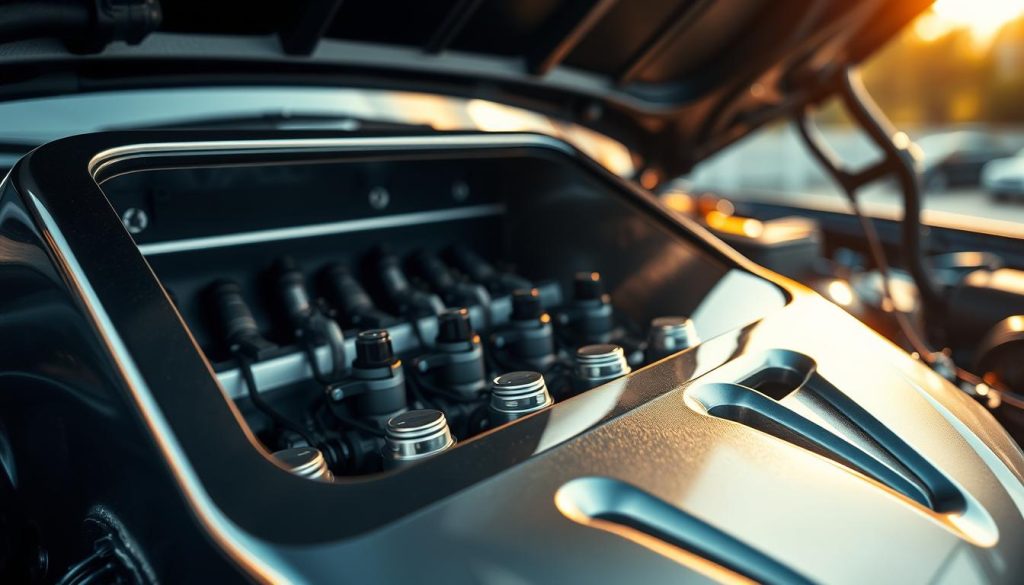
How pressure waves form and why the chamber matters
When the intake valve opens the piston draws air in; closing the valve can send a bounce back as a pressure wave. The plenum acts as a damper and reservoir so those waves do not cause large swings at the throttle or a restrictor.
Restrictor limits and choked flow
Mass flow through a restrictor depends on area, air density, and the pressure differential across it. The smallest section can hit choked flow, which caps mass airflow near sonic speed. Once choked flow occurs, power can no longer increase with demand, and torque may fall off at high RPM.
| Effect | Plenum Role | Performance Impact |
|---|---|---|
| Short pressure dips | Reservoir smooths fluctuations | Improved cylinder filling consistency |
| Valve-induced waves | Damps reflected pulses | Cleaner throttle response |
| Restrictor/critical flow | Buffers upstream pressure | Delays onset of choked flow |
| Excessive flow changes | Not always beneficial | Can reduce in-cylinder mixing and combustion quality |
How Plenum Size and Shape Affect Power, Torque, and Throttle Response
Plenum volume and contour set where the engine makes its torque peak and how quickly the throttle feels to the driver.
Volume guidelines: for naturally aspirated builds target roughly ~80% of engine displacement; for forced induction, aim near ~150% to give the turbocharged system extra damping and capacity.
The core tradeoff is simple. A larger chamber damps pressure swings and helps sustain steady flow under load, which often raises peak power and smooths torque delivery. But filling more air takes time, so quick throttle response can feel softer.
Distribution and shape basics
Center‑feed plenums generally balance air to all runners and reduce cylinder‑to‑cylinder variation. End‑feed designs can bias flow toward the far end, making early cylinders leaner and later ones richer.
Practical shape cues: expand the chamber well before the first cylinder, taper after that but keep the taper no smaller than ~1.5× the runner diameter, and extend beyond the last cylinder. Smooth, radiused runner entries or bell mouths cut turbulence and improve mixing while preserving good inlet velocity.
| Feature | Effect | Result |
|---|---|---|
| Volume (NA ~80%) | Damping | Smoother torque |
| Volume (Turbo ~150%) | Reservoir | Higher sustained flow |
| Bell mouth entries | Reduced turbulence | Better efficiency |
Intake Plenum vs. Intake Manifold: Understanding the Difference
A clear difference exists: one component stores and stabilizes pressure, while the other shapes and times airflow to each cylinder. This contrast explains why both parts matter for breathing and torque delivery.
What the manifold does for cylinder-to-cylinder distribution
The intake manifold is a network of passages that routes airflow — and on many engines, fuel — to each cylinder. Its runners set path length and cross-section, which affect how well the engine breathes at low, mid, and high rpm.
Good manifold design minimizes turbulence and imbalance so cylinders see similar mixtures. That boosts efficiency and keeps fueling consistent across cylinders.
How pressure stability complements runner design over time
The plenum supplies a steadier pressure so when valves open, there’s enough force to push air into cylinders. Runners then “meter” pulses and time the charge for each intake event.
- Pressure stability: reduces pulse swings and evens filling.
- Runners: shape flow dynamics that tune torque across rpm.
- Performance note: tuned manifolds and plenums have long been used in motorsports to broaden torque and improve cylinder filling, with exhaust tuning further refining results.
For practical upgrades, consider matched plenum and manifold designs rather than changing one without the other. See this comparison for intake upgrade ideas: Edelbrock intake comparison.
How to Spot Plenum-Related Performance Problems and Choose the Right Fix
Listen and log: inconsistent idle, hesitation on tip-in, and uneven fueling between cylinders are the most common signs of a troubled intake chamber.
Quick clues from data and sound
On tuning logs, an end-feed layout often shows one end trending lean while the other runs rich. That pattern points to distribution imbalance rather than injectors.
Under-the-hood checklist
- Check for vacuum or boost leaks at seams and clamps.
- Inspect for cracked plastic, welded seam failures, or degraded gaskets.
- Look for sharp internal corners or flat panels that cause turbulence or stress risers.
When to repair or upgrade
If cylinder balance stays poor, or your power goals change, consider a redesigned plenum or an aftermarket intake manifold. For NA builds with space, twin throttle bodies can reduce end-feed bias.
Forced induction notes
Boosted systems need stronger, heat-managed parts. Compressors help damp some pressure waves, but volume, runner length, and structural strength still determine reliable flow and long-term performance.
| Symptom | Likely Cause | Fix |
|---|---|---|
| Uneven fuel trims across cylinders | End-feed imbalance or runner blockage | Plenum redesign or manifold replacement |
| Hesitation on throttle tip-in | Leaks or small plenum volume | Seal repair, increase volume, or add damping |
| Cracks under boost | Flat panels/sharp corners, weak material | Replace with reinforced, radiused design and cooler routing |
Conclusion
A properly sealed intake chamber keeps pressure steady, which helps combustion stay consistent across cylinders.
Its core purpose is simple: store and damp pulses so each runner sees a more even supply of air. That stability supports predictable drivability and smoother idle.
Size, feed location, and runner entry shape all affect how quickly the chamber responds and how stable pressure remains through the rev range. Small chambers favor quick response; larger volumes aid sustained flow.
Why it matters: steadier airflow and consistent pressure let the engine make repeatable torque and usable output under normal driving.
Before swapping parts, use the inspection checklist and design notes here as your starting framework. Match any intake changes to goals and constraints for the best results.
FAQ
What does an intake plenum do and where does it sit in the intake system?
The intake plenum serves as an air reservoir that sits between the throttle body and the intake runners. It collects airflow from the inlet ducting, evens pressure pulses, and feeds each cylinder through the manifold runners to support consistent combustion and smoother engine operation.
How does a plenum maintain more consistent pressure for each intake event?
By providing a larger volume of air than a single runner, the plenum reduces the magnitude of pressure swings caused by valve events. That buffering effect smooths pulses so each intake stroke sees steadier pressure, which helps improve fuel-air mixing and repeatable cylinder filling.
Why does smoothing pressure pulses help torque and throttle response?
Smoother pressure pulses reduce surges and starvation in individual runners, yielding more even torque across cylinders and steadier power delivery. That stability improves drivability and can enhance perceived throttle response, though plenum size also influences response speed.
How can restrictors, pressure differential, or choked flow limit power?
Any restriction upstream or inside the plenum raises a pressure drop and limits airflow at higher engine speeds. When flow approaches choke conditions, the engine can’t ingest enough air for more fuel, capping power. Properly sized ducts and runner entries minimize these limits.
How do valve events create pressure waves and how does the plenum help damp them?
Opening and closing intake valves generate pressure waves that travel back into runners. The plenum’s volume and geometry absorb and reflect these waves, reducing peak-to-trough swings and promoting steadier flow into the cylinder on the next intake stroke.
What plenum volume guidelines apply to naturally aspirated versus turbocharged builds?
Naturally aspirated engines typically use smaller plenum volumes tuned for midrange responsiveness, while turbocharged setups often use larger plenums to buffer boost pulses and improve distribution. Exact volumes depend on engine displacement, RPM range, and tuning goals.
Why do larger plenums sometimes slow throttle response?
Larger volumes increase the air reservoir that must change pressure when the throttle moves. That extra mass and volume smoothes transient changes, which reduces abrupt throttle response even as it benefits steady-state torque and distribution.
How does center-feed versus end-feed plenum design affect air distribution?
Center-feed plenums inject air near the middle, often promoting balanced flow to all runners. End-feed designs introduce air at one end, which can bias distribution toward nearby cylinders. Careful internal shaping and runner tuning address imbalance risks.
Which shape details in a plenum matter for performance?
Rapid expansion near the throttle, a controlled taper, and extending the plenum beyond the last cylinder help manage flow separation and wave behavior. Smooth internal transitions and adequate cross-sectional area minimize turbulence and support better mixing.
How do runner entries and bell mouths improve flow and mixing?
Rounded bell-mouth entries reduce separation and turbulence at the runner entrance, maintaining higher effective flow and promoting even fuel-air mixing. Properly profiled entries help preserve velocity and lower pressure losses into the runners.
What’s the difference between an intake plenum and an intake manifold?
The plenum is the common chamber that stores and distributes air; the intake manifold comprises the runners and passages that deliver that air to each cylinder. Together they control pressure stability and cylinder-to-cylinder distribution across RPM ranges.
How does plenum pressure stability complement manifold runner design?
Stable plenum pressure supplies a steady source for runner tuning and resonance. When plenum pressure is consistent, runner length and cross-section can more reliably exploit pressure wave tuning to boost cylinder filling at target RPMs.
What drivability clues point to plenum-related issues?
Uneven fueling, misfires, weak or lumpy idle, or poor throttle response can indicate leaks, internal flow imbalance, or damaged plenum surfaces. Symptoms often appear under load or at specific RPM bands where flow distribution matters most.
What should I inspect when checking for plenum problems?
Look for cracks, vacuum leaks, loose clamps at the throttle and ducting, sharp internal corners, or deteriorated gaskets. Also inspect for clogged inlet screens, damaged bell mouths, and signs of uneven soot or residue at runner entries.
When does an aftermarket plenum or manifold redesign make sense?
Consider a redesign when pursuing higher power, improving balance on forced-induction engines, or correcting persistent distribution problems. Aftermarket units can offer tuned volume, optimized runner geometry, and stronger materials for the intended use.
What special factors apply to turbocharged and supercharged intake plenums?
Forced-induction plenums face higher pressure loads, heat soak, and the need to damp boost pulses. They require robust sealing, thermal management, and often larger volume or different internal baffling to maintain even distribution under boost.