Nash Bridges became linked to a bold, bright Plymouth ’Cuda that shaped the show’s look and attitude. Don Johnson’s CBS series ran from 1996 to 2001, and that striking muscle car served as more than a prop— it helped define the star’s persona on-screen.
Production teams sourced and modified 1970 Plymouth ’Cuda and Barracuda convertibles to mimic a rare 1971 Hemi ’Cuda convertible. Frank Bennetti at Same Day Paint & Body led the custom work so the vehicles could handle tight schedules and TV stunts.
The actor initially pushed for a Pontiac GTO Judge, but the Hemicuda concept won out. One hero car stayed with Johnson, was restored, and later sold at Barrett-Jackson in 2003 for $148,500.
Key Takeaways
- The series used modified 1970 donors to recreate a 1971 Hemi ’Cuda look for reliability on set.
- Don Johnson championed a high-impact muscle car that boosted the star’s image.
- Frank Bennetti and Same Day Paint & Body handled major custom work under tight production timelines.
- One hero car was restored and sold at Barrett-Jackson for $148,500, sustaining collector interest today.
- The vehicle blended on-screen mythology with real-world craftsmanship and stunt practicality.
What Kind of Car Did Nash Bridges Drive: The Iconic Yellow Convertible Explored
To sell the show’s swagger, the creative team dressed several 1970 donor cars to read as a 1971 plymouth Hemi ’Cuda convertible on-screen. That choice gave viewers a timeless muscle silhouette while letting the production swap parts and control costs.
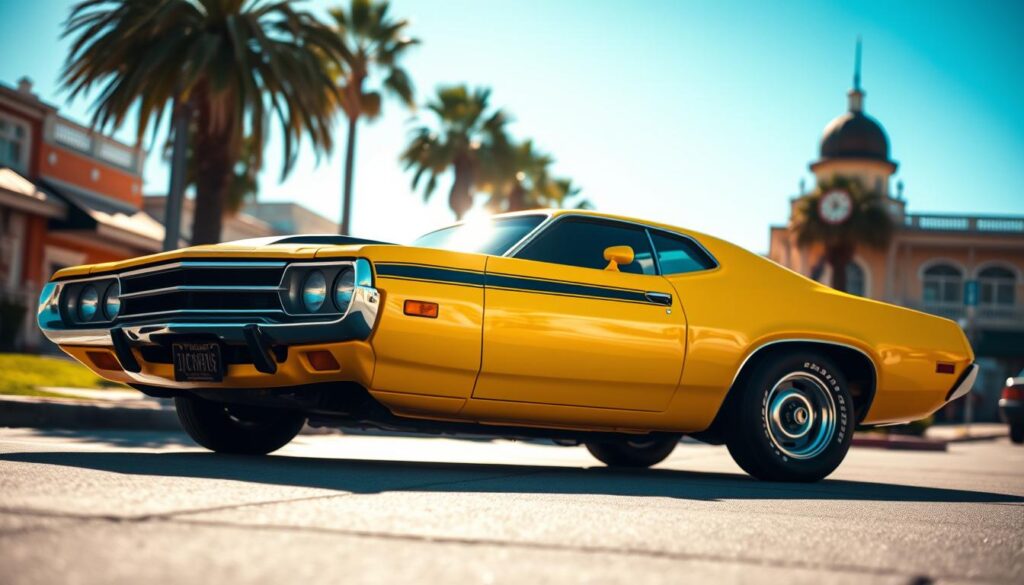
The on-screen legend: a 1971 Plymouth Hemi ’Cuda convertible
One hero began life as a 1970 340ci four-speed ’Cuda with a Shaker hood. Two other 1970 318ci Barracuda convertibles were modified to match the look like details of a rarer 1971 model.
Using several cars meant the show could reserve one for closeups, one for stunts, and one for backup. That approach kept continuity tight and reduced on-set problems.
Why a convertible works on San Francisco’s cinematic streets
A convertible frames the star against sweeping skyline shots and gives the camera clear sightlines. The white top and white interior concept—initially painted Lemon Twist—aimed for a West Coast, breezy feel.
After test filming in san francisco, Lemon Twist appeared washed out under fog and lights, so paint and trim were refined to perform reliably across weather and shooting conditions.
- Practicality: Multiple cars ensured safety and camera readiness.
- Visual impact: The 1971 design language sold period muscle while allowing parts swaps.
From Idea to Icon: How Producers Chose and Built the Nash Bridges ’Cuda
Producers debated muscle options early, but settling on a 1971 Hemi look gave the series its visual edge.
Don Johnson had favored a Pontiac GTO Judge, yet the production team pushed for a grander Hemi silhouette that read well on camera.
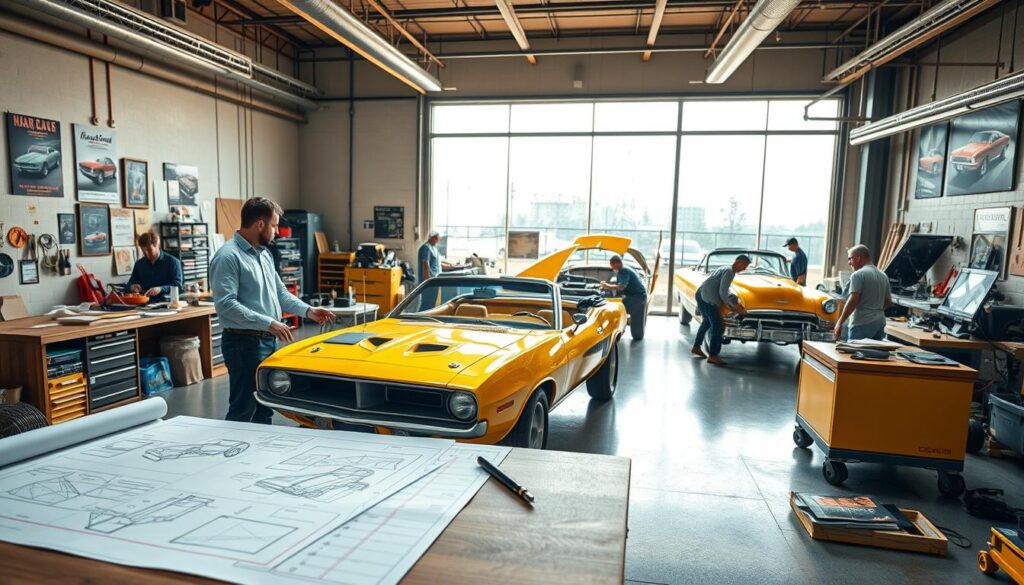
Frank Bennetti and the shop that made it real
Same Day Paint & Body in Newhall became the central production pipeline. Frank Bennetti coordinated body conversions, parts sourcing, and final prep.
Why 1970 models were the practical base
1971 convertibles were rare, so Bennetti used 1970 plymouth donors. Swaps of 1971 grilles, gilled fenders, taillights, rocker panels and Shaker assemblies created an authentic appearance.
Three cars in a week: intense deadlines
In mid-April 1995, Bennetti sourced three cars—a 1970 340ci ’Cuda and two 318ci Barracudas—and turned them into near-identical units within days.
People like Ed Briggs supplied rare parts while Jeff Bobst handled mechanics. That teamwork kept the production on schedule and the show ready for San Francisco filming.
’70 vs. ’71: The Visual DNA That Made the Car a Star
A handful of targeted part changes turned plain 1970 shells into convincing 1971 looks.
Gilled fenders, quad lamps, and grille/taillight swaps
Quad headlamps and the 1971 grille treatment were the quickest cues that made the cars read like a later model. Unique taillight assemblies finished the rear profile so closeups matched between units.
The Shaker hood and elastomeric bumpers that defined the look
The Shaker hood acted as a focal part that drew the eye in motion and stills. That signature scoop helped viewers identify the car at a glance.
Elastomeric bumpers gave a smooth, body-color finish that amplified the grille and fender work. Builders curated each part for fit and finish so multiple cars could cut together without jarring continuity errors.
- Continuity: matching parts ensured hero, stunt, and backup cars shared the same visual DNA.
- Practicality: using 1970 underpinnings kept reliability while the swaps sold the 1971 appearance on screen.
The Yellow Debate: Lemon Twist vs. Curious Yellow on Camera
Color choices on set quickly shifted when daylight tests showed one yellow lost its punch under San Francisco skies.
Lemon Twist paint and a white top with matching white interior were Don Johnson’s initial plan. The bright Lemon Twist aimed to deliver a period-correct, high-impact look for the cars and to frame the actor against skyline shots.
During early dailies, the Lemon Twist paint often appeared chalky and faded on film. Natural light, fog, and camera exposure stripped the depth from the finish. That outcome forced the production to reassess how the paint read in real-world filming.
The team repainted the fleet in Curious Yellow, a deeper hue that held saturation under varied lighting. Keeping the white interior and white top preserved contrast while the new color maintained clarity from wide shots to closeups.
- Practical fix: color adjusted to ensure continuity across scenes.
- Visual result: Curious Yellow read richer on camera than twist paint did in dailies.
The change reinforced that paint choices were performance decisions. The switch kept the car consistent, brand-forward, and reliable on location.
Under the Hood: Engines, Performance, and the Muscle Car Myth
Under the hood, the show’s fleet balanced on-screen bravado with sensible mechanical choices.
The hero was a 1970 340ci four-speed built with a prominent shaker hood. That setup delivered authentic looks while keeping the engine reliable for long production days. The strong visual scoop and hood profile read well on camera and matched the star image.
The 318ci Barracuda convertibles
Two 1970 318ci Barracuda convertibles were dressed to match exterior cues. Producers kept their powerplants lighter for routine driving and for scenes that required less aggressive tuning.
The 440 Six-Pack addition
Later, a 1970 ’Cuda 440 Six-Pack joined the fleet for sequences needing extra acceleration. That car boosted on-set performance and gave editors accurate sound and motion for action cuts.
Post-show evolution and the 426 Hemi crate swap
After filming, the 440 car reportedly received a 426 Hemi crate during restoration. That change prioritized raw power over factory authenticity and shifted collector value toward performance rather than original build claims.
None of the on-screen cars were factory 1971 Plymouth Hemi convertibles; the builds traded factory provenance for dependable performance under tight production schedules. In short, these choices reinforced a muscle identity while serving real-world filming needs for the cuda convertible images on screen.
On-Set Realities: Filming, Stunts, and Day-to-Day Car Logistics
On-set routines depended on a clear split between camera-ready units and stunt-ready rigs.
Hero units handled closeups and actor-facing moments. Stunt cars took heavy driving, jumps, and contact work. That separation kept aesthetics intact while protecting expensive pieces.
Hero car vs. stunt cars
Why multiple vehicles matter: productions rotate cars to balance looks, safety, and efficiency. A hero car has the correct trim and sound for close camera work. Stunt cars are reinforced and tuned for action.
Schedules, scenes, and on-the-day choices
Scene demands and camera setups decide which unit moves. Morning may favor the hero for a static shot. Later in the day, a stunt-prepped car covers high-risk driving.
Driver involvement and mechanical hiccups
Don Johnson did nearly all on-screen driving, adding authenticity but increasing wear. During the pilot he blew the 340 engine, which forced quick swaps and repair work.
On location in San Francisco, crews planned maintenance cycles, parts staging, and rapid repairs to limit downtime through a long week of shooting.
- Continuity checks matched paint, stance, and sound across cars.
- Mechanics and coordinators swapped vehicles quickly when a problem arose.
- Redundancy and planning kept the car a reliable production element.
| Role | Primary Function | Typical Use | Notes |
|---|---|---|---|
| Hero car | Camera detail & actor interaction | Closeups, static shots | Kept pristine; limited high-stress driving |
| Stunt cars | Action and durability | Chases, impacts, long drives | Reinforced; easy to repair |
| Backup units | Continuity and replacements | Standby during filming | Ensured schedule resilience |
Pop Culture Impact: How a TV ’Cuda Reignited Mopar Mania
Prime-time posters and opening shots folded the car into the series’ visual identity, making it as recognizable as the lead star.
That presence on promotional art and in title sequences pushed the cuda convertible into daily conversation. Fans saw the model in ads, on magazine covers, and in store displays tied to the show.
From posters to prime time: branding the series with the car
Marketing leaned on the vehicle to sell attitude. Key art paired the actor with the car to make a clear brand image.
That approach recruited new people to the series and sent collectors hunting for original and replica cars.
Why the ’Cuda’s muscle persona outshone other TV cars of the day
The convertible silhouette and raw muscle appeal stood out against sleeker, later-model props seen in competing television and movies.
Its bold look felt authentic and tangible. As a result, interest in Mopar E-bodies rose and the model became a touchstone for fans, collectors, and people curious about classic muscle.
- Lasting reach: the car kept influencing taste long after the last episode aired.
- Crossover appeal: prime-time visibility drove demand in both restorations and replicas.
Where Are the Nash Bridges ’Cudas Today?
Post-production paths for the fleet split: one car went to auction, another reappeared online, and the rest faded from view.
Don Johnson’s restored 340 and the Barrett-Jackson sale
Don Johnson kept the hero 1970 plymouth 340 after filming and had it restored. That car later sold at Barrett-Jackson in 2003 for $148,500, a price that reflected its on-screen fame.
The 440 Six-Pack’s later chapter
A separate 1970 ’Cuda 440 Six-Pack, often called “Nash Bridges #1,” resurfaced on eBay in 2012. It had a 2006 restoration and received a 426 Hemi crate engine, a change that boosted performance but shifted debates about originality.
The disappearing act: tracing the other production convertibles
Other convertibles used on set remain largely out of public view. Few confirmed listings exist, which adds mystique and makes provenance work harder for producers, historians, or any curious person.
- Provenance matters: sales and swaps change how collectors value these cars.
- Restoration trade-offs: engine upgrades often increase power but complicate authenticity claims.
- Enduring appeal: wherever they sit today, these cars stay compelling artifacts from a celebrated era of TV production.
Conclusion
A focused build strategy let production deliver a consistent on-screen muscle presence every week. Fans remember a crafted image more than any single factory model.
Across time the team balanced look, reliability, and performance so each unit could fulfill its role. One hero car and a few stunt cars carried that load and kept filming on schedule.
None were true 1971 factory Hemi convertibles, yet the builds met their point: to sell a bold, memorable presence on television. The result sparked a lot of renewed interest in E-body Mopars and influenced collectors for years after.
Thoughtful craftsmanship and clear storytelling turned these cars into characters, and that legacy still matters to viewers, fans, and restoration shops today.
FAQ
What specific model was the on-screen yellow convertible used in Nash Bridges?
The star car was presented as a 1971 Plymouth Hemi ‘Cuda convertible, but the production fleet mainly used 1970 Barracuda-based convertibles modified to look like 1971 ‘Cudas. These builds combined visual cues—like grille and taillight swaps—with period-correct trim to create the TV car’s distinctive appearance.
Why did producers choose a convertible for a San Francisco-set crime series?
A convertible offered visual flair against the city’s hills and waterfront, enhancing camera work and marketing appeal. The open-top look also let the lead actor drive with ease during dialogue scenes and created a memorable, branded silhouette for promotional material.
How did the production team decide on the final model after Don Johnson suggested a GTO Judge?
Don Johnson initially favored a Pontiac GTO Judge, but producers pivoted to a Mopar for its muscle-car cachet and styling options. They secured local body shops and Mopar specialists, then selected Barracuda convertibles as donor cars and modified them to match a 1971 Hemi ‘Cuda aesthetic.
Who handled the builds and paint work for the TV cars?
Frank Bennetti and Same Day Paint & Body were among the shops tasked with preparing and repairing the fleet. Local Mopar experts and production shop technicians collaborated to source parts, apply paint, and fabricate visual elements under tight shooting schedules.
Why were 1970 models altered to resemble 1971 cars?
True 1971 Hemi ‘Cuda convertibles are extremely rare and costly. The show used more available 1970 Barracuda convertibles and performed cosmetic swaps—grille, taillights, and other trim—to mimic the 1971 look without the expense or scarcity of authentic 1971 Hemi convertibles.
How many cars did the production use and why were multiple identical builds needed?
The production typically used three or more cars: hero cars for close-ups and camera work, and stunt or backup cars for action scenes and potential damage. Tight shooting timelines required identical builds so continuity remained intact when vehicles were rotated or repaired.
What visual features distinguish 1970 versus 1971 models and made the TV car stand out?
Key visual differences include gilled fenders, quad headlamp arrangements, and distinct grille and taillight designs in 1971. The show’s shop teams combined these features on donor bodies, and added elements like a Shaker hood and elastomeric bumpers to amplify the muscle‑car presence.
Did the Nash Bridges car use a Shaker hood and what role did it play?
Yes, several production cars wore a Shaker-style hood. The Shaker hood served as a visual cue of performance and offered authentic muscle-car styling for close-ups, even when the underlying engine was not a true high-displacement Hemi.
Which yellow paint was used and why was there a change during filming?
The team initially tested Lemon Twist with a white top and interior per Don Johnson’s preference, but cameras tended to wash that shade out under production lighting. The cars were later repainted in Curious Yellow, which filmed with better contrast and delivered the vibrant on-screen color viewers remember.
What engines powered the screen cars and were they true Hemi units?
The hero car featured a 1970 340ci with a Shaker hood for authenticity, while many working units were 318ci Barracuda convertibles modified cosmetically. Later additions included a 440 Six-Pack car. At least one production car received a 426 Hemi crate engine post‑show for performance and display purposes.
How did the show handle engine and mechanical needs for filming?
Productions balance realism with reliability: hero cars often have detailed interiors and visible engine bays for close-ups but use reliable powertrains for daily driving. Stunt cars receive reinforced components. The crew maintained multiple cars to avoid downtime when mechanical hiccups occurred.
Did Don Johnson do his own driving and were there mechanical problems during production?
Don Johnson performed many driving scenes to maintain continuity and screen presence. The production reported routine mechanical issues typical for older convertibles, which is why multiple cars and local body/engine shops were essential to keep the schedule on track.
How did the TV ‘Cuda influence Mopar interest and collector demand?
The show boosted visibility for Plymouth and Mopar muscle cars, inspiring posters, fan interest, and renewed collector enthusiasm. The TV car’s distinct yellow livery and convertible form helped the vehicle outshine many contemporaneous TV cars and reinforced Mopar’s classic muscle identity.
Where did the production cars end up after the series ended?
Several production cars survive in private collections. Don Johnson restored one of the 340-powered cars and later consigned it to the 2003 Barrett-Jackson sale. Another 440-powered “Nash Bridges #1” car surfaced on eBay years later after engine changes. Some production convertibles have become difficult to trace, with owners keeping them in private hands or restoring them for shows.
Were any of the cars fitted with a 426 Hemi during or after the show?
No verified production car left the show with an original 426 Hemi installed; however, at least one vehicle later received a 426 Hemi crate swap in private ownership. That post‑show upgrade enhanced performance for display and driving, but it wasn’t part of the original filming fleet.
Are authentic 1971 Hemi ‘Cuda convertibles common and would they match the TV car exactly?
Authentic 1971 Hemi ‘Cuda convertibles are exceptionally rare and highly valued. Even if original examples existed, the TV cars were hybrids built from 1970 donor bodies with 1971 styling cues, so an original 1971 Hemi convertible would differ in provenance and many details from the series vehicles.