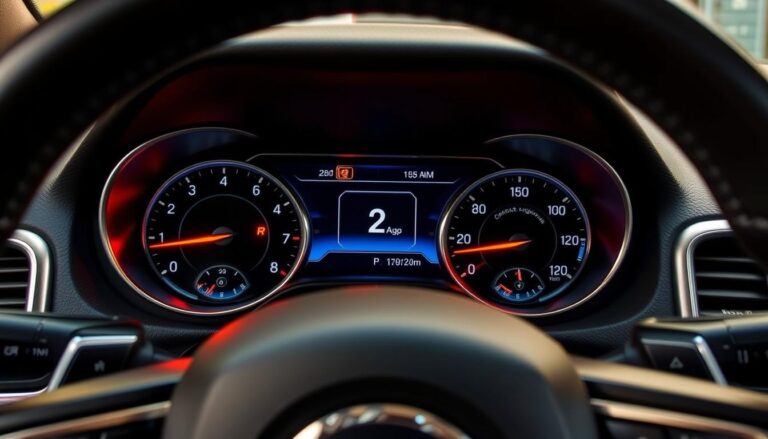
This short guide explains urgent steps when a red icon appears on a dashboard. A red oil can or the word “OIL” means an active engine problem that risks damage fast.
Pull over safely and stop the engine as soon as conditions allow. Low oil circulation harms bearings and can cause a seizure in minutes.
After shutdown, wait while the engine cools. Check the dipstick for level and oil condition, top up with the correct grade if needed, and inspect for leaks.
If the indicator stays on after a proper top-up, avoid driving. Call for a tow or professional service to protect warranty and prevent costly repairs.
Key Takeaways
- Recognize the red oil icon on the dashboard as an urgent engine alert.
- Stop driving, turn off the engine, and cool down before any checks.
- Use the dipstick to confirm level and condition; add the correct oil grade only when needed.
- If the light stays on after topping up, arrange towing to a shop.
- Distinguish a red oil pressure light from a routine maintenance reminder.
Immediate actions to take when the oil pressure warning light comes on
Pull over safely at the next suitable spot and cut the engine to prevent further wear. Set the parking brake and take a moment to calm down. This step limits damage from low oil circulation.
Pull over safely and turn the engine off
Park on level ground when possible. Turn engine off to stop further stress on bearings and pumps.
Let the engine cool before you check oil level
Wait about 10 minutes so hot fluids return to the sump. This reduces burn risk and gives a true reading when you use the dipstick.
Check oil level and condition with the dipstick
Wipe the dipstick clean, reinsert fully, then read the marks. Add only if the level sits at or below the add mark.
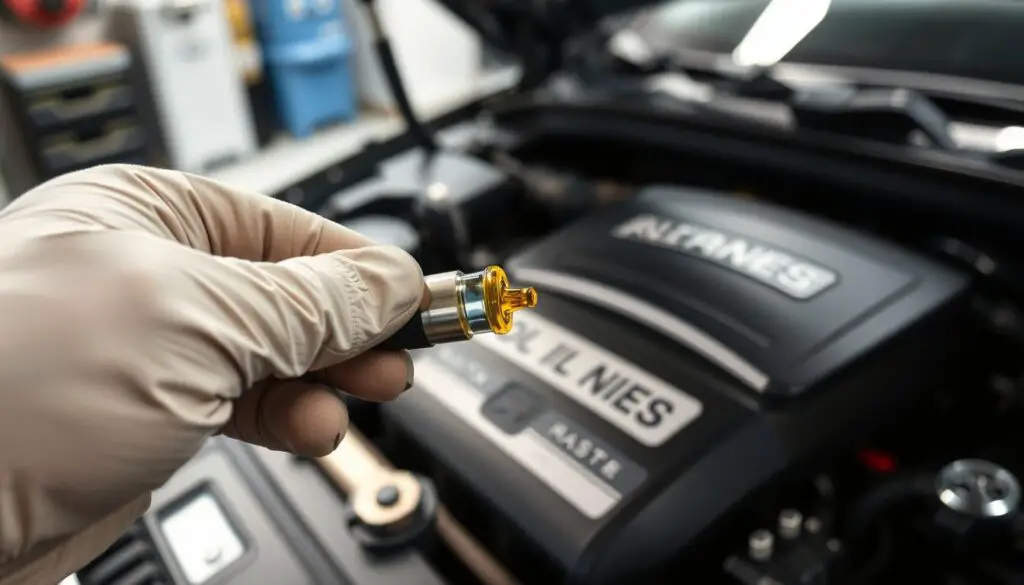
Top up the correct oil type and assess for leaks
Use the grade listed in the owner manual. Add small amounts, recheck level, and scan under the car for fresh drips.
- Healthy oil looks amber and flows easily; dark or sludgy fluid needs an oil change soon.
- If the light stays on after a proper top-up, or if you hear knocking or see high temperature, arrange towing rather than drive.
What should I do if the oil pressure warning light illuminates?
A flashing dashboard icon usually signals a more urgent lubrication fault.
Solid versus flashing: urgency levels
A steady red icon calls for an immediate stop and a quick level check after a brief cool-down. A blinking symbol often means critically low oil pressure or a failing pump and requires powering down right away.
Safe to drive to a shop or call a tow
Drive slowly to a nearby garage only when the indicator goes out after a top-up, engine runs smoothly, and temperature stays steady. If the indicator stays on, arrange towing to prevent further damage.
When not to restart the engine
Do not restart when you hear knocking, see smoke, or engine temperature spikes. If dash warning lights pair with strange noises, get professional help without delay.
“If a dashboard signal remains after correct topping, towing is the safest choice to protect the engine.”
| Condition | Immediate action | Drive or tow? |
|---|---|---|
| Solid red icon, low level | Top up, recheck | Drive short distance if normal |
| Blinking icon, knocking | Turn off and call tow | Tow |
| Normal level, light stays | Inspect sensor, visit shop | Tow if unsure |
Common causes of low oil pressure and quick curbside diagnostics
Quick diagnostics can separate level, quality, pump, and sensor issues in minutes.
Reading the dipstick and what “add” means
Check the dipstick after a short cool-down. If the mark sits at or below the add line, top up with the grade listed in the owner manual.
Record how much you add and how often. Repeated top-ups suggest an external leak or excess consumption that needs repair.
Dirty or degraded engine oil clues
Healthy fluid looks translucent amber and flows freely. Dark brown or black, sludgy oil or a burnt smell signals a required change.
An immediate oil change often restores proper flow and helps recover normal readings.
Signs of a failing oil pump
Listen for valvetrain or rod noise and watch for rising temperature while level looks fine. These signs point to a pump or pickup restriction.
Do not drive with suspected pump failure. Running an engine without proper lubrication risks rapid damage.
Faulty sensor or false indicator
When level and condition are normal but the lamp stays on, suspect a bad sensor. A technician can confirm pressure with a mechanical gauge and replace the sensor.
| Cause | Quick check | Immediate action |
|---|---|---|
| Low level | Dipstick at or below add | Top up, inspect for leaks |
| Degraded fluid | Dark, sludgy, burnt smell | Change fluid, replace filter |
| Pump failure | Noises, overheating | Stop engine, tow to shop |
| Faulty sensor | Normal run but indicator stays | Gauge test, replace sensor |
Oil pressure light vs oil change light: know the difference
Recognizing different dashboard symbols helps avoid confusing a service reminder with a critical engine alert.
Dashboard icons and colors: oil can, “OIL” text, and wrench indicators
Clusters use color and shape to signal urgency. A red oil can or text usually marks a critical fault that demands an immediate stop and a level check.
An amber wrench or oil-can combo is a maintenance notice from the car’s system. It means schedule an oil change and filter replacement soon, but driving to a shop is generally safe.
Note: an amber “oil level low” message needs a prompt check of oil level and top-up when required.
Oil life monitor and how to reset the maintenance reminder
Modern vehicles track time and driving conditions to estimate service intervals. After a full change, reset the maintenance indicator per the owner manual—often by pressing and holding buttons on the cluster.
If the message returns immediately or displays odd readings, test sensor integrity or seek technical help.
“Red symbols signal danger; amber icons signal planned change.”
| Icon | Color | Action |
|---|---|---|
| Oil can with drip / “OIL” | Red | Stop, check oil level, tow if needed |
| Wrench + oil can | Amber | Schedule oil change and filter service |
| Oil level message | Amber | Check oil level, top up, inspect for leaks |