Understanding wheel offset is crucial for vehicle owners looking to upgrade or replace their wheels. The offset refers to the distance between the wheel’s mounting surface and its centerline, significantly affecting the vehicle’s performance and aesthetics.
Choosing the right offset is vital for ensuring proper fitment and avoiding potential issues such as rubbing against suspension components or compromising the vehicle’s stability. The debate between 35 offset and 45 offset wheels is common among automotive enthusiasts.
Key Takeaways
- Wheel offset affects vehicle performance and aesthetics.
- Choosing the correct offset ensures proper fitment and avoids potential issues.
- The difference between 35 and 45 offset wheels can significantly impact the vehicle’s overall look and handling.
- Understanding wheel offset is essential for automotive enthusiasts.
- Proper wheel offset selection enhances vehicle stability and safety.
Understanding Wheel Offset Basics
Wheel offset refers to the distance between the wheel’s mounting surface and its centerline, a critical measurement that affects your vehicle’s overall performance. This measurement is crucial because it influences how the wheel sits in relation to the suspension and bodywork of your vehicle.
What Is Wheel Offset and Why It Matters
Wheel offset is essentially about positioning the wheel correctly on the hub. A correct offset ensures proper clearance between the wheel and the vehicle’s suspension or body components. Incorrect offset can lead to rubbing, reduced performance, and even safety issues. Understanding wheel offset is vital for maintaining your vehicle’s performance and aesthetic appeal.

How Wheel Offset Is Measured
Wheel offset is measured in millimeters and can be either positive, negative, or zero. Positive offset means the mounting surface is closer to the outside face of the wheel, while negative offset indicates it’s closer to the inside face. Zero offset occurs when the mounting surface is exactly at the centerline. The table below illustrates the differences:
| Offset Type | Description | Effect on Vehicle |
|---|---|---|
| Positive Offset | Mounting surface closer to outside face | Tighter clearance, more inward positioning |
| Negative Offset | Mounting surface closer to inside face | Wider stance, more outward positioning |
| Zero Offset | Mounting surface at centerline | Balanced positioning, neutral effect |
Wielding Power: Wheel Offset 35 Vs 45 Explained
When it comes to choosing between 35 and 45 wheel offset, understanding the implications on your vehicle’s performance and aesthetics is key. The difference between these two offsets may seem minor, but it significantly affects your vehicle’s stance, handling, and overall appearance.
Key Differences at a Glance
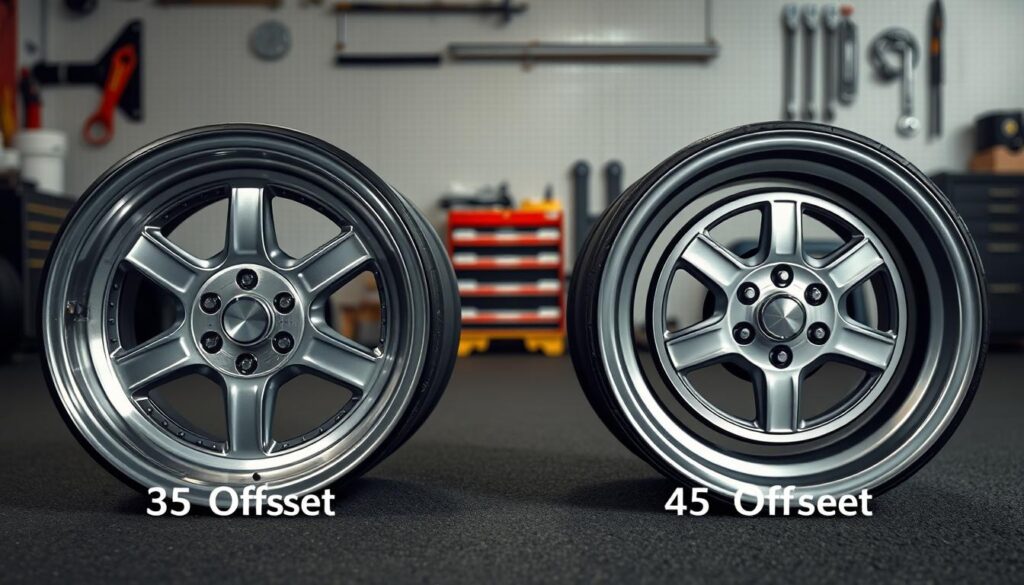
The primary distinction between a 35 and 45 offset lies in how they position the wheel in relation to the hub. A 35 offset means the wheel’s mounting surface is 35mm away from the centerline, whereas a 45 offset indicates a 45mm distance. This 10mm difference can lead to:
- A more aggressive stance with a 35 offset, as the wheel is positioned further outward.
- Potential clearance issues with a 35 offset if not properly fitted.
- Better stability with a 45 offset due to the wheel being closer to the hub.
- A more conservative appearance with a 45 offset.
Visual Impact on Your Vehicle
The visual impact of choosing between a 35 and 45 offset is substantial. A 35 offset wheel will make your vehicle appear more aggressive and wider, enhancing its sporty appeal. On the other hand, a 45 offset will result in a more subtle, stock-like appearance. The choice between the two often comes down to personal preference and the desired aesthetic.
Key considerations include:
- The vehicle’s original specifications and whether deviating from them is advisable.
- The potential need for additional modifications to accommodate the chosen offset.
- How the offset affects the vehicle’s overall stance and handling.
The Impact of 35 Offset Wheels
For those looking to upgrade their vehicle’s wheels, the 35 offset is a compelling option that warrants closer examination. The 35 offset wheels are known for their ability to provide a sportier stance and potentially improved handling characteristics.
Performance Characteristics
The performance characteristics of 35 offset wheels include enhanced cornering capabilities and a more aggressive appearance. With a reduced offset compared to standard wheels, vehicles can achieve a wider track, potentially improving stability during high-speed maneuvers.
Fitment Considerations
Fitment considerations for 35 offset wheels involve checking clearance between the wheel and suspension or bodywork components. It’s crucial to ensure there’s adequate space to avoid rubbing or interference, which could lead to damage or safety issues.
Pros and Cons
| Pros | Cons |
|---|---|
| Improved handling and stability | Potential for increased tire wear |
| Enhanced aesthetic appeal | Possible clearance issues |
| Wider track for better cornering | May require additional modifications |
Understanding the pros and cons of 35 offset wheels is essential for making an informed decision. While they offer several performance and aesthetic benefits, they also come with potential drawbacks that need careful consideration.
The Impact of 45 Offset Wheels
The 45 offset wheels offer a distinct set of characteristics that can significantly impact a vehicle’s performance. This offset is often considered a balance between the more aggressive stance of lower offset wheels and the stock or higher offset wheels that prioritize clearance and practicality.
Performance Characteristics
A 45 offset wheel can influence a vehicle’s handling and stability. The wider stance associated with lower offset wheels can improve cornering capabilities, but a 45 offset still maintains a relatively conservative stance. This can result in predictable handling and stability, especially for vehicles not heavily modified for extreme performance.
Fitment Considerations
When choosing 45 offset wheels, it’s crucial to consider fitment. This includes ensuring that the wheels do not rub against the fender wells or other suspension components. Clearance is key, and in some cases, minor modifications such as trimming the fender or using spacers might be necessary to achieve a proper fit.
Pros and Cons
The pros of 45 offset wheels include a more balanced aesthetic and potentially improved handling compared to higher offset wheels. However, they might not offer the same level of aggressiveness as lower offset wheels. On the downside, there’s a risk of rubbing or clearance issues if not properly fitted. A careful assessment of the vehicle’s specifications and intended use is necessary.
Vehicle Compatibility and Considerations
Wheel offset compatibility varies significantly across different types of vehicles. Choosing the right offset is crucial for optimal performance and safety.
The type of vehicle plays a significant role in determining the appropriate wheel offset. For instance, trucks and SUVs often require different offsets compared to sedans and sports cars.
Truck and SUV Applications
Trucks and SUVs typically benefit from a lower wheel offset, such as 35, to enhance stability and provide a more aggressive stance. This is particularly beneficial for off-road driving or when carrying heavy loads.
Sedan and Sports Car Applications
Sedans and sports cars, on the other hand, may prefer a higher wheel offset like 45 for improved handling and to maintain the manufacturer’s intended suspension geometry.
Off-Road vs. Street Performance
The intended use of the vehicle is another critical factor. Off-road enthusiasts may prefer a lower offset for increased traction, while those focused on street performance might opt for a higher offset for better handling on paved roads.
Ultimately, understanding the specific needs of your vehicle and its intended use will guide you in selecting the most appropriate wheel offset.
Technical Implications of Changing Wheel Offset
The technical implications of altering wheel offset are multifaceted, affecting various aspects of your vehicle’s behavior. Changing the wheel offset can influence how your vehicle handles, the strain on its suspension components, and the wear patterns on its tires.
Handling and Stability Effects
Altering the wheel offset can significantly impact your vehicle’s handling and stability. A change in offset can modify the scrub radius, affecting how the vehicle responds to steering input. For instance, a more negative offset can improve handling by increasing the scrub radius, but it may also make the steering more sensitive.
Key handling effects to consider:
- Increased steering sensitivity
- Potential for improved cornering performance
- Possible reduction in straight-line stability
Impact on Suspension Components
Changing the wheel offset can also have a profound impact on suspension components. A wider offset can lead to increased stress on bearings and other suspension parts due to the altered leverage. This can result in premature wear or even failure if not properly managed.
Tire Wear Patterns and Longevity
The tire wear patterns and longevity are directly influenced by the wheel offset. An improper offset can lead to uneven tire wear, reducing the tire’s lifespan and potentially causing vibrations that affect ride comfort. Ensuring the correct offset is crucial for maintaining even tire wear.
Factors influencing tire wear:
- Alignment and camber settings
- Driving habits and conditions
- Wheel offset and spacing
Making the Right Choice for Your Vehicle
Understanding the differences between 35 and 45 offset wheels is key to making an informed decision for your vehicle. The choice between these two offsets depends on several factors, including your vehicle’s specifications, driving habits, and personal preferences.
When to Choose 35 Offset
A 35 offset wheel is ideal for vehicles that require a more aggressive stance, such as trucks and SUVs used for off-road driving. This offset provides a wider track, enhancing stability and improving the vehicle’s overall appearance.
When to Choose 45 Offset
For vehicles that are primarily used on paved roads, such as sedans and sports cars, a 45 offset wheel may be more suitable. This offset results in a narrower track, which can improve handling and reduce the risk of rubbing against fender liners or other suspension components.
Required Modifications and Legal Considerations
Changing your wheel offset may require additional modifications to your vehicle, such as adjusting the suspension or installing spacers. It’s also crucial to consider legal implications, as certain modifications may not comply with local regulations. For instance, wider wheels with a lower offset may protrude beyond the fender, potentially violating vehicle codes.
| Offset | Ideal for | Potential Modifications |
|---|---|---|
| 35 | Trucks, SUVs, Off-Road | Suspension adjustments, spacers |
| 45 | Sedans, Sports Cars, On-Road | Minimal, possibly none |
Ultimately, choosing the right offset involves balancing performance, aesthetics, and legal compliance. By understanding the implications of your choice, you can ensure your vehicle is both functional and compliant with local laws.
Conclusion
Choosing the right wheel offset is crucial for optimal vehicle performance and safety. The comparison between 35 and 45 offset wheels highlights distinct differences in performance characteristics, fitment considerations, and technical implications.
When making a wheel offset choice, consider factors such as vehicle compatibility, handling, and suspension components. The correct offset ensures proper fitment, maintains optimal tire wear, and preserves vehicle stability.
By understanding the key differences between 35 and 45 offset wheels, vehicle owners can make informed decisions that enhance their driving experience. Whether prioritizing performance, aesthetics, or practicality, selecting the appropriate wheel offset is essential for achieving the desired outcome.
FAQ
What is the main difference between 35 and 45 wheel offset?
The primary difference lies in how far the wheel is positioned from the hub, affecting the vehicle’s stance and potentially its handling and tire wear.
How does wheel offset affect my vehicle’s appearance?
Wheel offset can significantly alter the appearance of your vehicle, with a lower offset (like 35) typically making the wheels more prominent and a higher offset (like 45) making them less so.
Can I use 35 or 45 offset wheels on any vehicle?
No, the suitability of 35 or 45 offset wheels depends on your vehicle’s make, model, and suspension setup. It’s crucial to check compatibility before making a change.
Will changing my wheel offset affect my vehicle’s warranty?
Modifying your wheel offset can potentially void your warranty if it’s deemed to be the cause of a problem. It’s recommended to consult with the manufacturer or dealership.
How does wheel offset impact handling and stability?
Changing the wheel offset can affect your vehicle’s handling and stability by altering the scrub radius and potentially putting additional stress on suspension components.
Are there any legal considerations when changing wheel offset?
Yes, you should ensure that any modifications comply with local regulations, particularly regarding fender clearance and overall vehicle safety standards.
Can changing wheel offset improve my vehicle’s off-road capability?
A lower offset can potentially improve off-road capability by allowing for wider tires, but it depends on other factors like suspension lift and tire clearance.
How do I determine the correct wheel offset for my vehicle?
To determine the correct wheel offset, consider factors like your vehicle’s make and model, suspension setup, and intended use (on-road, off-road, etc.), and consult with a professional if necessary.