Have you recently installed new brake rotors only to discover rust forming on them days or even hours later? This common occurrence often alarms vehicle owners, raising concerns about component quality and safety. Rest assured, in most cases, light surface rust on new rotors is completely normal and not a sign of defective parts. This comprehensive guide explains why new rotors rust so quickly, when to be concerned, and how to minimize oxidation on these critical brake components.
Why Do New Rotors Rust So Quickly?
Seeing rust on brand new brake rotors can be concerning, but understanding the science behind this oxidation process can help alleviate your worries. Several factors contribute to the rapid formation of rust on new rotors.
Material Composition
Most brake rotors are manufactured from cast iron or steel, materials chosen specifically for their durability, heat dissipation properties, and cost-effectiveness. These metals contain high amounts of iron, which readily reacts with oxygen in the presence of moisture to form iron oxide – commonly known as rust.
Unlike stainless steel or aluminum components that contain protective elements like chromium or nickel, standard brake rotors lack these natural rust inhibitors. This makes them particularly susceptible to oxidation, even when brand new.
Manufacturing Process
During production, brake rotors undergo machining processes that expose fresh, unprotected metal surfaces. While some manufacturers apply a light oil coating for shipping, this temporary protection quickly wears off once the rotors are installed and exposed to the elements.
Additionally, many economy rotors don’t receive protective treatments or coatings that could prevent initial oxidation, as these processes add cost to the manufacturing process.
Environmental Factors
Several environmental conditions accelerate the rusting process on new rotors:
- Moisture exposure: Even a single rainstorm, car wash, or morning dew can initiate rust formation on new rotors.
- Humidity: High humidity environments provide the moisture necessary for oxidation to occur, even without direct water contact.
- Road salt: In winter conditions, road salt dramatically accelerates the rusting process by enhancing the electrochemical reaction.
- Temperature fluctuations: Changes in temperature can cause condensation to form on metal surfaces, providing the moisture needed for rust formation.
Normal Surface Rust vs. Problematic Corrosion
Understanding the difference between harmless surface rust and problematic corrosion is crucial for maintaining your vehicle’s braking system. Here’s how to distinguish between the two:
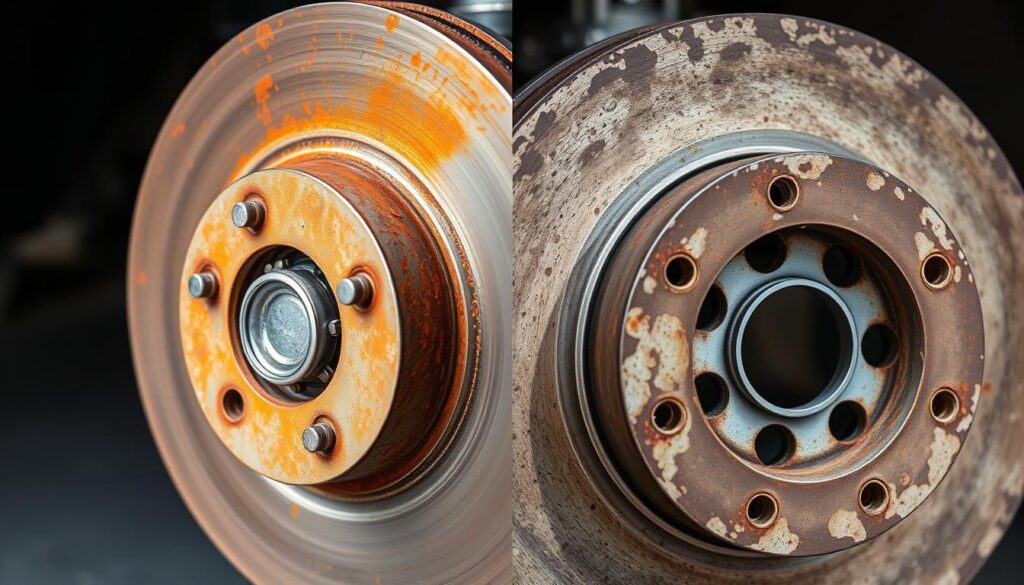
Normal Surface Rust: No Cause for Concern
Surface rust on new rotors is typically characterized by:
- A thin, orange-brown film on the rotor surface
- Even distribution across the rotor face
- Quick removal after brief driving and brake application
- No impact on braking performance after initial drives
This type of rust is merely cosmetic and will be removed naturally as you drive. When you apply the brakes, the brake pads make contact with the rotors, effectively scraping away the surface rust. After a few applications of the brakes during normal driving, the friction surface should return to its normal appearance.
Key Point: Surface rust that appears on new rotors after exposure to moisture is normal and will be removed through regular driving and brake application. This type of rust does not indicate a defect in your brake components.
Problematic Rust: When to Be Concerned
Signs that rust has progressed beyond normal surface oxidation include:
- Deep pitting or scoring on the rotor surface
- Rust that doesn’t clear after several miles of driving
- Uneven patches of heavy rust
- Vibration or pulsation when braking
- Unusual noises (grinding or squealing) during braking
These symptoms indicate that the rust has progressed beyond the surface and may be affecting the structural integrity or performance of your braking system. In these cases, further inspection and potentially replacement may be necessary.
Preventing Excessive Rust on New Rotors
While some surface rust is inevitable on iron-based brake rotors, several strategies can help minimize excessive oxidation and extend the life of your brake components.
Choose Quality Rotors with Protective Coatings
One of the most effective ways to prevent rust is to invest in quality rotors with protective treatments:
Upgrade to Rust-Resistant Brake Rotors
Premium coated rotors provide superior protection against rust and corrosion, extending component life and maintaining optimal braking performance.
- Zinc-plated rotors: These feature a protective zinc coating on the non-friction surfaces that significantly reduces rust formation.
- Geomet®-coated rotors: This specialized coating provides excellent corrosion resistance without affecting braking performance.
- Ceramic-coated rotors: Premium rotors may feature ceramic coatings that offer superior protection against environmental factors.
Regular Maintenance Practices
Proper maintenance can significantly reduce rust formation on your brake rotors:
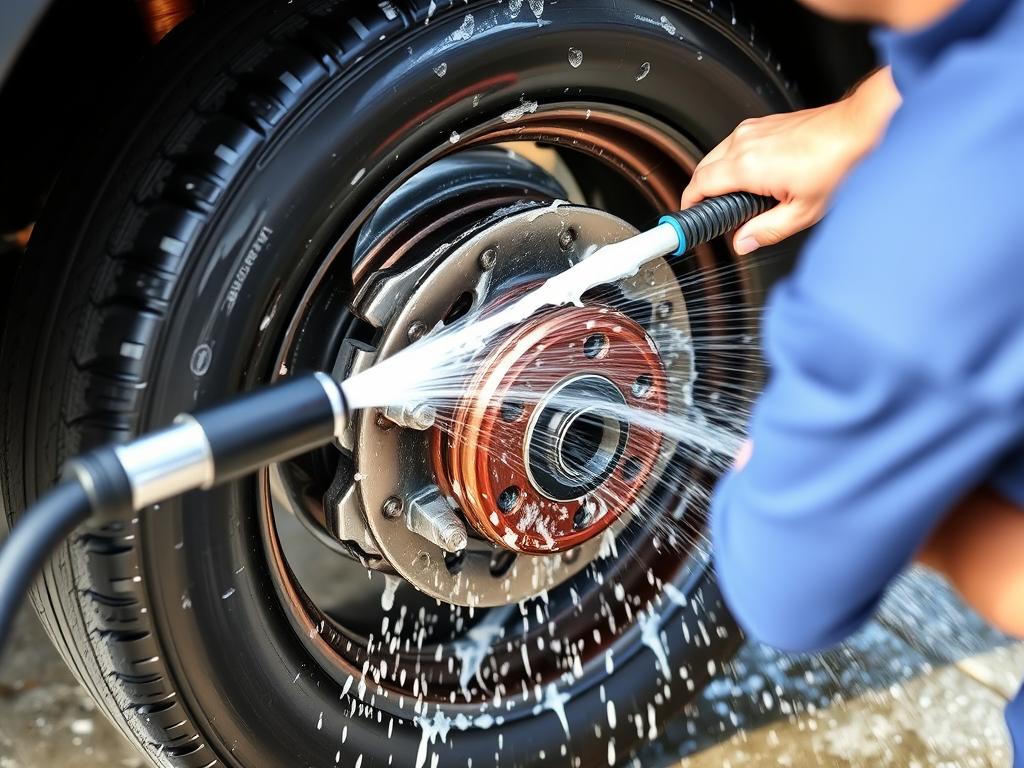
- Drive regularly: Regular driving naturally cleans rotors as brake pads scrape away surface rust during normal braking.
- Dry after washing: After washing your vehicle or driving in rain, consider taking a short drive with several gentle brake applications to dry the rotors.
- Clean thoroughly: When washing wheels, clean the visible portions of the rotors to remove salt and road grime.
- Garage storage: When possible, store your vehicle in a garage or covered area to reduce exposure to moisture.
Warning: Never apply lubricants, oils, or rust inhibitors directly to the friction surface of brake rotors. These substances can compromise braking performance and create dangerous driving conditions.
When to Seek Professional Help
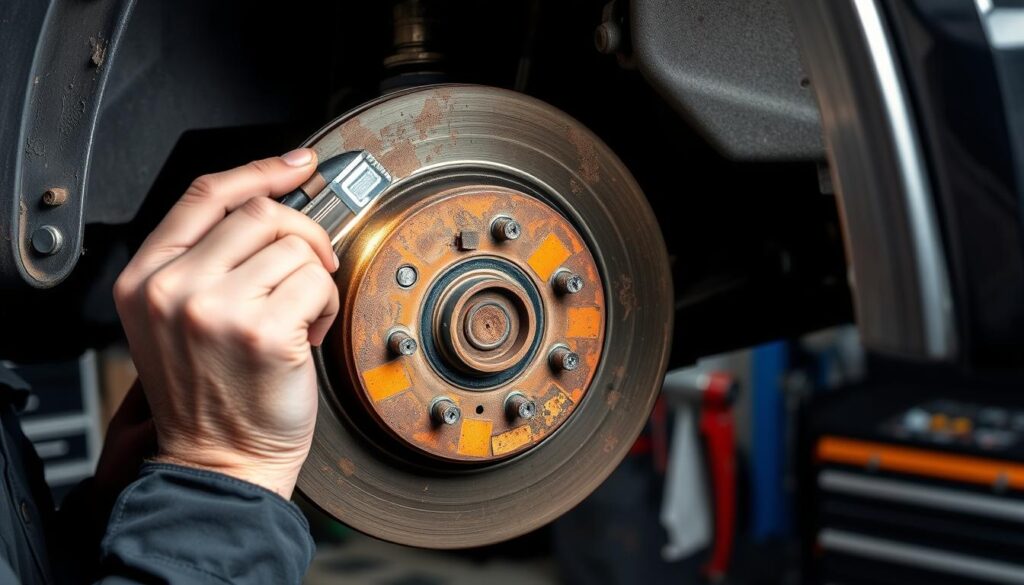
While surface rust is normal, certain conditions warrant professional inspection of your braking system. Be alert for these warning signs that indicate your rusted rotors may need professional attention:
- Persistent vibration: Feeling pulsation through the brake pedal or steering wheel when braking
- Unusual noises: Grinding, squealing, or scraping sounds during braking
- Reduced braking performance: Longer stopping distances or spongy brake pedal feel
- Visible scoring: Deep grooves or uneven wear patterns on the rotor surface
- Persistent rust: Surface rust that doesn’t clear after several drives with normal braking
Professional mechanics can properly assess the condition of your rotors and determine whether they need resurfacing or replacement. They can also recommend appropriate products and maintenance practices for your specific vehicle and driving conditions.
Visual Guide: Assessing Rotor Rust
Use this visual guide to help determine whether the rust on your rotors is normal or requires attention:
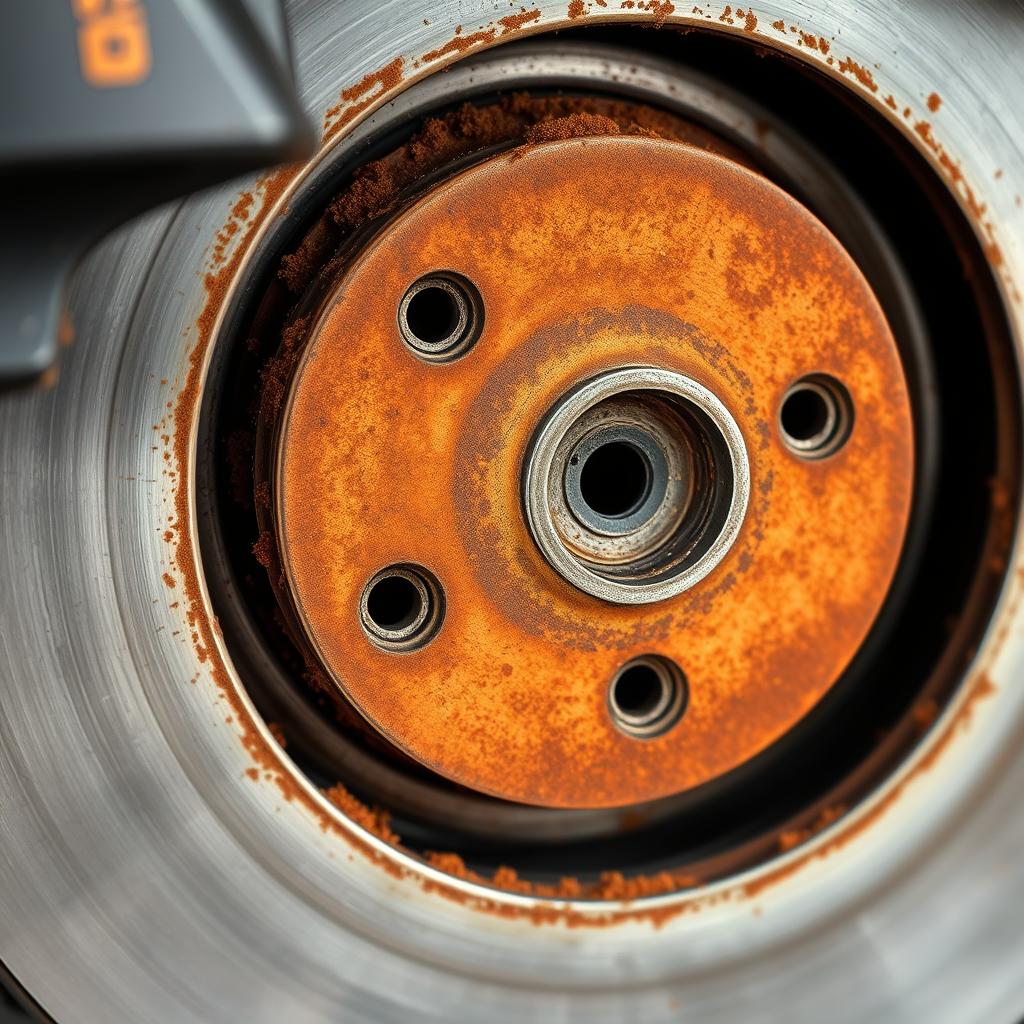 Normal: Light, even surface rust that will wear off with driving
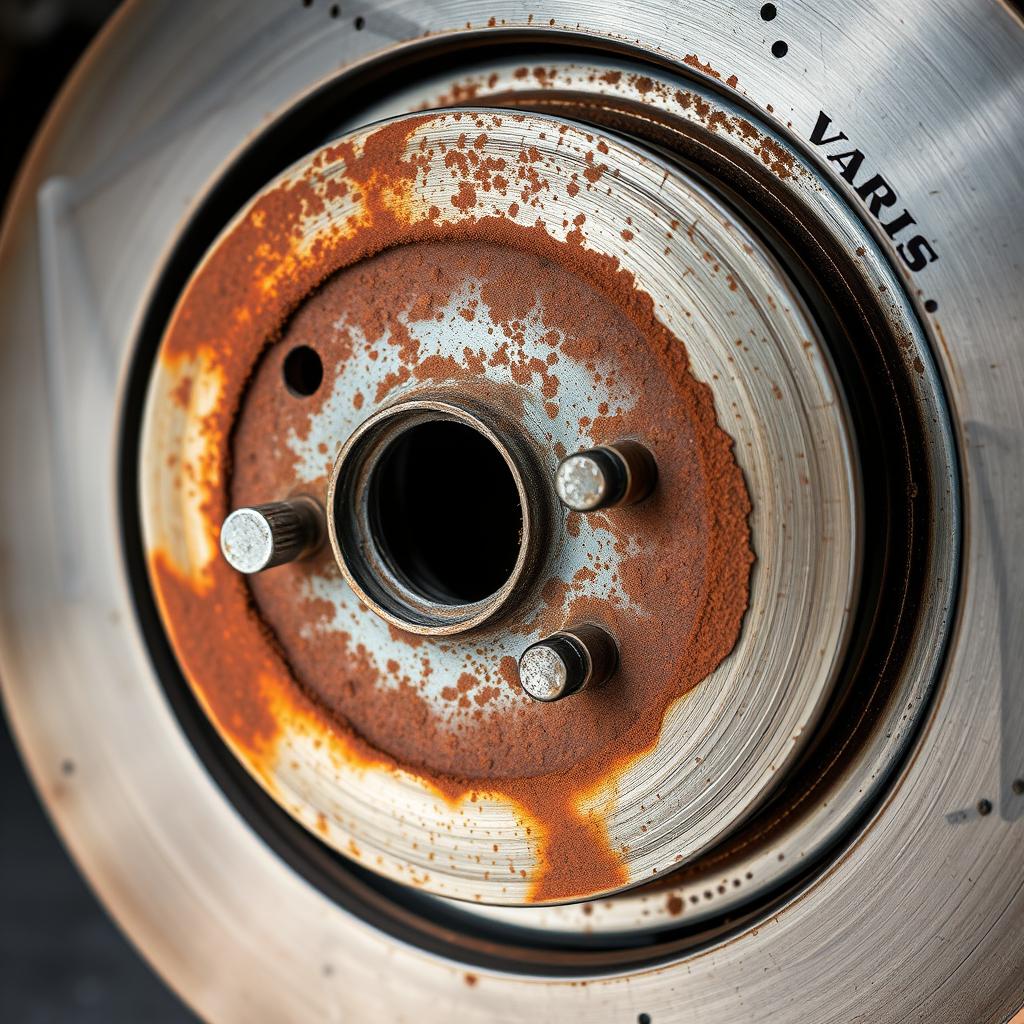 Normal: Partially cleared rust showing brake pad contact
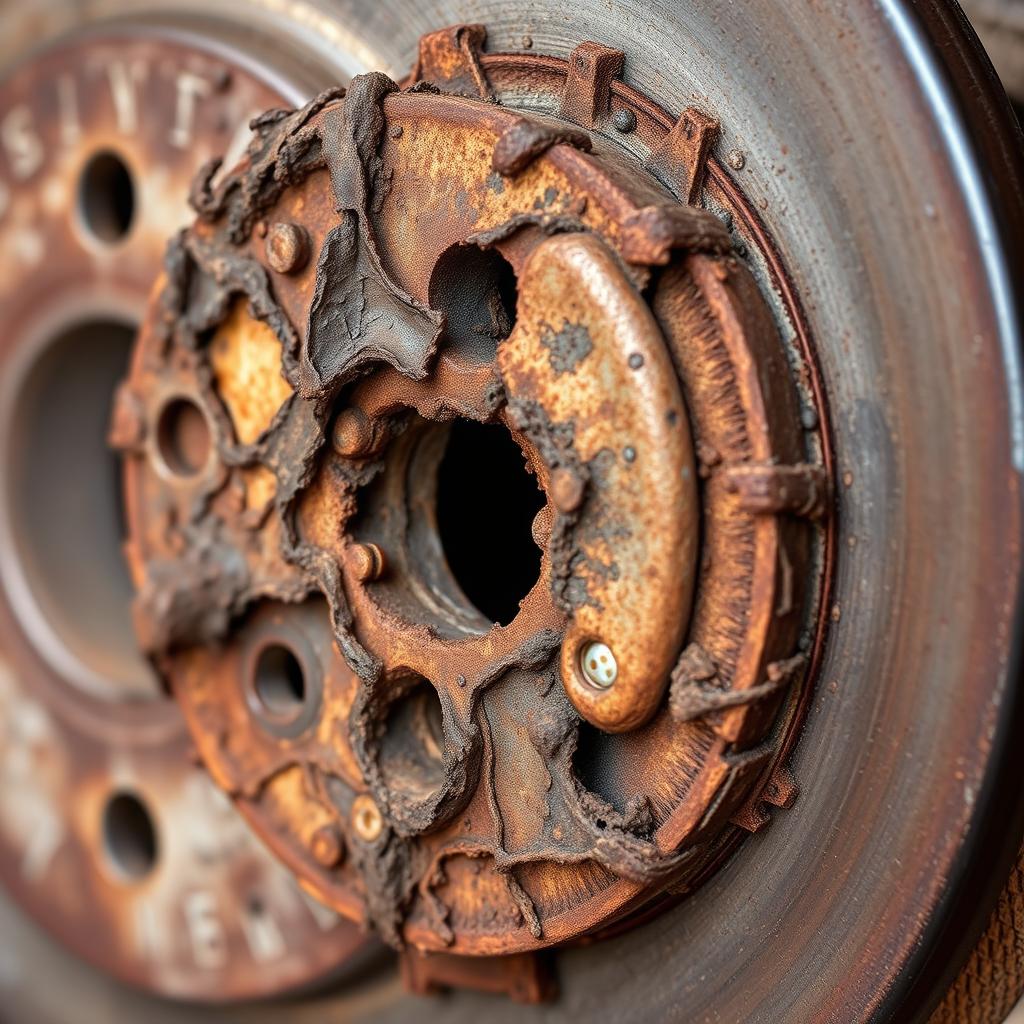 Problematic: Deep pitting and uneven surface requiring attention
Long-Term Maintenance Tips for Rust-Free Rotors
Implementing these maintenance practices can help keep your brake rotors in optimal condition and minimize rust formation over time:
Preventative Measures
- Regular driving: Drive your vehicle at least once a week to prevent rust buildup.
- Complete stops: Make several complete stops after driving through rain or washing your car.
- Avoid prolonged storage: If storing a vehicle long-term, consider removing rotors or applying appropriate preservatives.
- Thorough drying: After washing, dry brake components thoroughly or take a short drive to heat up the brakes.
Smart Product Choices
- Quality matters: Invest in quality rotors with protective coatings for longer life.
- Matching components: Use brake pads and rotors designed to work together.
- Avoid cheap alternatives: Economy rotors often lack rust protection.
- Consider climate: Choose components appropriate for your local weather conditions.
Frequently Asked Questions About Rusting Rotors
Is it safe to drive with rusty brake rotors?
Safety depends on the type and extent of rust. Light surface rust is normal and safe to drive with—it will clear up after a few brake applications during normal driving. However, deep pitting, scoring, or rust that doesn’t clear after driving indicates a more serious problem that could affect braking performance and should be inspected by a professional.
How long does it take for new rotors to rust?
New rotors can develop surface rust extremely quickly—sometimes within hours of exposure to moisture. This is normal and expected with iron-based rotors. Even a single rainstorm, car wash, or overnight dew can trigger rust formation on new, unprotected rotors.
Do all brake rotors rust equally?
No, not all rotors rust at the same rate. Premium rotors with protective coatings like zinc-plating or Geomet® treatment resist rust much better than standard uncoated rotors. Additionally, driving conditions, climate, and maintenance practices significantly affect how quickly rotors develop rust.
Should I replace my rotors if they’re rusting?
Replacement is not necessary for normal surface rust. However, if rotors show signs of deep pitting, grooves, or if the rust doesn’t clear after several drives, professional inspection is recommended. Severely rusted rotors that have deteriorated beyond minimum thickness specifications will require replacement.
Can I prevent my new rotors from rusting?
While you can’t completely prevent rust on standard iron rotors, you can minimize it by: choosing quality rotors with protective coatings, storing your vehicle in a garage when possible, driving regularly, and properly drying rotors after exposure to moisture. Never apply oils or lubricants to the friction surface of rotors as this can compromise braking performance.
Conclusion: Managing Expectations for New Rotors
Surface rust on new brake rotors is a normal phenomenon resulting from the iron content in these components reacting with environmental moisture. In most cases, this type of rust is purely cosmetic and will be removed through normal driving as the brake pads contact the rotor surfaces.
By understanding the difference between normal surface rust and problematic corrosion, you can properly maintain your vehicle’s braking system and know when professional intervention is necessary. Investing in quality components with protective coatings and following proper maintenance practices will help extend the life of your brake rotors and ensure optimal braking performance.
Remember that while rust may be unsightly, light surface oxidation doesn’t affect your vehicle’s safety or braking capability. However, always err on the side of caution and seek professional advice if you notice any changes in braking performance or if rust appears excessive.