Noticing smoke emanating from under the hood of your Jeep can be alarming. This issue often indicates a problem that needs immediate attention to prevent further damage. Engine problems can range from minor issues to serious mechanical failures.
Understanding the causes of smoke is crucial. It could be due to a leak, overheating, or other Jeep engine problems. For instance, a coolant leak can cause the engine to overheat, leading to smoke. Similarly, issues like a faulty head gasket or cracked engine block can also be culprits. If you’re experiencing unusual revving alongside the smoke, it might be related to issues discussed in our article on why your Jeep is revving high.
Key Takeaways
- Identify the color and source of the smoke to diagnose the issue.
- Check for common issues like coolant leaks or overheating.
- Consider recent maintenance or repairs that might be related.
- Consult a professional mechanic for a thorough diagnosis.
- Address the problem promptly to avoid further engine damage.
Understanding Different Types of Smoke from Your Jeep
The color of the smoke emanating from your Jeep’s engine is a significant indicator of the underlying problem. When diagnosing the issue, it’s essential to observe the smoke’s color carefully.
White Smoke: Coolant Issues
White smoke typically indicates a coolant leak. If your Jeep is emitting white smoke, it may be due to a cracked head or a faulty head gasket, allowing coolant to enter the combustion chamber.
Blue Smoke: Oil Problems
Blue smoke suggests that your Jeep is burning engine oil. This could be due to worn piston rings, valve stem seals, or other internal engine components that are allowing oil to leak into the combustion chamber.
Black Smoke: Fuel System Concerns
Black smoke is usually a sign of a fuel system issue, such as a faulty fuel injector or a clogged air filter, causing the engine to burn too much fuel.
Understanding the color of the smoke is the first step in diagnosing the problem. By identifying whether the smoke is white, blue, or black, you can narrow down the potential causes and take appropriate action.
Why Is My Jeep Smoking Under the Hood: Common Causes and Fixes
A smoking Jeep can be alarming, but knowing the common causes can help you address the problem effectively. Smoke under the hood can be due to various reasons, and understanding these causes is crucial for a proper fix.
Coolant Leaks and Overheating
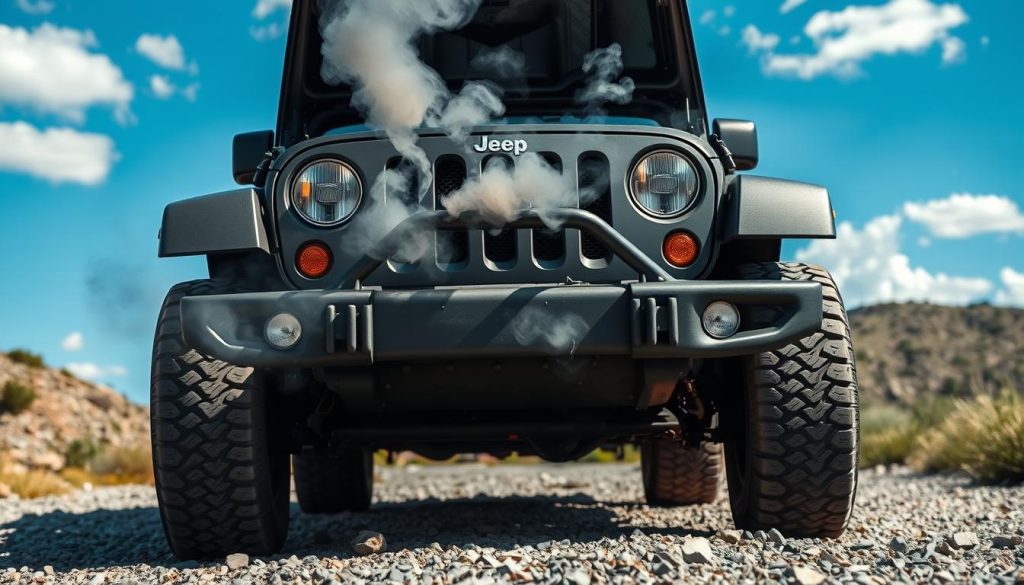
One of the primary causes of smoke under the hood is a coolant leak. When coolant escapes, it can come into contact with hot engine components, producing smoke. Coolant leaks can be due to damaged hoses, a faulty radiator, or a compromised head gasket. Overheating can exacerbate the issue, leading to more severe engine damage if not addressed promptly.
Oil Leaks onto Hot Components
Another common cause of smoke is oil leaking onto hot engine components. Oil leaks can occur due to worn-out gaskets, seals, or damaged engine parts. When oil drips onto the hot components, it vaporizes, creating smoke. Identifying and fixing the source of the oil leak is essential to prevent further damage.
Fuel System Malfunctions
Fuel system malfunctions can also lead to smoke under the hood. Issues such as a faulty fuel injector or a clogged fuel filter can cause an imbalance in the air-fuel mixture, resulting in smoke. Regular maintenance of the fuel system can help prevent such issues. It’s also important to diagnose and repair any fuel system problems promptly to avoid additional damage.
Diagnosing the Source of Smoke in Your Jeep
Smoke emanating from under your Jeep’s hood can be alarming, but diagnosing its source is key to resolving the problem. The process involves a combination of visual inspection, the use of diagnostic tools, and understanding which system is affected.
Visual Inspection Techniques
Begin by visually inspecting your Jeep’s engine compartment for signs of leaks, damage, or wear. Check for coolant and oil leaks, damaged hoses, and worn-out belts. Look for any signs of overheating or excessive wear on engine components.
Using Diagnostic Tools
For more complex issues, diagnostic tools are essential. Use a code reader or scan tool to check for any trouble codes stored in your Jeep’s onboard computer. This can help identify problems with the engine, transmission, or other critical systems.
Identifying the Affected System
Once you’ve gathered information from your visual inspection and diagnostic tools, you can start identifying the affected system. Determine if the issue is related to the coolant system, oil system, or fuel system, and then proceed with the appropriate repairs. Understanding the source of the smoke is crucial for effective repairs.
Step-by-Step Fixes for Common Smoking Issues
To resolve the issue of your Jeep smoking under the hood, follow these step-by-step guides for common fixes. Smoking under the hood can be caused by various factors, including coolant leaks, oil leaks, fuel system problems, and electrical component issues. Addressing these problems promptly is crucial to prevent further damage to your Jeep’s engine.
Addressing Coolant Leaks
Coolant leaks are a common cause of smoking under the hood. To fix this issue, you’ll need to identify and repair the source of the leak.
Replacing Damaged Hoses
Inspect the coolant hoses for any signs of damage or wear. Replacing damaged hoses is a straightforward process that involves removing the old hose and installing a new one. Ensure that the new hose is properly secured to prevent future leaks.
Fixing Radiator Issues
If the radiator is leaking, you may need to repair or replace it. Start by inspecting the radiator for any signs of damage. If the damage is minor, you can repair it using a radiator sealant. However, if the damage is extensive, it’s recommended to replace the radiator entirely.
Resolving Oil Leaks
Oil leaks can also cause smoking under the hood. To resolve this issue, you’ll need to identify the source of the leak and repair it.
Valve Cover Gasket Replacement
A faulty valve cover gasket can cause oil leaks. Replacing the gasket involves removing the valve cover, cleaning the area, and installing a new gasket. Ensure that the new gasket is properly seated to prevent future leaks.
Oil Pan Seal Repair
If the oil pan seal is damaged, it can cause oil leaks. To repair the seal, you’ll need to remove the oil pan, clean the area, and install a new seal. Ensure that the new seal is properly secured to prevent future leaks.
Repairing Fuel System Problems
Fuel system problems can also cause smoking under the hood. To fix this issue, you’ll need to inspect and repair the fuel system components.
Injector Maintenance
Faulty fuel injectors can cause smoking issues. Cleaning or replacing the fuel injectors can resolve the problem. Use a fuel injector cleaning kit to clean the injectors, or replace them if they’re damaged beyond repair.
Fuel Line Inspection and Repair
Inspect the fuel lines for any signs of damage or wear. Replace any damaged fuel lines to prevent future leaks. Ensure that the new fuel lines are properly secured to prevent damage.
Electrical Component Fixes
Electrical component issues can also cause smoking under the hood. To fix this issue, you’ll need to inspect the electrical components and repair or replace them as needed. Check for any signs of damage or wear on the wiring and connectors, and replace them if necessary.
Jeep-Specific Smoking Problems and Solutions
Different Jeep models, such as the Wrangler and Cherokee, have unique smoking problems that require specific solutions. Understanding these model-specific issues is crucial for effective diagnosis and repair.
Wrangler Common Issues (JK and JL Models)
The Jeep Wrangler, particularly the JK and JL models, is prone to certain smoking issues. Common problems include oil leaks onto hot engine components and coolant leaks due to faulty radiators or hoses. Regular inspection of the engine and its components can help identify these issues early.
- Check for oil leaks around the valve cover gasket and oil pan gasket.
- Inspect the cooling system for leaks or damage.
Cherokee and Grand Cherokee Concerns (WK and KL Models)
Cherokee and Grand Cherokee models (WK and KL) may experience smoking issues related to their fuel systems. Faulty fuel injectors or clogged fuel filters can cause excessive smoke. Additionally, these models may have issues with their PCV (Positive Crankcase Ventilation) system, leading to smoke under the hood.
| Model | Common Issue | Recommended Fix |
|---|---|---|
| Cherokee (WK) | Faulty Fuel Injectors | Clean or replace fuel injectors |
| Grand Cherokee (KL) | Clogged Fuel Filter | Replace fuel filter |
Liberty, Compass, and Renegade Troubleshooting
For Jeep Liberty, Compass, and Renegade models, smoking issues can often be traced back to electrical component malfunctions or engine oil leaks. Checking the spark plugs and ignition coils for wear or damage can help resolve these issues. Additionally, inspecting the engine for oil leaks and addressing any coolant system problems is essential.
By understanding the specific smoking problems associated with different Jeep models, owners can take targeted steps to diagnose and fix the issues, ensuring their vehicles run smoothly and efficiently.
When to Seek Professional Help
While DIY fixes can resolve some smoking issues, certain problems require expert intervention. If you’re unsure about the cause of the smoke or how to fix it, it’s time to seek professional help.
Severe Engine Problems
If your Jeep is experiencing severe engine problems, such as significant coolant leaks or overheating, it’s crucial to consult a professional. For instance, issues related to a leaking water pump or cracked engine block require specialized tools and expertise. You can find more information on related issues, such as coolant leaks, on our page about why your Jeep might be leaking water.
Complex Electrical Issues
Complex electrical issues, including faulty wiring or malfunctioning sensors, can be challenging to diagnose and repair without professional equipment. A professional mechanic can identify and fix these problems efficiently.
Warranty Considerations
If your Jeep is still under warranty, attempting DIY repairs could void the warranty. It’s essential to consult with a dealership or authorized service center to ensure that any repairs are covered under the warranty, saving you from unnecessary expenses.
Conclusion
Understanding why your Jeep is smoking under the hood is crucial for maintaining its performance and longevity. Throughout this article, we’ve explored the common causes of smoke, including coolant issues, oil leaks, and fuel system malfunctions.
Proper diagnosis is key to resolving these problems. By identifying the source of the smoke, you can apply the appropriate fix, whether it’s addressing a coolant leak, resolving an oil leak, or repairing a fuel system issue.
Jeep engine problems can be complex, but with the right knowledge, you can take the necessary steps to repair your vehicle. If you’re unsure about the diagnosis or the repair process, it’s always best to seek professional help to ensure your Jeep is running smoothly and safely.