Choosing the right seat on a Boeing 737-800 can transform your flying experience from cramped and uncomfortable to relatively pleasant. As one of the most common aircraft in the skies today, the 737-800 is operated by numerous airlines worldwide, each with slightly different configurations.
This comprehensive guide will help you identify the best seats for your specific needs, whether you’re seeking extra legroom, a quieter journey, or the fastest exit upon landing. We’ve analyzed seating charts, passenger reviews, and airline specifications to bring you detailed recommendations that work across most major carriers. Let’s dive into everything you need to know about selecting the perfect seat on your next 737-800 flight.
Boeing 737-800 Cabin Layout Overview
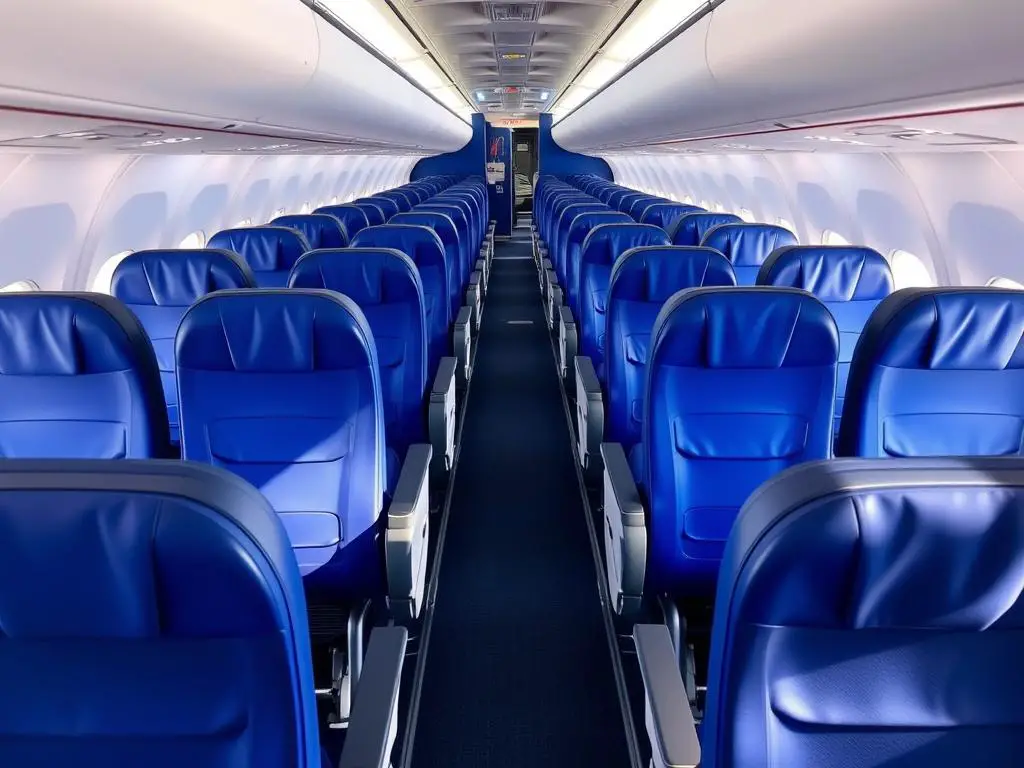
The Boeing 737-800 typically features a single-aisle configuration with three seats on each side of the aisle (3-3 arrangement). Most airlines configure these aircraft with approximately 160-189 seats, depending on the class layout and seat pitch.
The aircraft has two emergency exits over each wing and typically features galleys and lavatories at both the front and rear of the cabin. The exact configuration varies by airline, but most 737-800s share these basic characteristics:
- Approximately 30-33 rows in total
- Standard seat width of 17-17.8 inches
- Seat pitch (legroom) ranging from 29-33 inches in economy
- Two sets of emergency exit rows (typically rows 14-16)
- Overhead bins that may be smaller on older models
Seat Categories on the 737-800
Most airlines operating the 737-800 offer several different seat categories, each with distinct advantages and pricing. Understanding these categories will help you make an informed decision when selecting your seat.
Business/First Class
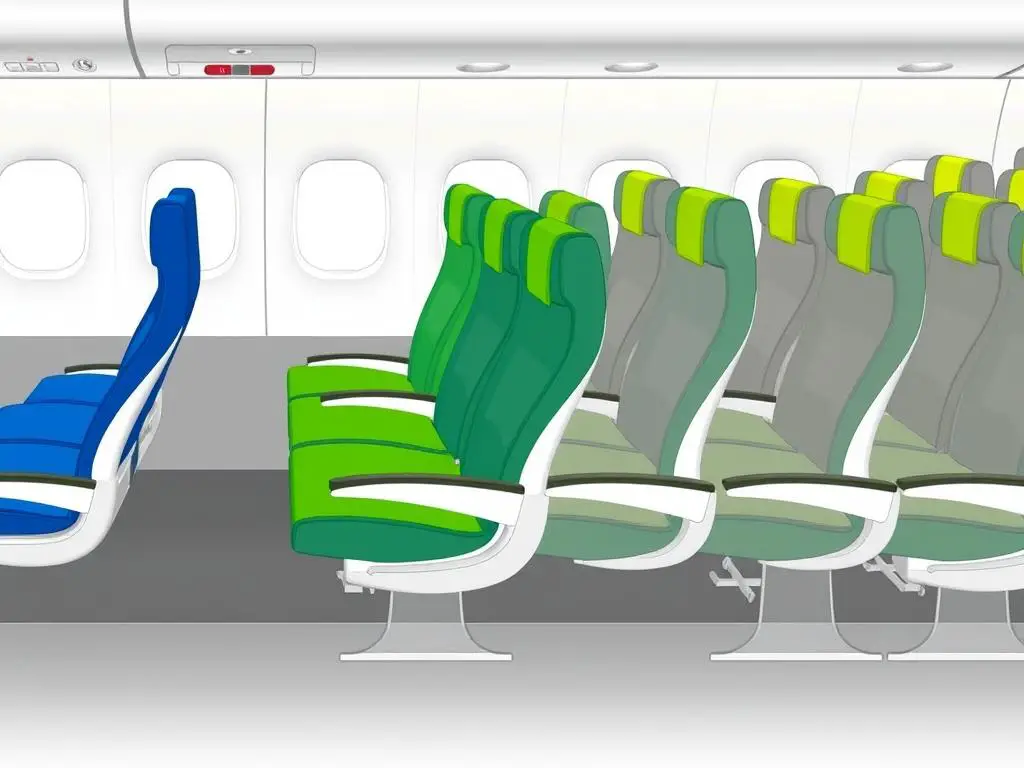
Located at the front of the aircraft, business or first class seats (when available) typically occupy the first 2-5 rows. These seats offer:
- Wider seats (typically 21 inches)
- Greater seat pitch (38-42 inches)
- Enhanced meal service
- Priority boarding and deplaning
- Middle seats often left empty or replaced with a table on some airlines
Premium Economy/Economy Plus
Many airlines offer an enhanced economy experience, often called Economy Plus, Comfort+, or Main Cabin Extra. These seats typically feature:
- Additional 3-5 inches of legroom (33-36 inch pitch)
- Located in the front section of economy or at exit rows
- Standard seat width but sometimes with slightly enhanced recline
- Earlier boarding than standard economy
- Sometimes include complimentary beverages or snacks
Standard Economy
The majority of the aircraft consists of standard economy seating with:
- 17-17.8 inch seat width
- 29-32 inch seat pitch
- Standard recline of approximately 2-3 inches
- 3-3 configuration throughout
Pro Tip: Some airlines like Southwest don’t assign specific seats but will be transitioning to assigned seating in the near future. If you’re flying Southwest before this change, their boarding process determines your seating options.
Best Seats for Legroom and Comfort
If stretching out is your priority, certain seats on the 737-800 offer significantly more legroom than others. Here are the top choices across most airline configurations:
Exit Row Champions (Rows 14-16)
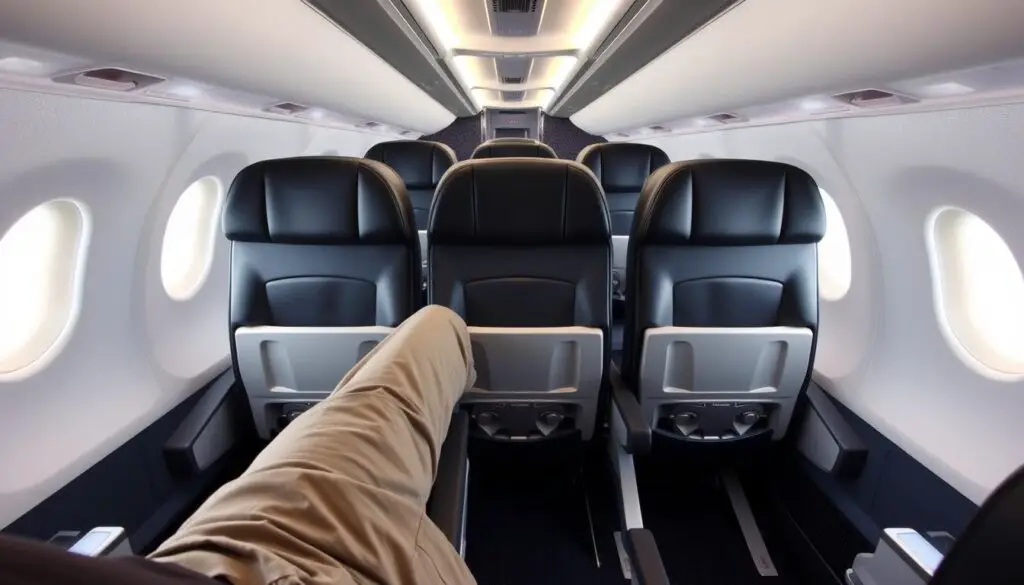
The absolute best seats for legroom are typically found in the exit rows, particularly:
| Seat | Advantage | Disadvantage | Best For |
| 16A & 16F | No seat in front, unlimited legroom | Slightly reduced width due to tray in armrest | Tall passengers |
| Row 14 | Extra legroom | Limited recline | Passengers needing space |
| Row 15 | Extra legroom, some airlines have 2-2 configuration | Limited recline, may be colder | Couples traveling together |
| Row 16 | Extra legroom throughout row | None significant | General comfort |
Bulkhead Seats (Row 1)
Bulkhead seats at the very front of the cabin or at cabin dividers offer excellent legroom but come with some tradeoffs:
Pros
- No one reclining into your space
- Extra legroom (though with a wall in front)
- Often priority boarding and deplaning
- Service begins here on many airlines
Cons
- No floor storage during takeoff/landing
- Tray tables in armrests (slightly reducing seat width)
- Potential for bassinet placement and babies nearby
- Limited overhead bin space (often used for equipment)
For those seeking maximum legroom without paying for premium seats, the window seats directly behind the exit row (particularly 16A and 16F) are the hidden gems of the 737-800. These seats have no seat directly in front, giving you unlimited legroom.
“The window seats behind the exit row (16A and 16F) are the best-kept secrets on the 737-800. You get unlimited legroom without paying for premium seating on many airlines.”
Best Seats for Quick Disembarkation
If you’re traveling with a tight connection or simply want to be among the first off the plane, seat selection becomes crucial. The following seats will help you exit the aircraft as quickly as possible:

- Row 1 (Seats D, E, F) – Being on the right side (seats D-F) at the very front puts you closest to the main exit door
- Rows 2-5 (Aisle Seats) – Aisle seats in the first few rows allow for quick exit
- Exit Row Aisle Seats – On some airlines, passengers may be allowed to exit through the emergency exits
Important: If you have a tight connection (less than 45 minutes), inform the flight attendants. They may make an announcement asking other passengers to allow those with tight connections to deplane first.
Best Seats for Families and Groups
Traveling with family members or in a group presents unique seating challenges on the 737-800. Here are the best strategies for keeping everyone together:

For Families with Young Children
When traveling with young children, consider these seating options:
- Rows 20-25 – Middle section of the aircraft often has the most available adjacent seats
- Proximity to Lavatories – Rows 25-28 provide quicker access to rear lavatories
- Avoid Exit Rows – Children under 15 cannot be seated in exit rows due to safety regulations
- Consider Split Seating – One adult and one child on each side of the aisle if full rows aren’t available
For Larger Groups (5+ People)
Larger groups should consider these strategies:
- Book as early as possible to secure adjacent seats
- Consider the rear of the aircraft (rows 25-30) where more consecutive seats are typically available
- Be prepared to split into smaller sub-groups of 3-3 across the aisle from each other
- Contact the airline directly if online seat selection doesn’t allow for adequate group seating
Family Boarding: Many airlines offer family pre-boarding or boarding between groups. Southwest Airlines allows families with children 6 and under to board after the “A” group, regardless of their boarding position.
Best Seats for a Quiet Journey
If peace and quiet are your priorities, certain areas of the 737-800 are notably quieter than others. Here’s where to sit for the most peaceful journey:
Quietest Seat Locations
| Seat Location | Noise Level | Turbulence Impact | Other Considerations |
| Over Wings (Rows 10-20) | Moderate engine noise but muffled | Minimal – most stable area | Limited window views due to wing |
| Forward Cabin (Rows 4-9) | Quieter than rear | Less noticeable than rear | Away from lavatories and galleys |
| Rear Cabin (Rows 25-30) | Loudest area | Most noticeable | Close to lavatories and galley noise |
For nervous flyers or those sensitive to noise, the seats directly over the wing (rows 10-15) offer the smoothest and quietest ride. The wing structure helps dampen both engine noise and the effects of turbulence.
Did you know? The rear of the aircraft can be up to 3-4 decibels louder than the front sections due to engine noise and air flow patterns. That might not sound like much, but the decibel scale is logarithmic, making this a significant difference in perceived noise.
Seats to Avoid on the 737-800
Not all seats are created equal on the 737-800, and some should be avoided if possible. Here are the seats that consistently rank poorly across most airline configurations:

The Worst Seats by Location
| Seat Location | Primary Issues | When It Might Be Acceptable |
| Last Row (Row 30/31) | No recline, close to lavatories and galley, noise, odors | Very short flights or if you need frequent bathroom access |
| Row in front of exit rows (Row 13) | Limited or no recline | If you don’t plan to recline or for short flights |
| Middle seats (B & E) anywhere | Confined on both sides, limited access to aisle | When traveling with companions on either side |
| Seats 9A & 10F | Misaligned or missing windows on many configurations | If you don’t care about the view |
Seats with Specific Issues
Some seats have unique problems worth noting:
- Seats 7A & 8F – On some configurations, these seats have misaligned windows
- Rows near the wings – Limited outside visibility if you enjoy aerial views
- Seats near emergency exits – Often colder due to proximity to the aircraft exterior
- Seats in the last 2-3 rows – Service may end here, limiting meal or beverage choices
Airline-Specific 737-800 Configurations
While the basic layout of the 737-800 remains consistent, airlines customize their cabins in ways that can significantly impact your seating experience. Here’s how major carriers configure their 737-800 aircraft:

| Airline | Total Seats | Class Configuration | Economy Pitch | Notable Features |
| Southwest | 175 | All Economy | 32-33″ | Open seating policy (changing in 2025-2026) |
| American Airlines | 172 | First (16) + Main Cabin (156) | 30-31″ | Main Cabin Extra seats with 33-34″ pitch |
| Delta | 160 | First (16) + Comfort+ (18) + Main Cabin (126) | 31-32″ | Comfort+ with dedicated cabin section |
| United | 166 | First (16) + Economy Plus (42) + Economy (108) | 30″ | Large Economy Plus section |
| Ryanair | 189 | All Economy | 30″ | High-density configuration, no row 13 |
Key Airline Differences
When booking your flight, keep these airline-specific considerations in mind:
- Southwest Airlines – Currently uses open seating but will transition to assigned seating in 2025-2026. Their 737-800s offer more legroom than many competitors.
- American Airlines – Offers Main Cabin Extra seats with additional legroom for a fee or complimentary for elite status members.
- Delta – Features Comfort+ as a distinct cabin section with dedicated overhead bins and enhanced service.
- United – Has a large Economy Plus section with extra legroom seats available for purchase or complimentary for elite members.
- Ryanair – Uses a high-density configuration with 189 seats and charges for seat selection, including exit rows.
Tips for Selecting the Best Seats When Booking
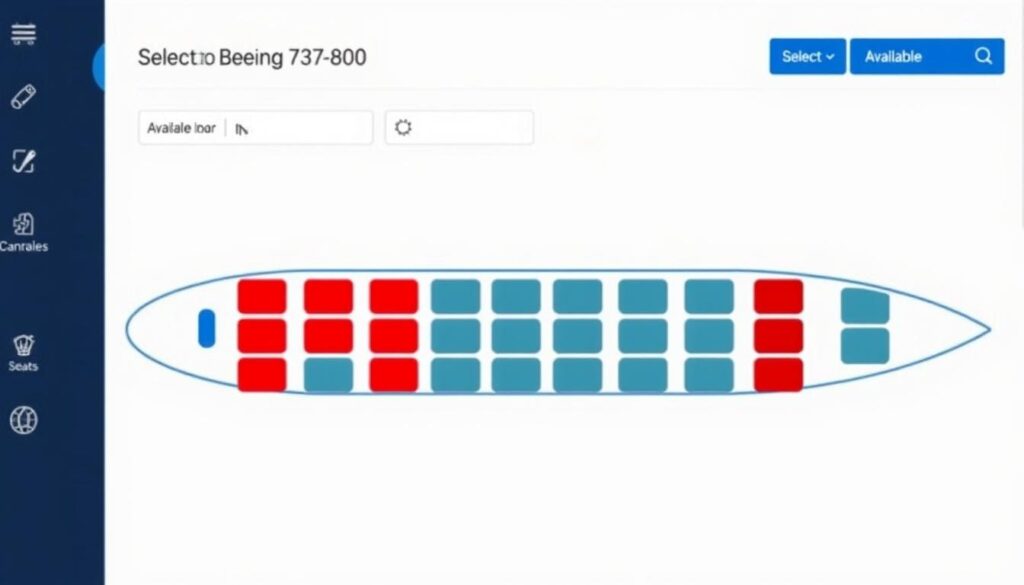
Securing your preferred seat requires strategy and sometimes timing. Here are expert tips for getting the best seats on a 737-800:
Booking Strategies by Airline Type
Full-Service Airlines
- Book directly with the airline for better seat selection
- Join the airline’s loyalty program for free preferred seating
- Check in exactly 24 hours before departure
- Consider paying for premium seats on flights over 3 hours
- Use ExpertFlyer or similar tools to set seat alerts
Low-Cost Carriers
- Budget for seat selection fees in your total cost
- Book exit row seats for best value-to-comfort ratio
- Consider front-of-plane seats for faster deplaning
- Check if bundled fares include seat selection
- For Ryanair, rows 16-18 offer good value
Southwest Airlines
- Check in exactly 24 hours before departure
- Consider EarlyBird Check-In for better boarding position
- Business Select fares get priority boarding (A1-A15)
- Families with children under 6 can board after A group
- Upgraded Boarding available at gate if available
General Seat Selection Tips
- Book early – The best seats are often claimed quickly, especially on popular routes
- Use SeatGuru or similar sites – Check aircraft-specific seating recommendations
- Consider flight time – For overnight flights, window seats offer better sleeping conditions
- Check for equipment changes – Aircraft swaps can change your assigned seat
- Elite status helps – Many airlines offer complimentary preferred seating to frequent flyers
“On a 737-800, I always aim for row 10 or 11 – just forward of the wing. You get a smoother ride, less engine noise, faster service, and quicker deplaning than the back half of the aircraft.”
Final Thoughts on Choosing the Best 737-800 Seats
The “best” seat on a Boeing 737-800 ultimately depends on your personal preferences and priorities. For maximum legroom, exit row seats (particularly 16A and 16F) are unbeatable. If you’re seeking a quiet journey, seats over the wing provide the smoothest ride. And if deplaning quickly is your goal, the front rows are your best bet.
Remember that airline configurations vary, so it’s always worth checking the specific layout of your flight before making your selection. By applying the strategies and insights from this guide, you’ll be well-equipped to choose the best possible seat for your next journey on a 737-800.
Whether you’re a frequent flyer or occasional traveler, the right seat choice can transform your flying experience from merely tolerable to genuinely comfortable. Happy travels!
Are exit row seats always the best choice on a 737-800?
While exit row seats offer the most legroom, they’re not always the best choice for everyone. These seats often have immovable armrests (reducing seat width), may be colder due to proximity to the exit door, and come with the responsibility of assisting in an emergency. Additionally, you must be physically capable of operating the exit door, which excludes children, elderly passengers with mobility issues, and pregnant women.
How can I get the best seats on Southwest’s 737-800 with their open seating policy?
Until Southwest transitions to assigned seating in 2025-2026, your boarding position determines your seat options. To get the best boarding position: check in exactly 24 hours before departure, consider purchasing EarlyBird Check-In, or book Business Select fares for guaranteed A1-A15 boarding positions. Once on board, head for exit rows (14-16) for extra legroom or rows 1-5 for quick deplaning.
Are bulkhead seats worth the extra cost on a 737-800?
Bulkhead seats can be worth the extra cost for flights over 3 hours if legroom is your priority. However, consider the drawbacks: no floor storage during takeoff/landing, slightly narrower seats due to tray tables in the armrests, and potential proximity to galley noise or bassinets with infants. For shorter flights, the standard exit row seats often provide better overall value.